Martin Austermuhle
Whether it was confronting Comcast over a confusing cable bill, loudly weighing in on the performance of George Washington University’s basketball team during its games, or expressing righteous indignation over D.C.’s lack voting rights and statehood, Mark Plotkin was nothing if not passionate.
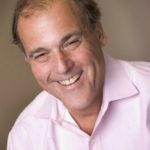
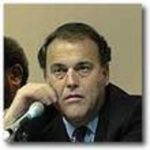
The longtime WTOP political analyst, former WAMU talk show host, and perpetual advocate of gaining statehood for his adopted hometown died over the weekend. He was 72.
His unexpected death, possibly related to cancer that was diagnosed last year, prompted an outpouring of remembrances from both his colleagues in the press and the public officials who were often at the receiving end of his pointed questions and unforgiving delivery.
“We all remember Tim Russert from Meet the Press. Plotkin was our Tim Russert,” says Mark Segraves, a reporter at NBC4 who first met Plotkin over two decades ago, and later shared an office with him while they both worked for WTOP.
Mayor Muriel Bowser said in a statement: “I am saddened to hear of the passing of Mark Plotkin … Mark was never one to mince words and offered fair, poignant perspectives across media outlets. In particular, tuning into Mark’s show was must-listen radio.”
Born in Iowa in 1947 but raised in Chicago, Plotkin came to D.C. in 1964 to attend the George Washington University, graduating five years later. (Thus began his love for Colonials basketball.) After working on political campaigns, he made the transition to media, starting as a part-time political analyst for WAMU in the early 1980s, where he focused on D.C. politics. He created what was originally the “D.C. Politics and Government Hour,” later changed to “The Politics Hour,” a show that still airs weekly on WAMU.
And it was there that he developed what became his trademark approach to interviewing newsmakers: direct and to the point, rarely letting an elected official get away with a talking point or platitude.
“He considered himself an equal to everyone who sat across from him on the microphone, whether they be a president of the United States or the dog catcher,” says Segraves, who jumped from TV to radio with Plotkin’s help (before returning to TV). “He was never intimidated by anybody. And he believed in what he was doing, he believed that the public had the right to the answers to the questions he was asking.”
Plotkin also tried his hand at becoming a politician, running twice for the Ward 3 seat on the D.C. Council, losing his second attempt by only a few hundred votes. (“The people have spoken,” The Washington Post reported him saying. “The bastards.”) And while he failed to win office, he still pursued another cause with the same vigor he brought to his journalism: D.C. voting rights and statehood.
“He was provocative, and he was original. I always said to him that if he didn’t exist we’d have to invent him because his provocation is what led to a significant number of accomplishments in the District,” says Kojo Nnamdi, a longtime friend of Plotkin’s who got his start at WAMU when Plotkin brought him on as co-host of his politics show. (“You were an absolute nobody operating in the periphery until I elevated you to your prominent status which you now so richly deserve,” Plotkin joked on-air in 2012.)
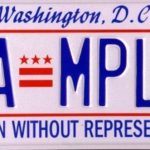
Among those accomplishments: his “near-solitary crusade” for the Wilson Building to be reverted to city control in the late 1990s. The District’s “Taxation Without Representation” license plates, a reference to the fact that the city has no voting representation on Capitol Hill, grew out of a discussion Plotkin hosted on his politics show on WAMU.
“That was not his idea,” says Nnamdi, who co-hosted Friday’s “The Politics Hour” with Plotkin starting in the late 1990s until Plotkin decamped for WTOP in 2002. “It was suggested to him by someone else, but it was (he) who almost literally forced it on city leaders. He was a major annoyance to city leaders, but (he) was so original in the ideas he would develop for advancing D.C. voting rights and statehood that they took him seriously.”
And Plotkin expressed those ideas every chance he got—whether or not the receiving party wanted to hear them.
“He was passionate, to the point where it wasn’t only on his radio show, it was in the grocery store, it was walking down the sidewalk, it was at the library. If Mark Plotkin ran into a politician who was somehow not on the right side of this statehood issue, he would let them know,” says Segraves.
Tom Sherwood, regular political analyst on the Politics Hour and former NBC4 reporter, said: “Mark could be cantankerous as hell and difficult to deal with—even when he agreed with you. But he cared deeply about local D.C. politics and, even more, the lack of statehood for the District and its citizens.”
In one incident that only helped build the legend of Plotkin as an advocate who knew no bounds, he was forcibly removed from the White House in 2007 after asking First Lady Laura Bush a question about the denial of voting representation for D.C. residents. (Bush did not answer.)
“I’m belligerent about being deprived the right to vote for an elected representative in the U.S. Congress because I live in the Nation’s Capital,” Plotkin wrote in a fiesty Q&A on the Post’s website a few days after the incident. “Why do I have to send a note of apology to Laura Bush? She should be sending a note of apology for her husband’s denial of our right to elect a voting representative.”
But he was an equal opportunity scold: in 2009, he chastised White House adviser David Axelrod for President Barack Obama’s decision not to outfit the presidential motorcade with the city’s “Taxation Without Representation” license plates.
And it wasn’t just D.C. that drew Plotkin’s attention.
“He was fascinated by regional politics, and he really knew all of the players,” says Rep. Jamie Raskin, a Democrat from Maryland. “He was also a lifelong obsessive student of Democratic Party politics across the country. He went to all the conventions, loved presidential politics. But his commanding passion was Washington, D.C., his adopted hometown. He always felt that Washington should be as fiercely proud as protective of its rights as Chicago, where he grew up.”
Plotkin was also known for some of his quirks. He was notoriously averse to technology, almost never using a computer and only purchasing a cell phone late in life. (When he donated his papers to GW in 2018, there was plenty of hand-written material.) His questions were often preceded by long lectures that would cause even his colleagues in the press corps to roll their eyes. His institutional knowledge extended beyond politics—he was a loyal follower of Colonials basketball and Navy football, as well as a “terrific tennis player,” per Nnamdi.
And he had a specific talent for alienating co-workers (WTOP parted ways with him in 2012) and his closest friends. Segraves went without speaking to Plotkin for six years, including a year during which they shared an office. Nnamdi’s experience wasn’t much different.
“There were occasions where for weeks, maybe months at a time, we weren’t speaking to one another. But we would invariably make up,” he says.
Over the last year of his life, Plotkin’s friends noticed he had mellowed considerably, and would often call multiple times to confirm a scheduled gathering for dinner. That’s what happened last Friday, when he was supposed to meet Nnamdi. Plotkin canceled dinner but asked Nnamdi to call him back in half-an-hour. Nnamdi did, but Plotkin never answered. Nnamdi says he knew something was wrong, because it wasn’t like him not to call back.
Plotkin had no siblings, never married, and had no children. Nnamdi says services are being planned so that Plotkin’s extended network of friends and colleagues in both D.C. and Chicago can say goodbye.
“We’re going to make sure he goes out in the way he would have wanted to,” he says. “With a bang.”
This story was originally published on WAMU.