Ally Schweitzer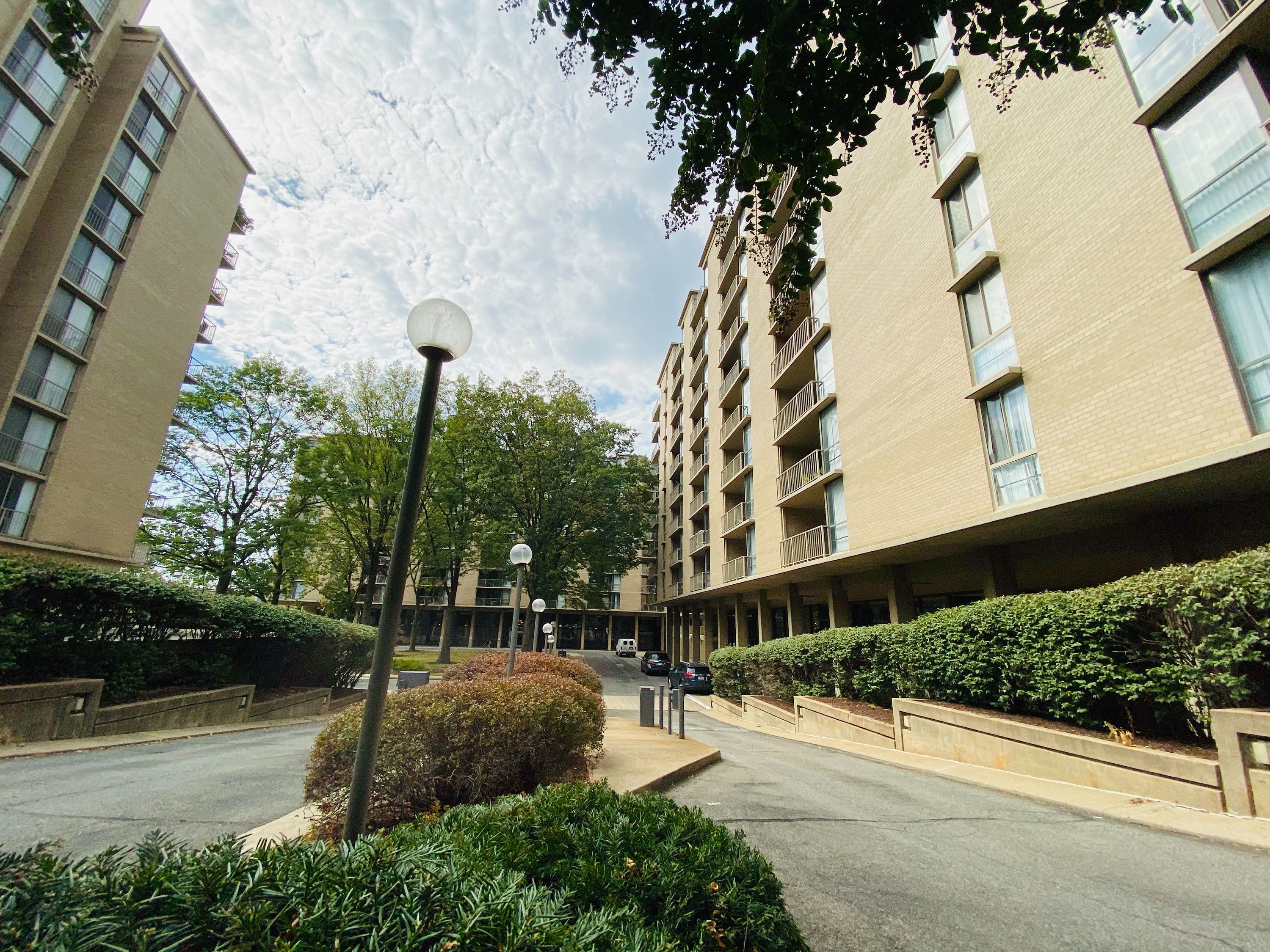
For 10 years, Shirley Tabb coveted the corner apartments in her building on K Street NW. When she was finally able to afford one of the units with the big bay windows, she snapped one up on the sixth floor.
“I felt like George Jefferson and them — I’m moving on up,” laughs the 66-year-old social worker.
Now, she’s moving on out.
A few months ago, Tabb says, building management informed her that her rent would be raised an additional $800 a month. She has a good job with the D.C. government, but still, she couldn’t afford to pay nearly $3,000 in rent. So slowly, painfully, she packed up all her belongings and left her apartment with the big bay window.
This wouldn’t have happened, Tabb says, if she’d been protected by rent control.

D.C. resident Shirley Tabb (shown with her dog Roxie) says she had to vacate her apartment of nearly 30 years after her rent went up $800 a month. Her building wasn’t rent-controlled.
An estimated 45 percent of all rental units in the District are rent-stabilized, meaning rent hikes are limited to the rate of inflation plus 2 percent. But the city’s rent control law is set to expire by the end of 2020, and the D.C. Council is considering a bill that would renew the law for another 10 years.
The legislation has unanimous support on the Council. But tenant organizers say it needs an overhaul to protect residents from landlords who have found creative ways around the rules.
At the same time, rent control remains a deeply controversial housing policy on the national level and locally. Advocates and economists are in sharp disagreement over whether it really promotes affordability, or if it worsens the housing shortage that has raised prices and forced residents out of their homes across the District.
The Case For Strengthening Rent Control
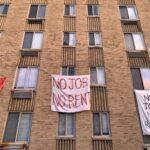
Inside the tattered apartment building at 220 Hamilton St. NW, a small band of activists gathered Wednesday to launch the Reclaim Rent Control campaign. They say the D.C. Council must not only reauthorize the law for another 10 years, but also make it harder for landlords to get around rent control and squeeze out low- to middle-income tenants.
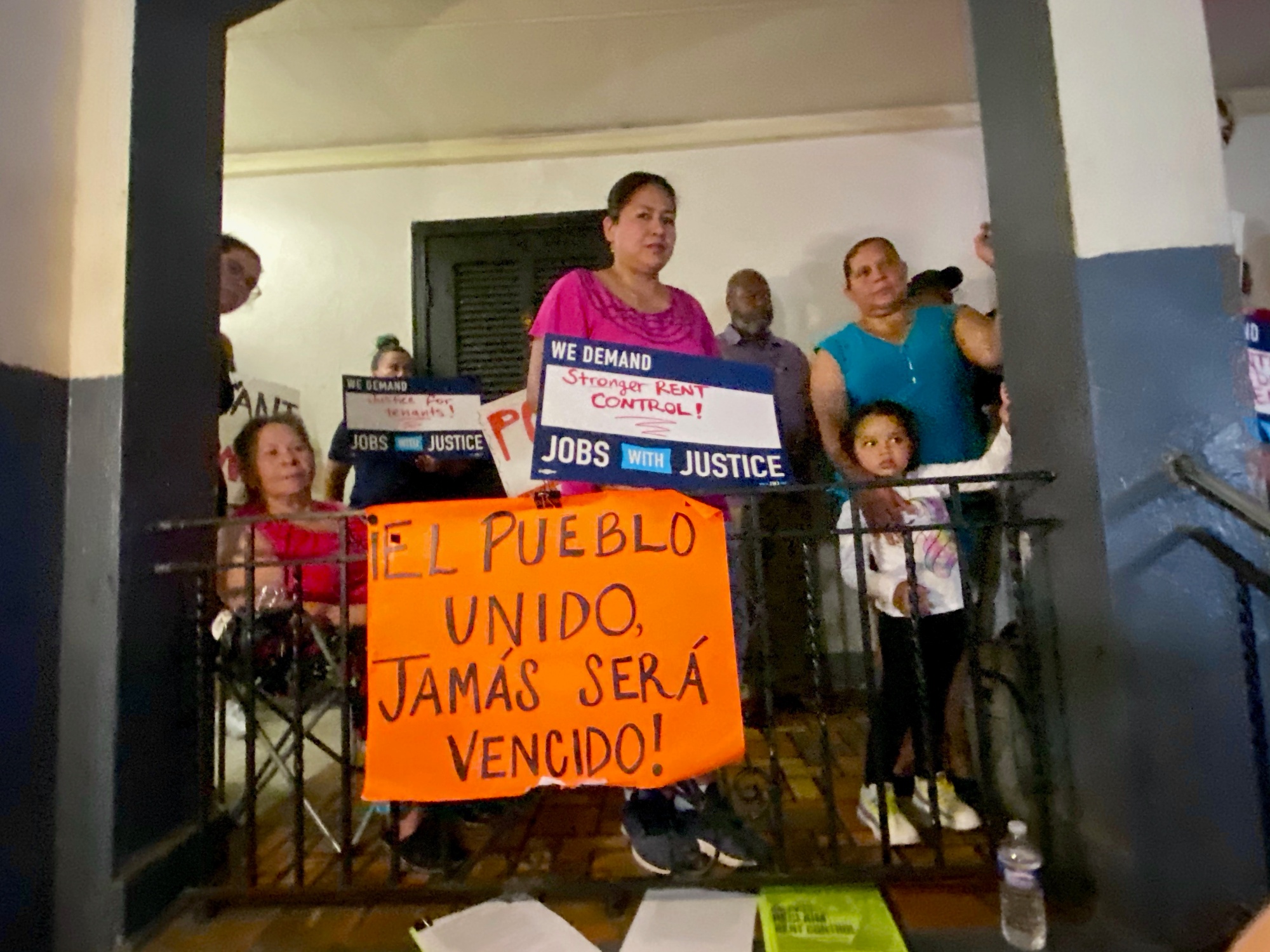
Residents of 220 Hamilton St. NW take part in the launch of the “Reclaim Rent Control” campaign.
“We can’t afford to lose our culture and have new gentrification coming here to take D.C. away from us,” said David Bonilla with the building’s tenant association. Attendees standing in the worn-out lobby hollered in appreciation.
Tenants need protections now more than ever, advocates say, as gentrification has swept the District, intensified by an overall housing shortage that has also driven up prices and competition.
“We need to update the legislation to be more responsive to the real crisis that we’re in right now,” says Victoria Gonçalves, a tenant organizer with the Latino Economic Development Center. “The status quo just isn’t enough.”
As of now, the District’s law only applies to housing built before 1976, and landlords who own four or fewer housing units are exempt. Plus, advocates say, the law is perforated with loopholes.
A particularly gaping loophole, says Beth Mellen Harrison with D.C.’s Legal Aid Society, involves a provision that deals with so-called voluntary agreements. They’re designed to let landlords negotiate higher rents with tenants in exchange for improvements to the building. But Harrison says property owners have been using them to do away with rent control altogether.
Tenants of rent-controlled buildings have been signing off on voluntary agreements that let landlords raise rents on future tenants, not existing ones, Harrison says. The increases renters agree to have averaged around $1,500 — much larger than any they’d opt to take on themselves — because they may not plan to leave their apartments. But with future rent increases locked in, landlords may then proceed to subtly — or not so subtly — encourage existing tenants to move out.
Since 2006, Harrison says, there have been 240 voluntary agreements affecting nearly 6,000 rent-controlled units in the District. They’ve added up to an additional $6 million in rental income for property owners. Many of them involved current residents agreeing to raise rents on future tenants, effectively taking units out of rent control once current residents leave.
“There’s nothing in the law that clearly says this is illegal,” Harrison says. “But it’s pretty clear this is not what the Council thought was going to happen with voluntary agreements.”
Another provision in advocates’ crosshairs involves properties that need major repairs. Under current law, owners of buildings in poor condition can apply for a “substantial rehabilitation” petition, which lets them raise rents up to 125 percent to cover the cost of renovations. But activists say this provision simply allows owners to neglect their buildings, then win rent increases to cover the cost of that neglect.
“The weaknesses in our rent control system fail all of us,” said Elizabeth Falcon, executive director of D.C. Jobs With Justice, in a statement. “The scales are tipped towards landlords and developers and away from renters. It’s time to right the scales.”
Is Rent Control Counterproductive?
Few disagree that rent control helps current residents stay in their homes. But there is profound disagreement over whether it helps preserve affordable housing across the city.
Rent stabilization has long been a target for economists who say it’s no cure-all to affordable housing shortages across the country. In fact, many say, it’s the opposite.
Critics point to the fact that rent-stabilized buildings don’t usually impose income caps on tenants. That means high-income people could be taking up below-market-rate, rent-controlled apartments that could go to lower-income renters instead.
“You can make six figures … and be a qualified applicant for a rent-controlled building that’s $1,200 for a one-bedroom in Dupont Circle,” says Randi Marshall, a vice president of government affairs for the Apartment and Office Building Association of Metropolitan Washington.
Suppressing profits on development could lead developers to build less housing and further deplete already anemic housing markets, according to an analysis from a Stanford University economist. The outcome, then, could be rising prices on a dwindling supply of homes. However, D.C.’s rent stabilization law only applies to older, not new, construction. Empirical work “found no significant relationship between rent control and new housing” development in D.C., according to the Urban Institute.
There are also concerns that rent control deprives owners of the incomes they need both to improve their buildings and to turn a profit, despite provisions in D.C. law that are supposed to prevent that from happening.
For instance, the District’s rent stabilization law allows landlords to file a “hardship petition” if their profit margins on rent-controlled buildings sink below 12 percent. But getting a petition approved, Marshall says, is no cakewalk.
“It’s difficult. It’s expensive. It’s a long process,” Marshall says, “and honestly, it may not always work. It could be denied.”
The various shortcomings of rent stabilization, Marshall says, are why her organization would like the D.C. Council to take on affordable-housing solutions that don’t impose high costs on apartment owners.
“We want to talk about rent subsidies. We want to talk about increasing the number of [housing] vouchers. We want to talk about reserving affordable housing units” in new and existing buildings, Marshall says. “In order to be responsive to how we address skyrocketing rents, we need to talk more comprehensively about many tools, not just one tool.”
The Future Of Rent Control
In D.C., it appears rent control is here to stay.
All members of the Council signed on to the bill from At-large Councilmember Anita Bonds that would extend current rent control protections until 2030. Not doing so, some advocates say, would be political suicide, because of the sheer number of District residents who depend on rent control.
Among those residents, as of this week, is Shirley Tabb. After the rent went up in her old building, she found a rent-controlled unit in Southwest D.C. for herself and her dog, Roxie.
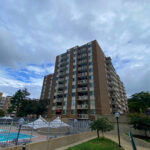
Punching in the passcode to her new apartment at Waterside Towers, Tabb says she endured intense financial and emotional strain having to leave her home of nearly three decades. But her new place is shaping up to be a fine place to live.
For about what she paid at her previous apartment in Northwest — roughly $2,100 a month — Tabb gets a pool, a short walk to The Wharf and Arena Stage and a clear view of the Potomac.
On a recent evening, Tabb says, she watched the sun go down over the river from her window.
“It reminded me of being on a beach somewhere,” she says. “I called my sister and I said, ‘Pat, I am looking at the most beautiful sunset.’ And I think that was God’s way of saying, ‘Welcome, baby. You’ll be OK.’”
This story was originally published on WAMU.