With a message inspired by anti-gentrification protests, a host of Councilmembers, medical experts and grassroots organizers have joined forces to combat health disparities and diet-related chronic illnesses in D.C.’s lower income neighborhoods.
And their main target is the way soda is taxed in the city.
The Healthy Beverage Choices Act of 2019 would provide vital funding for health and wellness programs in Wards 5, 7, and 8 through a tax on sugary drinks.
D.C. placed a 2 percent sales tax on sodas and sugary drinks last week. The new legislation would replace it with an excise tax, which would be charged to the companies that make soda. The group is proposing a 1.5 cents per ounce tax, which likely would be passed onto soda buyers.
#DontMuteMyHealth
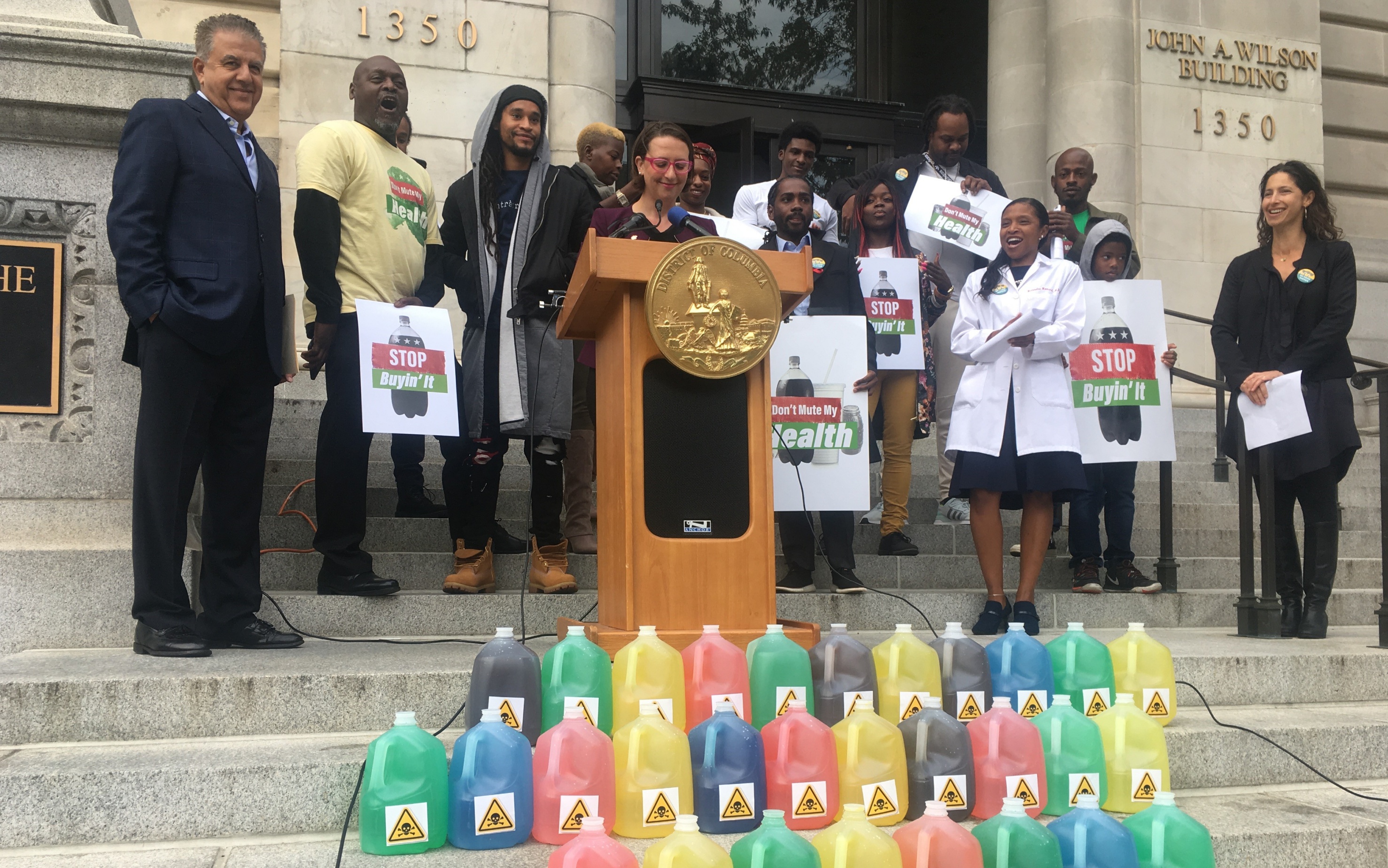
Ward 1 D.C. Councilmember Brianne Nadeau, introduced the measure at a press conference Tuesday morning, with the support of seven Councilmembers including Ward 8 Councilmember Trayon White and Ward 3 Councilmember Mary Cheh. But on the front steps of the John A. Wilson Building, it was a handful of community activists holding large posters and wearing yellow and white t-shirts that stole the show. The hashtag #DontMuteMyHealth was written on both sides of the shirts, and many attendees waved signs that said “Stop Buyin’ It.”
The hashtag is inspired by #DontMuteDC, the movement that formed last spring to preserve the District’s tradition of go-go music as neighborhoods gentrify. Applying the message to health is the idea of Stuart Anderson and Ronnie Webb, who previously founded The Green Scheme in 2011 to help change the way children think about their health.
“It’s a push to get people to take control over their own healthy lifestyle. It’s also a push to educate people on how to live a more wholesome life,” Anderson says, adding that the education campaign is aligned with the mission of the sugary drink tax and can address the well-documented food insecurity problem in neighborhoods east of the Anacostia River.
HAPPENING NOW: A spoken word opening as D.C. Councilmember Brianne Nadeau, community activists and a majority of council introduce new bill to impose excise tax on sodas and sugary drinks — a major health improvement for residents of D.C. low-income neighborhoods. @wamu885 pic.twitter.com/tLdKpaVGj1
— Sasha-Ann Simons (@SashaAnnSimons) October 8, 2019
“It’s not just about a sugary drink tax, it’s about an overdose on sugar,” he says. “#DontMuteMyHealth is about access to quality health care, equitable grocery amenities, and not having to make the tough decision of whether you’re going to shop at one of three grocery stores east of the Anacostia or shop at a convenience store whose shelves are filled with high concentrations of sugary foods.”
How Effective Are Soda Taxes?
Health advocates say sugary drinks, like sports drinks and sodas, represent a real health risk to kids. On average, American children consume over 30 gallons of sugary drinks every year. Sugary drinks also contribute to increasing rates of diabetes and heart disease.
In the District, residents living in the lowest-income neighborhoods have the least access to healthy drink and full-service grocery options, along with the highest rates of diabetes and other diet-related chronic diseases.
Around the world, soda taxes have been proposed to curb the most negative effects of soda consumption. More than 30 countries and seven U.S. cities — including Seattle, San Francisco and Boulder, Colorado — now tax sugary drinks.
Many have faced opposition from manufacturers. Spokespeople for the American Beverage Industry, which represents the soda industry, have said that taxes on sugary drinks are harmful, raise prices, and cost people — many with low incomes — their jobs. Councilmember Cheh attempted to pass a soda tax in D.C. in 2010, but it failed to move forward.
However, research shows that Philadelphia’s sugary drink tax hasn’t hurt other aspects of the grocery business. Although sales of sugary drinks have fallen, overall business at chain stores hasn’t suffered, according to a 2017 study. A study of a soda tax in Berkeley, California, found similar results, with residents buying less soda but more bottled water.
The proposed excise tax would focus on sugary drinks that list any form of common sweetener as an ingredient. It does not include:
- Drinks where milk is the primary ingredient
- Beverages for medical use
- Baby formula
- 100 percent natural or fruit juices
- Alcohol, and
- Unsweetened drinks to which a purchaser can add sugar or natural common sweetener at the point of sale.
“Communities of color are targeted in the advertising of them,” says Nadeau. “Black children and teens see more than twice as many TV ads for sugary drinks than their white peers.”
As Anderson and his fellow #DontMuteMyHealth ambassadors seek to educate residents, they also recognize systemic injustices that make it challenging for minority residents to change their behavior. That’s why Anderson organized events like the 2017 Grocery Walk, where residents marched two miles from the Alabama Avenue SE Giant in Ward 8 to Anacostia, to bring awareness to the issue of food deserts.
According to Nadeau, revenue from the excise tax will fund programs that help communities most affected by sugary drinks and lack of access to healthy food. Council members say revenue from a new excise tax on sugary drinks could amount to $21 million annually, which would go toward increasing access to healthy food.
The money would be split between D.C.’s Birth to Three program, initiatives such as the Produce Rx program that allows some District residents to fill prescriptions for fresh produce at farmers markets and at the Giant in Ward 8, grants for more nutrition programs in the city’s green spaces, and grants to further support D.C.’s Food Policy Council.
“Overall, this policy will make D.C. healthy and will reinvest in our communities,” Nadeau says.
This story first appeared on WAMU.