Martin Austermuhle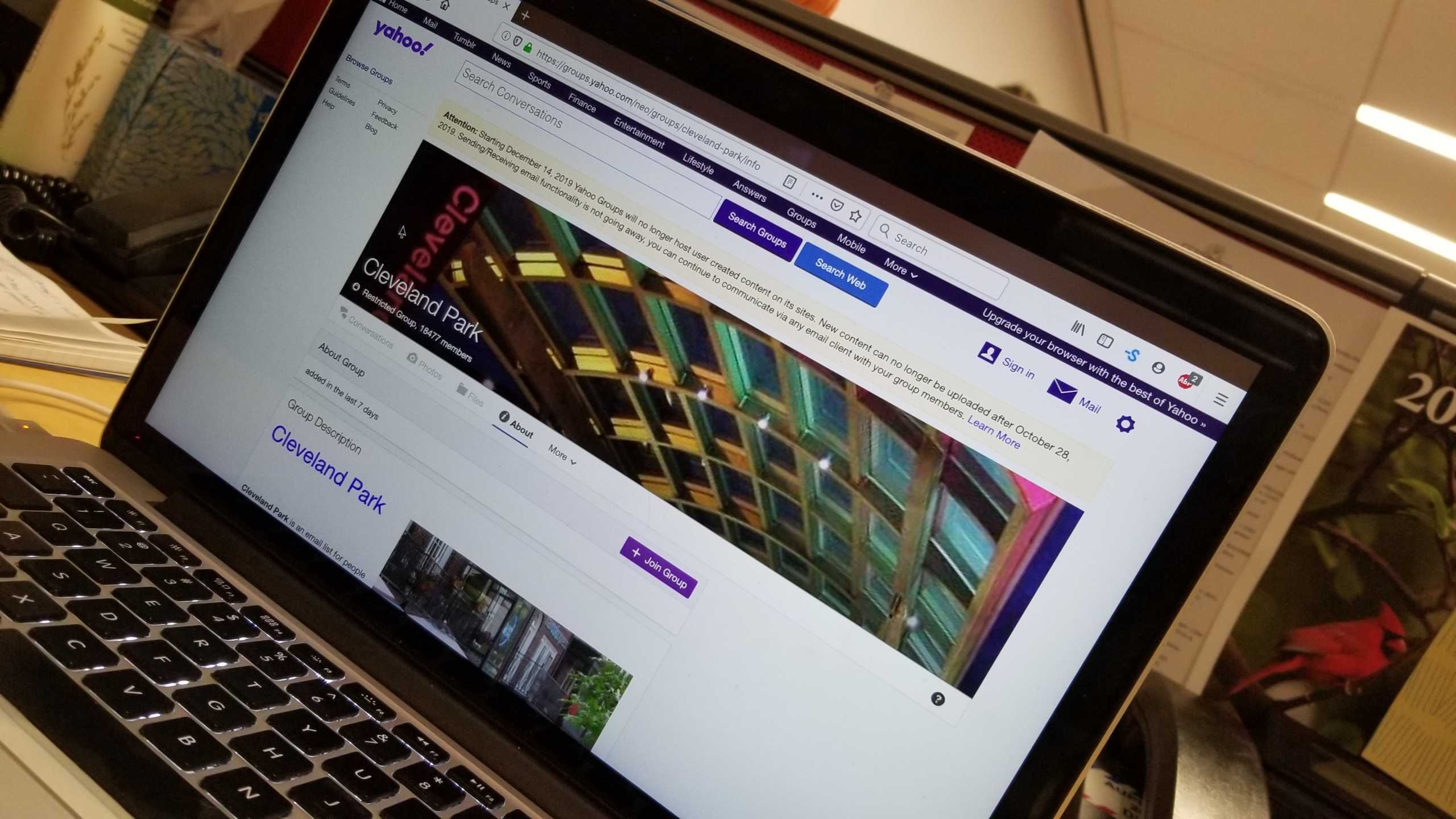
Peggy Robin may have expected this week to be like any other, but instead, she’s scrambling to deal with an unexpected crisis that could impact the thousands of people that have, in one way or another, come to rely on her on a daily basis.
Robin runs the Cleveland Park neighborhood listserv, and on Tuesday she heard the news: Yahoo! said it will soon start scaling back on the popular forum/mailing list combo service it launched almost two decades ago. That’s left her the task of moving the community listserv—at 18,474 members the biggest in the city, and some say the country—and its extensive archives of messages to a new platform to keep the communication going.
“It is the end of an era. We started in November 1999. We’re almost hitting our 20th anniversary, but not making it,” she said.

Archived messages and other content will be deleted from Listservs by December.
By the end of the month, Yahoo! said all groups will be made private, requiring new members to get approval from moderators to join. (Currently, a moderator can choose whether a group is public or private.) And while members of a group will still be able to email each other, they won’t be allowed to upload files or photos. Links and the calendar feature will also be disabled, moderators will have fewer tools at their disposal to keep the e-peace, and members won’t be able to opt for a daily or weekly digest of all the messages exchanged.
By December, a more significant change will kick in: archived messages and other content will be deleted. For 2018 alone, that’s 11,572 messages, a veritable day-to-day diary of the wants, whines and whimsies of Cleveland Park’s residents. Over in Adams Morgan, the neighborhood listserv has seen more than 52,000 messages over its almost 20 years in existence.
“Deleting the archives without offering an opportunity and a means to download and preserve it first is an act of historical destruction and cruelty,” wrote co-founder Josh Gibson in an email today.
“A lot of people join just to access the archives,” said Robin of Cleveland Park’s listserv.
The sudden announcement is impacting listserv owners and moderators across the city, region and country. Many neighborhood residents across the Washington region long ago self-organized onto listservs hosted by Yahoo!, an internet pioneer that created its Groups service in 2000. From parts of Alexandria and Adams Morgan to Brightwood Park and River Terrace, listservs became a convenient way to communicate locally. In D.C., even the Metropolitan Police Department came to rely on it, creating public listservs 15 years ago for each of its seven police districts.
On the east end of Capitol Hill, resident Gretchen Mikeska took a 30-person email distribution list created by a longtime neighbor and put it on Yahoo! Groups in 2002. “It basically expanded exponentially and in a month we had 500 people,” she said. The New Hill East group now has 4,808 members, trading anywhere from 150 to 300 messages a month.
“The thing about this listserv that at least distinguished it is that it was the one keeping track of development, of crime trends, of social trends. There were definitely snarky things that would go down, but in general it tried to be the pulse of Hill East,” she said.
But as neighborhoods have changed, so too has technology. Where residents would once rely on their neighborhood listserv for information, gossip, the occasional item for sale and commentary that could fast devolve into epic internet battles, there are more communication tools around today: Facebook groups, Twitter and NextDoor, to name some of the biggest.
Robin also said that Yahoo!—the Verizon-owned internet pioneer whose once-stellar offerings have fallen behind competitors—had started ignoring Groups, making the platform less and less usable over the years.
“I’ve been expecting this for years. Yahoo! Groups has been falling apart piece by piece over a long period of time,” she said.
Robin is in the midst of moving the whole Cleveland Park listserv over to Groups.io, which she said will offer her far better functionality. The Takoma D.C. listserv already made the jump, but warned that listserv owners should be patient because of a sudden spike in demand. The Georgetown Forum is making the same shift, while the District’s police department said it is shifting its listservs to Google Groups.
Mikeska said she’s exploring her options for New Hill East, but one thing remains clear to her: the listserv will live on.
“We could dissolve it and not do it anymore. I can’t say that [Yahoo!] specifically offers anything that you couldn’t get out of Facebook or NextDoor, but the fact is that we have so many members that are here. They have stayed here for a reason, because it has gotten to be a community of some sort that has this history behind it. So that’s what you’re preserving, rather than some functionality of Yahoo! Groups that is better than these newer platforms. I don’t think anyone can make that case.”
Consistency is critical, Robin said, especially for older residents who use email but don’t delve into social media. And she agrees that just pulling the plug on an almost 20-year project that consumes most of her days isn’t an option, largely because of the value of having a local listserv.
“We had one woman who signed on very early on. She came to Washington and was looking for shared housing, and she found roommates. Next thing is she found a job, then she and her boyfriend were looking for a house together and she found one,” Robin said. “It was like we went through every stage of her life with her for about two or three years until she moved away.”
This story originally appeared on WAMU.