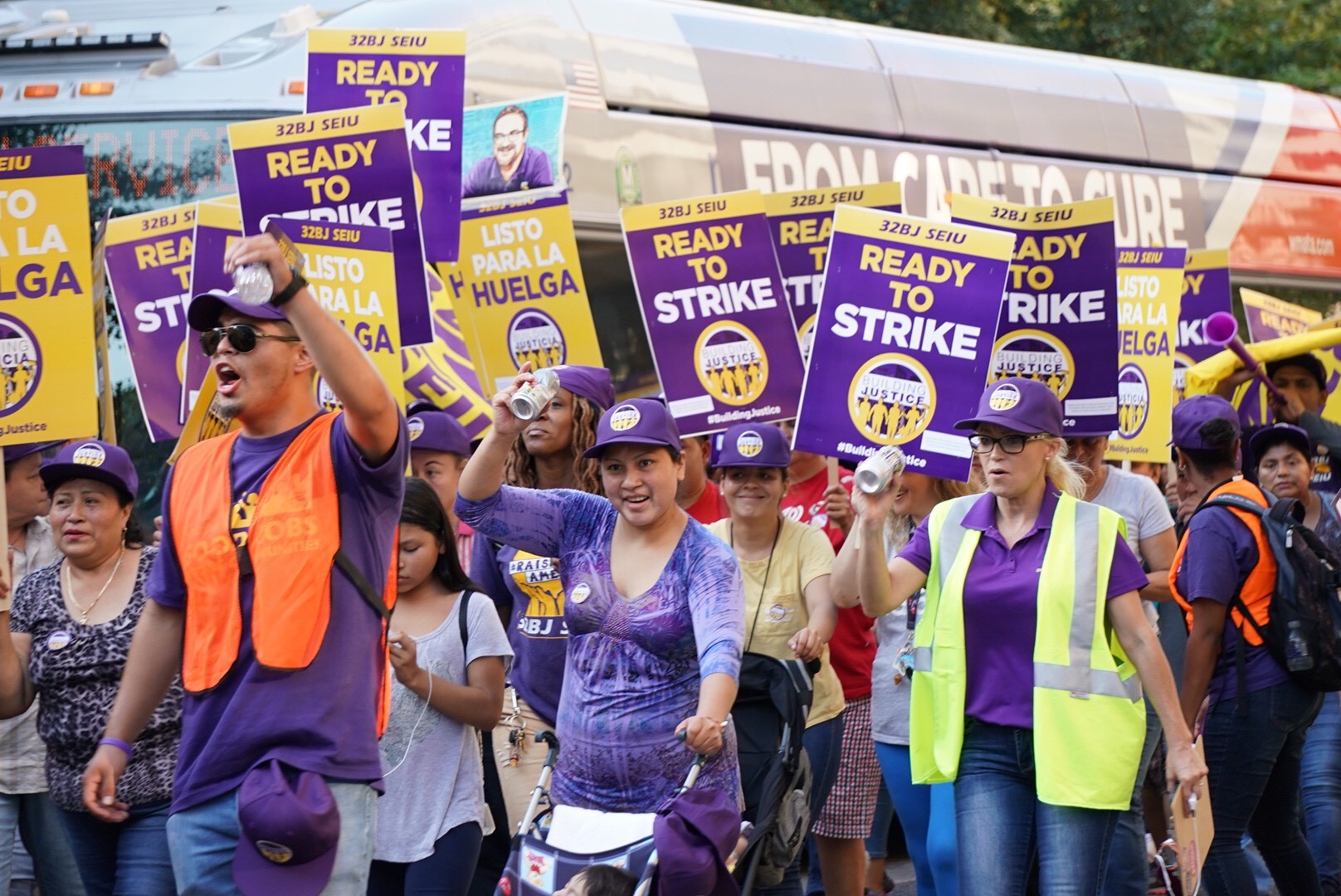
Local unionized janitors have ratified a new contract, avoiding a potential strike that could have impacted more than 1,200 office buildings throughout the region.
32BJ SEIU, a union representing the 10,500 office cleaners in the D.C. area, finalized a four-year contract with Washington Service Contractors Association, which represents about 70 percent of cleaning companies in the region.
The new contract includes an hourly pay increase of 60 cents an hour for the first two years and 65 cents an hour for the latter half of the contract, totaling a $2.50 hourly increase over four years. Under the new contract, a cleaner working in 2020 will make $16.70/hour; by 2023, they’ll make $18.60/hour.
The involved parties reached an agreement the day before the contract’s expiration date on October 15. The number of sick days was expanded to seven days annually and employees will enjoy an extra holiday each year—their birthday.
Additionally, janitors will have a month of unpaid leave to resolve any immigration-related issues.
Julie Karant, a spokesperson for 32BJ SEIU, says her members are thrilled with the new contract. “It provides them a great wage increase that brings them above the $15 minimum,” she says.
Karant says another key component of this contract is increasing the number of full-time jobs for workers. Previously, employers in some local jurisdictions could post part-time positions as a way to limit their health care costs.
“A lot of people don’t know this, but most of these janitors are part-time,” Karant says. “Even if they want to work full-time, they can’t. So what they do is work two and three part-time jobs and not get employer health care.”
The new contract requires that employers offer only full-time janitorial positions for work in buildings with more than 350,000 square feet in Montgomery County and Arlington County. (A similar requirement was made in 2016 for D.C. janitors).
Miriam Pineda is a single mother working in Bethesda as a cleaner. “Full-time hours would mean a world of difference,” she said in a press release from 32BJ. “It would mean more money to help me catch up with bills and health care so I could get breast cancer screenings.”
Peter Chatilovicz, the lead negotiator for employers WSCA, is also pleased with the contract, calling it a “win for both sides.”
He emphasized the contract’s length as being particularly motivating. “When we go out to bid for contracts, we can bid a three-year contract at a commercial office building and have certainty as to what the labor costs are going to be,” Chatilovicz tells DCist.
Chatilovicz says that the good economy helped along negotiations. “There were no cuts in benefits, there were wage increases,” he says. “So the economic piece of this was as long as both sides were going to be reasonable, it wasn’t too difficult to achieve.”
While Karant says workers were prepared and willing to strike, Chatilovicz says he suspects talks of strikes were overblown.
Hundreds of janitors rallied two weeks in a row earlier this month with signs that said “Ready to strike,” ahead of the union’s contract expiration date. Prominent D.C. politicians joined them for the rush hour demonstrations, including Mayor Muriel Bowser and members of the D.C. Council.
Previously:
Mayor Bowser And Councilmembers Attend March With Janitors Downtown During Rush Hour