 Mary Tyler March
 Natalie Delgadillo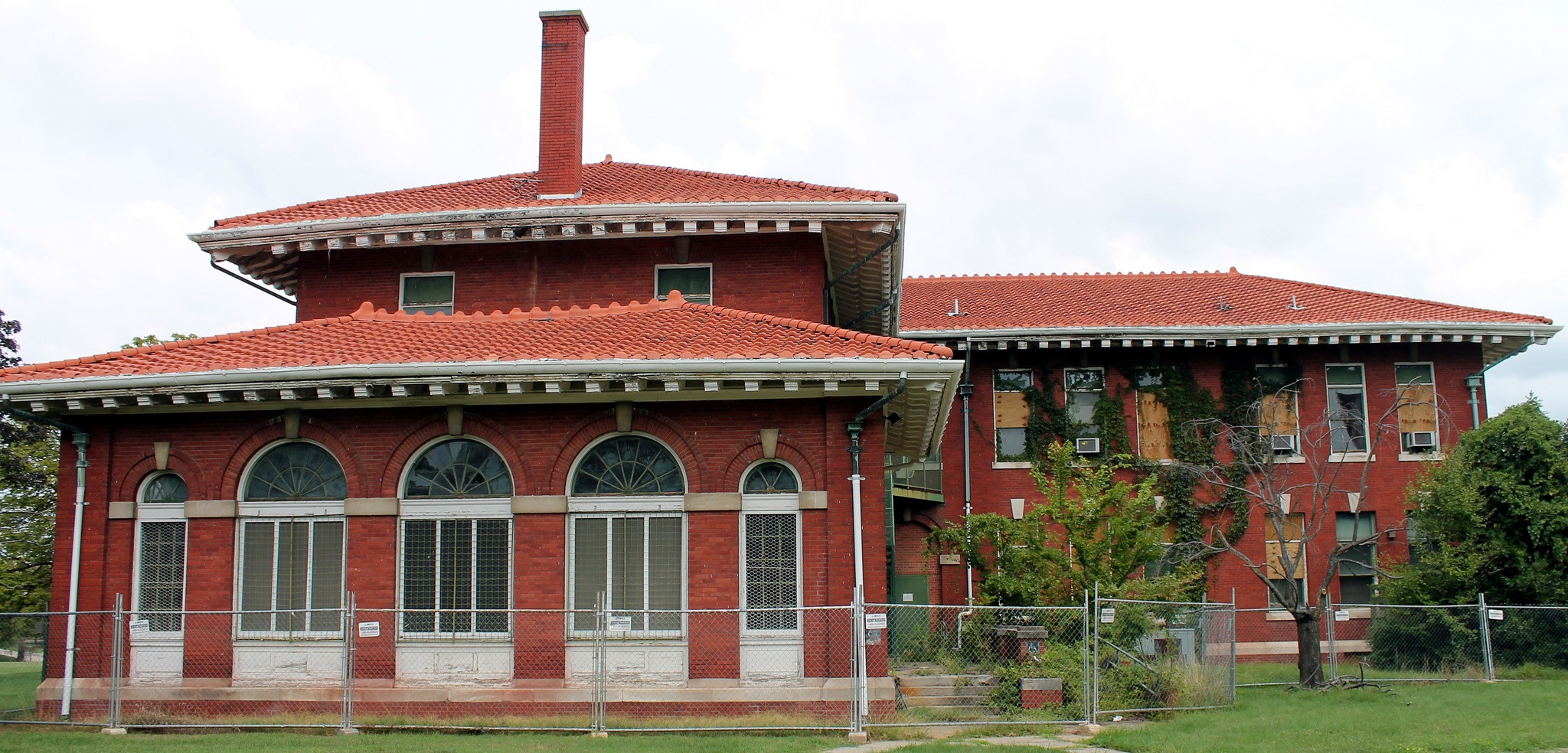
On Wednesday night, 28 days after tests revealed harmful bacteria in the water at St. Elizabeths, the city announced that its only public psychiatric hospital finally had clean water again.
But civil rights groups remain unsatisfied with the city’s handling of the water outage, which left hundreds of sick patients in a facility without clean drinking water for nearly a month. The Washington Lawyers’ Committee for Civil Rights and Urban Affairs, the American Civil Liberties Union of D.C., and the law firm Arnold & Porter LLP announced late Wednesday night that they had filed a federal class action lawsuit against D.C. Department of Behavioral Health Director Barbara Bazron, St. Elizabeths Hospital CEO Mark Chastang, and the District of Columbia over the “horrifying” conditions at the facility.
“I can’t overstate how egregious the conditions are at the hospital,” said Margaret Hart, Counsel at the Washington Lawyers’ Committee for Civil Rights and Urban Affairs. “A hospital without water cannot really function as a hospital.”
On September 26, a routine water test showed pseudomonas and legionella bacteria in St. Elizabeths’ water supply. For nearly a month, the hospital’s more than 270 patients and 700 staff were left to use bottled water for drinking and cooking, as well as hand sanitizer, disinfectant wipes and portable showers. Pseudomonas bacteria can cause severe infections in those with compromised immune systems, while legionella bacteria can cause Legionnaires’s disease.
In early October, officials and contractors worked to replace the hospital’s nearly 900 faucets and to chlorinate the St. Elizabeths water line. An initial attempt failed, with tests continuing to detect legionella bacteria in the water late last week. Still, officials continued to admit patients to the hospital and would not say whether they were considering moving patients offsite, particularly if further attempts to clean the water also proved unsuccessful.
City officials said late Wednesday evening that the hospital’s supply was declared safe, allowing them to resume normal water use. Bazron said in a statement that workers are reinstalling roughly 800 faucet handles, adding, “With the advice of water management experts, the Hospital is identifying possible sources of the bacteria and putting practices in place to prevent a reoccurrence.”
By Thursday morning, water had been completely restored to the patient units and the toilets, and crews were working on bringing it back to the kitchens, Bazron tells DCist. She says that DBH does not yet have a timeline as to when crews might be able to pinpoint the cause of the bacteria.
The civil rights groups expressed concerns that the District’s assurances about fixing the problem could be “overly optimistic.”
The lawsuit, filed in the U.S. District Court for the District of Columbia and brought on behalf of four St. Elizabeths patients, seeks a court order requiring the District to sanitize the hospital, restore all services, and to assess the needs of patients following the prolonged water outage. The complaint also seeks a permanent injunction requiring that the District craft a plan for the hospital in the case of future water problems.
“The District subjected some of its most vulnerable residents to appalling conditions, depriving them of basic human needs and jeopardizing their health, safety, and recovery,” Monica Hopkins, Executive Director of the ACLU of D.C., said in a statement. “It is now critical for the court to intervene to ensure this kind of thing never happens again.”
Throughout the water outage, the ACLU of D.C. and other advocacy groups were pushing the city to consider moving patients offsite, particularly as the days and weeks without water dragged on. Geriatric patients were of particular concern to Disability Rights D.C., an organization that has advocated for patients at St. Elizabeths. “I was just horrified, especially by the conditions in the geriatric unit. People in wheelchairs can’t be taken down to shower, so I talked to a man who hasn’t been able to wash his hair for a week,” Andrea Procaccino, a staff attorney at Disability Rights DC, told DCist earlier this week.
According to the lawsuit, plaintiffs reported cuts to treatments and services during the water outage, alleging that regular individual and group therapy sessions were scaled back or cut entirely, dentistry and podiatry services were put on hold, and activities, including art therapy and classes, were closed. One man had his therapy hours cut down from 40 a week to just 10, the complaint states.
The water outage also created unhygienic conditions, per the suit—the portable showers were not accessible to patients in wheelchairs, it says, and toilets were being flushed with bottled water, and only twice a day. Feces, urine, and menstrual blood sat in toilet bowls for hours, and sometimes overflowed onto bathroom floors, the lawsuit claims. The stress created by the lack of water also led to an uptick in patient violence and restraint and seclusion by staff, according to the complaint.
All the while, new patients were being admitted to St. Elizabeths.
Bazron declined to comment on the lawsuit specifically (the city generally does not comment on pending litigation). But she did say that patient care was never interrupted. Per Bazron, during the water outage, the hospital admitted 31 patients and discharged 34.
“The facility was certainly safe and there was no reason not to admit patients,” she says. “There was care for all the patients in the facility. They received the treatment they required and all of their personal needs were met.”
Bazron says the city has plans in place for moving patients from St. Elizabeths should it ever prove necessary, called the continuity of operations plan. A copy of the DBH plan online does not appear to be filled out, and does not outline the sites the city has in mind for evacuation of St. Elizabeths. Bazron declined to elaborate. She told DCist that the city has not displayed a lack of transparency in the crisis, despite the fact that it came to light through a report in the Washington City Paper on October 2.
During an appearance on The Kojo Nnamdi Show on Friday, Mayor Muriel Bowser publicly addressed and apologized for the water outage at St. Elizabeths. “I am deeply sorry that it took this many days to resolve,” she said. “And I can commit to making sure that the protocol for turning off the water in the first place or having it tested, just as fast as possible, is done should we ever encounter that problem again.”
Addressing criticisms that the city had lacked transparency about the issue, Bowser said on Kojo that “I would agree that we could have done a better job at the outset of communicating, and throughout.”
Civil rights groups have previously raised alarm over the facility’s conditions, facing scrutiny over the safety of its working conditions and allegations of patient abuse.
The water contamination at St. Elizabeths will be examined during a Nov. 20 oversight hearing on the Department of Behavioral Health, according to D.C. Ward 7 Councilmember Vincent C. Gray, who chairs the Committee on Health.
This story has been updated to include comments from the director of the D.C. Department of Behavioral Health, Mayor Muriel Bowser, and further detail from the lawsuit by the ACLU.