From a particular vantage point (say, Twitter), it may appear that what’s wrong with D.C.’s public services outweigh what’s right with them. But a new poll commissioned by the District of Columbia Auditor shows that District residents believe city services are significantly better overall than they were two decades ago. In fact, half of the residents responding to a recent survey said they were “excellent” or “good.”
That’s in marked contrast to twenty years ago, when just 15 percent of people surveyed rated D.C. government services as “excellent” or “good.”
In 1997, when the firm Belden Russonello Strategies questioned residents about their satisfaction with city services at the request of the city’s Financial Responsibility and Management Assistance Authority, the top concerns were crime and trust in city government (makes sense given the city’s junk bond rating at the time.)
Flash forward to this year, when city auditor Kathy Patterson released the results to a poll conducted by the same firm asking 1,210 people about city services. In addition to the 49 percent who rated them “excellent” or “good,” a little over a third rated them as “fair.”
Just 13 percent of residents , say government services are “poor” or “very poor.”
“(The research) tells you almost a surprising level of satisfaction with city services across all demographics, across all wards, even across income categories, and even across long term District residents,” Patterson tells DCist. “So one of the takeaways from this is sort of underscoring how much happier people are with services generally.”
Patterson, who served as the Ward 3 councilmember from 1995 to 2007, notes that the city has spent the last couple decades trying to get in the financial position to improve its relationship with residents.
“Starting in the mid-90s, when the city was nearly bankrupt, those of us who were in elected office then made the really tough decisions to get the city back into black ink. And, I think that’s one of the important contexts to keep in mind when we look at where the city is today,” she said. “It is a much wealthier city, but it’s a much more financial secure city from the standpoint of having revenues coming in and being able to make some of these spending priorities, like for affordable housing.”
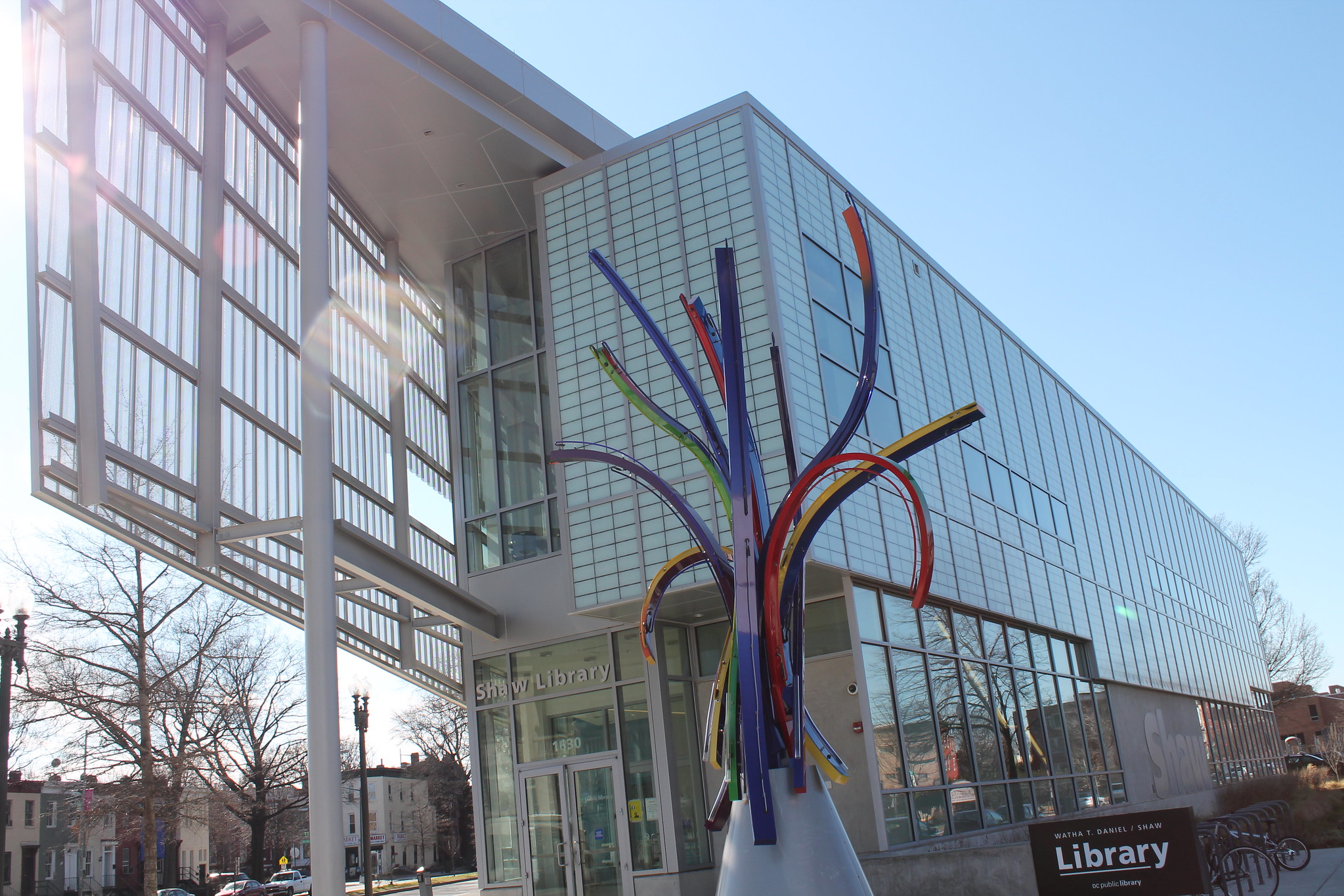
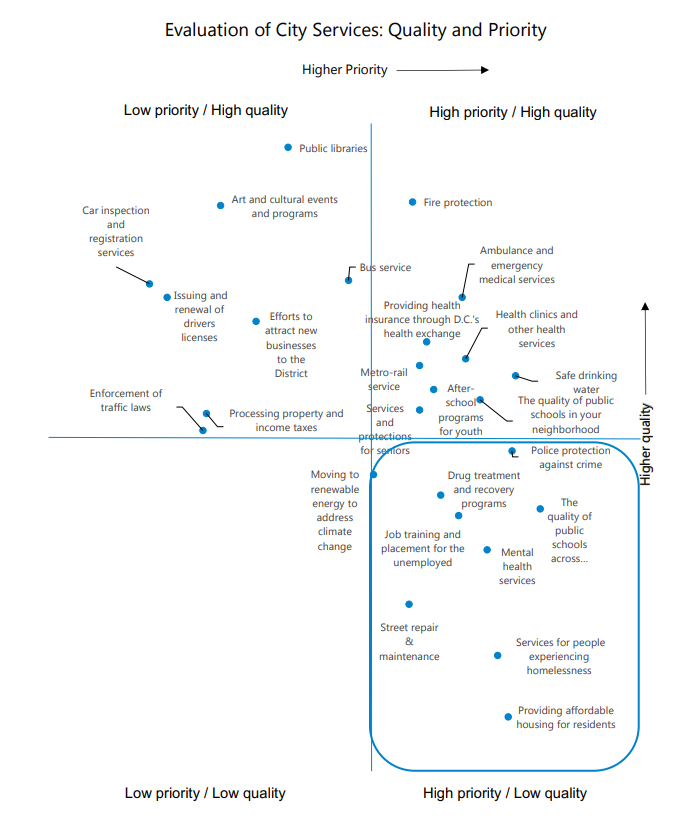
Of the 26 services the firm asked residents to rate, they said they were most satisfied with public libraries, fire protection, art and cultural programs, and bus services.
They were least satisfied with affordable housing options, services for people experiencing homelessness, and infrastructure. Crime, mental health services, education, and employment are still among people’s top concerns.
Notably, overall satisfaction with Metrorail has dropped since the last survey: from 79 percent down to 52 percent.
While city services were rated more positively overall, the results showed that dissatisfaction with city services is highest among people who identify as African American; people who live in wards 7 and 8; and those with a high school education or lower or people with household incomes $15,000 or less.
Conversely, married people; males; people who identify as white or Latino; people ages 45 or older; residents with a postgraduate degree; people with an annual household income of more than $100,000; homeowners; people who have lived in D.C. for six to ten years; and residents of Wards 1, 2, 3, or 6 were more likely to say city services were excellent or good.
As D.C. becomes more expensive and residents get priced out of certain neighborhoods, it is unsurprising that across all demographics, the top priorities in D.C. now are gentrification and affordable housing, two issues that weren’t even mentioned in the 1997 survey.
Roughly 20 years ago, city officials were focused on balancing the budget and encouraging the kind of population growth and revitalization they believed were necessary to solve problems with government services.
During D.C. Mayor Anthony Williams’ administration, from 1999 to 2007, D.C.’s finances improved dramatically and the city attracted about 100,000 new residents.
While the city benefited from better finances and more investments, those same factors that improved quality of life in the District also aided gentrification, something Williams admits in an interview with Chuck Rosenburg in October on his podcast The Oath.
“This surplus creation of the public good and wealth has gone to rebuilding our human services agencies in D.C., rebuilding our schools in D.C., which go to our poorest and our neediest residents in D.C. This is because we revived the economy and finances of the District,” Williams said. “The downside yes, there has been displacement, particularly by rental properties being quote unquote “flipped.” I’m not a big fan, though, of, you know, going before the tribunal and confessing for my sins. I think we did what we had to do to improve the District’s finances.”