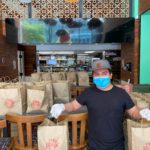


A team of first- and-second-generation Americans are behind Immigrant Food, a new fast-casual concept in downtown D.C. honoring the country’s “immigrant DNA and heritage” through cuisine. Global affairs specialist Peter Schechter, Seven Reasons co-owner Ezequiel Vázquez-Ger, and chef Enrique Limardo opened doors to their first collaboration earlier this week.
The group calls Immigrant Food, located in the shadow of the White House (no, this isn’t some New York Times-esque joke—the restaurant is actually one block away from presidential headquarters) a “cause-casual” restaurant. They envision their lunch spot as a place for advocacy and community partnerships with immigration NGOs as well as dishes that crisscross cultures. Schechter, a former long-time board member for José Andrés’ ThinkFoodGroup who speaks six languages, has a background in advocacy and political consulting. Immigrant Food provides a venue to marry his dual passions and to honor his Jewish parents, who immigrated to the U.S. from Austria and Germany.
“For a long time, the life I had with politics and advocacy and the one I had with restaurants were very separate things,” Schechter says. “At this moment, in which immigration is such a controversial and divisive issue in our country, I keep thinking of my parents. They walked off the boat with nothing. We believe celebrating immigration is something that is profoundly American.”
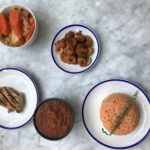
For the Venezuelan-born Limardo and Vázquez-Ger, the project comes on the heels of their smash hit Seven Reasons on 14th Street, recently named the best new restaurant in the country by Esquire. To “combine 20 restaurants in one” for Immigrant Food, Limardo says, was no easy task. He took a fast-casual fusion approach with nine pre-made bowl recipes ($12-$13.75), but think a bit more gourmet than Chipotle or Cava. Limardo researched spices and flavor profiles of more than a dozen countries represented by U.S. immigrants, then tested hundreds of recipes to cross-pollinate sweet, sour, and spicy ingredients. Each dish combines multiple cultures, including the Columbia Road bowl with spice-rubbed steak and pickled loroco flower buds to represent D.C.’s biggest immigrant populations.
“The idea was to pay tribute to the huge Ethiopian and Salvadorian communities here,” says Limardo. “They’re two very different cultures, but the berbere, which is one of the most common Ethiopian spices, combined perfectly with alguashte, one of the most popular dressings in El Salvador made from pepita seeds. It reminds you of a place but isn’t exactly like your grandmother’s.”
The Beirut and Beyond bowl, taking cues from the Middle East, Iran, and North Africa, pairs harissa hummus and kale with dates and preserved lemon. Stockholm to Dublin ties in salmon rillettes, arugula, pumpernickel croutons, and dried apricot from Ireland, Scandinavia, Poland, and Russia. House-made sauces—pesto, pho vinaigrette, smoky mango chipotle—are meant to douse specific bowls.
Instead of cocktails or soda, Limardo played with plant-based blended mylk drinks ($8-$9), which also combine flavors from around the world. They’re a “lighter and less sweet option that fills you up,” he says. The Pink Dragon takes coconut milk, dragon fruit, and blue agave from Southeast Asia. The Sesame Sparks uses a rare black sesame milk, medjool dates, and cacao from North and Central Africa.
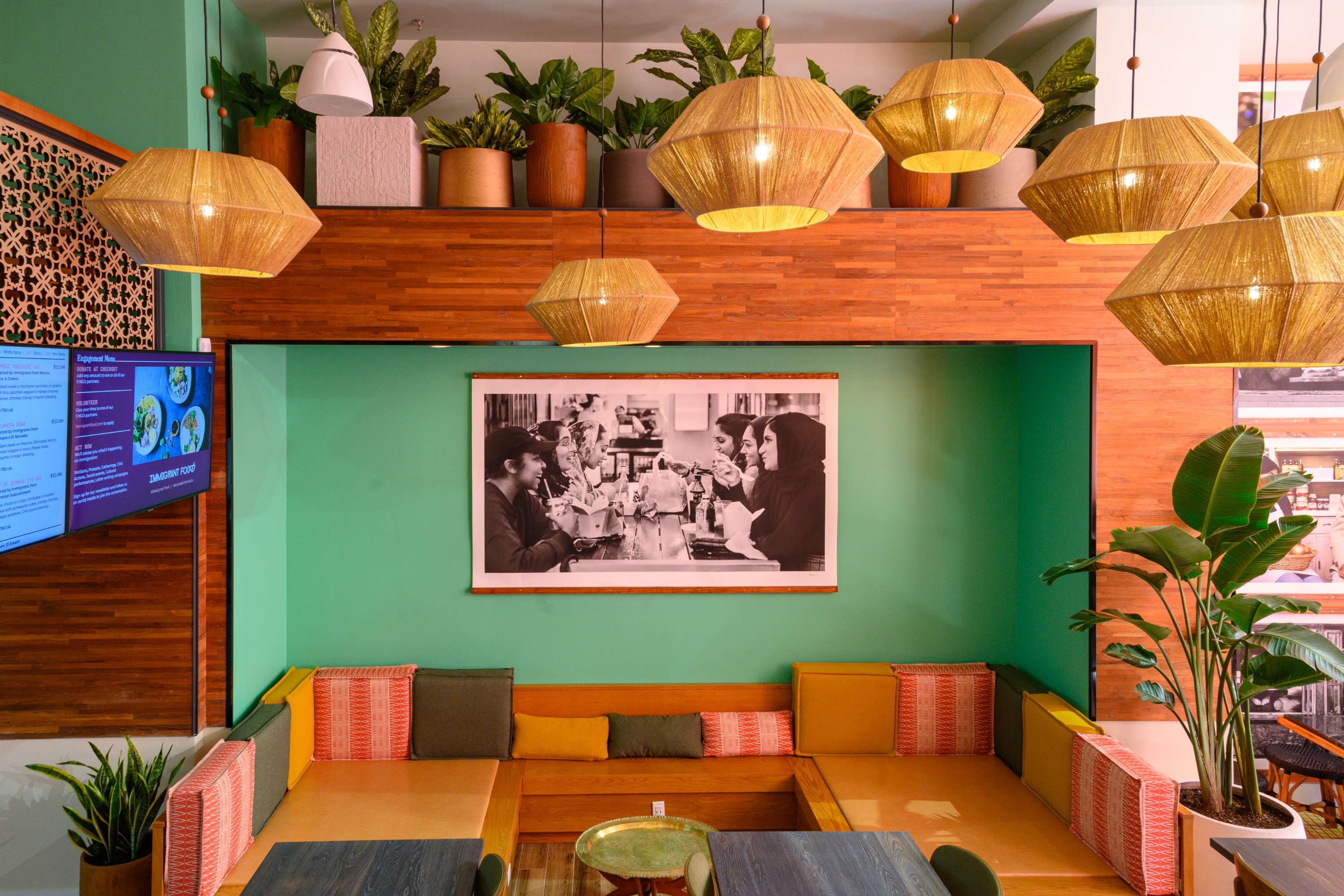
DesignCase’s Michelle Bove and Sommer Moore designed the two-level restaurant around warm hues, tapestries, a world map, and options for seating that are meant to mirror how a variety of cultures traditionally eat, according to Schechter—low tables for sitting cross-legged, high-top tables, benches for more communal meals. Bove is well-known for her architecture work at the popular restaurant Maydan, which draws its design from Middle Eastern food markets and also employs communal seating.
On the advocacy side, Schechter says it was important to him to also support today’s immigrants. Though he stresses that the restaurant isn’t inherently political, Immigrant Food is partnering with five local immigration NGOs: Ayuda, Asian Pacific American Legal Resource Center, Capital Area Immigrants’ Rights Coalition, Central American Resource Center, and CASA. The restaurant will serve as an additional meeting space for the groups to host workshops, meetings, and English classes.
The organizations “are in a moment of time where they’re really stretched for money, space, and volunteers,” Schechter says. “We consciously stayed local because we wanted to make as much of an impact as we can. The restaurant wouldn’t exist without this cause.”
To encourage customers to get involved, an “engagement menu” and the restaurant’s website encourage donations and list volunteer ideas and sign-up links to teach citizenship or financial literacy classes, provide translation or transportation, or give tours of D.C. Some of the restaurant’s touches feel less impactful than others: For example, a photo booth at the front takes selfies framed by the words “We’re all immigrants,” to cater to the social-media crowd.
Immigrant Food will also publish a monthly digital magazine called Think Table, spearheaded by director of communications and outreach Téa Ivanovic, to showcase news, videos, and facts surrounding immigration. Each month will focus on one central issue to help people make sense of the “preconceptions, mistakes, and prejudices in today’s debate on immigration,” according to Immigrant Food’s website.
The first edition addresses DREAMERs, the young undocumented immigrants protected by the Obama-era Deferred Action for Childhood Arrivals program. Immigrant Food’s opening coincided with the first day of the Supreme Court arguments around DACA, and whether to continue protections for an estimated 700,000 people.
Immigrant Food eventually hopes to expand beyond Washington. Any new restaurant, says Schechter, will be uniquely tailored to represent the immigrants of its location.
“Food has been a quintessential way that immigrants have shown their culture to Americans for so many centuries, to show what makes up home,” Schechter says. “That’s why a restaurant is a perfect way to do this.”
Immigrant Food is located at 1701 Pennsylvania Avenue NW. Hours are 11 a.m.- 7 p.m. daily.
This post has been updated with the correct photo credit for Elizabeth Sanjuan’s photos.
There’s No Paywall Here
DCist is supported by a community of members … readers just like you. So if you love the local news and stories you find here, don’t let it disappear!