Elliot C. Williams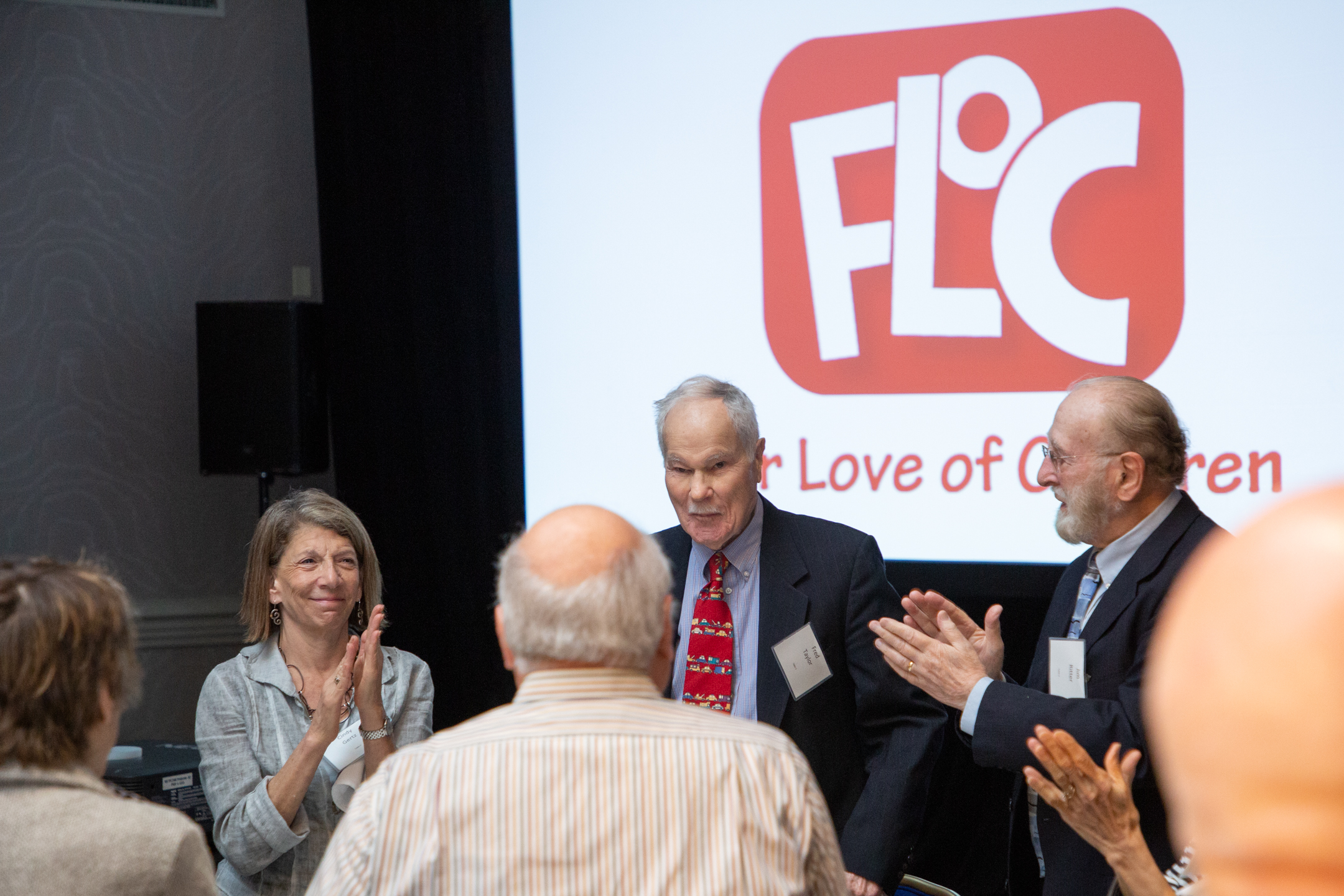
Rev. Fred Taylor cared about children. He cared about them so much that in 1968, he became the founding executive director of For Love of Children, a D.C. nonprofit that has helped over 10,000 kids in need over more than five decades. And he played a crucial role in shutting down an orphanage that was exposed for harboring abuse of hundreds of children in the 1960s and early 1970s.
Taylor passed away on Saturday, November 23, after a battle with cancer, according to current staff at FLOC. He was 87.
The civil rights activist Rev. Gordon Cosby started FLOC in 1965, and he quickly tapped Taylor, an early volunteer, for the director role.
Cosby and Taylor put Junior Village in their crosshairs. The public children’s home was visited by the likes of Jacqueline Kennedy and Martin Luther King Jr., but reports of overcrowding and abuse began trickling out.
Taylor began making regular visits to the 20-acre institution in the late 1960s. What he saw at the Southwest facility was harrowing.
Earlier this year, The Washington Post spoke to some of the people who spent time there as children. Here was one account:
“Nick Robinson arrived in 1965 when he was 9 and saw a crowd of boys gathered around the dorm’s bathroom. When he pushed his way through, he witnessed an older boy forcing a younger boy to perform oral sex.
‘It was horrifying,’ said Robinson, now an English professor at Claflin University. ‘I started sleeping with a pair of scissors under my pillow and did everything within my power to avoid instances of sexual abuse.’
Kids who were considered disobedient were administered massive doses of Thorazine, a heavy sedative, to prevent them from acting out, investigations eventually revealed. Robinson said that some of the worst counselors would drug children and then sexually assault them.”
A counselor at Junior Village spent years documenting such accounts and shared them with Taylor, who connected him to an editor a the Washington Post. The ensuing four-part exposé in 1971 led to a Heywood Broun Award and a congressional investigation.
But Taylor’s work didn’t stop there. FLOC worked to get children out of the facility—finding foster parents and starting new group foster homes. His main goal was to “develop the FLOC approach,” he wrote in a 1968 op-ed in the Post, and “adequately meet the needs of [Washington’s] homeless and dependent children.”
In a 1971 interview with the Washington Post, Taylor criticized the way the Department of Public Welfare screened children in the foster care system at the time. Age, income, and house size were secondary to whether the couple could provide a child with a “personal relationship and loving care,” Taylor said.
Junior Village finally closed in 1973.
Born in Kentucky and educated at Yale Divinity School, Taylor spent the early 1960s as a Baptist minister in suburban Virginia. He saw Martin Luther King Jr. speak at the 1963 March on Washington, and it forever changed his path to focus on abject poverty in cities. Taylor describes that path in a 1999 book, Roll Away the Stone: Saving America’s Children.
“If we only attack current demons like drugs and persistent poverty, we may get what asked for and find that it is something worse…We can do better,” he writes. “The way to begin is to generate a compelling vision for our community, nation, and world and then experiment our way toward its realization.”
Renée-Lauren Ellis, chair of FLOC’s board of directors, says that although Taylor had reverend in his title, “He was just Fred” to everyone he encountered in his more than 30 years as director and board member. Ellis remembers starting as a FLOC volunteer and discovering “Fred Taylor Dollars,” small Monopoly-money-sized bills with Taylor’s face on them, awarded to students for hard work.
“Fred’s energy was so calming,” says Brandelyn Anderson, FLOC’s current executive director. “It didn’t matter how crazy I came into the room—by the time I left, I was like, ‘OK, it’s going to be fine.’ He was an incredible listener, but was also someone who wasn’t afraid to tell you the truth.”
Anderson credits Taylor with creating the organization as it is today—a nonprofit that now provides education and career development for nearly 600 students annually and, she hopes, will soon serve 1,000 per year.
Taylor is survived by his wife, Sherrill, his four children—Sarah Harris, Fred Chapman Taylor, Grace Taylor, and his stepdaughter Joycelyn Kovalenko—and eight grandchildren.
There’s No Paywall Here
DCist is supported by a community of members … readers just like you. So if you love the local news and stories you find here, don’t let it disappear!