Matt Blitz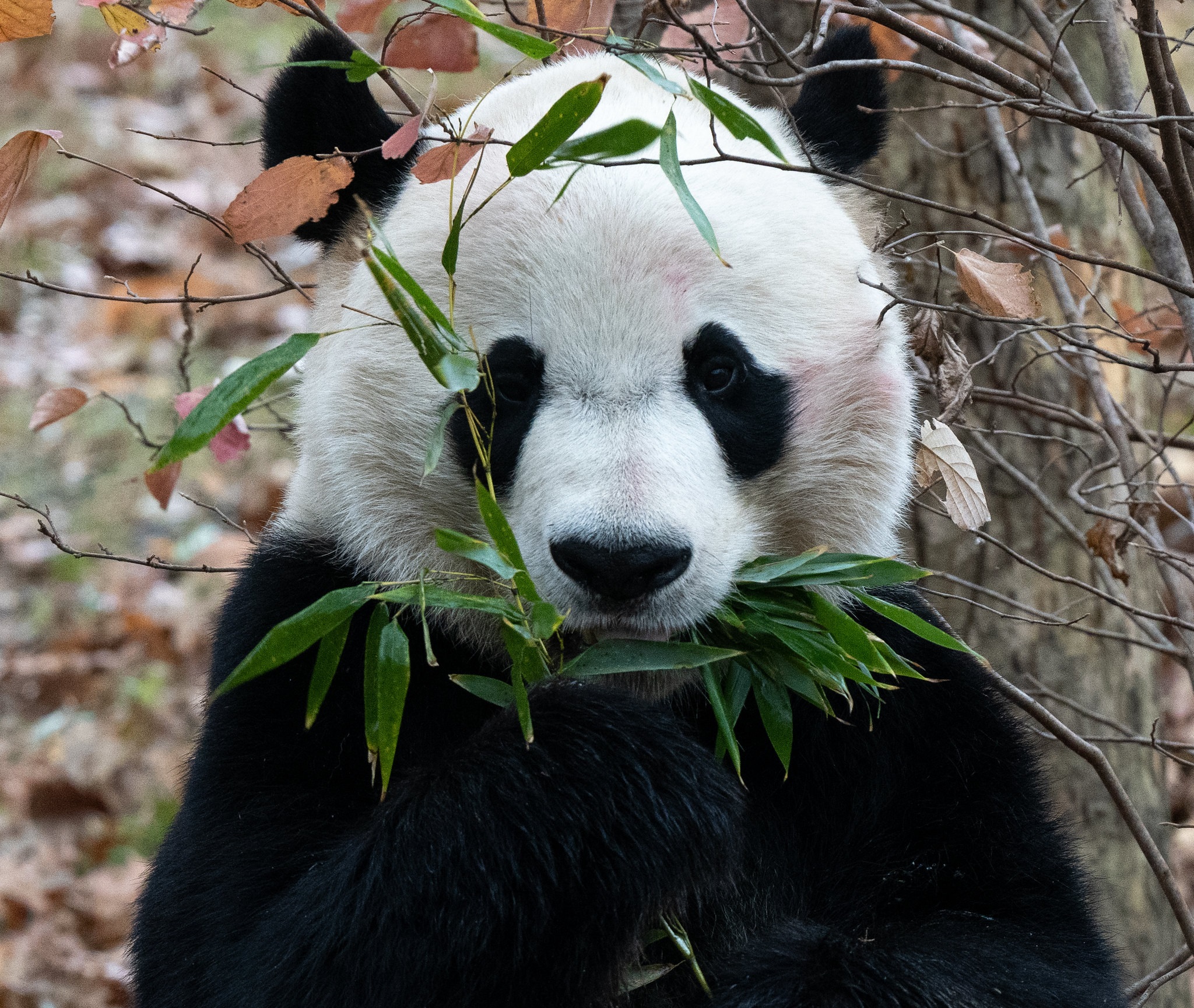
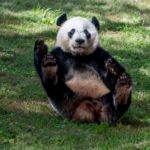
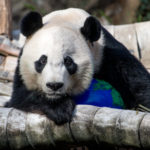
Like a lot of four-year-olds, all Bei Bei needed was the promise of treats to get through his long plane ride. “I brought some sugar cane,” says Laurie Thompson, the Smithsonian National Zoo’s assistant curator of giant pandas and one of Bei Bei’s travel companions on the 16-hour-long trip to China. “Every time we went back there [to see him], we would give him a little bit.”
On November 19, four-year-old Bei Bei departed Smithsonian’s National Zoo and boarded the FedEx Panda Express (a panda-dedicated 777F aircraft) for his long-awaited move to China under a lease agreement between the two countries. He was accompanied by the zoo’s chief veterinarian Don Neiffer and keeper Thompson. While the trip was long, the beloved panda did what many of us do lengthy journeys. “Basically all he did was eat and sleep,” says Thompson. “He’s a pretty relaxed guy.”
Bei Bei is the third panda in less than ten years to go back to China, after his brother Tai Shan and sister Bao Bao before him. While tourists and locals alike are broken up every time the playful pandas leave D.C., this has always been part of the deal: according to an agreement between the National Zoo and the China Wildlife and Conservation Association, any panda cubs born in D.C. must go to China when they turn four years old.
This time around, Thompson says that Bei Bei had a calm journey across the ocean, and has already begun adjusting to his new life. After their trip, she and Neiffer stayed in China for a few days to confer with Bei Bei’s keepers and help him transition without too much stress.
The panda-keeper trio took off from Dulles Airport mid-day on Tuesday, November 19 with Bei Bei in a crate and the two keepers in jump seats near the front of the plane, Thompson says. They checked on him often, bringing bamboo, apples, carrots, sweet potatoes, and sugar cane. When the plane landed in China on Wednesday night, they were whisked away to Bifengxia Panda Reserve in Sichuan province where they were greeted by the cheers of the staff. Despite (or perhaps because of) the humans’ enthusiasm, Bei Bei was a bit reluctant to come out of his transportation crate, per a blog post from the CWCA. Unsurprisingly, it took some bribery with more treats to get him to move.
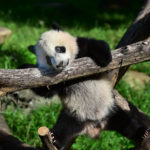
Thompson tells DCist that she spent the next few days giving advice and tips to Bei Bei’s new Chinese keepers. She says what separates Bei Bei from the other pandas is his intelligence and how he socializes with his caretakers. “He would always want to know what we [keepers] were doing,” says Thompson, “He would climb trees to look for us.” In fact, he found tricks to do this, something that she warned his new caretakers about. “He would actually move his toys to the door, stand up, and climb on them… to get to the top of his doors. We’ve never seen a panda actually do that before,” says Thompson. “I did tell [Bei Bei’s new keeper] to not have anything too big in his exhibit so that he could climb out.”
Before her departure, Thompson gifted Bei Bei something special: His red ball. There was some concern that his favorite cuddle toy wouldn’t get through Chinese customs, but Thompson put it in her personal suitcase to ensure it would make it, she says. It did, and she was able to provide the panda a keepsake from his first home.
It was emotional, says Thompson, saying goodbye to Bei Bei but she was lifted up by the fact that he was already adjusting. “When I saw him on [that] last day and he was doing so well… being his normal self, I felt good that he was happy there,” says Thompson, “So, it wasn’t as bad as thought it was going to be.”
Back in D.C., mom and dad are enjoying the perks of their empty nest: Mei Xiang and Tian Tian got access to the yard that was previously reserved for their cub.
With Bei Bei’s departure, the future of pandas at the National Zoo gets a little more uncertain. Mei Xiang and Tian Tian (both of whom live at the zoo on lease), are getting older and reaching the end of their reproductive lives—it’s unclear as of yet whether the zoo will ever have another cub.
Giant pandas have lived at the National Zoo since 1972. The story goes that, at a dinner between leaders of the U.S. and China, First Lady Pat Nixon told the Chinese Premier Zhou Enlai about her visit to the Peking Zoo, specifically how “cute” the black and white bears were. Enlai responded with a trade proposal: two Chinese giant pandas for two American musk ox. It was a sweetheart deal and an example of “panda diplomacy.” In April 1972, the National Zoo’s first two pandas, Ling-Ling and Hsing-Hsing, arrived in D.C. and melted hearts.
Pandas are notoriously hard to successfully breed in captivity, and Ling-Ling and Hsing-Hsing were no exceptions. While they did produce five cubs, none survived more than a few days. Both adult pandas died in the 1990s, but another pair—Mei Xiang (female) and Tian Tian (male)—arrived in D.C. in 2000. The original deal for the pandas was for 10 years for $10 million. In 2005, the couple had their first cub together, Tai Shan (commonly called Butterstick). Under the agreement lending Mei Xiang and Tian Tian to the zoo, once a panda cub reaches the age of four, they must be returned to China to participate in a breeding program.
The Smithsonian National Zoo’s current agreement with the CWCA runs through December 7, 2020, meaning Mei Xiang and Tian Tian will be residents at the zoo at least until then. According to National Zoo spokesperson Devin Murphy, negotiations haven’t started yet to keep them here beyond that date. As for the potential of more cubs, at 21 years old, Mei Xiang is reaching the end of her reproductive life cycle, but the National Zoo is quick to point out that older pandas have successfully had cubs before.
Here’s to hoping that the panda party that began nearly five decades ago continues beyond 2020.
There’s No Paywall Here
DCist is supported by a community of members … readers just like you. So if you love the local news and stories you find here, don’t let it disappear!