Elliot C. Williams

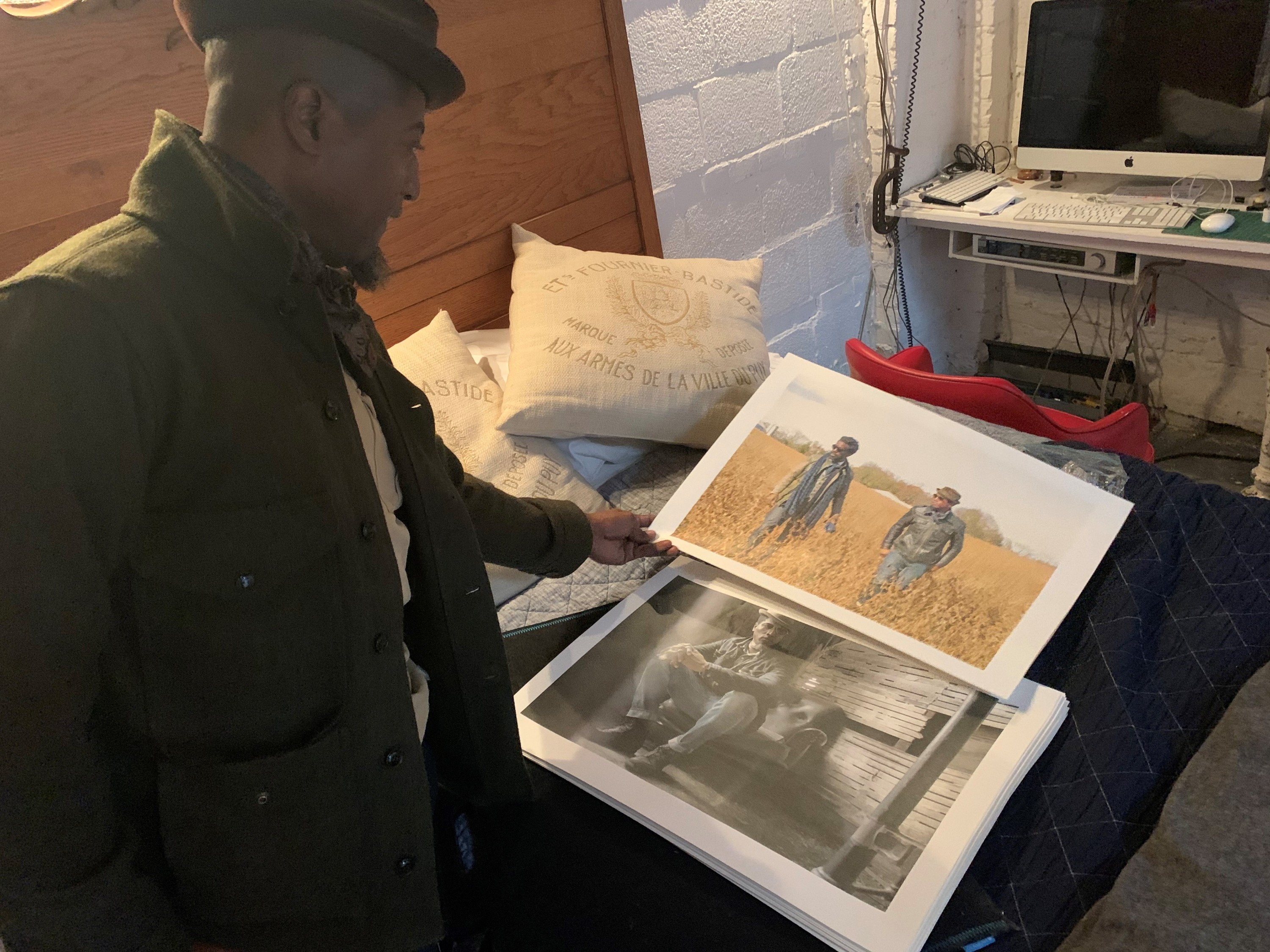
It’s a mild Sunday afternoon in December, and Steven M. Cummings is relaxing in his converted carriage house in a back alley off H and 8th Streets NE. The cozy space has a loft, self-made art on the brick walls, and a ton of cameras he’s used over the years. He bought the building in 2005 and rents the studio space to local photographers. In a room next door, guests are staying in a space he and his wife list on Airbnb.
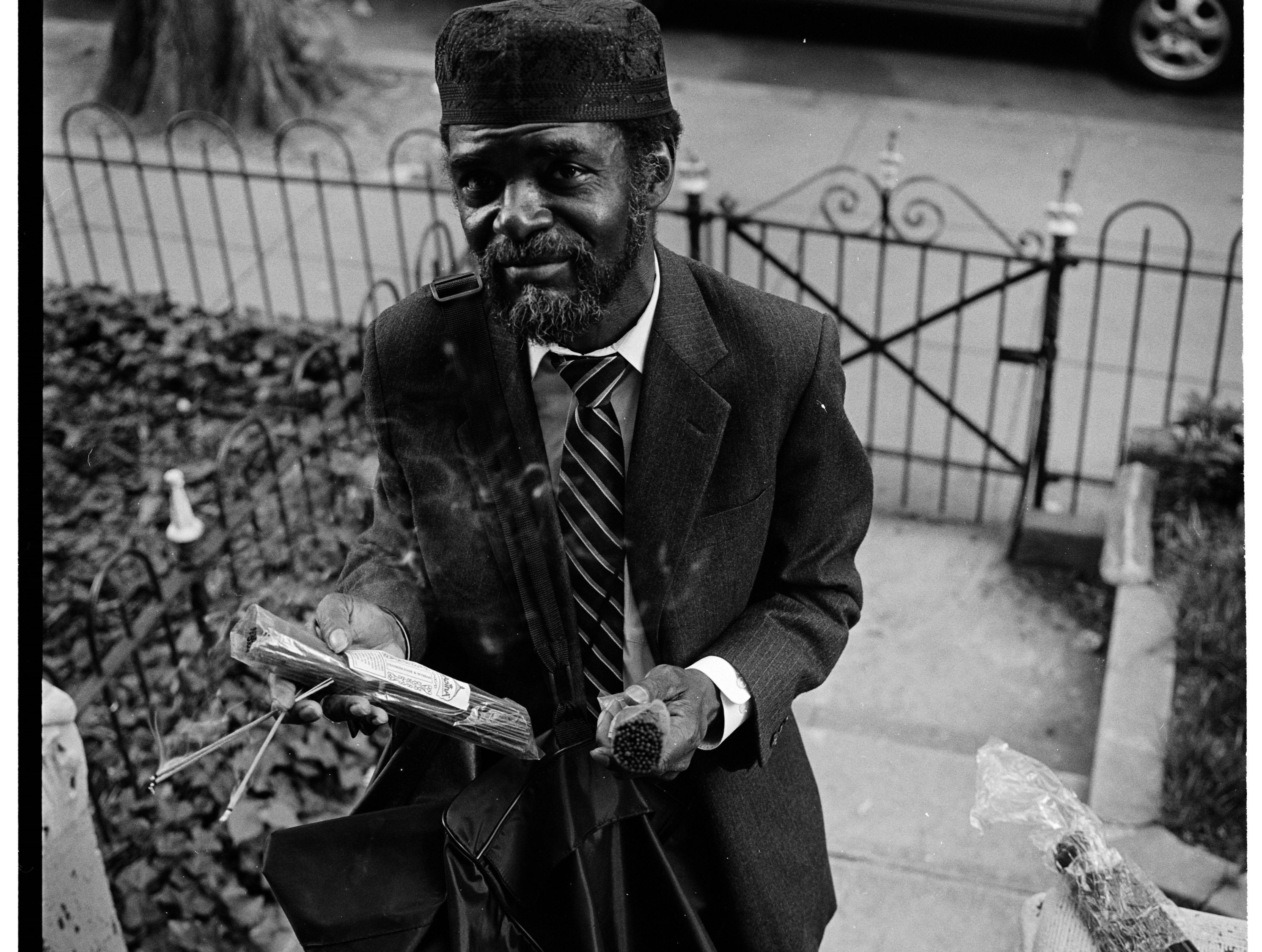
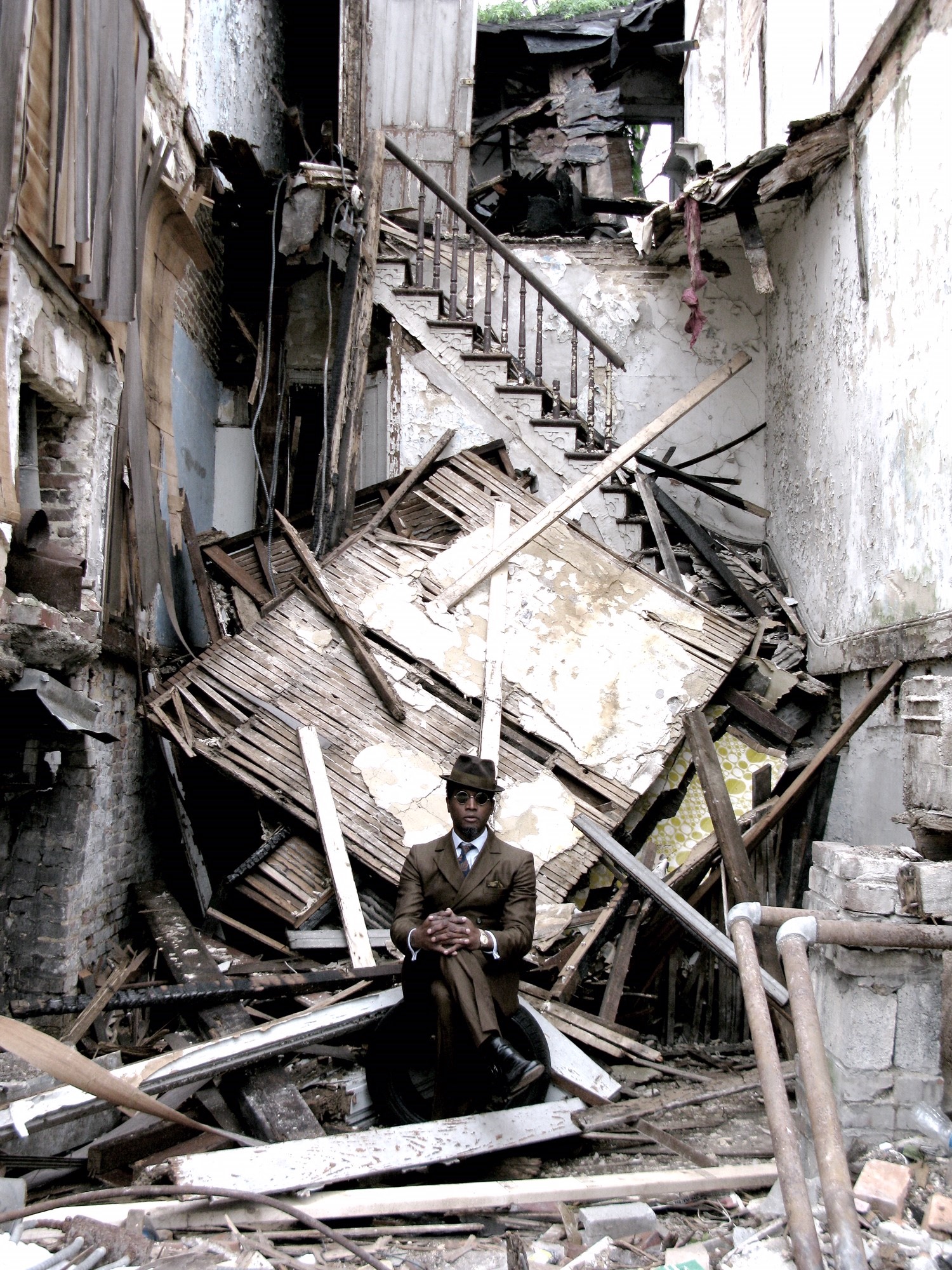
Cummings, 54, mostly works on self portraits and is trying to “get into the art world” these days, but for more than a decade, he spent his time capturing the everyday life of D.C.’s black community.
For the last three years, Cummings has been posting his photos from the 1990s and early 2000s to his Instagram profile @chocolatecityrip. He first got the idea to post the photos on Instagram in January 2016 after sifting through thousands of negatives from his early days living in Shaw and seeing something special. (He’s since moved to Bloomingdale).
“There was no real value in the work when I first shot it. No one asked to see them or did any shows for it,” Cummings says. “When I looked back on the work, I realized I captured the last part of the Chocolate City.”
The Instagrammed depiction of demographic change in Washington isn’t just an artist’s fantasy. A March study revealed that D.C. has had the highest percentage of gentrifying neighborhoods in the U.S., with an estimated 20,000 black residents being displaced from 2000 to 2013. Chocolate City was real, with a black population of 71.1 percent in 1970, compared to 48.4 percent in 2015.
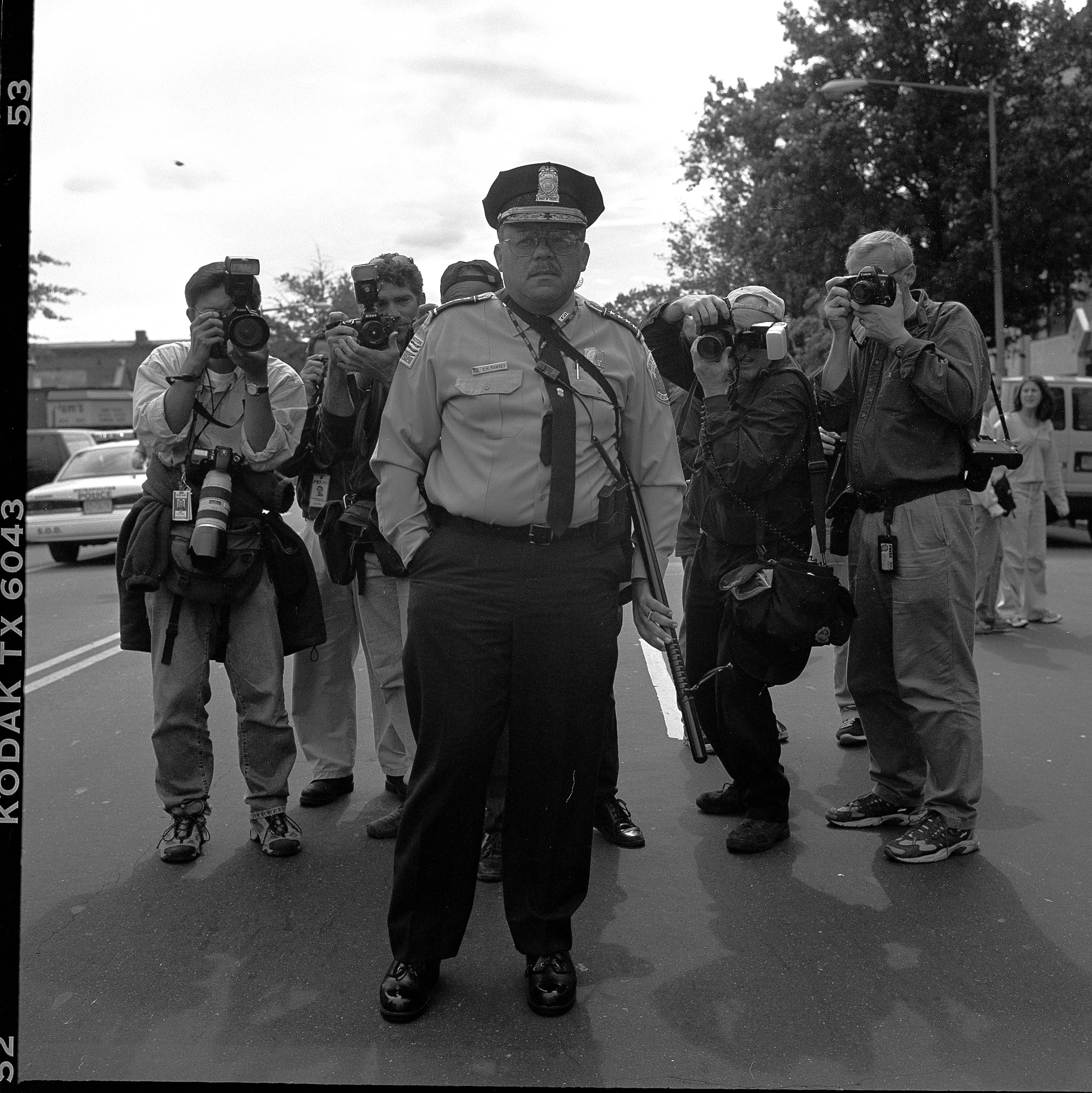
Cummings’ account quickly gained a modest following, and the comments reflect the power of his work (“Incredible image! Timeless.” “Beautiful.” “Thank you for sharing your photos with the public!”) Cummings tags the photos with their current locations—for instance, his first photo in the collection is at Mount Vernon Square near what is now the Convention Center.
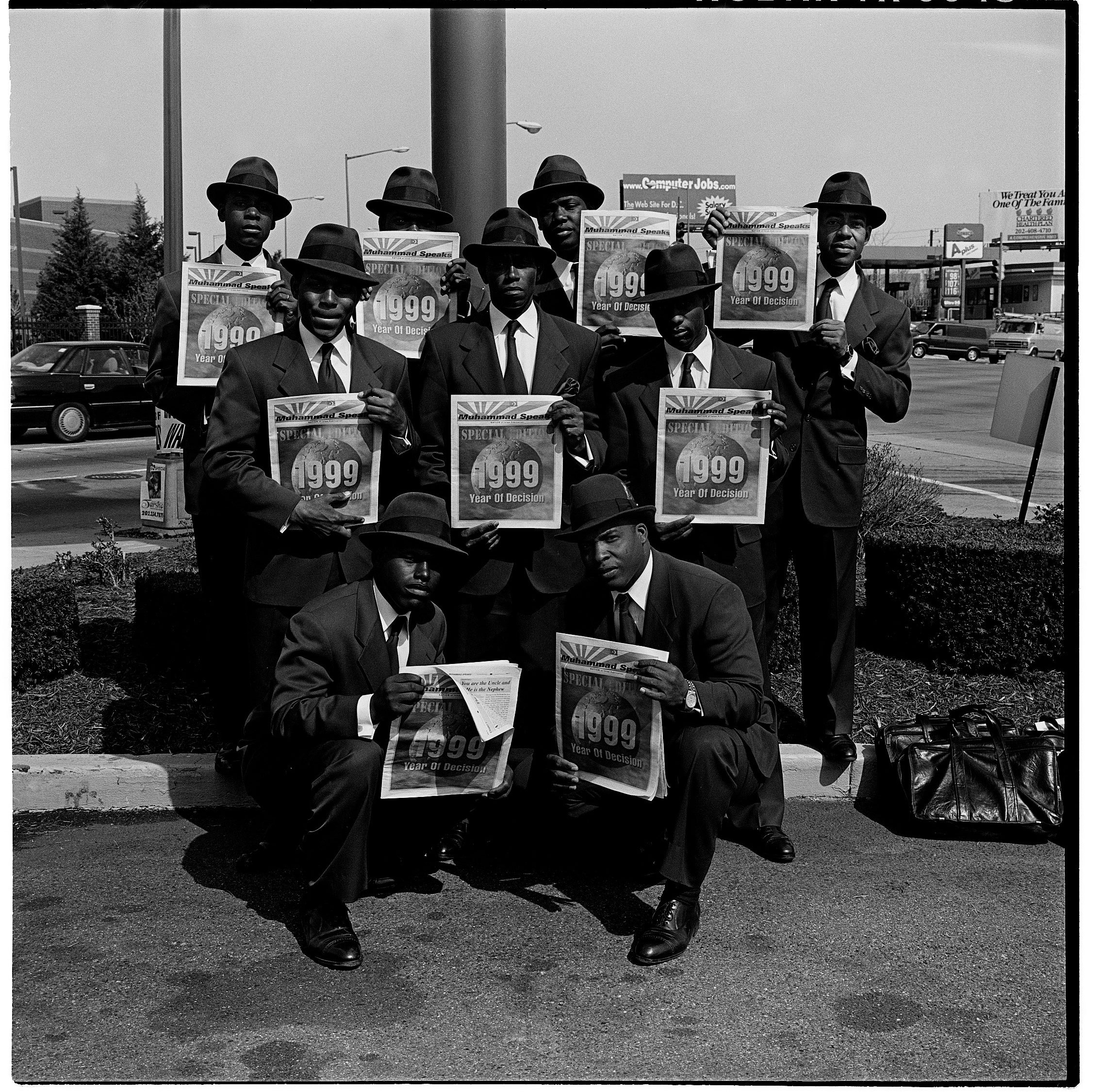
For another image taken in 1999 at New York and Florida avenues NE, he remembers asking a group of men selling newspapers if he could take their photo. At first, the men ignored him, until he came back and showed the leader of the group his portfolio.
“He said, ‘Oh wow, these are great.’ So he lined all of them up, and that’s how I took that picture,” Cummings says. “Then, one day, I told them I had a picture for them, and all these guys, like 20 guys, came to my house knocking on my door to collect their picture … Lots of people at Steven’s house.”
Cummings hasn’t posted in several months, as he sees the account as more of a lasting exhibit than an ongoing project. While the images have a certain timelessness to them, Cummings’ work is decidedly from a different era—the black and white imagery doesn’t leave that up to question. At first, he captured photos in black and white for practicality since he couldn’t afford a camera that shot in color. But then, he found that he could capture the realities of life in just two tones.
“I had this idea to capture just the strength—not rich, not poor, just beauty,” he says. “You just always see these extremes of [the black] community, you know? Not the regular lives of people.”
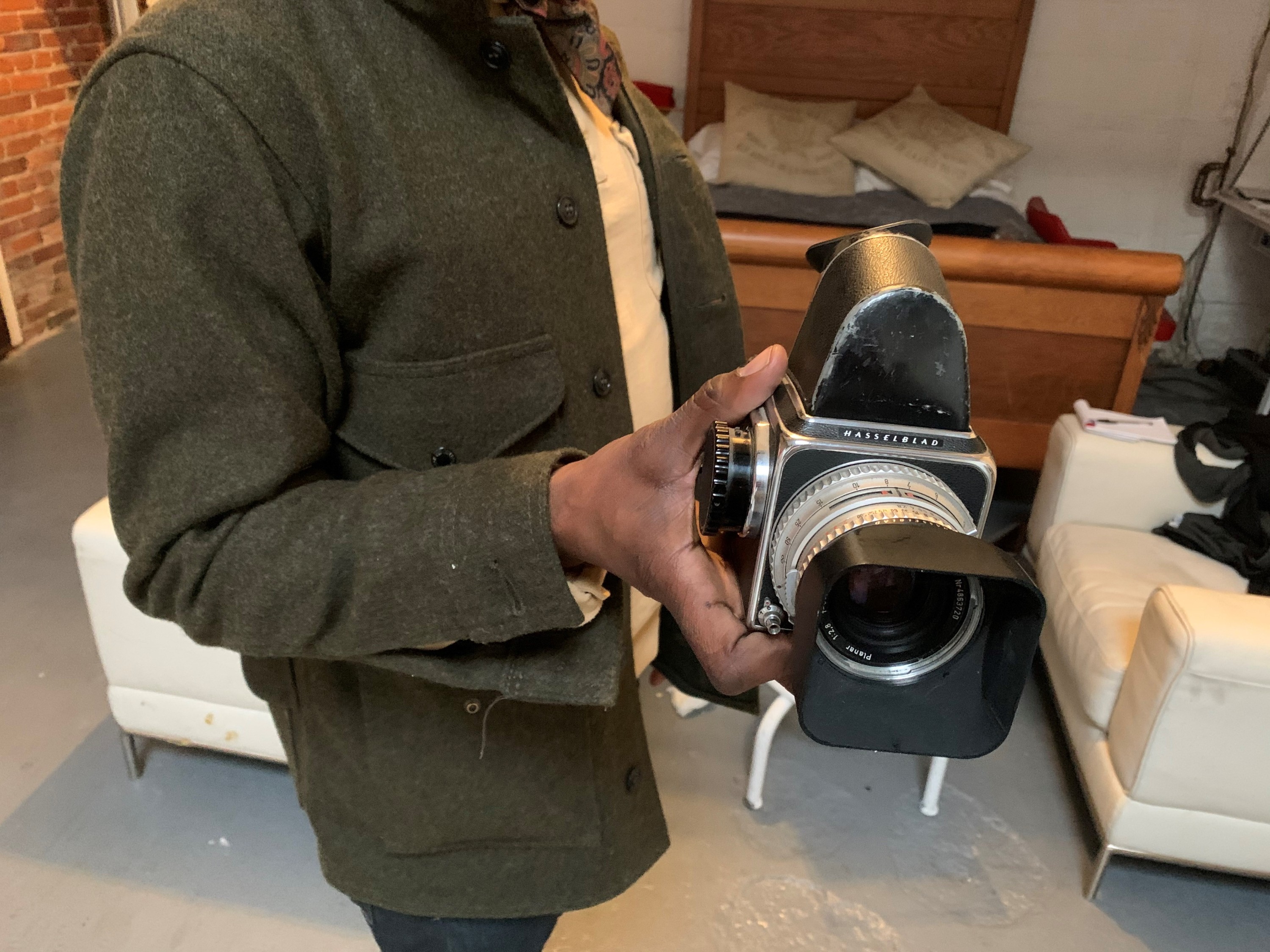
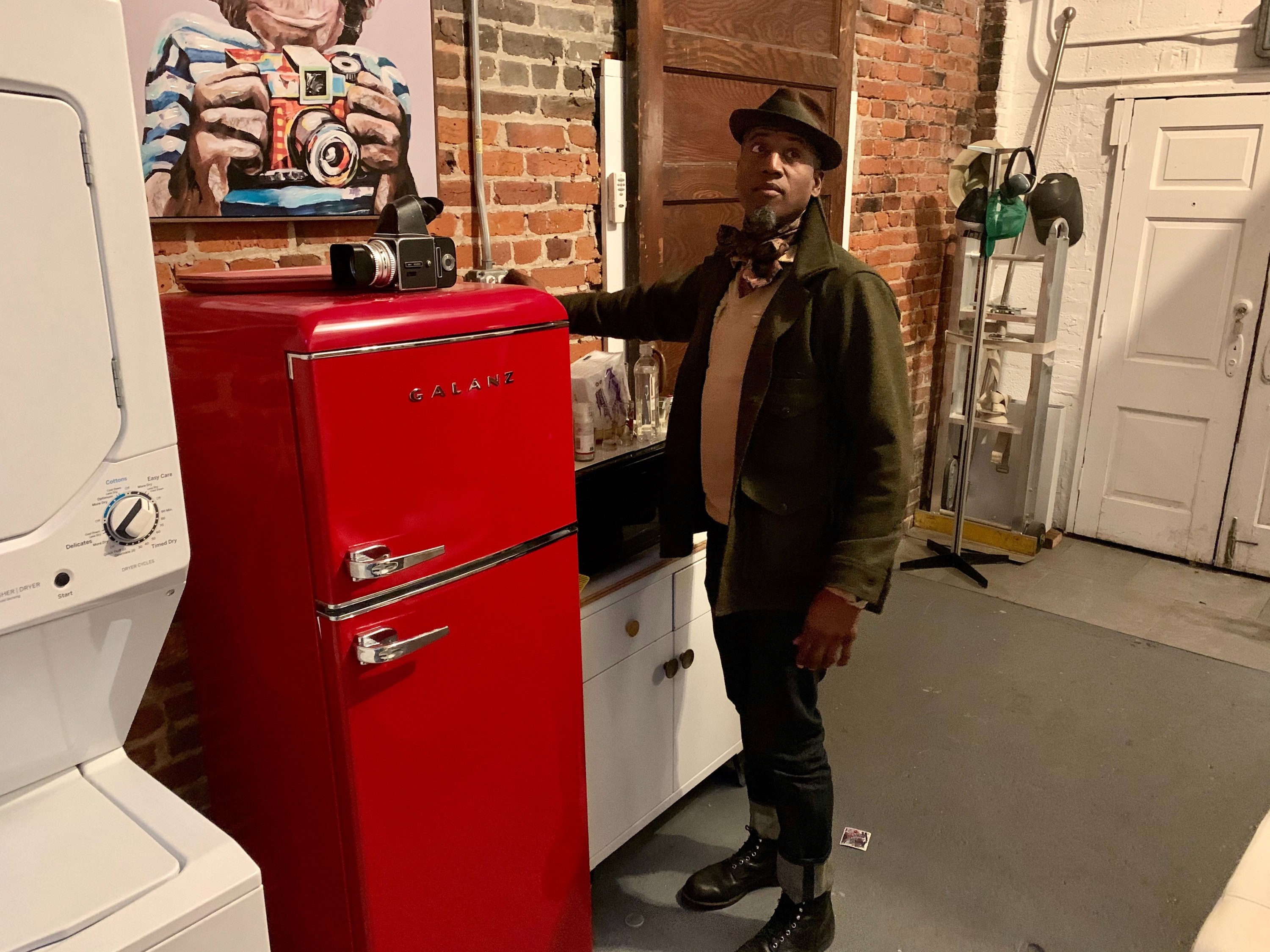
Cumming was born in Okinawa, Japan where his father—a D.C. native, Army colonel, and Bronze Star recipient—was stationed. He went to elementary school in Germany and graduated from high school in Seoul, South Korea. Cummings’ parents bought cameras for him and his siblings so they could remember their travels throughout the world.
The gift sparked an early interest in photography for Cummings, who went to to McNeese State University and transferred to Louisiana State University, where he took his first formal photography classes. After graduating in the summer of 1990, he moved north to D.C.
When he started out in D.C., Cummings says he was like a fish out of water. Growing up on military bases, he’d never lived in a predominantly black neighborhood before. With that outsider’s perspective, he captured legendary graffiti artist Cool Disco Dan, churchgoers in their Sunday best, and city life at a different speed.
Cummings’ first jobs in D.C. in the 1990s were hit and miss. First, he developed film for a couple in Arlington. Then, he worked as a photographer’s assistant and took shots of every commercial building in the District, but lost the job after misidentifying some of the addresses.
His first application to the Smithsonian went unanswered. But years later, the Smithsonian Anacostia Community Museum called and offered him a staff photographer gig, a job he had for about 10 years. His work has been shown here and there around the District, and is featured in an anthology of black photographers.
Cummings is now building a bigger studio in Baltimore and has his sights set on new goals—namely, figuring out the business side of being a self-sustaining artist. But as he looks around his H Street digs, he’s a bit sullen, as if he’s searching the room for memories of a world that once was. Chocolate City may be gone, but D.C., in all its complexities and changes Cummings has witnessed over the last two decades, is still his home.
“I had these photographs that represented what it was in the 90s, and I came up with the term later on—Chocolate City Rest In Peace—because it was over,” he says. “It was a short run, but it was a run.”
There’s No Paywall Here
DCist is supported by a community of members … readers just like you. So if you love the local news and stories you find here, don’t let it disappear!