Martin Austermuhle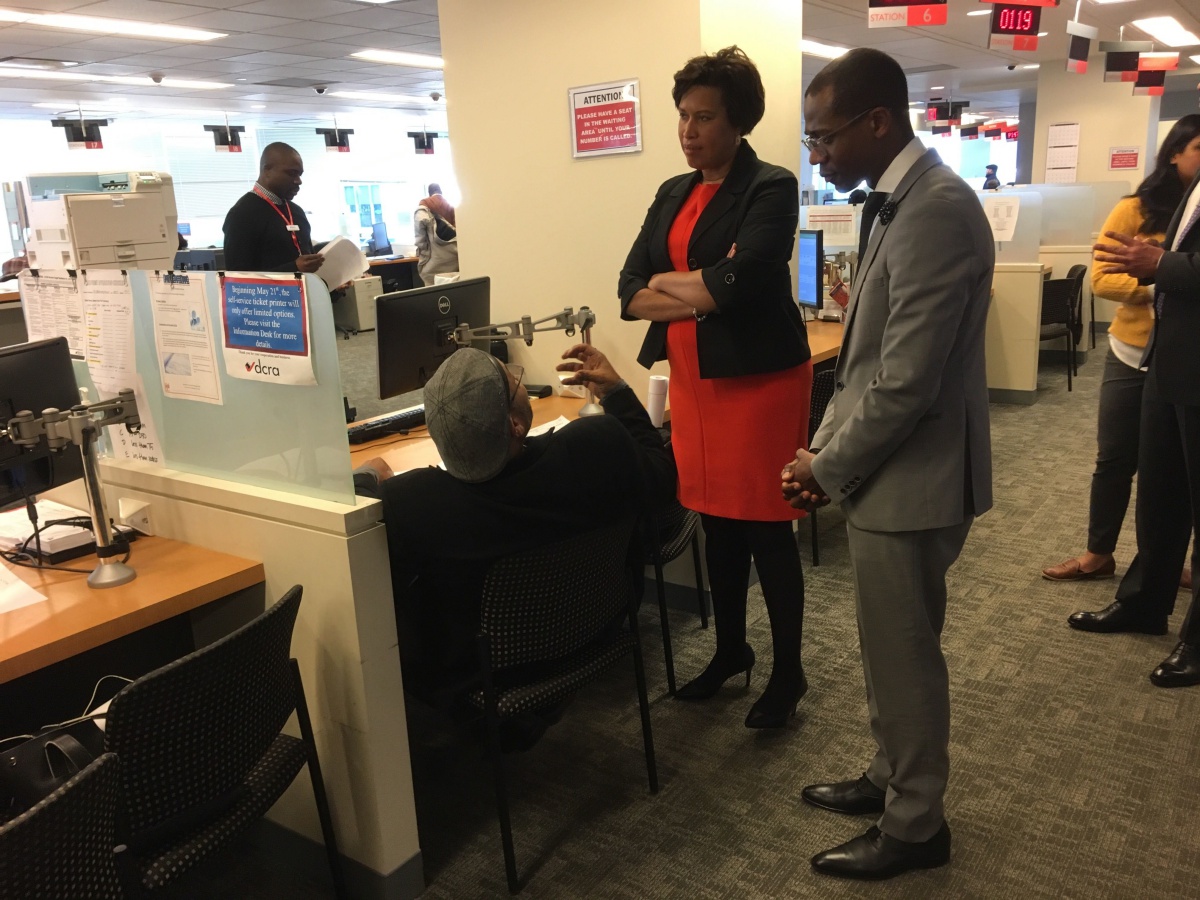
It’s not often that a D.C. government agency goes on something of a massive hiring spree. But that’s exactly what the Department of Consumer and Regulatory Affairs has quietly done in recent months, training hundreds of new inspectors to scour the city for everything from illegal construction to dangerous housing conditions.
But these inspectors aren’t full-time employees—they’re contracted workers that the agency’s head has described as Uber for property inspectors.
The initiative comes as DCRA’s new director is in the midst of what he says is a wholesale transformation of the oft-maligned agency. But DCRA is also facing intense criticism for failing to take steps that may have prevented a fire in a Kennedy Street rooming house that killed two people—including nine-year-old Yafety Solomon.
That incident has revived a push at the D.C. Council to split DCRA into two separate agencies: one to handle business licensing, the other to police housing conditions and illegal construction. That bill is getting a hearing today.
The new inspectors are part of a pilot program launched by director Ernest Chrappah this year. Instead of beefing up full-time DCRA staff, Chrappah invited normal residents to get trained and certified on buildings codes and housing inspections.
Some 700 people signed up for training earlier in the fall, 133 have since been certified, and 29 are already on the ground as “on-demand” inspectors. Unlike traditional DCRA staff inspectors, these on-demand inspectors dispatched only when need arises—including after hours or on weekends—to check out a vacant building or inspect living conditions in a questionable residence.
When Chrappah likened the concept to Uber, but for inspectors in hearing before the council earlier this year, Ward 1 Councilmember Brianne Nadeau said the idea seemed “so crazy it could work.” Other people have referred to them as “citizen-enforcers,” those friendly neighbors who are also empowered to write someone up for running an illegal rental or a developer illegally flipping a rowhouse.
Speaking to DCist, Chrappah says the new resident-inspectors have allowed DCRA to increase its capacity—and quickly.
“We have 68 [staff] inspectors who oversee 90,000 inspections annually,” he says. “The demand is expected to be at 150,000 [inspections]. The city is booming, so we had to figure out a way to match the demand with the supply. There is a shortage of construction workers in general, so we couldn’t hire our way out of the problem. We had to incubate a way to have that supply.”
One of those new on-demand inspectors is Andre Allen, 42, a home inspector who also runs a property maintenance company. He started the process—18 hours of classroom training, followed by field work and tests—in September, and recently became one of the program’s first certified resident-inspectors. He’s conducted almost two-dozen inspections so far, some of illegal construction and others of housing conditions. He works on his own schedule and uses a tablet with DCRA-provided software to upload his notes and any images from his inspections.
“It’s wonderful because it serves the public in various ways. It decreases unemployment and it provides a service to the people of the city. A lot of landlords that don’t give a lot of attention and there hasn’t been a lot of oversight in the past,” Allen says. “It incentivizes us to go out there and be vigilant. I think it’s a brilliant idea.”
This isn’t the first time that DCRA has looked to outside parties for help with agency tasks. It currently allows private companies to inspect and sign off on construction projects as they are happening.
Proponents say this third-party inspector program eases the pressure on overworked staff inspectors, but critics say it creates a perverse incentive in which private inspectors are incentivized to approve projects because developers are paying them to do so. And the idea of citizen-enforcers has been floated for other tasks, including in a bill that would let residents write parking tickets.
Allen and the other new inspectors aren’t formally DCRA staff, but rather trained contractors that conduct inspections when needed. They are paid anywhere from $30 to $100 per inspection. And that concerns Kathy Zeisel, an attorney at the Children’s Law Center, which has testified to the council on numerous occasions about what they say are DCRA’s failure to keep residents safe.
“We have a lot of concerns that, when you’re paying someone $40 an inspection and when they’re not required to come to court and they have to have no background, that their inspections won’t be reliable,” she says. “We’d rather see increased professionalization, increased training and increased qualification of the [staff] inspectors.”
DCRA says the inspectors “may be” required to give a statement or testimony in court.
Zeisel also says that DCRA simply needs to hire more of its own staff inspectors. To check on housing conditions alone, she says the agency currently has one inspector for every 8,100 rental units in the city. Philadelphia, by comparison, has one for every 4,500 units. Zeisel says D.C. needs to do better: she’d like to see an inspector for every 2,000 units of housing.
And she says she doesn’t have much faith that initiatives like Chrappah’s resident-inspector program will make a dent within the agency’s existing structure.
“We have seen DCRA try a lot of innovations and end up at the same place. It doesn’t have the the willpower to create the systemic and ongoing change that’s needed. And we need that separate agency to get there,” Zeisel says.
Zeisel is referring to the bill that to split DCRA into two separate agencies, with the expectation that smaller agencies better focused on specific missions would be more responsive to residents. The legislation has been floating around the council for the last two years. But Chrappah, who has been on the job for almost a year, is asking for more time before lawmakers take an axe to his kingdom.
“We feel that splitting the agency doesn’t solve the fundamental challenges,” he says. “It doesn’t accelerate reform in any way. The temptation to take drastic action, while I understand it, I am focused on executing the city’s agenda, and that is all about reforming DCRA.”
That reform includes initiatives like the resident-inspector program and is more broadly encompassed by what Chrappah calls “Vision 2020“—an ambitious reform plan he promises to deliver on by the end of next year. “There are real reforms that are happening, and they are happening at the speed of light,” he says.
But whether the council waits on those reforms to happen remains to be seen. While lawmakers often hear complaints from residents about illegal construction that happens without consequence or vacant and blighted homes that are never taxed at the higher rate the law requires, it was the fire at the rooming house on Kennedy Street in August that has ramped up their frustration with DCRA—an agency many a mayor have pledged to fix.
It was revealed that an inspector with the agency was made aware of conditions at the house, but failed to act on them. And during a hearing last month, many councilmembers said those failures made them doubt that Chrappah was doing enough to fix DCRA.
Still, Council Chairman Phil Mendelson, a leading proponent of reforming DCRA, says that he’s still willing to give Chrappah the benefit of the doubt—including on his new resident-inspector program.
“I think it’s worth seeing how this plays out. I’m a little skeptical about citizen enforcers. On the other hand, they’re being trained and the director has said he will have quality controls in place. I say give it a shot with close scrutiny and we’ll see,” Mendelson says. “Ernest Chrappah is night and day different than his predecessor. It could be that the good feeling is the warmth of the change rather than the luxury of the progress. Time will tell.”
This story was updated to reflect the fact that inspectors can be paid between $30 and $100 per inspection.
There’s No Paywall Here
DCist is supported by a community of members … readers just like you. So if you love the local news and stories you find here, don’t let it disappear!