Ally Schweitzer
The Purple Line is coming. But how can Maryland leaders make sure the rail line is a boon for suburban residents, and not an engine of gentrification?
That’s the question explored in a plan released Thursday by the Purple Line Corridor Coalition, a group of nonprofit leaders, planners, developers and others convened by the University of Maryland’s National Center for Smart Growth to advise local leaders and organizations as the light rail project gets underway.
The coalition’s new Housing Action Plan recommends steps that officials and advocates can take to preserve affordable housing and reduce displacement along the path of the 16-mile light rail, which is expected to transform economically distressed neighborhoods in Montgomery and Prince George’s counties when it begins service in 2023.
“Evidence from other regions where new transit lines have opened demonstrate that home values, rents and land speculation can increase rapidly after service starts, bringing opportunity to some and displacing others,” the plan says. “Preserving affordability and the distinctive character of the neighborhoods around the rail requires us to be thoughtful and act now.”
The plan makes 12 recommendations for the next three years—most are focused on how to foster housing construction, preserve existing affordable homes, and protect vulnerable renters along the Purple Line, which will run between New Carrollton in Prince George’s County and Bethesda in Montgomery County.
In part, the plan calls on leaders and advocates in Montgomery and Prince George’s Counties to:
- Increase public funds for affordable housing construction;
- Ramp up efforts to buy and redevelop land for affordable housing;
- Deploy low-cost loans and down payment support to help residents purchase or maintain homes;
- Assist existing renters by strengthening tenant protection laws and enforcing housing codes;
- Guide developers through regulatory and bureaucratic challenges to building in the Purple Line corridor; and
- Encourage developers to focus on transit-oriented development with at least some affordable housing.
Members of the coalition say the group is “committed to preserving at least 17,000 units currently affordable to households earning 60 percent of the area median income,” which is roughly $73,000 or less per year.
Almost half of all renter households in the Purple Line corridor are considered “cost-burdened,” the plan says, meaning they spend more than 30 percent of their income on housing. Incomes are especially low on the far east side of the line near New Carrollton, where 60 percent of households earn an annual income of $70,000 or less. Incomes are similar in the East Silver Spring/Takoma and Langley Park areas, where multiple Purple Line stations are slated for construction.

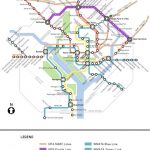
The Purple Line is a planned 16-mile light rail network linking Prince George’s and Montgomery counties. It’s expected to open service in 2023.
JPMorgan Chase Bank recently announced it would offer $5 million in grants to support affordable housing and small businesses along the light rail. The bank also helped fund the Housing Action Plan.
The Purple Line Corridor Coalition received more than 600 responses to a housing survey it conducted earlier this year. “The surveys conveyed strong consensus to prioritize housing actions that benefit low- and middle-income residents,” the plan says. About 20 percent of survey respondents “opposed or strongly opposed” dedicating public funds to support affordable housing.
Robert Goldman, president and CEO of the nonprofit Montgomery Housing Partnership—a PLCC member—says the coalition will be urging local officials to consider the plan’s priorities in upcoming budgets.
“It will be a big loss if we build the Purple Line and the folks who live there now can’t find a way to stay,” Goldman says.
But with construction of the transit line already underway, the plan calls for leaders, nonprofits and private sector leaders to start implementing some of its recommendations now.
“The next three years … are a critical time to act in anticipation of market dynamics that will accelerate once service is open,” the document says. “Simply put, this is a plan that cannot afford to sit on a shelf.”
This story originally appeared on WAMU.