 Mikaela Lefrak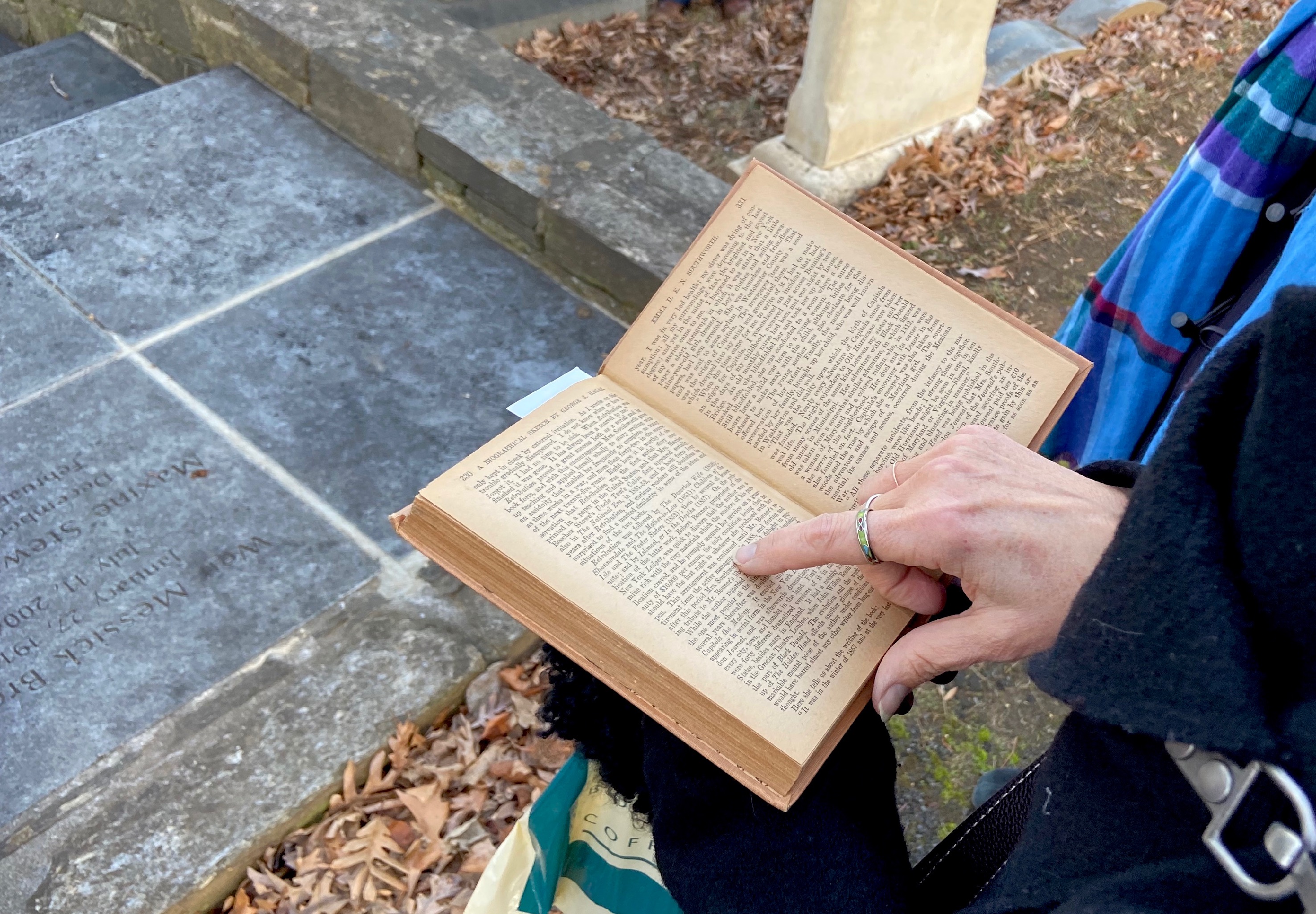
While many of us were at home relaxing family or contemplating the impending arrival of the new year, Washington novelist Mary Kay Zuravleff was spending a few quiet moments at a gravestone in Georgetown’s historic Oak Hill Cemetery.
On the day after Christmas, Zuravleff convened a few fellow writers to lay a wreath at the grave of a once-famous but now largely forgotten D.C. author, marking the 200th anniversary of her birth.
“E.D.E.N. Southworth,” the white stone reads. “Born Dec. 26, 1819. Died June 30, 1899.”
Emma Dorothy Eliza Nevitte Southworth was one of the most successful American writers—male or female—of the mid-19th century, outselling contemporaries like Herman Melville and Nathaniel Hawthorne. She was a mainstay of Washington’s early literary scene: She hosted Friday night salons at her Georgetown cottage, attended Lincoln’s second inaugural ball, and is even credited with encouraging Harriet Beecher Stowe to write the anti-slavery novel Uncle Tom’s Cabin.
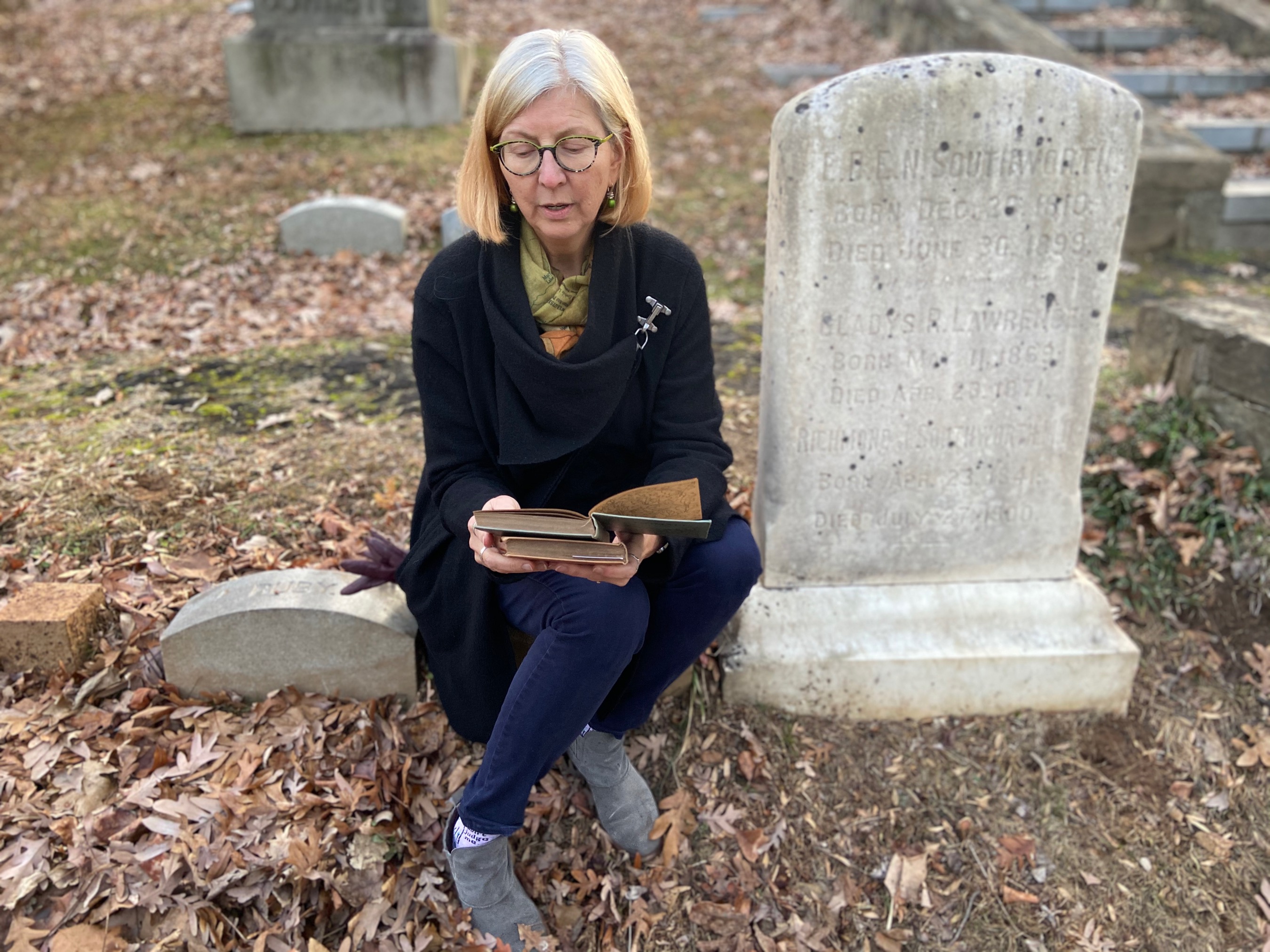
“It’s kind of remarkable to me that we don’t know more about her,” Zuravleff told me a few days before Christmas, as we visited her grave with writers Whitney Fishburn and Carrie Callaghan. “How does someone just disappear like that? I think it happens all the time for women writers.” But today, Southworth’s books are rarely taught outside of college courses on Southern literature. No D.C. street bears her name, and her Georgetown home was torn down ages ago.
Zuravleff first learned about Southworth from her mother-in-law, who sent her books that had been passed down through the family. Zuravleff started researching Southworth and was shocked to find out how successful she’d been in her lifetime.
Much of Southworth’s work was published in magazines, including her most famous work, The Hidden Hand. In that 1859 serialized novel, the protagonist Capitola Black outruns murderers, captures an outlaw, participates in a duel and marches her way through a myriad of other adventures. The story was widely translated and reprinted abroad. Southworth was also staunchly anti-slavery and feminist, in her own way. Many of her stories featured women having adventures that Southworth’s readers were often unable to experience firsthand.
“Her morals are definitely 19th century,” Callaghan said of Southworth’s affinity for lauding female characters for their chastity and devotion to honorable men. “But like so many women, she was trying to find commercial success within the parameters of her time. She was a working, single mother, essentially, and she did this to get money to support her children.”
Southworth was born and raised in Northeast D.C. In her early 20s, she married an inventor and moved with him to Wisconsin. She ended up back in D.C. three years later with two young children and no husband, desperate to make a living.
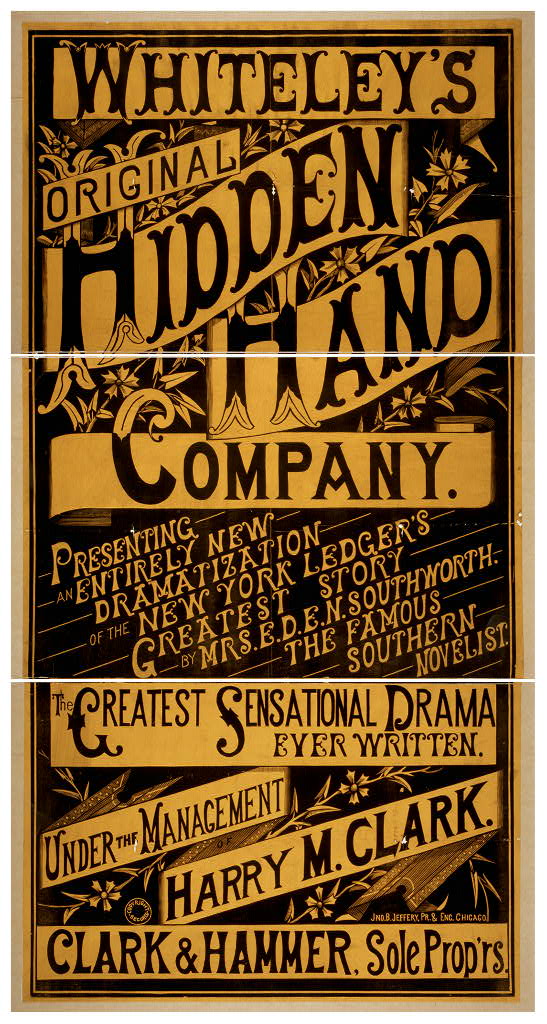
A poster advertising a theatrical production of Southworth’s bestselling novel.
She began teaching at a D.C. public school at 13th and C Streets Southwest but grew frustrated with the low pay and the salary disparity between male and female teachers. She then started submitting stories to magazines and newspapers and found success.
Literature professor Ann Beebe wrote about Southworth in 2015 for the Historical Society of Washington D.C. She noted that Southworth’s exclusive contract with the “New York Ledger,” a weekly paper published in Manhattan, “would mature into one of the century’s most lucrative publishing arrangements.”
Southworth’s work remained popular after her death in 1899, but, as often happens with the work of women, it faded into obscurity as works by her male contemporaries made their way into the country’s literary canon. Zuravleff, Callaghan, and Fishburn allowed that part of the reason might be because of critics’ disdain for Southworth’s overblown language and highly improbable plot twists.
Until about a year ago, Southworth’s headstone was off its base and in disrepair. Oak Hill’s superintendent, Dave Jackson, had it cleaned and reinstalled after receiving an email from a Georgetown librarian about the author’s upcoming 200th birthday.
Jackson has a couple of Southworth’s books in his office but says he doesn’t get many people asking about her — just handful in the eight years he’s been at Oak Hill. Part of the reason, Zuravleff offered, might be because Southworth isn’t included on the cemetery website’s list of famous writers, all of whom are male. (Southworth’s name does appear under the cemetery’s “Women of Interest” section.) Jackson acknowledged that she should be on the writers list.
“May this be the first of many resurrections,” Zuravleff said with a laugh.
This story originally appeared on WAMU. It has been corrected to reflect that Southworth’s name appears on the on the cemetery’s “Women of Interest” page.