Rachel Kurzius
A planned gun rally in Richmond, Va. on Monday has prompted Governor Ralph Northam to declare a state of emergency in the commonwealth’s capital, citing “credible intelligence” that many of the demonstrators “may be armed, and have as their purpose not peaceful assembly but violence, rioting, and insurrection.” Northam instituted a temporary ban on firearms on State Capitol grounds in anticipation of the demonstration.
But he’s not the only Virginia politician fearful that the protests slated for Martin Luther King, Jr. Day in Richmond could result in a dangerous clash like the fatal Charlottesville Unite the Right rally in 2017.
Facing a series of death threats, Manassas Delegate Lee Carter says he will spend Monday at a safe house instead of the state house, as first reported by Gen.
The threats against Carter—a Democratic Socialist first elected in 2017—also show how an echo chamber of conspiracy theories that begin as social media posts get laundered into mainstream outlets like the Wall Street Journal, and can ultimately lead to real-world peril.
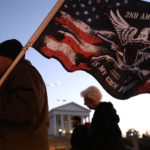
Monday’s rally is a tradition for the Virginia Citizens Defense League, a pro-gun group that lobbies each year in Richmond on Martin Luther King Jr. Day while bearing arms. But this year, a large number of armed militia groups have pledged to join the rally. Northam tweeted that “intelligence suggests militia groups and hate groups, some from out of state, plan to come to the Capitol to disrupt our democratic process with acts of violence.”
At least some of the people who say they’re coming have described it as a “boogaloo,” a word used by the far-right to describe a violent civil war, according to the Daily Beast. This morning, the Federal Bureau of Investigation arrested three suspected members of a neo-Nazi hate group who were considering going to Virginia’s capital for the rally and had more than 1,500 rounds of rifle ammunition, per prosecutors, the New York Times reported.
As these protesters get ready to descend on Richmond, Carter is planning to be at an undisclosed location amid concerns over his safety.
“People were threatening to murder me and murder my family over something I’m not even doing,” Carter tells DCist from Richmond on Wednesday evening. “These threats are more hateful and more numerous than anything I’ve seen before. I mean, I’m the only socialist elected to a legislature in the south, so I do occasionally get waves of death threats—about every two three months it’ll happen—but this one is far larger and far more serious than anything I’ve seen before by orders of magnitude.” Carter has reported the threats to the Virginia Capitol Police.
This situation stems from a fundamental misunderstanding about a bill he reintroduced, which would allow public sector employees to go on strike. For at least the past 70 years, engaging in work stoppages would automatically be considered a resignation for Virginia employees, without the possibility of getting rehired for a year. Carter’s bill, inspired by teachers’ strikes across the country, would change that policy.
When he first introduced the bill last session it did not get a hearing, largely due to concerns from fellow lawmakers that letting law enforcement strike could lead to a decrease in public safety (a contention that Carter disagrees with). The Manassas delegate’s modified bill for the 2020 session does not allow law enforcement to strike.
But the intent of the bill, and the fact that law enforcement currently are not allowed to strike, has been lost. Instead, it has been lumped into a broader category of bills that gun-rights advocates and far-right groups allege are designed to take away their freedoms after Democrats won control of the General Assembly in November. Since then, dozens of jurisdictions in the commonwealth have declared themselves “Second Amendment sanctuaries” in opposition to the gun control measures expected to pass in the legislature, like universal background checks and red flag laws.
Social media posts began erroneously characterizing Carter’s legislation as trying to make sure police enforce gun control legislation on threat of being terminated from their jobs, in concert with Northam (“who I’m not particularly a fan of,” Carter notes). An article in Law Enforcement Today alleges that Carter’s bill is trying to “punish police,” and pro-confederate group the Virginia Flaggers tweeted that the bill would allow the commonwealth to “fire law enforcement officers if they won’t enforce unconstitutional gun laws.” Ultimately, those claims made their way into a Wall Street Journal editorial, which said that a Virginia lawmaker “introduced a bill that requires firing police officers who don’t enforce a gun statute.”
At least one of Carter’s colleagues is among those fanning the flames of the conspiracy. Culpeper Delegate Nick Freitas, a Republican who is currently running for Congress, went on a conservative media blitz about Virginia Democrats’ gun control plans, specifically name-checking Carter as proposing a bill that would fire cops who refused to confiscate firearms. Freitas’ office did not respond to a request for comment.
“You have to acknowledge sort of the disconnect between what the extreme right has been telling themselves and reality,” says Carter. “There are people out there who have been telling themselves since the 90s that the government is trying to take your guns to start enabling tyranny. And many of those folks are very heavily armed and are on sort of a hair trigger … There’s a lot of people out there that uncritically believe whatever they hear, as long as it confirms their biases.”
Despite the deluge from gun activists, Carter’s beliefs on gun control don’t quite line up with mainstream Democratic perspectives on the issue—or Republican ones, either.
“My views on this were informed by the Nazi attack on Charlottesville in 2017,” he says. “We saw what happened when these groups pick a target and descend on one place. We’ve also seen a massive wave of hate crimes throughout the country.”
While Carter supports some gun control measures—namely universal background checks, mandatory reporting for lost or stolen guns, and safe storage requirements—he says “there are a lot of other proposals that mainstream Democrats are floating that I don’t support because my fundamental view on this is anybody who Nazis would want to murder should have the means to stop a Nazi from murdering them.”
Chief among his concerns is red flag laws, which allow police, relatives, or some other third parties to request that a court remove a person’s guns temporarily, and often, those judicial hearings are held “ex parte,” meaning the defendant doesn’t have to be there. Carter says that he monitors online forums where members of the extreme right converse (“because they regularly discuss killing me, so I kind of have to,” he says), and has seen them say that they would file false red flag orders against people they’d like to attack. Whether those efforts would be successful, or even possible, depends on how the particular red flag law is written.
Carter isn’t the only Virginia politician receiving threats—so have Northam and Virginia Attorney General Mark Herring, both of whom have security details. Hamilton Delegate Dave LaRock, a Republican, released a statement with concerns from wives of Virginia Army National Guardsmen, who received threats over the gun control measures. (One example? “Be ready to die. If you refuse to stand with the people who were born to an oath. Be ready to die violating it,” per a message LaRock sent along with his statement.)
While protesters demonstrate and lawmakers are in session on Monday, Carter will be in an undisclosed location (he won’t be at home because his address has been made public, he says). Does Carter regret not being among his colleagues in the legislature on January 20? “No, not at all,” he says. “I’m not dying for these bills that I don’t even support.”
There’s No Paywall Here
DCist is supported by a community of members … readers just like you. So if you love the local news and stories you find here, don’t let it disappear!