Margaret Barthel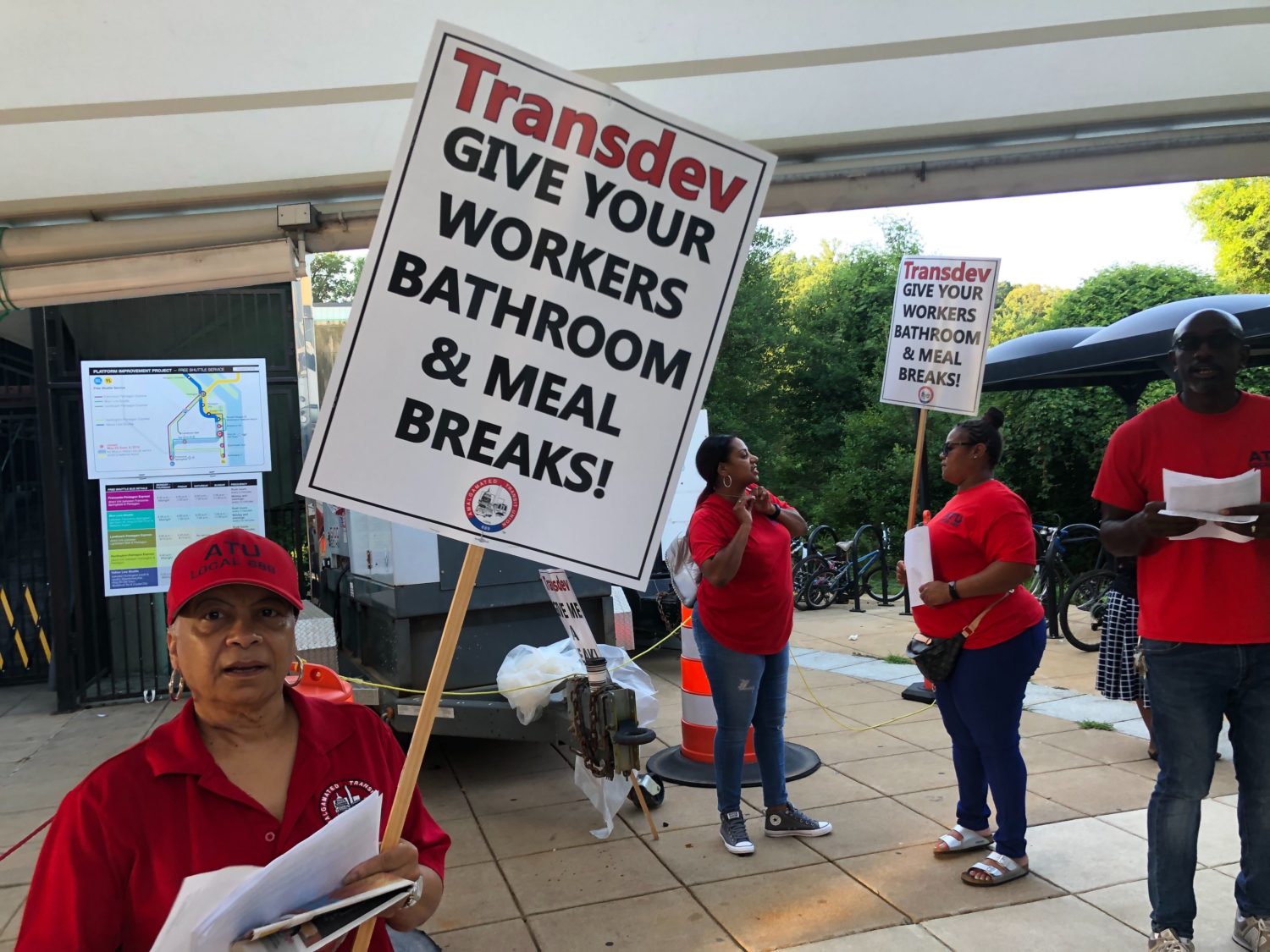
The Cinder Bed Road bus strike in Northern Virginia is over, and a leading Democratic presidential candidate is celebrating with union workers from Amalgamated Transit Union Local 689.
Vermont Sen. Bernie Sanders expressed support for the striking workers, tweeting, “They went on strike for 84 days, and our public transit system is better for it.”
The members of @ATUComm have once again proven why unions are so essential to workers. They went on strike for 84 days, and our public transit system is better for it. Thank you, @ATULocal689. https://t.co/TaNPUZD5CI
— Bernie Sanders (@BernieSanders) January 23, 2020
This isn’t the first time Sanders has expressed support for the striking workers. When the work stoppage began on Oct. 24, he tweeted:
With a strong union, workers get the basic protections they deserve. Unions like ATU are defending workers every day against the expansion of corporate greed within our transit systems. I support @ATULocal689 in its fight for justice. https://t.co/KQgm5ih506
— Bernie Sanders (@BernieSanders) October 24, 2019
Alfonzo Jackson, a bus operator with the Local 689, said he was excited to have Sanders’ public support.
“I think that’s crazy, it’s beautiful,” he said. “This is somebody who’s running for the president of the United States, and he’s taking time out of his busy schedule to write about us.”
Jackson and fellow strikers alleged that their employer, Metro contractor Transdev, created “unfair labor practices.” They stayed off the job for 84 days. That length of time sets the Cinder Bed Road strike apart from other regional and national transit strikes, which tend to be much shorter.
Transdev did not respond to a request for comment by publication time.
“Both parties worked hard to reach a fair and fiscally responsible agreement,” a company spokeswoman wrote in a statement released when the negotiations concluded.
Keeping up the strike for that amount of time wasn’t easy, according to Jackson, who hadn’t previously participated in a strike. Workers took turns on the strike line outside the facility for 8-hour shifts every day.
“It made us like family,” Jackson said. “Even now, with us being back to work, we’re hanging with each other, we’re talking more.”
The strike took a toll on workers and their families, financially and emotionally, Jackson told WAMU. In addition to regular pay, strikers lost health benefits—and had to contend with real uncertainty about the future of their jobs.
“This is on your mind day and night,” he recalled. “A lot of us couldn’t even sleep. One, two, three in the morning, we [were] talking, texting with each other.”
Union membership voted to approve a new contract negotiated with Transdev last week. The deal includes guidelines for worker raises and an improved benefits package.
Jackson said he was underwhelmed by the agreement. He expects a $2.50 raise.
In December, Metro said it would not renew Transdev’s contract to operate the Cinder Bed Road garage. Instead, it will bring workers like Jackson in-house.
That prospect prompted Jackson to vote for the union deal with Transdev, which he sees as a holdover between now and the day when he can become a WMATA employee—and reap the pay and pension benefits that come with it.
“It’s not going to be just a job, it’s going to be a career,” he said.
Union leaders hailed the move as a victory against privatization in the transit industry.
“This is one of the first examples of a system directly turning back against that model,” said Local 689 spokesperson Brian Wivell. “The workers did an unbelievable job.”
“Transdev and the Union reaching an agreement is good news for all involved,” a Metro spokesperson wrote in an email. The transit agency did not comment on the length of the strike or Sanders’ comments in support of workers.
For his part, Jackson was glad to be back at work this week, serving his usual riders again.
“I missed driving the bus,” he said.
This story originally appeared on WAMU.