Washington-area officials seeking to limit the spread of coronavirus are taking new precautions as an increasing number of cases are being reported across the world.
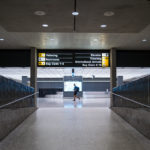
Students in the region are being recalled from China and new screenings are being implemented at Dulles International Airport as officials take steps to prevent an outbreak. United Airlines announced Tuesday that it will cancel some flights between Dulles and Beijing, citing a “significant decline in demand.”
Georgetown University announced it was implementing a temporary ban on university-sponsored and university-related travel to China for faculty, staff, and students. The university also is requesting that all of its community members in China make immediate travel arrangements to return home or to the university. American University (which holds the license for WAMU and DCist) made a similar request Tuesday after the Centers for Disease Control and Prevention (CDC) raised its travel warning for the country.
The University of Maryland told WAMU that all of its study abroad programs in China this spring have been canceled.
Maryland Gov. Larry Hogan said in a statement Wednesday that health officials are working with universities and colleges across the state to address concerns about their students and possible exposure.
“The state is taking every precaution to prepare and mobilize whatever resources are necessary to address the coronavirus,” he said. “Our state government team is in close communication with federal officials and will continue to remain so on an ongoing basis.”
Among other efforts, the state’s health department has ramped up coordination, communication, and training programs for Maryland’s some 25,000 health care providers.
Airports, too, are taking precautions. Dulles is now among 20 other port-of-entry airports with CDC quarantine stations where travelers from China will have to undergo enhanced screening in an effort to contain the new strain of coronavirus that’s been linked to more than 100 deaths in China so far.
The CDC on Tuesday added 15 airports to the five already screening passengers from China. The agency is monitoring passengers at airports where most international passengers arrive to screen for those with symptoms of illness in an attempt to limit the introduction of infectious diseases.
The CDC will be “building on our regular, day-to-day activities at those quarantine stations,” Nancy Messonnier, director of the Center for the National Center for Immunization and Respiratory Diseases, said at a press briefing Tuesday.
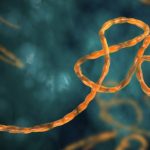
In addition to identifying ill and treating ill patients, Messennier said the enhanced screening is an opportunity to educate returning travelers on the signs and symptoms of the novel coronavirus, formally known as 2019-nCoV.
“They are an important part of the equation,” she said. “We want travelers to understand even if they don’t have symptoms when they come back to the U.S., if they develop symptoms, they should contact their health care provider immediately.”
In the D.C. region, the number of suspected cases of the novel coronavirus remains at four as of Tuesday: two in the District of Columbia, and one each in Virginia and Maryland.
Health officials are awaiting test results from the CDC, which is currently the only place where testing takes place.
In the U.S., there are only five confirmed cases so far—two in California, one each in Arizona, Chicago, and Washington state. And there have been no cases of person-to-person transmission in the U.S.; each person who has coronavirus recently traveled to Wuhan.
The CDC is updating its data on how many confirmed, negative, and pending cases there are on Mondays, Wednesdays, and Fridays. As of Tuesday, in addition to the five cases, there are 73 pending cases, while 32 cases tested negative for coronavirus.
Local health officials are on heightened alert but say ordinary people—those who haven’t traveled to China recently or haven’t had contact with a person infected with coronavirus—should not be overly concerned.
“This is a serious public health threat and we’re trying to understand what’s going on,” says Dr. Lilian Peake, Virginia’s state epidemiologist. “But right now, the immediate health risk to the general American public is considered low.”
That hasn’t stopped some local organizations from canceling events, such as Rockville’s Lunar New Year celebration, which had been scheduled for Saturday.
As for precautions, Fran Phillips, Maryland’s deputy secretary for public health, says everything known about the new strain of coronavirus indicates that it’s spread like other respiratory illnesses—from droplets as a result of sneezing and coughing, and picking up those viruses on their hands and transmitting them to their eyes, nose, or mouth.
“The message on how to protect yourself for any of those viruses is really the same, and it comes down to very frequent hand washing, to avoid being around people who are sick,” she says. “And if you are sick, do not to expose your co-workers or fellow students. If you do develop flu-like symptoms, it’s important to stay home, to rest, and to not get back into circulation until your symptoms subside.”
This story originally appeared on WAMU.