Elliot C. Williams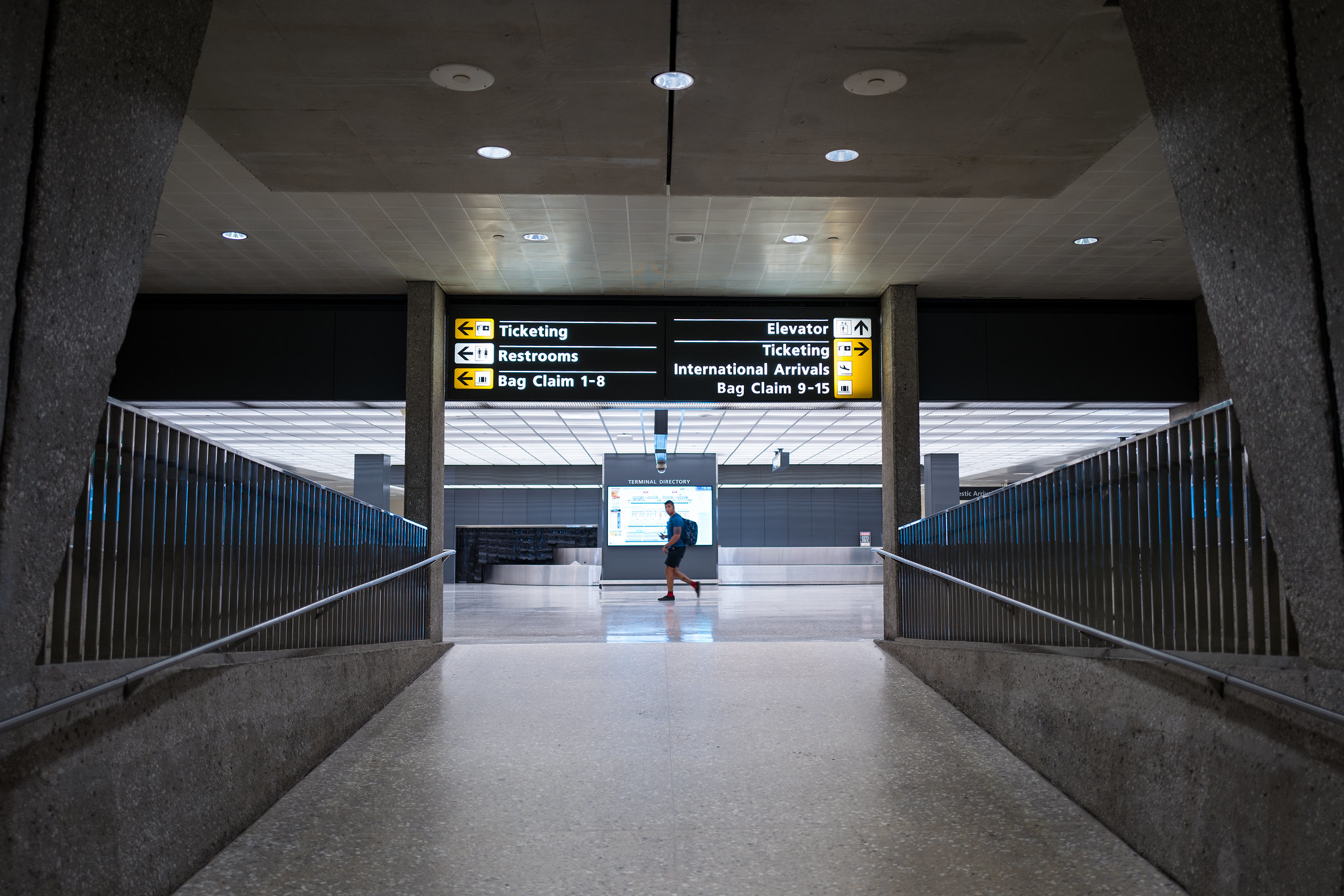
Dulles International has been added to the list of designated airports where passengers from China will be screened, amid concerns over the coronavirus outbreak.
After initially cancelling some flights between Beijing and Dulles, the Department of Homeland Security announced Sunday that all flights from China and all passengers who have traveled to China within the last two weeks will be re-routed to one of 11 U.S. airports, including Dulles.
These airports have established “enhanced screening procedures and the capacity to quarantine passengers, if needed,” the department wrote in a release.
“While the overall risk to the American public remains low, funneling all flights with passengers who have recently been in China is the most important and prudent step we can take at this time to decrease the strain on public health officials screening incoming travelers,” DHS Acting Secretary Chad Wolf said in the statement. “We realize this could provide added stress and prolong travel times for some individuals, however public health and security experts agree these measures are necessary to contain the virus and protect the American people.”
DHS also announced that U.S. citizens who have been in the Chinese province Hubei—where the new strain was first identified—within two weeks of their return will be subject to quarantine for up to two weeks. The agency provided the following details:
- American air travelers should be aware that if they have been to China in the last 14 days, they will be routed through one of eleven airports to undergo enhanced health screenings.
- Any individual traveling from China who has either been in Hubei Province or other areas of the mainland and is showing symptoms associated with the virus will be screened and subject to mandatory quarantine by medical professionals at a nearby facility.
- If a traveler who spent time in China, but outside the Hubei province, is re-routed through one of the eleven airports and shows no symptoms following a health screening, they will be re-booked to their destination and asked to “self-quarantine” at their homes.
DHS declined to comment on where specifically these passengers could be quarantined, and how passengers will be redirected to their initial destination.
Symptoms of the new strain of coronavirus include fever, cough, sore throat, and shortness of breath, though the Center for Disease Control and Prevention is still working to identify all symptoms, and to confirm the exact source of the virus.
As of Jan. 31, three D.C. residents have tested negative for coronavirus while one patient remains pending. D.C. universities have temporarily banned students’ travel to China, and some local events have been canceled.
While the World Health Organization has declared it a “public health emergency,” the handling of anxiety around the outbreak has drawn criticism worldwide. Australia, which has seen 12 confirmed cases of coronavirus, evacuated its affected citizens to an immigration detention center on Christmas Island. U.C. Berkeley issued an apology after students called out a coronavirus pamphlet for “normalizing racism”—the pamphlet listed xenophobia as a “common reaction” to the outbreak.
So far, the outbreak has killed more than 360 in China and infected more than 17,300 worldwide.
Meanwhile, the seasonal flu has already sent 180,000 Americans to the hospital, and killed 10,000. Every state has reported an uptick in cases of the flu, and the CDC is urging Americans to get vaccinated.
“Coronavirus isn’t a risk for the average American [or] for anyone who hasn’t traveled to China or been exposed to someone who has,” Gregory Poland, director of the Vaccine Research Group in Rochester, Minnesota, told Bloomberg. “Their risk is influenza, and it’s substantial.’”