Martin Austermuhle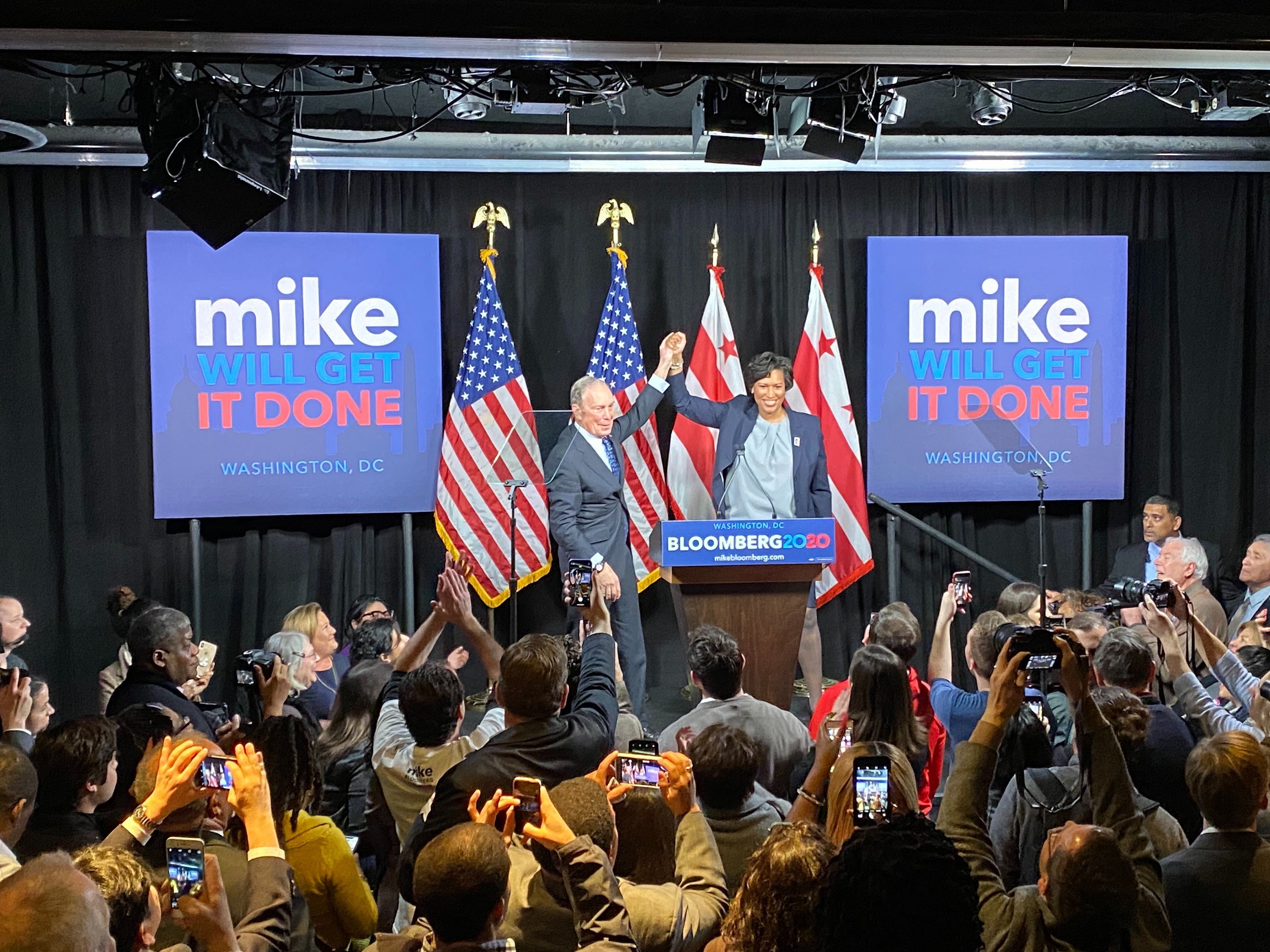
Muriel Bowser may be D.C.’s mayor now, but some District residents say they received a phone poll testing the idea of having her join Democratic presidential hopeful Michael Bloomberg as his vice presidential running mate. The calls come just over two weeks since Bowser heartily endorsed Bloomberg and joined his campaign as national co-chair.
If this is part of an official effort to sound out possible running mates for Bloomberg, it’s a thoroughly unconventional one. Most presidential candidates wait until further into the primary cycle to float possible contenders for vice president. And they typically rely more on privately vetting possible choices rather than on polls. Many candidates wait until after they’ve sewed up the nomination to seriously assess vice presidential candidates. In 2016, though, Republican hopeful Ted Cruz announced Carly Fiorina as his running mate in April.
Additionally, polling D.C. residents on their own mayor’s impact on a presidential primary pick would be unusual, if indeed the effort is funded by the Bloomberg campaign. It’s not clear what would be gained by assessing Bowser’s standing as a running mate in her own jurisdiction, especially considering the District’s limited role in the electoral process.
D.C.’s primary is on June 2, when 46 delegates will be on the line. That’s a tiny fraction of the 1,991 delegates needed to win the nomination. Similarly, the reliably Democratic District accounts for only three of the 270 Electoral College votes needed to be elected president.
The Bloomberg campaign did not respond to multiple requests for comment and one person who received a call said the question-asker did not identify who commissioned for or paid for the poll.
John Falcicchio, a key adviser to Bowser, said the poll is news to him. “I don’t know anything about a poll other than what I saw on Twitter,” he wrote in a text message.
Bloomberg isn’t running a conventional campaign. He’s sinking a significant amount of his personal wealth into his presidential bid — $129 million in ad spending alone ahead of Super Tuesday on March 3 — and has so far skipped the early-voting states. He’s also sought out endorsements from mayors across the country; more than 100 are now on his side.
“Essentially, all the questions were asking if Bloomberg picked her as VP before the D.C. primary, would I be more or less likely to vote for Bloomberg over other candidates,” said one person who received a poll call. They agreed to speak to WAMU on the condition that they remain anonymous.
“The pollster ran a number of arguments for and against [Bowser], and asked how each statement influenced my vote,” said the person who spoke to WAMU about the call they received.
“Things like, listing that she was the first black woman to be re-elected mayor, that she would bring out a diverse electorate and that she has national and international experience as D.C.’s mayor vs. potential attacks, like ‘She’s done nothing to improve homeless and the murder rate’ and ‘She fought the city council against progressive policies like guaranteed maternity leave.’ Each question was, ‘Considering what was just said, would that make you more or less likely to vote for Bloomberg and her as VP vs. other democratic candidates?’” they added.
Josh Kraushaar, politics editor at the National Journal, similarly reported hearing of the calls.
Justin, a D.C. resident who asked that we only use his first name, also got the phone poll and said he was caught off-guard — both by the questions and the timing.
“It sounded very much like a horse race poll: Who are you considering, what is your background? I thought it was curious because [the pollster] introduced it as a survey about the Democratic primary, which sent up some red flags,” he said. “Who polls Washington, D.C. in February?”
The poll came just a day after Bowser appeared on CNN to defend Bloomberg in the wake of reports this week of comments he made in 2015 supporting the police tactic known as stop-and-frisk that mainly targeted African American men. Bowser also traveled to Houston on Thursday to join Bloomberg at an event where he was endorsed by Mayor Sylvester Turner. Bowser also went to Virginia last weekend, where she spoke on his behalf in Arlington, Richmond and Hampton Roads. (The Virginia primary is on March 3.)
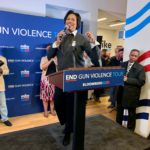
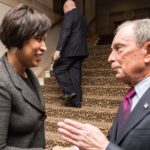
During her own endorsement event in late January, Bowser praised Bloomberg as the “only candidate who will unify the country and defeat Donald Trump and has a blueprint to rebuild America and improve the quality of life for all Americans.” He returned the compliments, referring to Bowser as a “national leader on affordable housing, economic opportunity, sustainability, safe streets, good schools, and equal rights.”
Were Bowser to join the campaign as Bloomberg’s running mate, it would be unusual, at least historically. The last mayor to serve as a vice president was Hubert Humphrey from 1945 to 1948; Spiro Agnew was the former Baltimore County Executive before becoming vice president from 1962 to 1966.
It would also mark a significant increase in national profile and exposure for the two-term mayor and former D.C. Councilmember. While she has tweet-battled with President Trump and aggressively pushed a bill to make D.C. the 51st state, Bowser remains relatively unknown across much of the country.
“I’m not a huge Bowser supporter, and it was like, ‘Oh no, there’s a tiny little chance that she might be our VP. I was caught off guard, because who would even think Bowser would be qualified for that?” said Justin.
Bowser could also make an appealing option as Bloomberg’s running mate: She’s a fellow mayor, young, African American and a woman. The city has seen dramatic changes during her tenure, with the population ticking over the 700,000 mark for the first time in decades, widespread development in neighborhoods, and prudent fiscal management. And she has generally polled well among D.C. residents. Late last year, a Washington Post poll found that two-thirds of respondents approved of the job she was doing, and just over half would support her seeking a third term.
But those numbers have also masked ongoing challenges in D.C., including a rising murder rate, a persisting homelessness problem, a painful shortage of affordable housing, the use of stop-and-frisk tactics targeting mostly African American men, and a widening economic gap between white and black residents. Critics say in that respect, Bowser is not unlike Bloomberg, who also governed during an era of revitalization and growing inequality in New York.
Bowser has recently touted her plan to build 36,000 housing units in D.C. by 2025 as one step to bringing housing prices down. Bloomberg praised that plan during their joint endorsement event, and said that if he were elected president, he would increase federal funding for programs to build housing and fight homelessness.
Were Bowser to be picked to run alongside Bloomberg, she would be allowed to remain as D.C.’s mayor. But if she opted to resign — whether to better focus her efforts on the campaign or upon a winning election — Bowser would be replaced temporarily by Council Chairman Phil Mendelson until a special election could be held.
But when she was asked last week by a DCist reporter whether she would take a position in a possible Bloomberg Administration, Bowser demurred. “I have the best job in Washington, D.C. I’m the mayor of my hometown,” she said.
This story first appeared on WAMU.