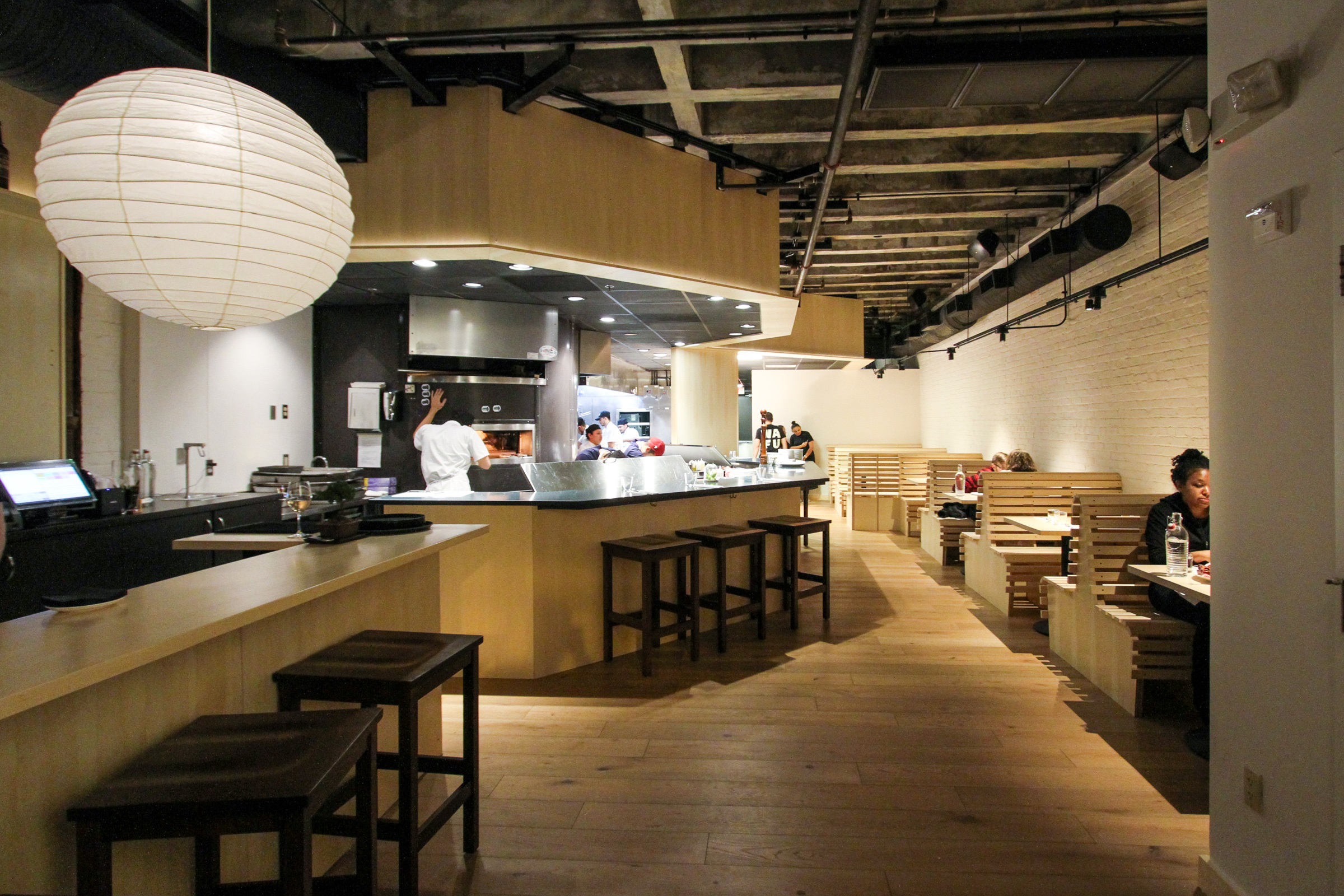
The oven made them do it. Partners Daisuke Utagawa, executive chef Katsuya Fukushima, and Yama Jewayni of Daikaya Group weren’t planning to use the vacant Graffiato spot next door to their flagship shop Daikaya. They own four beloved local ramen shops, but didn’t believe another one so close made sense—that is, until they saw the built-in pizza oven, too beautiful to sit unused.
Tonari opened last Friday, marking a new era for the Daikaya Group and for D.C. dining. The restaurant introduces wafu, or Japanese-style, Italian pasta and pizza to Chinatown for the first time. Unlike their Sapporo-style ramen at Haikan and Hatoba and Japanese fried chicken at Bantam King, all with distinct menus of bright broths tailored on trips to Japan, Tonari ditches the bowls for plates of carbs designed with the same attention.
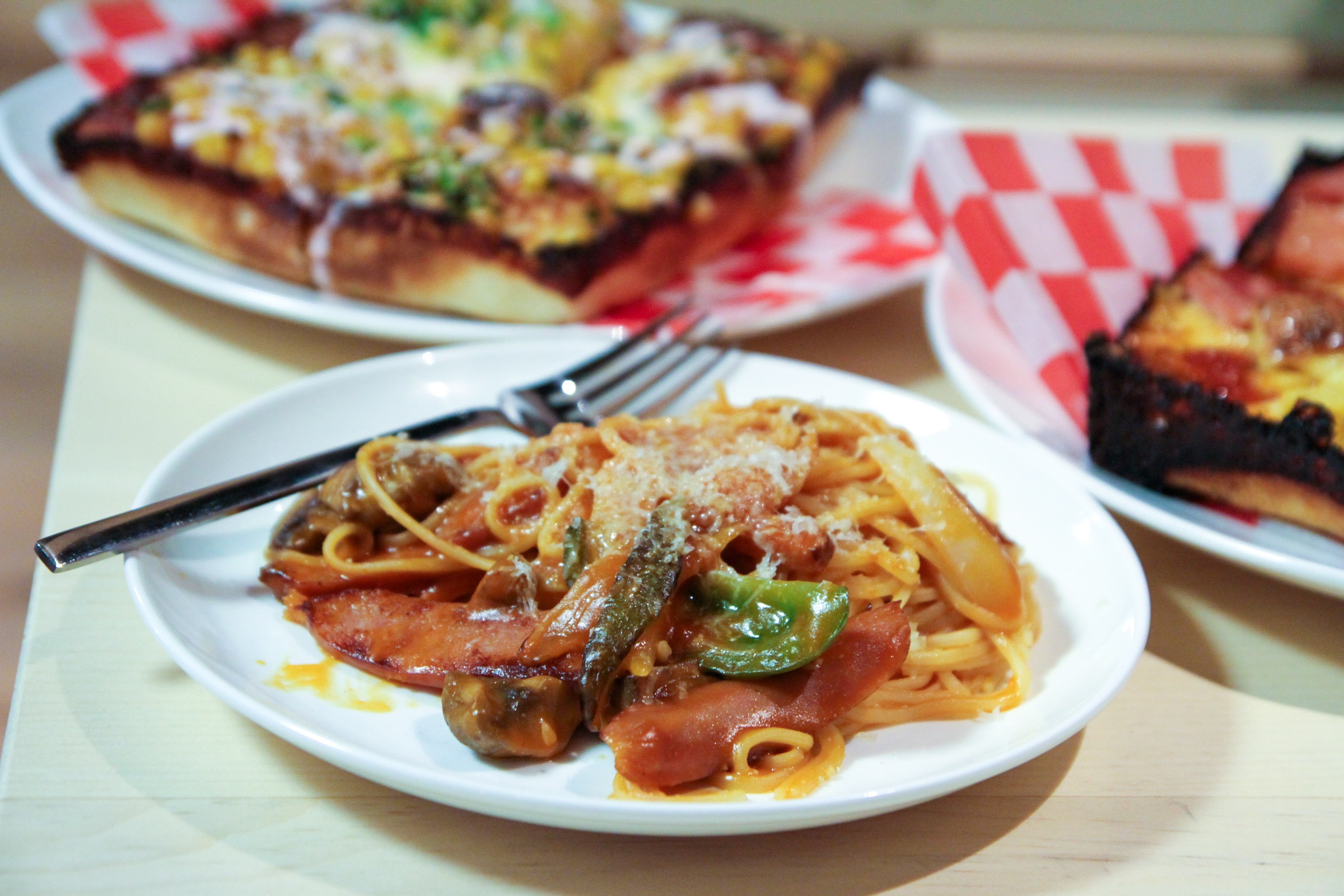
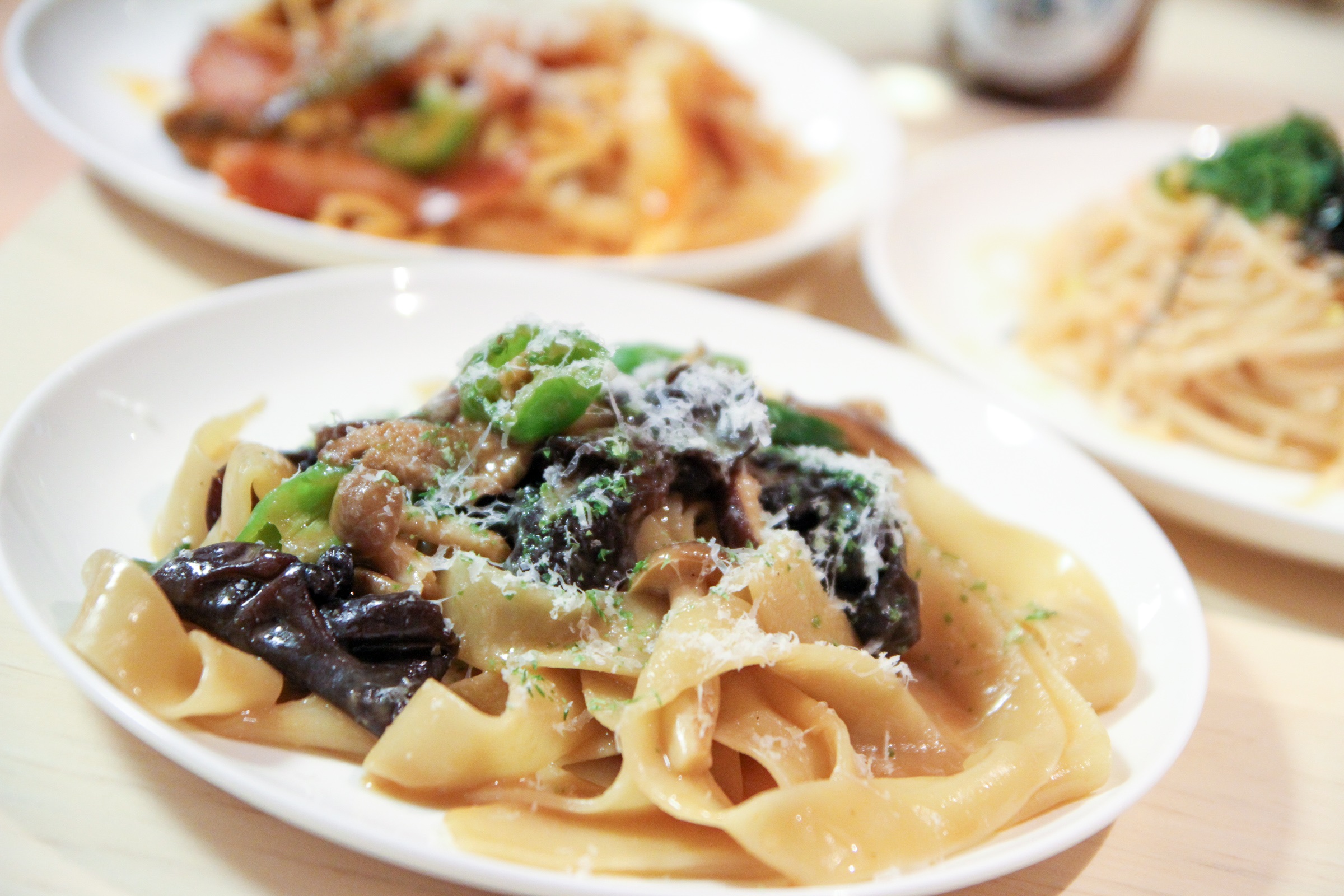
Though many U.S. audiences aren’t familiar with wafu Italian pasta, the food is “battled-tested in Japan,” according to Utagawa, who is from Tokyo. The first shop appeared in 1953 in Tokyo, pairing Italian-shaped noodles and Japanese flavors like sea urchin, nori, and soy, and dishes are now widespread. The noodles are “100 percent different” than Italian pasta, according to the menu, with a springy texture characteristic of Japanese noodles. Daikaya Group again teamed up with Nishiyama Seimen Co. in Sapporo, the long-time provider of their ramen noodles, to create the pasta for wafu-style dishes. Tonari has seven pasta options to start ($12-$18), including a buttery sea urchin pasta tossed in soy, mirin, and sake, an “everything but the kitchen sink” Neapolitan spaghetti with button mushrooms, sausage, and a ketchup and Tabasco sauce, and a fishier mentaiko spaghetti with cod roe, olive oil, and nori.
Pizza has a similar cult following in Japan, but Fukushima says the style hasn’t congealed yet, and their recipe is a first—their crust took months of experimentation overseas. Nishiyama recommended a Sapporo flour mill, Yokoyama Seifun, where Fukushima and Utagawa tested dough recipes.
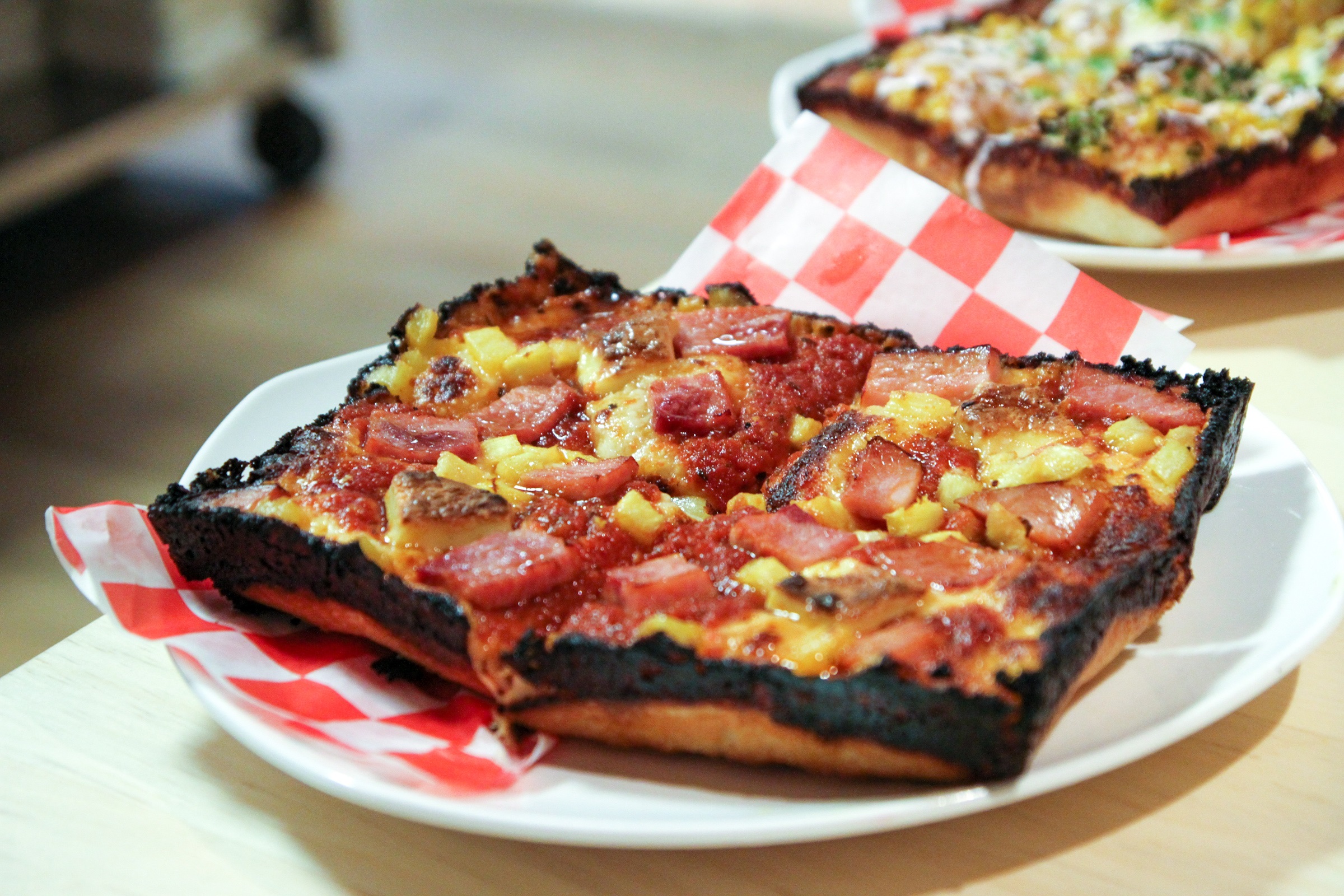
They took inspiration from Japanese bread for the final product: a fluffier, thick and chewy dough made with the mill’s Hokkaido wheat flour, baked in square pans and crisped up almost tempura-style using rice oil as a shortening. Their first menu iteration has four pies ($14-16): a pepperoni with shoyu-pickled jalapeno, a garlicky clam featuring miso and Wisconsin brick cheese, a mentaiko roe cream and Kewpie mayo pizza with corn, and a Hawaiian with hickory ham, fresh pineapple, amazu (a sweet and sour sauce) and Japanese processed cheese that costs, at $8 a pound to import, more than their fine Italian cheeses.
“Japanese people really love Italian food,” says Fukushima. “There are places like Dominos in convenience shops, then truly-rooted traditional Neapolitan style pizza that is really Japanese. We wanted to find something that is still Japanese and different from the States.”
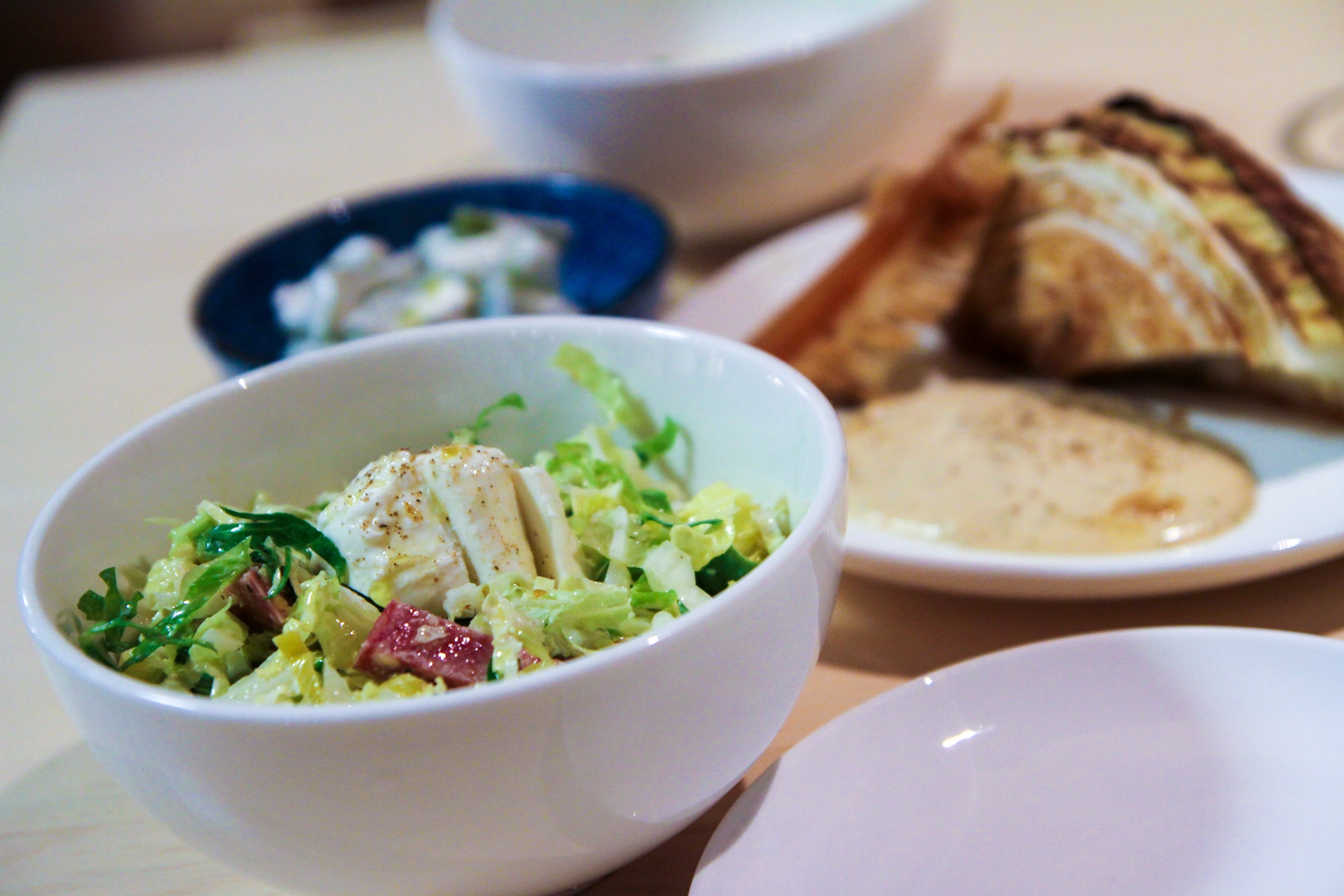
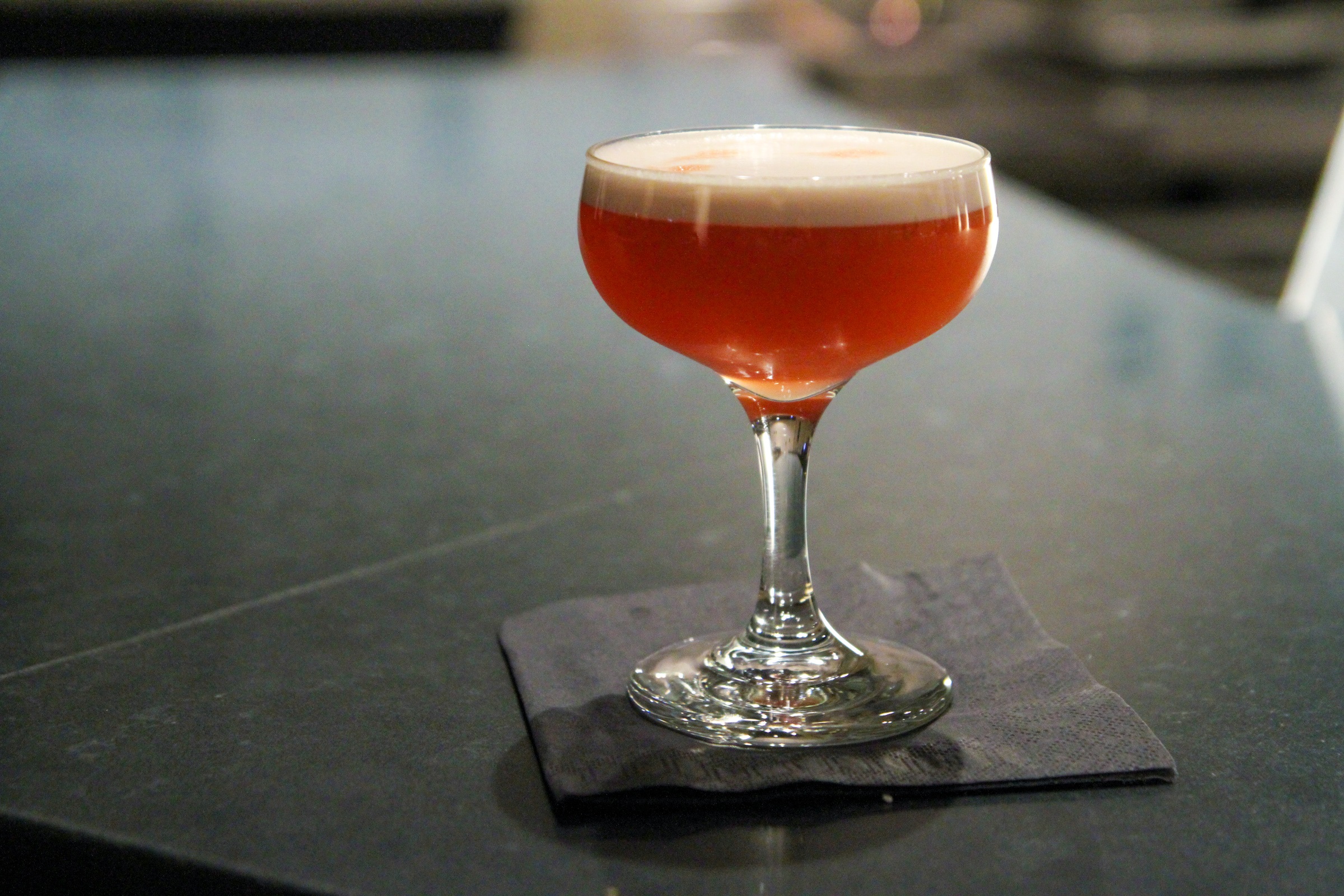
Appetizers ($7) also fuse Italian and Japanese flavors. There’s a silken tofu salted with anchovy, a romaine and pepperoncini salad, and ricotta with snow peas and yuzu vinaigrette. To ease people into the new food, beverage director Nalee Grace Kim kept to Italian wines and cocktails using recognizable liquors and amaros, including a smoky Manhattan, a reverse martini made with maraschino liqueur, and a jasmine negroni. Desserts by pastry chef Mary Mendoza, who has been with Daikaya Group for six years, focus on comfort foods to end the meal. Most also toe the Italian line, apart from a yuzu-foam tiramisu. Notables include a bitter chocolate and whipped cream custard and a grapefruit ice with Campari and vanilla gelato.
As the food debuts, the group anticipates a few controversial reactions. The dishes aren’t their effort at new fusion; they’re bringing over a well-loved Japanese tradition that hasn’t gained as much ground in the U.S. But Fukushima has seen Instagram posts where people write that what they’re doing isn’t pizza.
“I knew it was going to happen, but it’s fine,” says Fukushima. “In the States, people have come here and made Italian American food their own, and it’s part of our culture. We’re not trying to make a bad version of Italian food, but a food that’s Japanese with a love of Italian. What excites me is people experiencing it, especially Italian diners and chefs.”
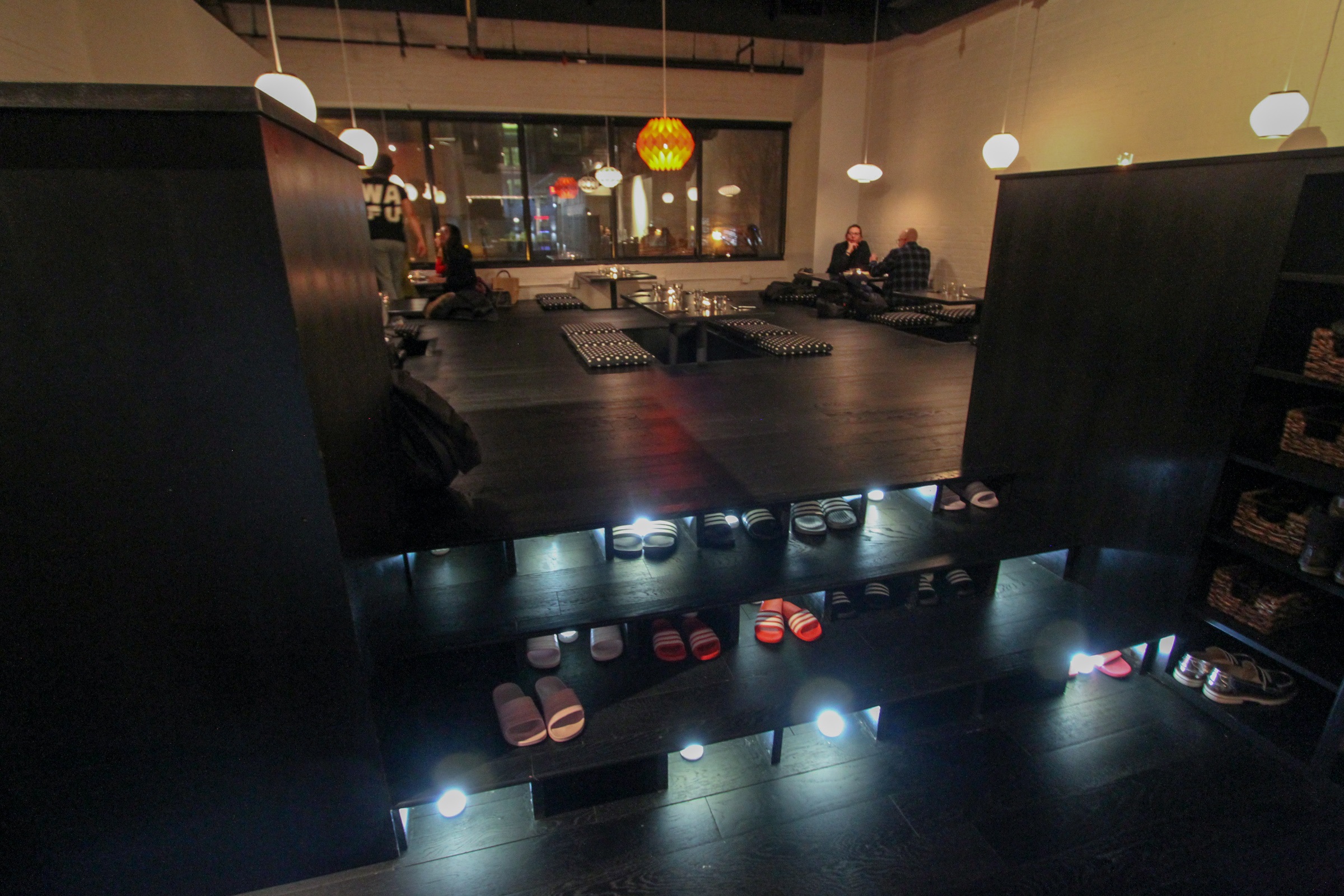
Jewayni, who heads up the design, once again tapped Brian Miller of edit lab at Streetsense to give Tonari Japanese flair across the restaurant’s two floors. They wanted to keep tradition in the design because the menu breaks from it, Jewayni says. Downstairs, they stripped down to blonde woodwork and added dyed Japanese wallpaper, paper lanterns, and a collection of vinyl jazz (often the music of choice in Japanese restaurants) from Joe’s Record Paradise in Silver Spring. To eat in the moodier upstairs, diners must slip off their shoes and sit horigotatsu style on the floor at low black tables. As an ode to Kyoto’s ornate temples and palaces, a Japanese moss garden sits center stage.
A separate dessert bar of Mendoza’s creations and drink pairings is forthcoming upstairs, though the team is tight-lipped about what will be on the menu. Lunch will also eventually get a time slot downstairs.
The biggest goal the partners have for Tonari, which means ‘neighbor,’ brings the neighborhood something new.
“A lot of restaurants look the same: same uniform, same menu, and it’s like they are all about ‘me, too,’ instead of creating something that is really different,” says Jewayni. “We want to do something that pushes the envelope in D.C. and puts us even more on the map.”
Tonari is located at 707 6th Street NW in Chinatown. Hours are Sunday through Friday 5 p.m. to 10 p.m. and Saturday from 5 p.m. to midnight.