Martin Austermuhle
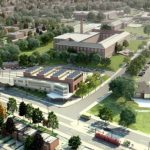
A pair of filmmakers who document abandoned buildings and sites have released a video of their visit to Spingarn High School, a D.C. public school with a rich African American history that was closed in 2013.
In the video, Bryan and Michael, known online as The Proper People, walk around the hulking, 225,000-square-foot former school building just off Benning Road NE. Their footage shows paint peeling off the walls, science labs full of untouched and broken equipment, a theater with a still-working piano in it, the school’s former greenhouse, and the gymnasium, where water has pooled on the wood-floored basketball court and the walls are covered in graffiti.
They offer running commentary on the state of the school, which they say looked like it has been “left at the mercy of nature, vandals, and thieves.” In one classroom, they find a vulture. And while they’re looking through a science room, they find shelves of still-usable beakers. “This glassware could have been so easy to auction off and sell. They didn’t. Now it’s just all getting smashed in here. It’s such a waste,” they say.
It’s unclear exactly how the filmmakers got into the school, and they have not responded to multiple requests for comment. But it probably wasn’t particularly difficult. After the video started circulating online on Monday, NBC 4 reporter Mark Segraves visited the school, finding two open doors and windows and evidence that many other people had been inside the shuttered building. That prompted D.C. to send police and city workers to re-secure the site.
The video footage also drew a range of reactions on social media, from fascination with the state of the abandoned school to anger over how it reflected poorly on the city’s management of a school building with the type of legacy and history that Spingarn had.
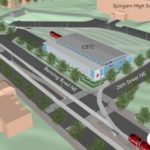
Opened in 1952 as a segregated high school for African American students, Spingarn came to be known both for its academics and its fearsome basketball program, which produced NBA talents like Elgin Baylor, Sherman Douglas and Dave Bing — who also served as Detroit’s mayor. In 2012, the building was declared a historic site, partially in response to plans by the city to build a streetcar repair facility on the school’s grounds. But dwindling enrollment prompted D.C. Public Schools to close Spingarn in 2013, alongside 14 other schools.
“This video will be used very shortly to justify turning over this school to charters,” tweeted Valerie Jablow, an education activist who has been critical of the city’s embrace of charter schools. She was referring to the recent decision by Mayor Muriel Bowser to turn over the old Ferebee-Hope school building in Ward 8 to KIPP, the city’s largest charter operator, where it plans to build a high school.
But charter operators say the opposite is actually true, and that D.C. doesn’t consistently follow the law offering them the first option to take over a public school’s building when it is closed. In other cases, D.C. has used old school buildings for various purposes—some have been offered up for redevelopment (like the historic Crummell School in Ivy City) or repurposed for other city uses (like Backus near Fort Totten, now used for the UDC Community College).
In a statement, Deputy Mayor for Education Paul Kihn said there are no current plans to dispose of the Spingarn building.
“It has remained in the DCPS facilities inventory and is under consideration for future use as the sector projects continued enrollment growth,” he said. “Beginning next school year on the grounds of Spingarn, a modular classroom complex will be built to serve as swing space for School-Within-School @ Goding.”