Matt Blitz
It may be mammoth, but it’s actually a mastodon. With scooped tusks, a firm jaw, and powerful hind legs, the 14,000-year-old skeleton looks like it could walk right out of the Smithsonian American Art Museum.
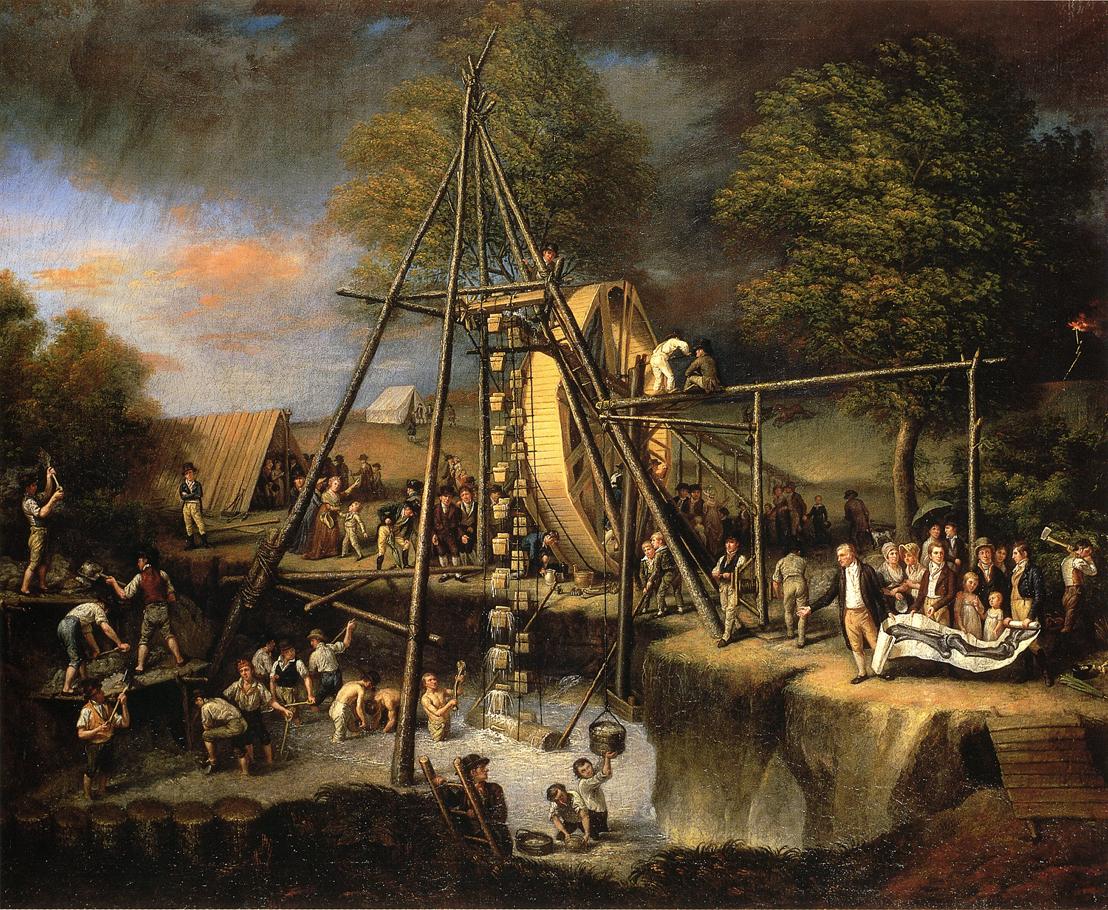
Excavated out of an upstate New York bog over 200 years ago and later immortalized in Charles Wilson Peale’s famed 1806 painting, it was at the time the most complete skeleton of a prehistoric animal ever found. And now, for the first time in 173 years, this female mastodon is back on American soil.
“To me, it’s the symbol and scale of our cultural ambitions,” says Eleanor Jones Harvey, senior curator at the Smithsonian American Art Museum, “It sends a signal to the world that [America’s] cultural relevance is driven by our natural history and beauty.”

The skeleton is the centerpiece of the new exhibit Alexander von Humboldt and the United States: Art, Nature, and Culture set to open March 20 at the museum. It will tell the story of naturalist and explorer Humboldt’s historically significant trip to the United States in 1804 and how he helped shape America’s view of itself as a land full of natural wonder during a pivotal time in its history.
“He came along exactly the right time,” says Harvey, who has spent the last six years curating, researching, and planning this ambitious exhibit. “His message to us was to pin our future on what’s here.”
Of course, this isn’t the only large animal skeleton in D.C. recently to attract massive attention. This past summer, Smithsonian’s Natural History Museum debuted their new fossil hall featuring a 66-million-year-old tyrannosaurus rex skeleton ripping the head off of a triceratops.
Humboldt loved mammoths (at the time, it wasn’t known that mastodons and mammoths were two different species). In fact, he loved them so much that his going away party was a dinner hosted by Peale (who was his guide on the trip) underneath the rib cage of this skeleton.
As luck would have it, Thomas Jefferson also had a mammoth spot in his heart for mastodons, and the two bonded over their shared infatuation for the giant, ancient creature. The third president saw the animal as proof that America was built on a history full of natural splendor, wonder, and mysterious grandeur, no matter how condescending Europeans could be.
“Humboldt told Jefferson that… you may not have castles and cathedrals, but [America] has natural monuments,” says Harvey. “We became a culture that stakes its identity on nature.”
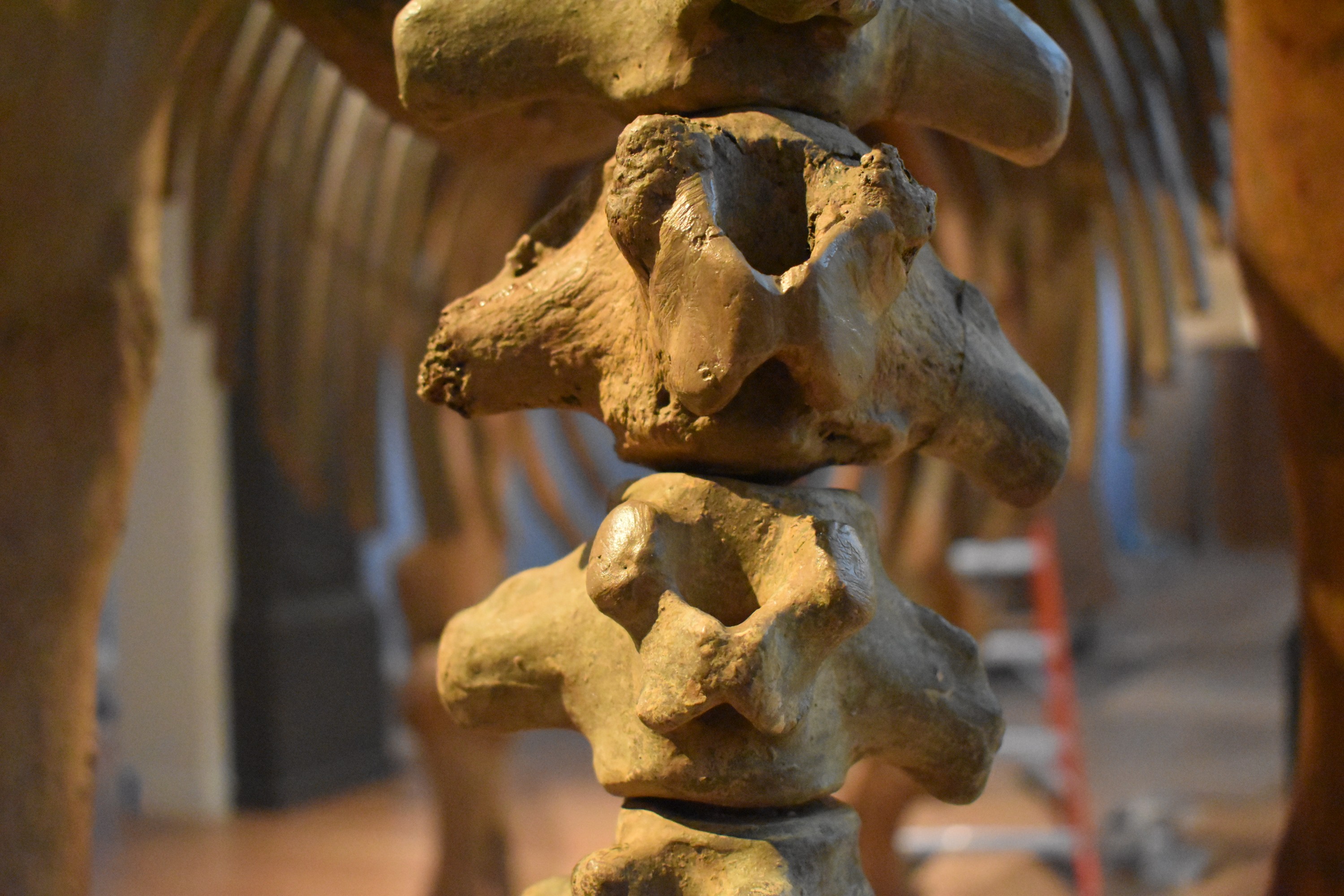
It’s also a bit of mixed-media art. Peale, who also supervised the excavation, wanted to showcase the skeleton fully articulated. To do this, he had to fill in a few gaps since the skeleton was only about 60 percent complete. He took the liberty of adding cherry wood bones since it matched the color of the bog-stained actual bone. Peale also made the decision to make the tusks out of papier-mâché since the material is light. Later, the skeleton also got some plaster and metal.
The skeleton has had a unique path to the Smithsonian.
After being excavated in 1801, it stood tall in Peale’s Philadelphia museum. But that went bankrupt and the skeleton was sold to PT Barnum, of circus and Hugh Jackman fame, with the intention of selling them to King Louis Philippe I of France.
But the French Revolution of 1848 began, forcing the bones to London, where they were soon bought by a German collector who put them in the museum in Darmstadt. That’s where it has stood for the last 170 or so years. Until now, when the Hessisches Landesmuseum Darmstadt offered to loan it to the Smithsonian American Art museum specifically for this exhibit.
Harvey says that this skeleton is a perfect example of how art, nature, history, and science are often intertwined with each other.
The famous 1806 Peale painting will hang directly across from the skeleton it depicts being pulled out from the murky depths. Says Harvey, “It was essentially like they were excavating our identity out of that bog in New York.”
Alexander von Humboldt and the United States: Art, Nature, and Culture will run from March 20 – August 16 at the Smithsonian American Art Museum. In addition to the skeleton, the exhibit will feature more than 100 paintings, sculptures, maps, and artifacts related to Humboldt’s impact on America’s emerging naturalistic identity.