Natalie Delgadillo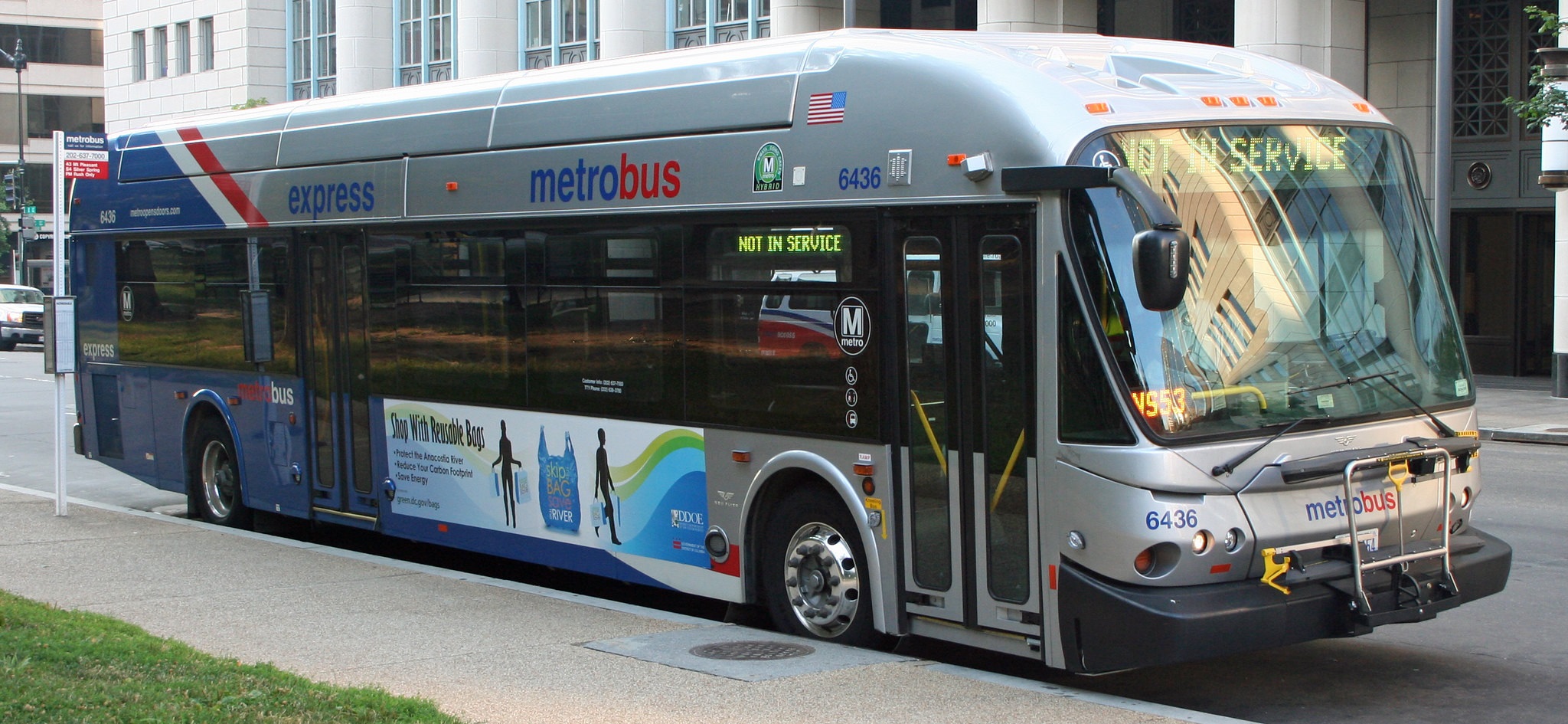
As Metro considers cutting or consolidating more than 50 bus routes across the region, some riders in D.C. are worried about how they’ll commute to work, travel to the doctor, or go to the grocery store in the absence of bus lines they depend on.
Anger about the potential cuts has largely dominated public discussion about WMATA’s 2021 budget, which officials first proposed at the end of last year. Members of the public have until March 2 to submit a public comment about any aspect of the budget, and the transit agency has held public hearings across the region to hear directly from riders. The proposed cuts aren’t finalized until the Metro board votes on the budget after the end of the public comment period. The new budget will go into effect on July 1.
To help the transit agency pay for other items in its budget—including the return of some late night service, more frequent rail service on Saturdays, and a flat $2 weekend fare—WMATA is considering cutting or reducing service to about 50 bus routes.
But some riders aren’t taking the proposal lying down. They argue that they and their family members depend on these bus lines, and that Metro would be harming some of its most low income, vulnerable residents with the cuts.
“Bus services are a life line for the working class families across our city,” Ward 8 Councilmember Trayon White said Wednesday night at a public hearing on the proposed budget, which was dominated by testimony from public officials and riders angry about the potential bus cuts. “Reduction of bus services will deepen the wealth gap and inequality in this city. We create additional financial burdens for families that already struggle to go to work and take the kids to school in the morning.”
Of the 22 bus lines that Metro has proposed eliminating, nine are in Ward 8, White testified, saying that upward of 70 percent of its residents do not have a car.
The councilmember held a town hall meeting for his constituents to discuss the potential cuts, and the attendees were “furious” about losing bus lines they depend on, White said. Especially relevant to Ward 8 riders are the 30N, 30S, 34, 36, A4, W5, W1, W2, and W4, all of which are proposed for service cuts and changes. (You can see a full list of the proposed bus line changes here).
Other D.C. councilmembers share White’s concerns—last week, every sitting councilmember signed onto a letter asking WMATA to reconsider the cuts.
Lines that serve Ward 2 and Ward 3 riders are also at stake, and several public officials and riders arrived at the hearing to protest the loss of the G2 line, which runs to Georgetown. While it is one of the city’s wealthiest neighborhoods, it doesn’t have a Metro station.
Changes to the G2 would especially affect people who work in Georgetown, many of whom have much lower incomes than many of its residents, says Alex Taliadoros, a local immigrant rights organizer. Taliadoros also showed up to the public hearing to advocate for campus workers at Georgetown University, many of who are immigrants and live outside of the District. Taliadoros says these workers depend on the G2 to get to their jobs.
“We are talking about people who are security, hotel and food court employees, housekeepers at the hospitals. These are folks who are immigrants, people of color, and a great majority of them don’t live in D.C. proper,” he says. “Their commute is much different. It’s not uncommon for them to take a bus to a Metro stop, ride the train into the city, and then take another bus to Georgetown, usually the G2. Their commute takes an hour and a half on a good day.”
The proposed changes would consolidate the G2 line with another line, and it would move the nearest stop to the university to about six blocks away, per Taliadoros. For employees, that means another 10 to 15 minutes of walking to get to work or to get home, sometimes “after working a really physically demanding shift,” Taliadoros says.
The G2 is also already often full. Georgetown workers are worried that the consolidation will mean completely untenable crowding on the line, he says.
WMATA, for its part, maintains that the cuts are proposed in places where, in many cases, there are alternative transit options or duplicative Metro service already available.
“If you have one bus route that goes down P Street and another that goes down Q Street, what we proposed is having them run down one of those streets with more frequent service,” says Metro spokesperson Dan Stessel. “In many of these cases, there’s a corresponding enhancement to set off some of the loss,” though that’s not the case with every cut, Stessel says.
Plus, he argues, the cuts make other improvements and increases in service possible in the budget—especially considering that WMATA is constrained by a 3 percent mandated subsidy budget growth cap.
Other lines offered up for cuts have very low ridership. Stessel points to the example of the B30, which goes from the Greenbelt Metro station to BWI airport. Before the MARC train could bring passengers to the airport, many more riders depended on the B30, Stessel says. Today, the line has an average of seven passengers per trip.
However, “we are sensitive to the fact that there’s probably someone out there, or maybe a handful of people, who love the B30 and who ride it all the time and it suits their needs,” he says. “So we know that any time you touch someone’s transit service it’s a big deal to them, regardless of what the averages are or what the totals are. If it’s you, it’s a big deal. We know.”
WMATA is also proposing cutting the 5A bus to Dulles, due to the expansion of the Silver Line—though its opening is likely delayed until mid-2021.
For those riders frustrated by the potential cuts, Stessel stresses that this budget proposal is just that: a proposal. The purpose of the public comment period is so the Metro board, which ultimately approves the budget, can understand public opinion. “That’s exactly what we want to see through this process, that’s exactly the kind of feedback that will have an influence on the final budget,” he says of the public outcry about the potential cuts.
Taliadoros, for his part, says he hopes the Metro board will indeed take into account riders’ concerns when they vote on the budget.
“Maybe on paper these look like logical consolidations,” Taliadoros says. “But if you speak to folks that rely on these routes, it really has a deep harmful impact on their lives, and I think it’s worth it for WMATA to reevaluate.”
Paul Smedberg, chair of the Metro board, told reporters after a board meeting on Thursday that the board will take public feedback about the bus cuts into account.
“We’re hearing a lot of good feedback from the public and we’re going to take that in,” he said. “That’s the purpose of this, is to get that input and take it all in. We’ll evaluate those comments and talk with staff to see if there’s any changes that we need to make.”
Members of the public can fill out an online survey about the proposed budget until March 2.
Margaret Barthel contributed reporting.