Update, 3/3/20: An 11th-hour effort to push forward a long-delayed bike lane project connecting downtown and other Northwest neighborhoods by way of Shaw came apart Tuesday with the withdrawal of a hotly contested D.C. Council bill. The bill’s author pulled it from consideration after lawmakers carried on a lengthy discussion about the implications of building a two-way protected cycletrack proposed for approximately 1.5 miles of 9th Street NW between Pennsylvania and Florida avenues NW.
Those implications explicitly included racial ones: The project, planned for the area since 2015, would replace some existing street parking currently used by members of several historically black churches on the corridor with bike lanes, and these church communities worry that they’d be further squeezed out of the neighborhood amid an already gentrifying District.
“The churches see this as yet one more attack,” Council Chairman Phil Mendelson said from the dais during lawmakers’ discussion about the legislation, noting that this perception was part of a larger conversation happening in congregations across the city. A few other councilmembers expressed similar views that the project was divisive and that they wouldn’t vote in support of the bill. Pitched as an emergency, the legislation would have required D.C.’s transportation department to make progress on the design and construction of the cycletrack by Nov. 1—lest the agency face stricter oversight regarding how it budgets for capital projects, such as repavings and sidewalk repairs.
Staring down such opposition, Ward 1 Councilmember Brianne Nadeau, who wrote the legislation, scrapped it. (It was clear she couldn’t get the eight “yes” votes for such an emergency measure to pass Tuesday.) She said she was disappointed to do so, but that it was “clear from months of dialogue this bill has become a lightning rod” and a symbol for deep-seated tensions over gentrification and displacement felt throughout D.C. At the same time, Nadeau said more people would die from traffic crashes if the protective infrastructure remained unimplemented and that she hoped to bring together community members, including cyclists and parishioners, to come to a resolution.
“This is in direct opposition to our stated Vision Zero goals,” Nadeau said during the council’s meeting, referring to the city’s initiative for ending traffic deaths and serious injuries by 2024. She alleged that the Bowser administration “quietly cancelled” the project and added that the next time a crash occurs in the area, she feared blood would be “on our hands.”
Now, the Shaw cycletrack project appears to be on hold indefinitely, even though over 60 pedestrians and cyclists have been struck by drivers on the relevant stretch of 9th Street NW since 2017, according to the Washington Area Bicyclist Association. The project had allegedly already been stalled due to intervention by Mayor Muriel Bowser’s office: A senior adviser to the mayor reportedly attends one of the churches on the street and played a hand in putting it on ice, according to reporting from Greater Greater Washington and Street Justice. Spokespeople for DDOT and Bowser’s office haven’t commented on the project’s standing or Nadeau’s failed legislation despite requests from DCist.
WABA and the councilmembers who supported the bike lanes said they would reduce collisions and improve traffic flow in the area. City planners identified 9th Street NW as the preferred location for the project in 2018, per Nadeau’s office, but it lagged in the process anyway. (6th Street NW was a previous preliminary option, though no less controversial than the 9th Street NW one). Legislators who spoke out against the measure Tuesday said that, while they supported biking infrastructure and safely designed streets, they didn’t think the council should decide detailed or technical urban-planning decisions.
“This emergency bill is well-intended, however, I do not think it is the correct avenue to move forward with,” said Anita Bonds, an at-large councilmember. “I believe that, rather than passing an emergency bill such as this, we need continued communication.”
Original:
District lawmakers are set to vote Tuesday on emergency legislation that would effectively force the city’s transportation department to complete planned work this year on a divisive bike lane project in Shaw. It’s unclear whether the legislation will garner the necessary eight votes to pass, as cycling advocates and church ministers—who largely are on opposite sides of the project—make last-minute attempts to sway D.C. councilmembers to their respective corners before the vote.
Ward 1 Councilmember Brianne Nadeau, whose jurisdiction includes part of the roughly 1.5-mile stretch of 9th Street NW where two protected bike lanes are proposed, intends to move the measure during the D.C. Council’s regularly scheduled meeting on March 3.
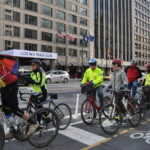
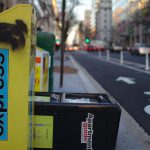
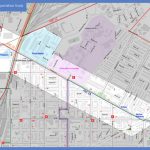
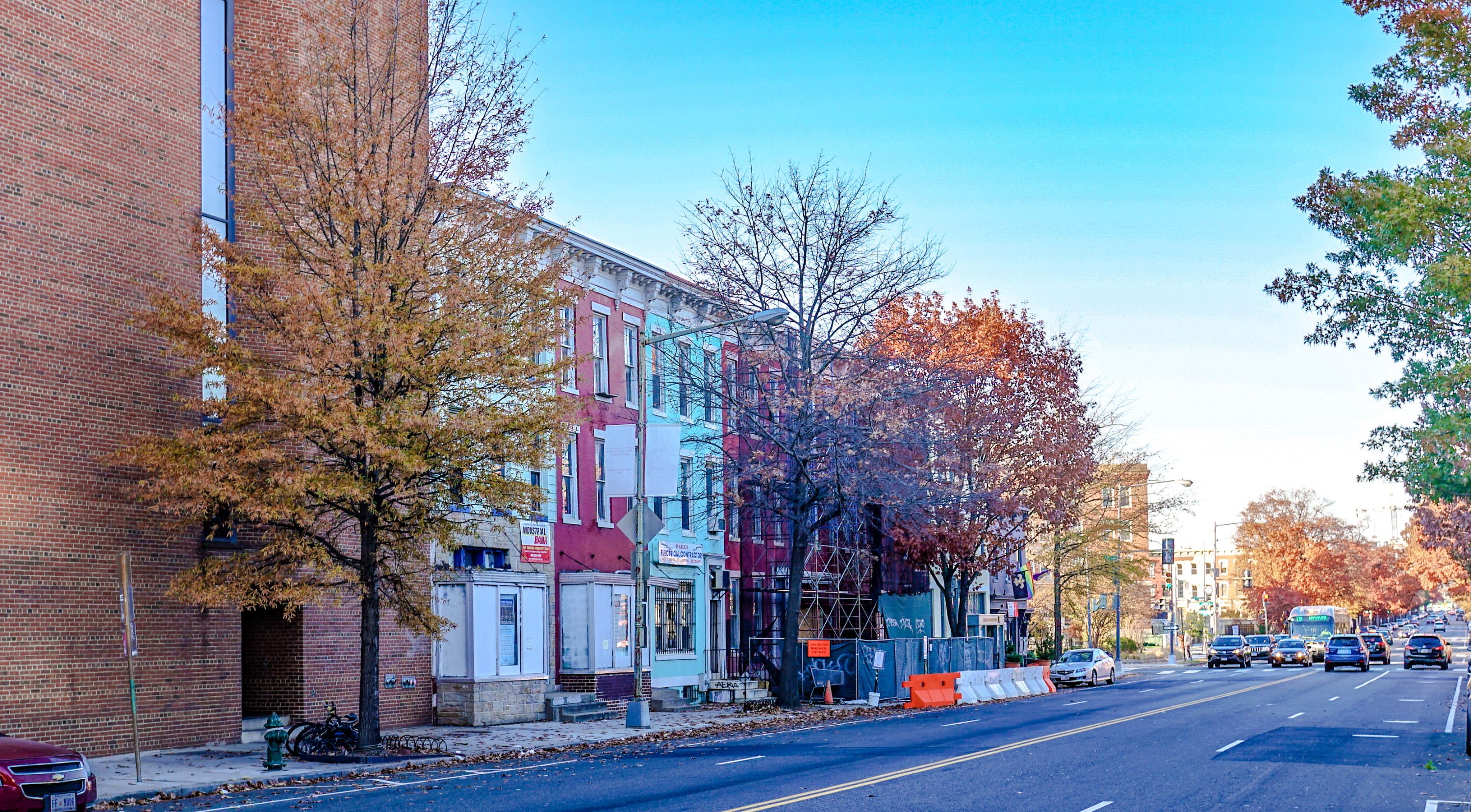
Designed as a cycletrack, like the popular one nearby on 15th Street NW, the bike lanes would run in both directions on the east side of the street, between Pennsylvania and Florida avenues NW, passing the National Portrait Gallery, the city’s Convention Center, and—crucially—several historically black churches whose congregants tend to use available street parking during services.
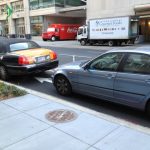
As currently envisioned, the plan would require removing a few dozen parking spots to accommodate taxi standing, turn lanes, and some restricted parking, although Nadeau’s bill pledges “no net change in Sunday angled parking and minimal changes to travel time” in an effort to appease the churchgoers and their leaders.
The project, dubbed the “Eastern Downtown Protected Bike Lane,” has remained in the planning phase since 2015, when concerns about its impacts boiled over at a tense public meeting.
Greater Greater Washington and Street Justice reported last year that Mayor Muriel Bowser’s office has intervened to slow-walk the project and that senior adviser Beverly Perry belonged to one of the churches. Bowser’s office didn’t respond to DCist’s request for comment about the reports. The District Department of Transportation also did not weigh in on Nadeau’s bill by press time.
Meanwhile, the mayor has committed to eliminating traffic deaths in the city, by 2024, through the Vision Zero initiative. DDOT has promised to build 20 additional miles of protected bike lanes citywide by 2022, or three times more than the current number. The city was also slated to begin ticketing motorists for obstructing bike lanes to deter unsafe driving behavior last week.
Proponents of the 9th Street cycletrack say it will improve road safety for cyclists, pedestrians, and drivers. They cite over 60 incidents of pedestrians and cyclists being struck by drivers along this corridor since early 2017, including an incident that happened just last month. “The whole point of the legislation is to restart that public process,” Nadeau says in an interview, noting that her office has communicated extensively with DDOT about the project but hasn’t seen any concrete progress (it has yet to advance past the preliminary “30 percent” design phase). “They won’t do it unless we make them.”
She says the project has been stalled for too long despite the fact that the Council appropriated $300,000 for it last year. “In my mind, it’s critical that we move it forward, and, frankly, malpractice if we don’t, because people are getting hurt,” adds Nadeau. “This is very straightforward. It’s a safety issue that has been identified for five years, it’s an issue that’s been studied, a solution has been identified, funding has been allocated, it needs to move forward.”
Nadeau’s legislation was drafted with four other co-introducers: Councilmembers Mary Cheh, Charles Allen, Robert White, and David Grosso. Because it’s an expedited version that would avoid the usual public hearing and mark-up process for D.C. bills, it needs eight votes to get through the Council, or three additional backers, before it would head to Bowser for review. Spokespeople for the remaining legislators didn’t immediately say how their bosses would vote on the bill when asked by email Monday.
The measure would bar DDOT from shifting its capital dollars between projects—unless it gets Council approval—if certain conditions for the 9th Street NW cycletrack project aren’t met by November 1. Nadeau says the legislation is modeled after a bill the Council approved last year that similarly prohibited DDOT from reprogramming capital dollars before progress was made on redesigning a collision-prone part of Florida Avenue NE.
Originally, she sought to get her bill to a vote in December, but she pulled it when other councilmembers requested more time to consider the issue and speak with the groups that would be affected by the project. She was expected to meet Monday with one of those groups, the Missionary Baptist Ministers’ Conference of Washington D.C. and Vicinity.
This story has been updated with the withdrawal of the bill on Tuesday.