The time and setting of Antoinette Nwandu’s incendiary Pass Over is “now, right now” on “a ghetto street.” But it’s also 1855, on a plantation. Oh, and also 13th century B.C. in Egypt, “a city built by slaves.” All these places, all at once. This description, detailed in the show’s program, gives us only a hint of what to expect before the proverbial curtain lifts at Studio Theatre and the show commences.
Pass Over, whose sparkling two-man repartee dominates its short runtime, isn’t only borrowing from the format of Waiting for Godot. It’s also deeply influenced by the spirit of Samuel Beckett’s classic, a prime example of Theatre of the Absurd, which this play channels with relish. Throw in a healthy dose of Old Testament portent and you have an uncompromising production that explores the long, grim past (and possible future) of race in America.
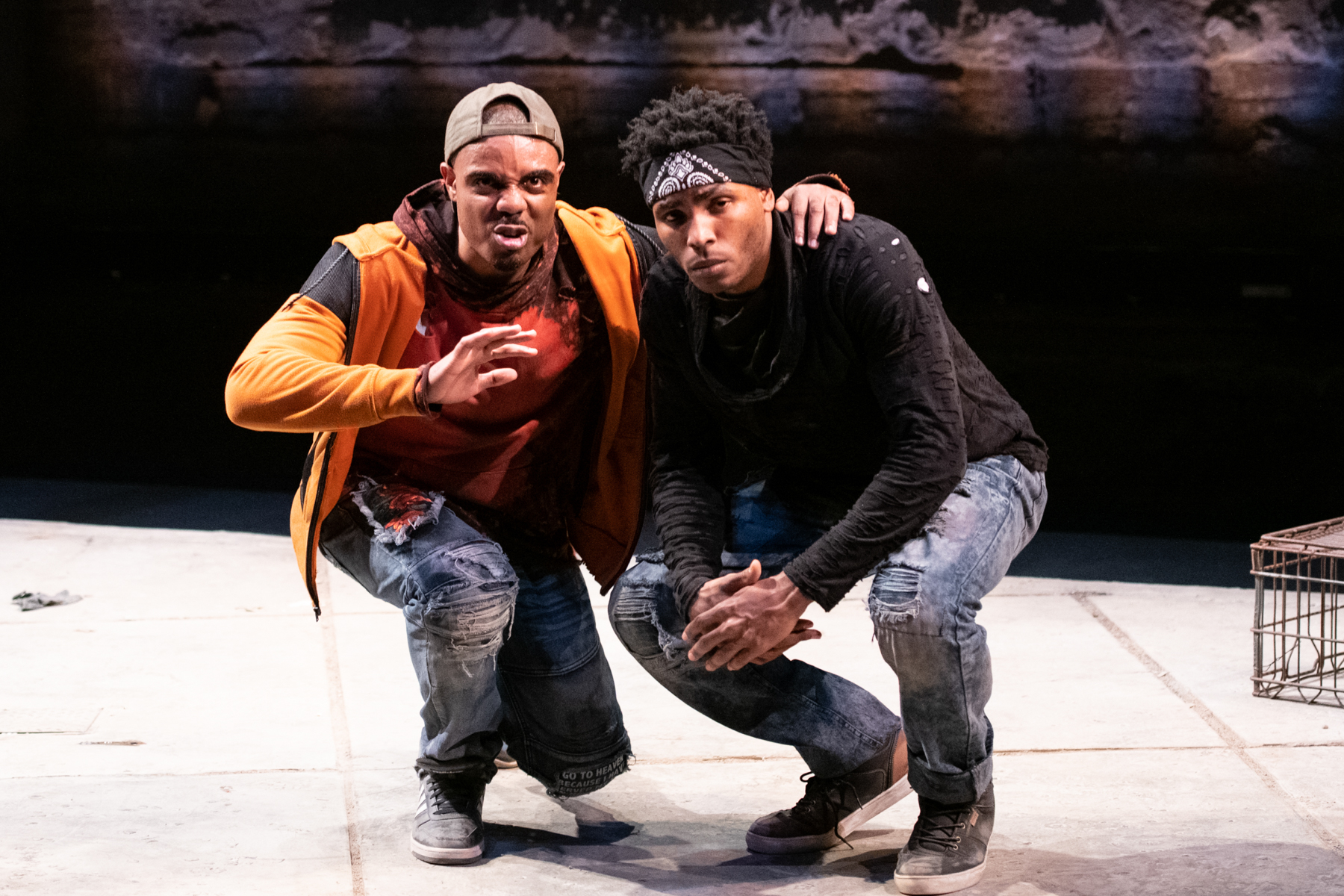
Directed by Psalmayene 24 (a Helen Hayes award winner), Pass Over dramatizes a day or two in the life of Moses and Kitch (Christopher Lovell and Jalen Gilbert, both wonderful), two young black men who spend their time hanging out on a street corner, trading stories about recent casualties of police brutality while daydreaming about better times, that “promised land,” still to come. “What you fixing to do today?” is a question repeated so often it becomes a mantra. The answer is usually “plans.” But Moses and Kitch seem tethered to the trapezoidal slab of pavement they inhabit (the main component of Debra Booth’s spare, concrete-strewn set), a prison without walls.
This is in stark contrast to a white man (Cary Donaldson, perfectly milquetoast) who glides in and out of their space with sheer abandon. When we first meet this interloper, straight out of Leave It to Beaver, he’s dripping with privilege. Dressed like a genteel southerner (linen suit, boater hat, suspenders, bow tie) and armed with a picnic basket and the whitest of vocabularies (“gee golly gosh”), Donaldson plays a caricature in the extreme, intentionally so. After all, Nwandu is interrogating–and exaggerating–stereotypes, both white and black.
Every time the white man returns, in various guises, it’s with escalating menace. Likewise, “pass over,” Moses and Kitch’s shorthand for emancipation, evolves from a message of optimism to nihilism to tragedy. Pass Over concludes with a norm-breaking theatrical twist, which shifts the tension from the stage to the seats. The audience doesn’t quite know what to do when the lights come on. Everything feels uncomfortable, broken, upside-down. But during that moment of confusion and electricity, maybe we just flirted with empathy.
Pass Over runs at Studio Theatre through April 12. Tickets $20-$104. Runtime approximately one hour and 10 minutes with no intermission.