Elliot C. Williams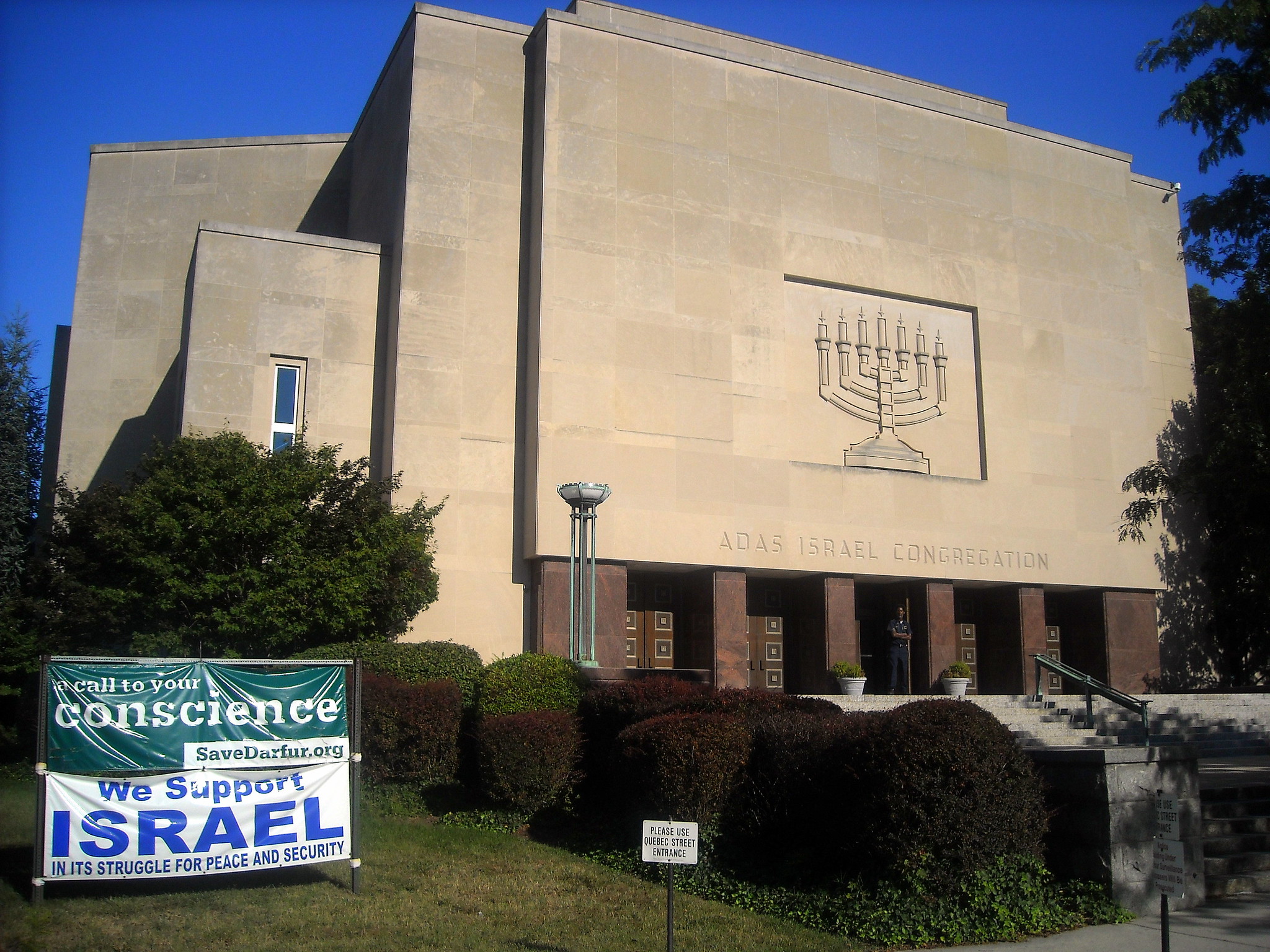
Masses are being skipped. Synagogue services and programs are being moved online. Mosques are canceling congregational prayer services. This is the new reality for faith communities across the D.C. area, as COVID-19 cases are confirmed throughout the region at an exponential rate, leaving religious leaders scrambling to find new ways of reaching their congregations.
Within the local Muslim community, unprecedented measures have been taken to prevent further spread of the virus. Dar Al-Hijrah Islamic Center in Fairfax County suspended Friday prayers for the first time, seemingly ever.
“I don’t think we’ve ever done that, even on worst snow days,” says Saif Rahman, the director of public and government affairs.
Rahman says he and other faith leaders in Northern Virginia have been frustrated with the lack of directive and clear information—they’ve been following advisories and indicators like school closures—but says county officials need to follow Maryland Governor Larry Hogan’s lead and specifically ban gatherings of 250 people or more. Virginia’s state of emergency declaration is not enough, he says.
“From an Islamic perspective, Friday prayers can’t happen digitally,” Rahman says. “In order to suspend a command of God to perform a specific prayer, you need an imminent risk or a directive from an official.”
Typically, more than 100,000 Muslim worshippers congregate at Friday prayer services across Northern Virginia, with three Friday services at Dar Al-Hijrah each attracting more than 1,100 people. Some who weren’t aware of the early Friday morning decision showed up anyway, before realizing the building was closed, Rahman says. He was on a 6 a.m. conference call Friday morning deciding what to do next.
“Our food bank gets 400 people every Thursday,” Rahman says. “We’re trying to make sure that is still stocked, we don’t want people to go hungry, so we’re discussing how people can come in intervals.”
The first confirmed coronavirus case in D.C. was the rector of Christ Church in Georgetown, an Episcopal church. After a member of the Washington National Cathedral’s worship team also tested positive for coronavirus, hundreds of Episcopal churches announced closures for two weeks.
Similarly, the Archdiocese of Washington suspended the regular obligation for Catholic parishioners to attend Mass, starting Saturday, and Catholic schools across the region have been closed.
The Basilica of the National Shrine of the Immaculate Conception announced Friday that Mass and confession are suspended as of Saturday, but will be open for private prayers from 9 a.m. to 5 p.m. daily. The basilica will stream Sunday Mass on its website, starting March 15.
Many D.C. synagogues have made the shift to online services, as well. “We’re closing our building but not closing our community,” says Rabbi Shmuel Herzfeld, of Ohev Sholom, the National Synagogue.
“It’s obviously devastating to close the building, but we know we need to do it,” he says. “We’re limiting social interaction when our whole community is very much built around social interaction. It’s something we’re doing for the sake of our city.”
Shabbat is typically observed in the absence of technology, so Rabbi Herzfeld has, for the first time, provided sermons and Talmud classes on the video service Zoom and on Facebook Live—but only on the eve of Shabbat, and the day after. He says this is a time to improve the synagogue’s online capabilities and grow spiritually.
The time to break physically with the congregation also is allowing for much-needed self-reflection, he adds. “Spiritually speaking, I should’ve been self-quarantining a while ago.”
Rabbi Sarah Krinsky, of Adas Israel, the largest Conservative congregation in Washington, says the leaders made the painful decision of closing the Cleveland Park synagogue until at least March 29. And yet, she says the faith community as a whole is uniquely prepared for emergencies like this.
“The blessing is we already have a strong community outreach,” Krinsky says. “We were already calling our homebound members, but we’re going to be doing that … on steroids. I feel like of any civic category of institutions, including faith organizations, are really set up for this, because this is sort of what we do all the time—thinking of how we take care of each other and the world.”
The George Washington University Hillel is also adjusting its regular outreach, as the university joins other D.C. area schools by going online until April 5. With the stresses the health emergency is causing students, Rabbi Daniel Novick (Krinsky’s husband) says the four members on staff at the Hillel are planning to personally call the 1,700 Jewish students within their network over the next few weeks.
“Many college students haven’t experienced anything like this before,” Novick says. “A lot of synagogues are doing live streaming—we’re actually sending out weekly Shabbat resources to connect students to those services.”
Still, one of the hardest things to control amid the outbreak is the overwhelming sense of panic among some congregants, says Rahman, of Dar Al-Hijrah.
“We need to service the religious and spiritual needs of our community, especially at time like this, when people are lonely and feeling fear,” he says. “This is when faith institutions need to step up.”