Martin Austermuhle
 Rachel Sadon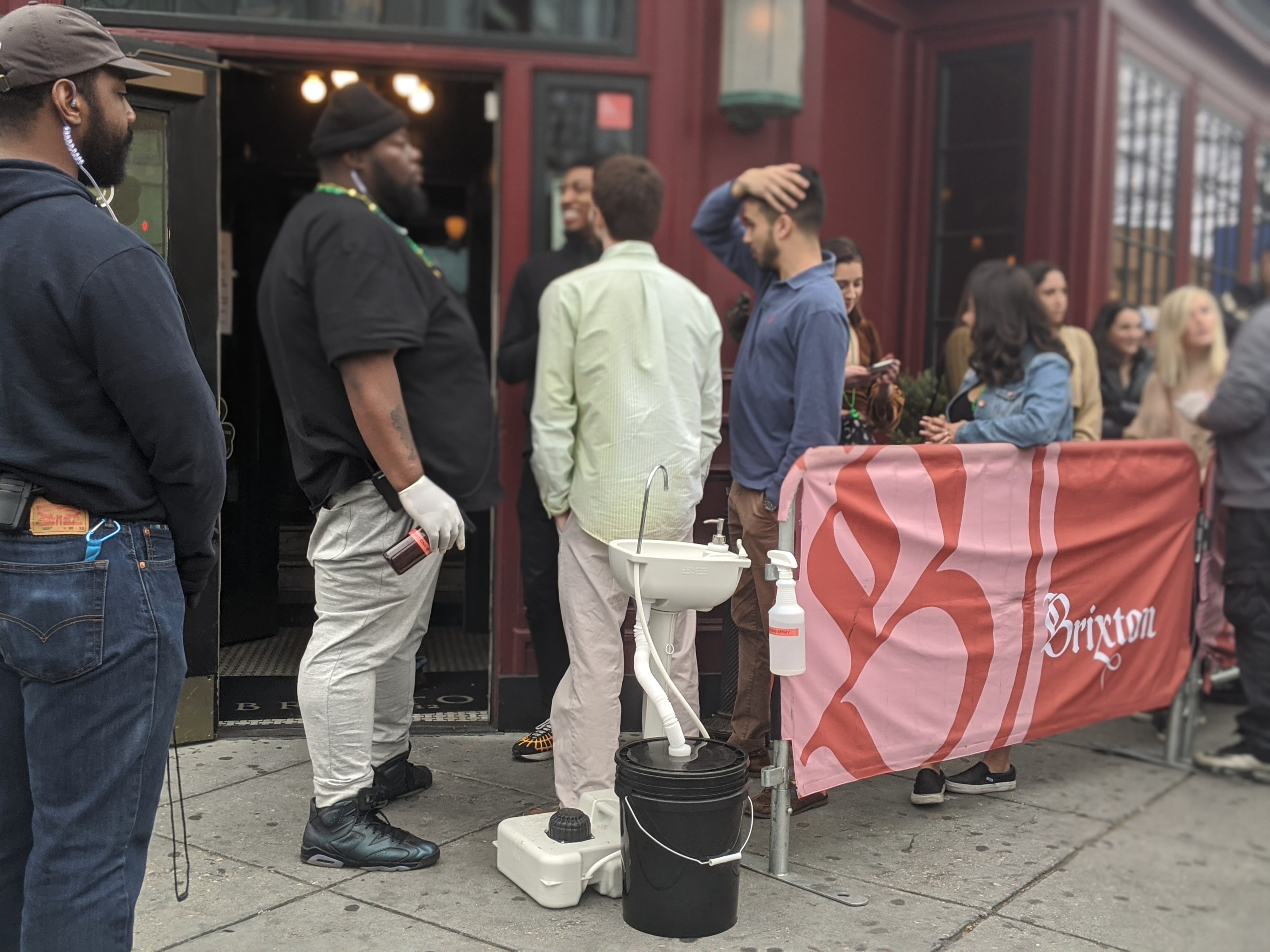
Nightclubs will have to close and bars and restaurants in D.C. will face new restrictions on how they serve their customers as part of an effort by Mayor Muriel Bowser to curtail opportunities for groups of people to congregate during the spreading coronavirus pandemic.
Under the new guidelines, bars and restaurants will have to comply with the existing ban on gatherings of 250 or more people, which was imposed on Friday. But they will have to go further: they will have to suspend the use of bar seating, will not be allowed to serve drinks to anyone who is standing, limit table seating to six people or less, and ensure that tables and booths are at least six feet away from each other.
Nightclubs and multi-purpose facilities, on the other hand, will have to close during the ongoing state of emergency. That definition of “nightclub” is broad enough — a place that serves alcohol, allows musical performances and dancing — to include everything from sizable music venues like the 9:30 Club (which has already suspended performances) to neighborhood mainstays like Columbia Heights’ Wonderland Ballroom.
[For the latest coronavirus updates, see here.]
The new restrictions — which were announced on Sunday afternoon — fall short of across-the-board closures or limits on operating hours, showing the delicate balance that D.C. officials are trying to maintain in encouraging people to keep their distance from each other while not fully shutting down an industry that provides revenue to the city and jobs to many residents.
And the new restrictions come after a weekend where many D.C. residents took advantage of the warm weather and flocked to bars and restaurants, largely ignoring guidance from city officials that they practice social distancing, or staying away from other people. Health experts say that distancing is needed to “flatten the curve,” limiting the possibility of exponential growth of new coronavirus cases.
“I was walking home and I have to pass by the Wonderland [Ballroom] and it was packed, completely packed,” said Claudine Hellmuth, a Columbia Heights resident about what she witnessed Friday evening. “And the Metro was even quiet. It seemed so much in contrast to what I was just experiencing on my trip home to pass by this place where it was standing room only. They were having a great time, it looked like a regular summer evening, not where we’ve all been told that the plague is coming and we have to socially distance ourselves. It was really weird, and I found it really upsetting.”
‘You Can Drink At Home’
Bars and restaurants along the popular 14th Street strip were similarly busy on Friday and Saturday, as were other hot spots across the city. A long line snaked around the Sauf Haus Bier Hall in Dupont Circle on Saturday afternoon, and a user of the popular Instagram account We The People posted a picture of their brunch at Commissary in Logan Circle — including a joke that they were practicing social distancing by not clinking their glasses. That prompted a barrage of angry comments.
“Please stay home so that more people survive this. You can drink at home,” said one commenter. “This is also the opposite of social distancing. What part of ‘distancing’ is difficult to grasp?” came another.
But some bars and restaurants have taken steps to address concerns over social distancing. Local chain Busboys & Poets said it was increasing cleaning of its restaurants, offering paperless menus and moving tables away from each other. Some have opted to go all-delivery. Dacha, a large and popular beer garden in Shaw and Navy Yard, said it remained open — but was limiting entry on Saturday night to remain in compliance with the city’s 250-person ban.
[For more on how bars and restaurants are changing operations, see here.]
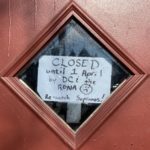
All Souls, a bar in Shaw, posted a sign saying that it was “closed for social distancing,” as did Bloomingdale’s Showtime and The Pug on H Street NE said it would also close. (Little Miss Whiskey’s on H Street went in the opposite direction, posting on Instagram that it was “predicated on freedom of choice” and would remain open.) And Tail Up Goat in Adams Morgan urged Bowser to close all bars and restaurants, saying on Instagram that “to stay open any longer would further jeopardize the health of our staff and our guests.”
At U Street’s The Brixton, patrons waiting in line had the chance to either wash their hands in a small sink at the door or have them sprayed with sanitizer. The bar said it was also wiping down surfaces every 30 minutes and asking people to wash their hands often. Carissa Gambo, the assistant general manager, said the effort was a means to balance keeping people safe while also letting the bar’s staff make a living.
“We have a lot of staff here that their livelihood depends on making money, so it’s from that standpoint we want to make sure our staff gets the money that they need, and from a community standpoint we want to be open for the community because, you know, people still want to go get drunk,” she said.
A Hit To The Industry — And City
Bar and restaurants already operate on thin profit margins, and many workers have said they are concerned about what will happen with a downturn in business because of the coronavirus pandemic. Additionally, many of the workers are tipped employees with limited access to paid time off, meaning that for every hour they can’t work, it’s an hour of pay they won’t get.
More broadly, D.C.’s reliance on sales tax revenue also means that as businesses are hit, so too are city coffers. Bars, restaurants, and nightclubs in D.C. sustain some 65,000 jobs and bring in more than $7 billion in annual revenue, according to a recent report from the Mayor’s Office of Nightlife and Culture.
Still, the messaging on social distancing has been vague and inconsistent. Though D.C. imposed the ban on gatherings of more than 250 people on Friday and city officials urged residents to stay home, they waffled on what bars and restaurants should do to comply. And Gambo says younger residents are still convinced the coronavirus and COVID-19, the illness it causes, won’t impact them.
“[On Friday night] we were way, way less busy than we normally are, which is understandable. But I also was noticing people were just like, ‘Oh, it’s fine.’ The 25-to-35 age group, they’re like, ‘Oh, it’s good. It’s not gonna get us, not going to worry about it. We’re still gonna go out and have fun.’ And we got a couple posts on our Facebook saying, ‘Please stay open, we’re gonna come out.’”
Growing Calls For Further Restrictions
But local and national officials seem to be growing more and more concerned that Americans are not taking the threat of the coronavirus seriously enough, and that many are carrying on with their normal lives. Speaking on CNN on Sunday, Dr. Anthony Fauci, the director of the National Institute of Allergy and Infectious Disease, said he would “like to see a dramatic diminution of the personal interaction that we see” at places like bars and restaurants.
Maryland Gov. Larry Hogan, who on Sunday closed the state’s race tracks and casinos, was critical of bars and restaurants that were operating the way they would on any normal weekend — and the patrons going there. “Anyone who hosts or is part of the crowds in bars this weekend is jeopardizing the health of others and must avoid any contact with family members or friends over the age of 60 or those with underlying health conditions,” he tweeted.
France, which is facing a widespread coronavirus pandemic, took the step this week of fully shuttering bars, cafes and restaurants, after initially not doing so. And in states like Illinois, officials are considering temporary closures to stem the spread of the virus. And on Sunday, Boston Mayor Marty Walsh imposed his own restrictions, requiring all bars and restaurant to close by 11 p.m., cutting their occupancy by 50% and prohibiting lines outside the door. In Ohio, bars and restaurants are being ordered closed.
Additional reporting was provided by Jenny Gathright and Carmel Delshad. This story was updated to clarify that a line was for the Sauf Haus Bier Hall, not Shake Shack.