Rachel Kurzius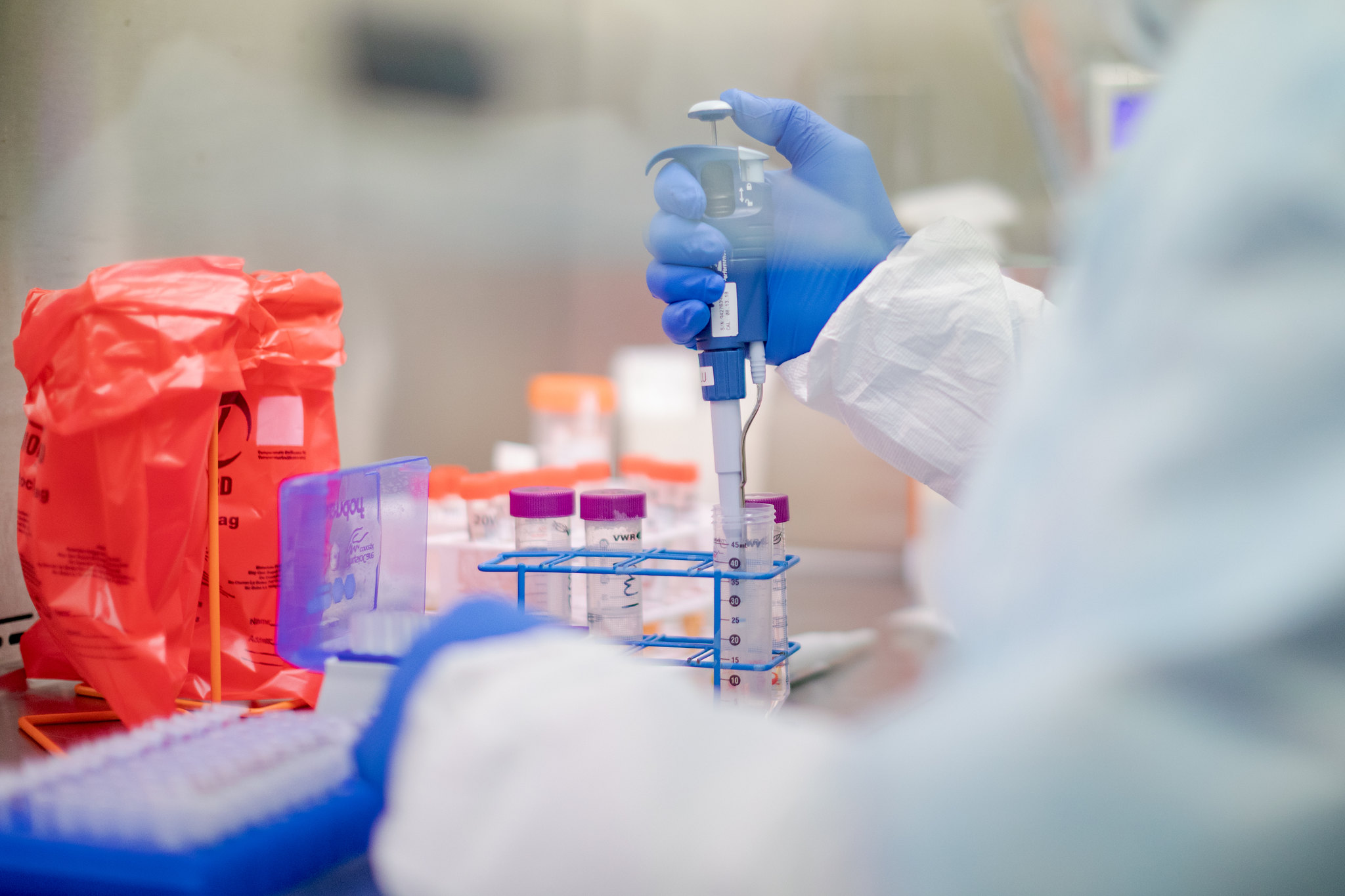
The number of people in the District who have been tested for COVID-19 more than doubled from Wednesday to Thursday, thanks largely to the increase in reporting from tests performed by commercial labs. But nearly two weeks after the city registered its first confirmed case, many say that they lack clarity about what it takes to get tested.
The D.C. government has made it clear that the decision about whether or not a person can access a coronavirus test is entirely in the hands of doctors. Still, some people who have come into direct contact with someone who has tested positive or are exhibiting symptoms say they’ve received conflicting information about testing or were not sure who to call, because they don’t have a primary care physician.
Given the initial shortage of tests, doctors’ guidelines for who can acquire them are strict. (Further complicating matters, many of the symptoms for COVID-19 overlap with the flu, allergies, and other afflictions.)
[For the latest updates on coronavirus, see here.]
The Centers for Disease Control “gives guidance, but it’s really up to the provider, the physician’s discretion, in terms of who to test,” says William Borden, the chief quality and population health officer at the GW Medical Faculty Associates.
The administration of D.C. Mayor Muriel Bowser says that this system has been working well: “We have no evidence of individuals needing testing being turned away,” says spokesperson Susana Castillo over email.
But Damon Fodge, a D.C. resident whose wife has been exhibiting symptoms of COVID-19, like fatigue, an off-and-on fever, and slight respiratory issues since traveling to Orlando, wants to know “how do you define ‘needing’?”
Despite multiple phone calls with doctors, his wife, Katie Parker, has not been able to acquire a test. Her health remains stable, she says: “I don’t think it would really make much of a difference personally for me, other than people I’m close to have underlying conditions and I’d like to know if I exposed them.”
Instead, per doctors’ recommendations, she been quarantining in place alongside Fodge and their 10-year-old son (neither of whom have any symptoms right now).
Many of the high-profile actors and athletes who tested positive for coronavirus did not exhibit any symptoms, but were nonetheless contagious to others. While some countries, most notably South Korea, enacted broad-based testing among residents, U.S. jurisdictions are still waiting for more tests from the federal government.
“We don’t know the true number of how many people in the population have the virus,” says Borden. “Many people with the virus have pretty minimal symptoms.”
He says broad testing hasn’t been enacted for two reasons: there aren’t enough tests, and because “people asking for testing are often people who may have had an exposure, and are looking to get negative result so they can return to work and discontinue home quarantine.” But if the test is a false negative, he says, then that person might return to their regular routine and spread the virus. Better, per Borden, for people to continue quarantining.
It’s not just a lack of tests. There are also national shortages of protective gear like face masks for medical professionals conducting the tests. “During these times, we need to be able to conserve personal protective equipment for our healthcare providers,” said D.C. Department of Health Director LaQuandra Nesbitt on Friday.
People who have sought to get tested have shared varying experiences about whether they were able to do so and where—some of which can be attributed to the ever-changing landscape as governments and institutions react to the virus’ spread. It also mirrors the bureaucratic hurdles that people across the country face as they look for tests.
Tamara, a D.C. resident who had traveled to Chicago in early March, started feeling sick about five days after she returned—her body ached and she had a consistent fever of about 100 degrees. (She asked that we not use her last name because she doesn’t feel comfortable discussing her healthcare history publicly.) After five days of her temperature remaining the same, she decided to go to an urgent care clinic run by Kaiser Permanente in D.C., where she tested negative for both strep throat and the flu.
But the doctor there said Tamara did not meet the guidelines for COVID-19 testing because she had not traveled internationally. When she got home from the clinic, she emailed her general practitioner, who is based in Maryland and also with Kaiser.
“As soon as he saw my email, he gave me an appointment to go to a drive-through in Gaithersburg,” she says. “I drove up there, which was really hard because I was still feeling terrible, but I was able to get there. They did the test while I was sitting in the car—they just stuck the swab in my nose—and then I drove home.” She is still waiting for her results, which she was told would take three to five days.
Kaiser announced on Tuesday that it was opening five drive-through COVID-19 testing sites in Virginia and Maryland, and one walk-through testing site for D.C. The testing is limited to Kaiser members.
As of Thursday evening, the number of people tested in D.C. for COVID-19 was 573, up from 203 the evening prior. The most recent numbers amount to approximately 0.08 percent of D.C.’s population. A total of 71 people tested positive, and D.C. reported its first coronavirus-related death today.
Silver Spring resident Joe Russell, meanwhile, was unable to get tested in Maryland but instead did so at GW Medical Faculty Associates. Because Russell doesn’t have a primary care practitioner, he started calling up local clinics when he spent days with a fever and a “general ache-y malaise.” He has not traveled recently, and has not had any known contact with someone who tested positive.
“They all said, ‘get an order from your doctor and we can do [the test]’—I don’t have a doctor,” he says. He considered going to an emergency room, but didn’t want to “add to chaos of ER if I wasn’t feeling critically ill.” Ultimately, he went to GW University Medical Faculty Associates on Wednesday, where he waited about 30 minutes to get a swab. He says his test was tagged as “low risk.”
Maryland has announced it is converting its vehicle emissions inspection sites into drive-through testing, and Arlington County launched a coronavirus sampling site on Wednesday. At a press conference on Thursday, Bowser said, “We continue to explore having a central testing site.”
At first, D.C. was only processing tests through the D.C. Public Health Laboratory. The public lab currently has a capacity of 50 people per day. According to Nesbitt, it can now provide results for COVID-19 tests within a day of receiving a sample. The city began reporting data from commercial lab testing on March 13.
Bowser, along with the governors of Maryland and Virginia, has repeatedly called on the federal government for testing support. She said on Friday that she has requested 10,000 test kits from the federal government.