 Daniella Cheslow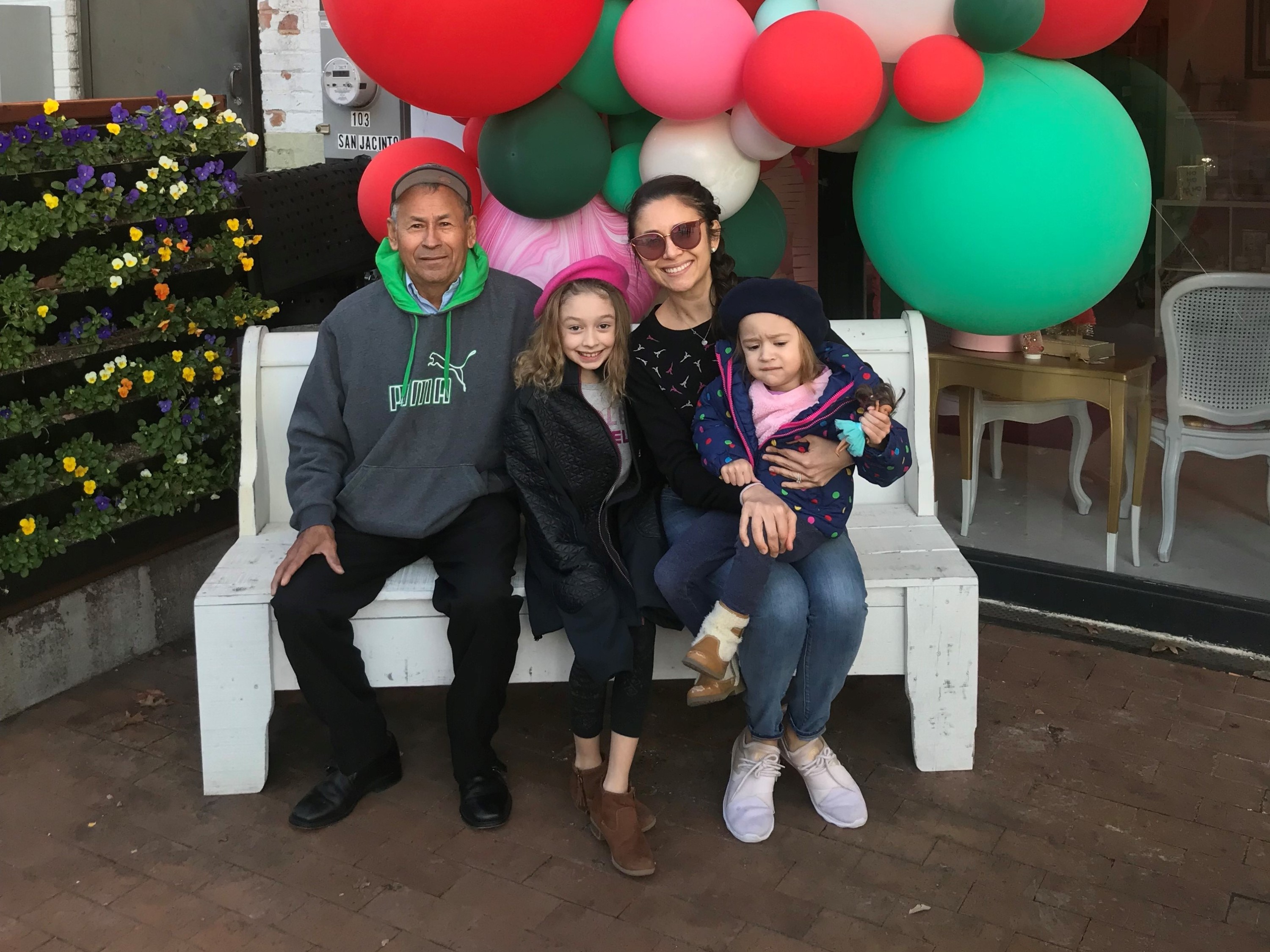
Thousands of Americans are stranded overseas, stuck in place by quickly enacted airport closures and flight cancelations. Among them are U.S. citizens from the D.C. region who were locked down in El Salvador. Some travelers are elderly; others left young children behind and are trying to return.
They say the U.S. State Department has been slow to respond, although the government says it’s working to resolve a complex return operation across multiple countries, each with unique lockdown conditions in response to the coronavirus.
Karen Windholz of Woodbridge, Virginia, says her father Leandro Argueta, 72, is stranded in El Salvador three weeks after he arrived.
“Just two days before his return home … the airports were completely shut down, and they were not allowing anyone to exit the country due to the coronavirus,” she told WAMU.
The president of El Salvador closed the San Salvador airport for two weeks on March 17. Windholz said she filed her father’s information with the State Department and the U.S. Embassy in El Salvador.
“We have not heard back from the embassy yet,” she said. “It would be of tremendous help if the U.S. Embassy in El Salvador could give us some direction on how they will proceed.”
The U.S. State Department did not reply to WAMU questions, but pointed to a briefing issued Monday on the subject. Senior State Department officials said 13,500 U.S. citizens were seeking help getting back to the United States. The officials noted the department already brought home 5,000 Americans from 17 countries, including 800 people from Wuhan, China, and 90 people from Honduras. The officials said an option for evacuating some U.S. citizens could be to fly people back on return flights from deportation missions.
The State Department said it suspended routine visa services in all posts worldwide, so the officials said there are more people available to help repatriate stranded citizens. Still, the officials urged U.S. citizens abroad to act quickly if they planned to leave, take commercial flights if they were available, and register with the State Department if that was not possible.
“Take a look at your circumstances; determine whether this is a place where you would be willing to hunker down for an indeterminate period of time as airspace and borders, et cetera, close down,” the officials advised. If the answer is no, they continued, “get out now.”
Windholz’s Congressman is Democratic U.S. Rep. Gerald Connolly; his chief of staff Jamie Smith said Connolly is working with the State Department to help return constituents from at least five countries.
Virginia Sen. Mark Warner said he has helped repatriate some 100 Virginians and is in touch with others stuck in countries including El Salvador. He invited stranded citizens from the state to contact him via web form.
Residents of Maryland and D.C. are also stranded in El Salvador.
Tatiana Juarez of Rockville, Maryland, says her sister is caring for her two children, aged 4 and 5, as she tries to leave El Salvador. Juarez, who will unexpectedly spend her 24th birthday Thursday in El Salvador, said she and her parents traveled to obtain affordable surgery for her father.
Juarez said she planned to return to the U.S. on Saturday, but couldn’t because of the airport closure. Her commercial flight was postponed to April 1, when the airport may reopen. Now she is trying to enlist the State Department to return home sooner. She said she entered her information on a State Department website for stranded citizens, but has not been contacted.
“I think they should at least help us get home,” she said. She heard other U.S. citizens were offered flights out of El Salvador, but at a cost of some $1,200 a seat, “which is ridiculous. There’s a family of three and you’re telling me it will cost $4,000.”
Former U.S. Ambassador to Yemen Barbara Bodine, who is now Director of the Institute for the Study of Diplomacy at Georgetown University, said she understood it was “horrible to be stuck,” but she noted that the State Department faces a challenge likely not seen since World War II.
Bodine said she was deputy Chief of Mission in Kuwait in 1990 when Iraq invaded and she had to help some 5,000 Americans depart. That effort took months. She urged Americans stuck overseas to be resourceful, patient, and willing to pay.
“Our job is to help find a way for citizens to get out safely, but unfortunately not necessarily cheaply,” she added.
Some stranded citizens managed to get out.
Margie Legowski, 65, traveled to El Salvador in February with volunteers from Holy Trinity Church in Washington, D.C. and planned to leave this week, but was also blocked by the government airport shutdown. Legowski said she had no major health issues and felt comfortable in El Salvador, where she visited often before. Still, on Monday evening she was relieved to speak with a representative of the U.S. Embassy in El Salvador, offering her seat on a relief flight to Houston.
“The economy flight just to Houston costs about $1,200 — then I booked on to D.C.,” Legoswki wrote to WAMU. “Thank God I have a credit card and am only flying myself, although it’s a hardship even for me.”
Windholz said she hopes her father gets a similar notification soon.
“We have been in contact with my dad every single day since the situation got worse to keep him motivated, and to let him know that this will be over soon,” Windholz said.
This story originally appeared on WAMU