 Eliza Tebo
 Rachel Sadon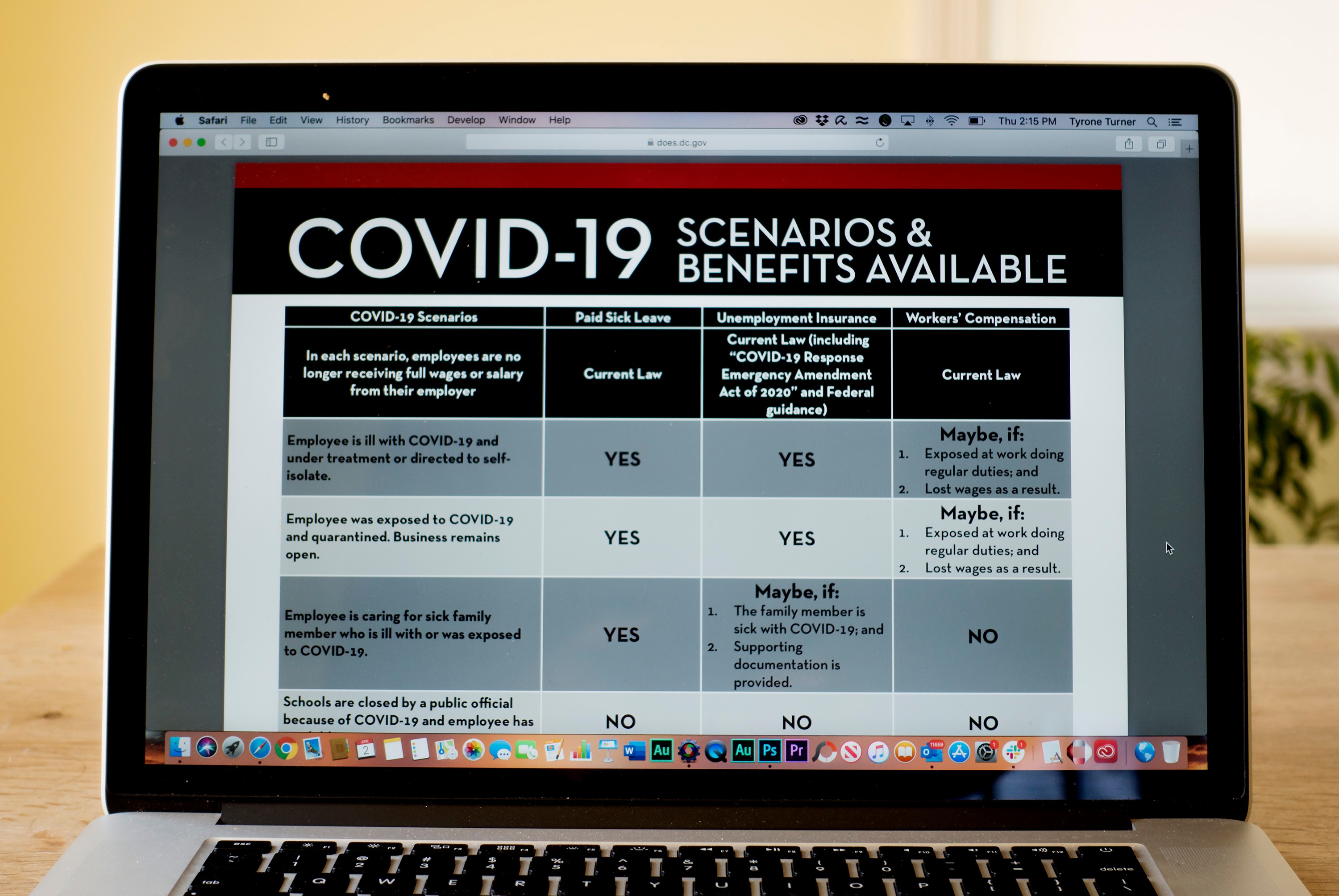
More than 50,000 D.C. workers have filed for unemployment insurance since the coronavirus outbreak began –– nearly double the annual total of applications in 2019 — as the region reels from an economic downturn caused by measures designed to contain the COVID-19 outbreak.
On Sunday, the D.C. Department of Employment Services reported an increase of 1,400 applications in a 24-hour period, with 50,181 total applications since March 13. That’s more than the entirety of 2019, during which D.C. saw a total of 37,720 claims.
Virginia saw more than 158,000 applications for unemployment over the past two weeks, with about a quarter of them filed in Northern Virginia, according to the latest figures provided by the Virginia Employment Commission and broken down by InsideNova. The number of claims in the last week of March represents a 5,000 percent increase from a comparable week in 2019, the VEC said.
In Maryland, some 120,000 claims have been filed in the last two weeks –– three times the amount that’s typical in a given year –– a Maryland Department of Labor official recently said in a Prince George’s County business webinar.
Mass layoffs began hitting in mid-March, decimating service industries in particular as restaurant workers, dog walkers, hair dressers, massage therapists, and others have seen business dry up (more than 6,000 D.C. businesses applied for relief from a $25 million city fund, which is no longer accepting applications).
Unemployment benefits—which apply in the jurisdiction where employees work rather than live—top out at $444 a week in D.C. Benefits are capped at $430 in Maryland and $378 in Virginia. D.C. and Virginia are waiving their usual one-week waiting period for receiving approved benefits, and Maryland does not have a weeklong wait requirement.
Under the newly passed Coronavirus Aid, Relief and Economic Security (CARES) Act, an additional $600 per week can be tacked on to state benefits. The federal plan also expands eligibility to independent contractors and workers who are self-employed, eases restrictions requiring active work searches, and extends the length of potential coverage through July 31.
The federal government reported Thursday that more than 10 million people filed for unemployment over the past month. And in the first two weeks of the outbreak, the number of unemployment claims in the U.S. equaled that of a three-month period during the 2008 recession.
One economist, writing in the New York Times, estimates that the country’s total unemployment rate is likely around 13 percent—which would be the highest it has been since the Great Depression.
With record numbers of Washingtonians applying for unemployment, the systems for submitting claims have buckled under the pressure. The District has been attempting to update its digital unemployment portal for a decade, as the Washington Post and the Washington City Paper have reported. But in the absence of a modern system, an antiquated website has caused confusion and a hotline was overwhelmed by callers, with people reporting wait times of as long as 11 hours. D.C. officials are urging residents to file online, preferably with Internet Explorer.
“I want to answer this question again to emphasize that we are working relentlessly to meet the flooding demand of unemployment claims,” Mayor Muriel Bowser wrote when asked about such issues in a Twitter Q&A on Friday.
Spikes in unemployment claims have also overwhelmed Virginia’s website. “The online claim filing system is operational but not sending confirmation numbers,” the site reads. “Claims are being received and we are working on fixing the problem.”
Maryland is also experiencing an “unprecedented surge in claims traffic,” and state workers who process claims have taken on extra shifts and begun working on Saturdays to tackle the load.
Jeannette Chapman, director of George Mason University’s Steven S. Fuller Institute for Research on the Washington Region’s Economic Future, told WAMU recently that she expects there to be at least two waves of unemployment claims, starting with the leisure, hospitality, restaurant, and retail workers who have been hit first.
“That will probably continue for a few weeks before things start to stabilize,” she said. “The next wave will be from salaried workers that are not yet affected, but if this lasts much longer, things will start to spread into other sectors. So we may see another wave later on.”
Interpreting what these numbers mean for the long term, though, is nearly impossible.
“The severity of the recession is almost immeasurable because things are happening so much faster than usual,” Chapman said. “We are used to measuring things in incremental changes, and we’ve had full scale shutdowns of entire sectors, which is unprecedented. So it’s hard to extrapolate what that means in the long term, because the long term will be determined by what happens with the health crisis.”