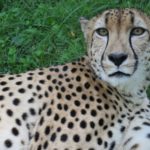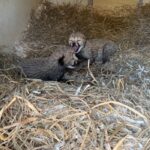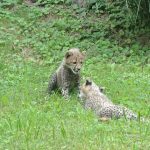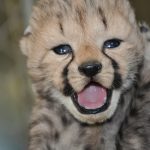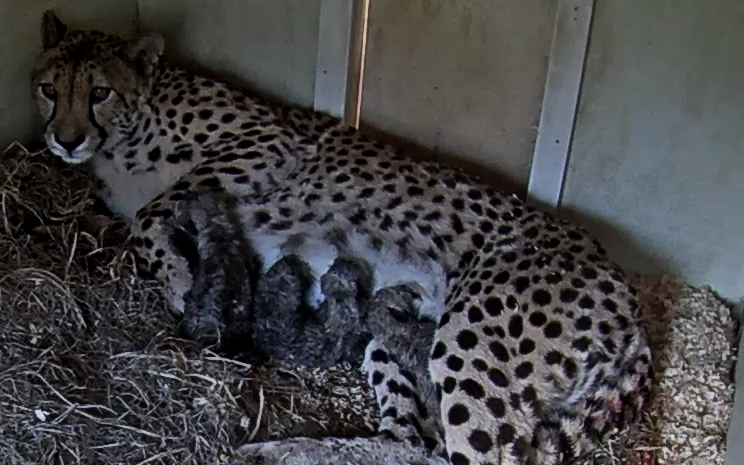
Some good news: a cheetah named Echo at the Smithsonian Conservation Biology Institute in Front Royal welcomed a litter of four cubs on Wednesday. Echo, who is five-years-old, gave birth to her first cub late in the morning, and she and her newborns can be seen live via a cheetah cub cam broadcasting live on the zoo’s website.
“It’s thrilling and humbling to witness something as special as an animal birth,” Steve Monfort, the John and Adrienne Mars Director of the Smithsonian’s National Zoo and Conservation Biology Institute, said in a statement about the birth. “I’m eager to watch the newborn cubs in their early days. During this extremely tumultuous and isolating time, we want the new cheetah cam and all our live animal webcams to provide much needed moments of relief and inspiration from our natural world.”
The National Zoo and Conservation Biology Institute are currently closed to the public due to the coronavirus outbreak, but keepers and veterinary staff have kept working, caring for animals like Echo.
The institute is part of the Cheetah Breeding Center coalition, which helps maintain and care for the North American cheetah population. The Association of Zoos and Aquariums also has a Species Survival Plan for cheetahs, and these cubs mark a big contribution.
Echo and another cheetah, a four-year-old named Scott, were paired and bred in January, according to the zoo. She’s a first-time mom, and her keepers trained her to voluntarily participate in ultrasounds.
“This was Echo’s first pregnancy, but we’re confident in her maternal instincts and abilities,” Adrienne Crosier, the cheetah reproductive biologist at SCBI and head of the cheetah species survival plan, said in a release. “She was raised by her own mother without human intervention, so there’s a good chance Echo has learned cheetah parenting behaviors from the best teacher—her mother.”
This is the latest in big cheetah news to come out of the zoo in recent weeks. In late March, the Conservation Biology Institute announced it received a delivery of cheetah milk from the Columbus Zoo in Ohio. The sample will be stored in their milk bank, and scientists will study it to create a suitable substitute for cubs who can’t get milk from their mothers.
The public will be able to view Echo care for her litter online until the cubs leave the den, though they do have access to multiple dens, and might move off-camera from time to time. The zoo is also offering an Animal Cam Educational Packet, for teachers and parents at home with their kids, or any curious viewer.