Rachel Kurzius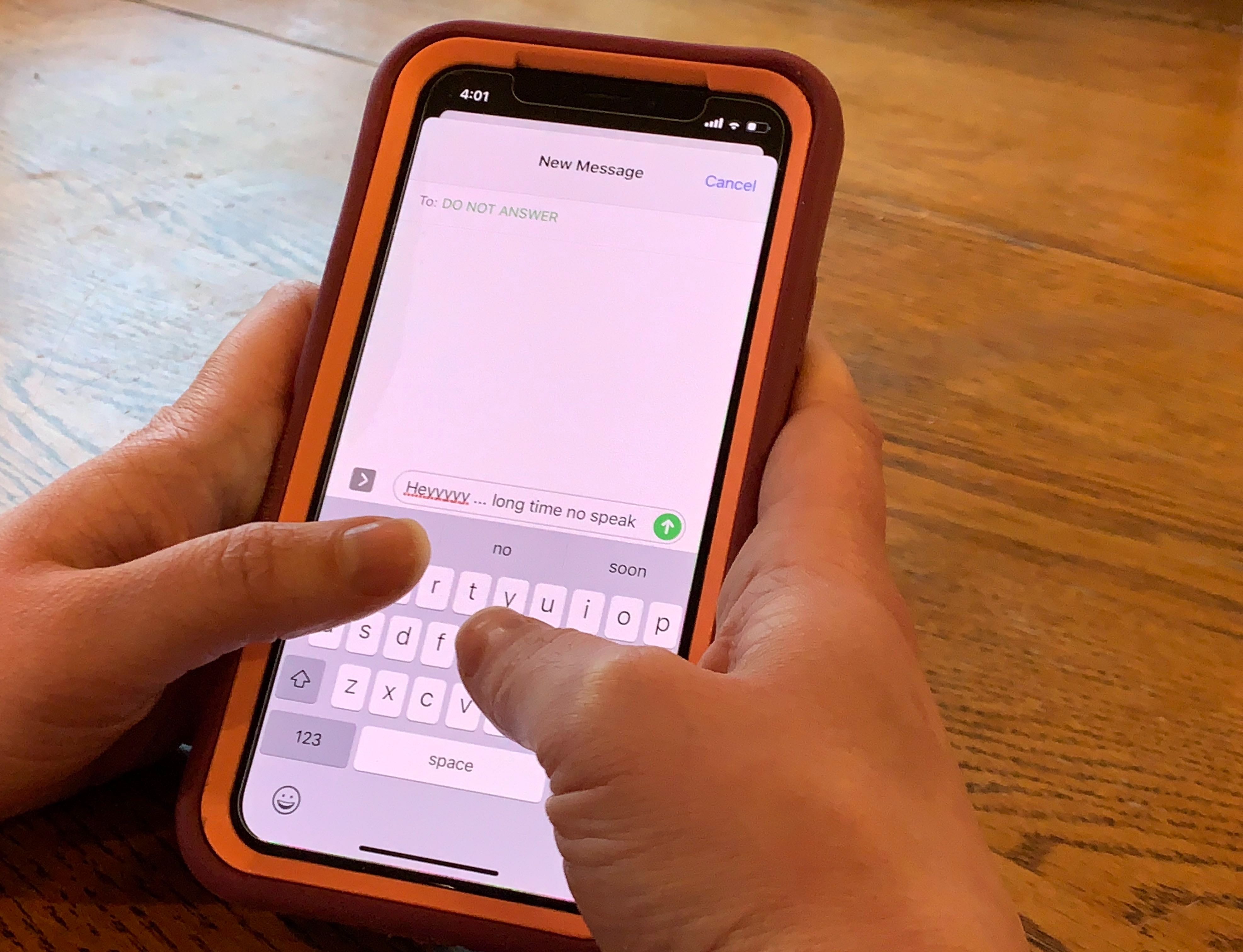
Coye has often thought about getting in touch with his ex-girlfriend since they broke up six years ago, but he always stopped himself.
“It never felt like it was the right time to reach out,” says Coye, a local in his mid-twenties who asked that we only use his first name. “I always felt like if I reached out, she would think I was trying to rekindle our relationship, even though I genuinely wanted to check in on her and her family—I had love for them.”
But the spread of coronavirus changed his calculation. The pandemic “made me think about who I still care about and she is one of them,” he says. “It felt right” to get back in touch.
After getting the okay from a mutual friend, Coye decided to add his ex on Instagram. (After their break-up, they had removed one another from their social media feeds.) She followed back. Two days later, he sent her a message to inquire about her and her family’s well-being and apologized for the radio silence over the past six years.
“She didn’t leave me on read, which was nice,” Coye says. Instead, his ex responded, expressing that she was glad to receive his note. Since then, they’ve kept up a correspondence, sharing all of their life updates that transpired since they last spoke.
“It definitely rekindled our friendship,” he says. “I think we’re on good terms now. It’s the biggest accomplishment that I’ve had during social isolation.”
Coye isn’t the only one reaching out to a former flame during the coronavirus outbreak, enough so that an entire genre of meme now exists to parody the phenomenon. Dr. Andrea Bonior, a licensed clinical psychologist in D.C. and author of the forthcoming book Detox Your Thoughts, says many of her clients have been talking about either sending or receiving such notes during their video sessions, and their experiences “really run the gamut.”
“I have seen some people be thrown by it because it is out of the blue—they were relationships that had ended poorly, so any contact was disruptive emotionally and it felt confusing and maybe even manipulative,” says Bonior. “But others reach out in good faith to exes that they want to check in on. Those are more innocent because it’s about human connection.”
Neo, a D.C. woman in her early thirties, says that an unexpected communication from one ex inspired her to reach out to a different beau. (She requested that we only use her first name.)
“I had been wrestling whether or not to call my previous ex,” she says. The two of them had dated for about two years, and broke things off late last spring. When she got an email from a more recent fling, she found herself feeling “surprised, but I mainly feel really good knowing he would be thinking about me.” That flurry of emotions is what prompted her to contact the ex on her mind, even though the two of them hadn’t spoken since their break up.
“I figured email would be safer, just to make sure there he wouldn’t misread my email, and think I was trying to get back together,” Neo says. About an hour after she sent her one-line email, her ex wrote back with a kind missive four times as long.
“It was touching to see that he does care about me,” she says. “I think this is kind of the closure I needed—he’s someone out there who cares, but not enough to reach out to me first. Maybe this is a good way for me to finally stop thinking about him or imagining years down the road we’ll find each other.”
But Redd, the middle name of a late-thirties area man, hasn’t quite gotten the same sense of resolution. His birthday takes place during the second week in March, right as concerns about the coronavirus began causing local closures. He was already bummed about his birthday, “which I felt like was the end of the world,” when suddenly the world itself shifted. So he decided to take the opportunity to reach out to women who he’s either dated or felt a connection with—five in total over text or email—to see how they were doing.
He thought that it might be nice to “establish relationships where there’s no expectation there’s anything beyond texting,” he says. “Because I have no idea when I’ll ever see anyone again, it’s kind of a safer space to play around and talk.” One of the five got back to him, and she signaled that she’d be interested in a pen pal exchange. Recently, Redd hasn’t tried to reach out to anyone new. A few weeks ago, “I stopped caring about dating, period,” he says.
Bonior says that people considering contacting an ex should first examine their motivations, because there’s a “potential for, ‘I’m bored and lonely, let me see what this person is up to,’ when in reality, you’re throwing a hand grenade … You have to be respectful and have to keep your expectations reasonable. The only rule is to do what feels healthy for you, and that, if you do interact with your ex, you treat them with respect …Make sure the first contact is simple, casual, nuanced, and brief enough that you’re not coming in with a sledgehammer.”
Dooley, the nickname for a new D.C. resident, says that he ultimately decided not to contact his ex, despite feeling sorely tempted. They broke things off in November after a three-year relationship.
“Don’t get me wrong—I definitely thought about it,” he says. “For me personally, I had an opportunity for once in my life to be alone. I was always someone afraid to be alone. If I reached out to her, I would be repeating what I’ve been doing my whole life, which is basically trying to fill that void: wanting someone to affirm the things you’re doing in life, or to support you in things you’re doing.”
But while Dooley is pleased with his choice, he doesn’t begrudge those who opt for a different path. “If someone does want to hit up an ex and rekindle the flame, I would never want to discourage that,” he says.
And Bonior says that at least one of her clients appears to have revived a lost love, but she acknowledges that “it’s hard to know what a romance means in this time. There’s this question of, are we just bored at home or are we going to want to prioritize each other when life gets back to normal?”