 Mikaela Lefrak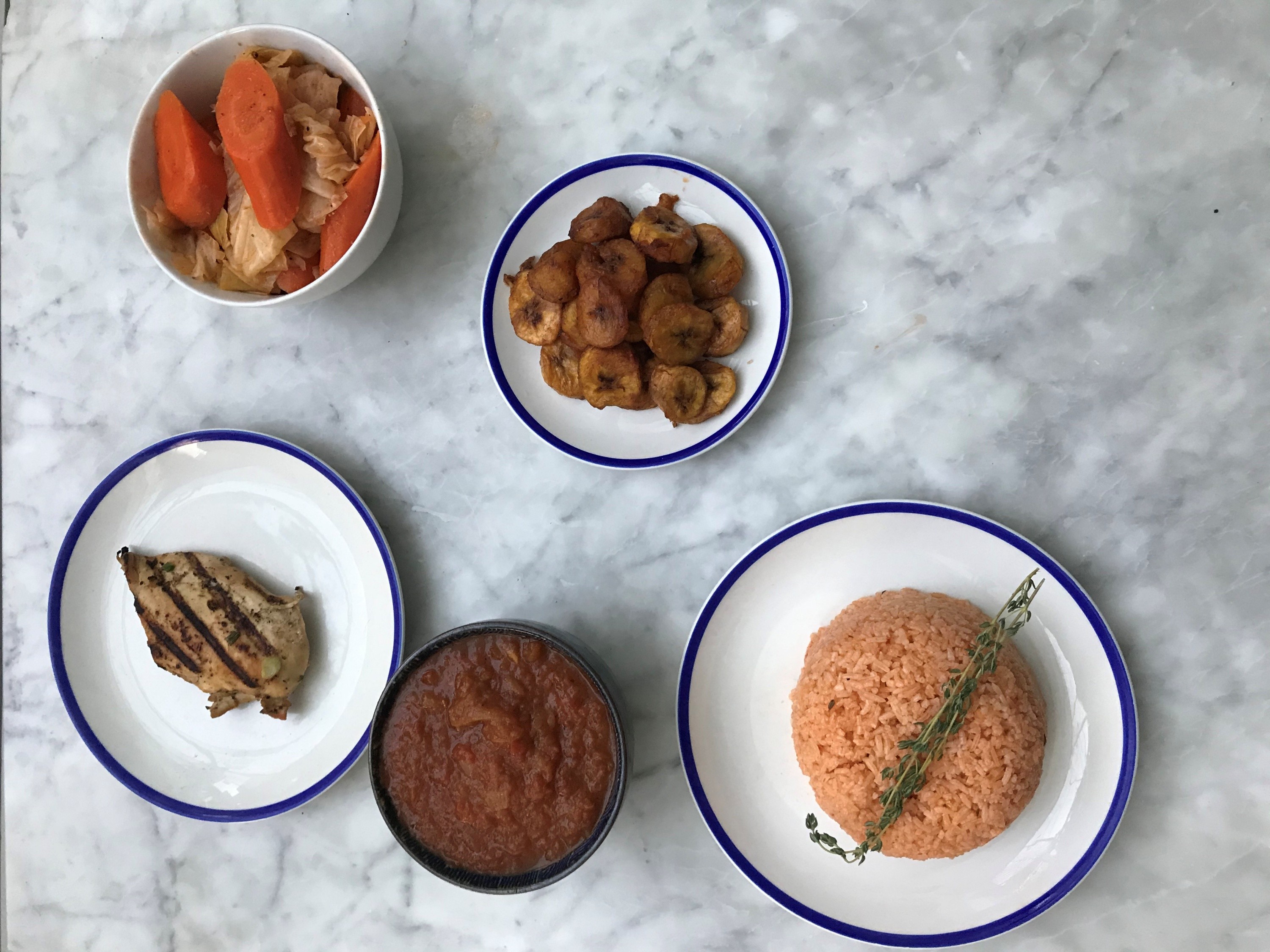
Haimonot is an Ethiopian refugee, and her passion is cooking.
“If you ask me where my future is, I will tell you: In the kitchen cooking dishes that taste good and that bring people joy who eat them,” she said through an interpreter. She asked not to use her full name to protect her safety.
Haimonot can’t send money back to her family in Ethiopia because she doesn’t have a job yet. But this week, at least, she has one day’s worth of work. The nonprofit Tables Without Borders will pay her $25 per hour to cook 250 meals that will be donated to people in need during the coronavirus pandemic.
Haimonot plans to prepare a spread of Middle Eastern dishes inspired by the 15 years she lived in Lebanon before moving to the U.S. — chicken shawarma, chickpea stew, rice, and tahini sauce. One hundred and seventy of the meals will go to Howard University Hospital for its night shift workers, and the other 80 will go to a temporary homeless shelter in Arlington.
When Sara Abdel-Rahim and Sam Sgori launched Tables Without Borders last summer, their goal was to place refugee and asylum-seeking chefs in paid internships at local restaurants. They organized a half dozen successful internships last year and planned to do it all again this summer.
Then the coronavirus outbreak hit and restaurants across the region shut down.
“That’s when we thought, why not do a rendition of Tables Without Borders dinners, but providing meals that our chefs make to the most vulnerable individuals in our communities?” Abdel-Rahim said.
She and her co-founder launched a Go Fund Me page in late March that’s raised nearly $9,000 so far. All the money will go towards paying their chefs and buying food packaging supplies.
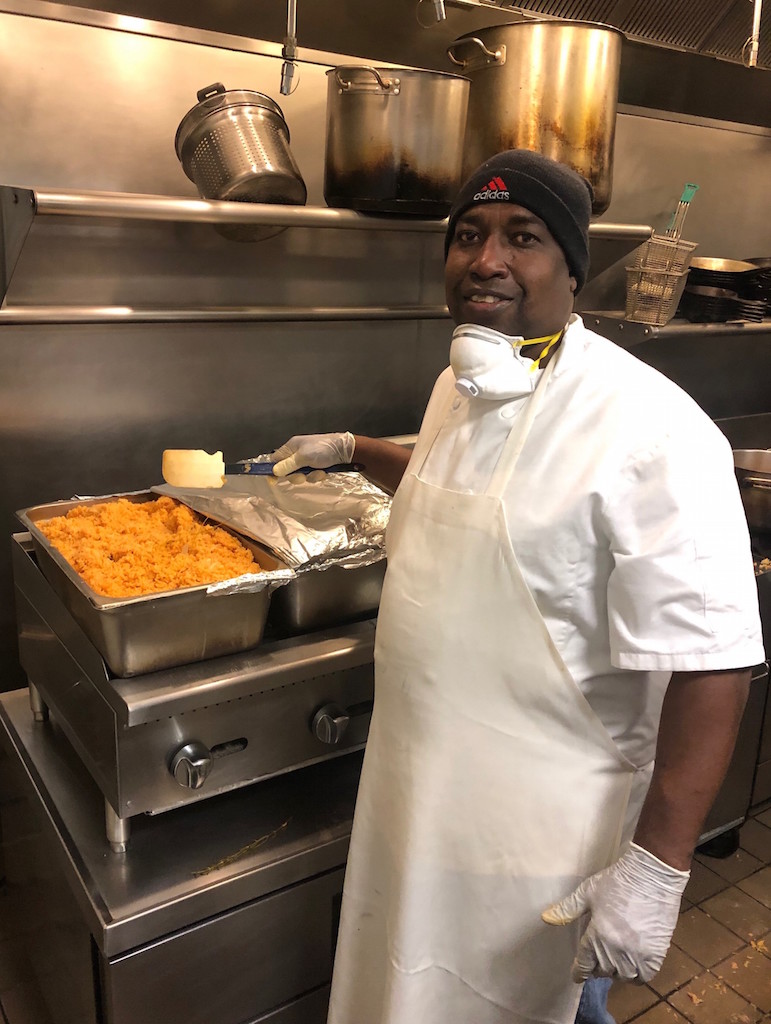
The first chef they hired was Bacon Williams, a hotel restaurant chef by trade who arrived in the United States six months ago from Côte d’Ivoire. He teamed up with Gerald Addison, the former executive chef at Maydan. Addison had been preparing to open a new restaurant in Navy Yard until the pandemic delayed his plans.
Working out of Addison’s empty restaurant kitchen, the two chefs made 250 West African meals during one long 10-hour day. All the meals were delivered to Ayuda, a nonprofit that works primarily with Latin American immigrant clients.
As the nonprofit did with Haimonot, Tables Without Borders paid Williams $25 per hour for his work. Abdel-Rahim said she’s also working on a new partnership with the fast-casual restaurant Immigrant Food on a way to provide more work for the chefs.
Many other food nonprofits in the D.C. region are developing innovative ways to feed people during the coronavirus outbreak. Silver Spring Cares purchases food from local restaurants and distributes it to hungry Montgomery County residents. José Andrés’s nonprofit World Central Kitchen now operates out of Nationals Park, where the team produces meals for senior communities, first responders and District residents experiencing poverty and homelessness.
Restaurants and bars are also finding ways to help. The new Chevy Chase eatery Muchas Gracias offers free meals and CSA boxes to immigrant families in need and Hook Hall in Petworth distributes meals, and pantry staples to restaurant industry workers. Others are turning themselves into makeshift markets where they sell toilet paper, milk, coffee, meat and other provisions to customers.
Tables Without Borders has a number of other chefs lined up for future weeks, including refugees and asylum-seekers from Ethiopia, Afghanistan, El Salvador, and Iran. Abdel-Rahim says her main focus right now is finding new places to donate the meals.
“We’re super nimble and able to quickly turn around meals and deliver them,” she said, “so we’d love to support anyone who’s in need of our meals.”
This story first appeared on WAMU.