Martin Austermuhle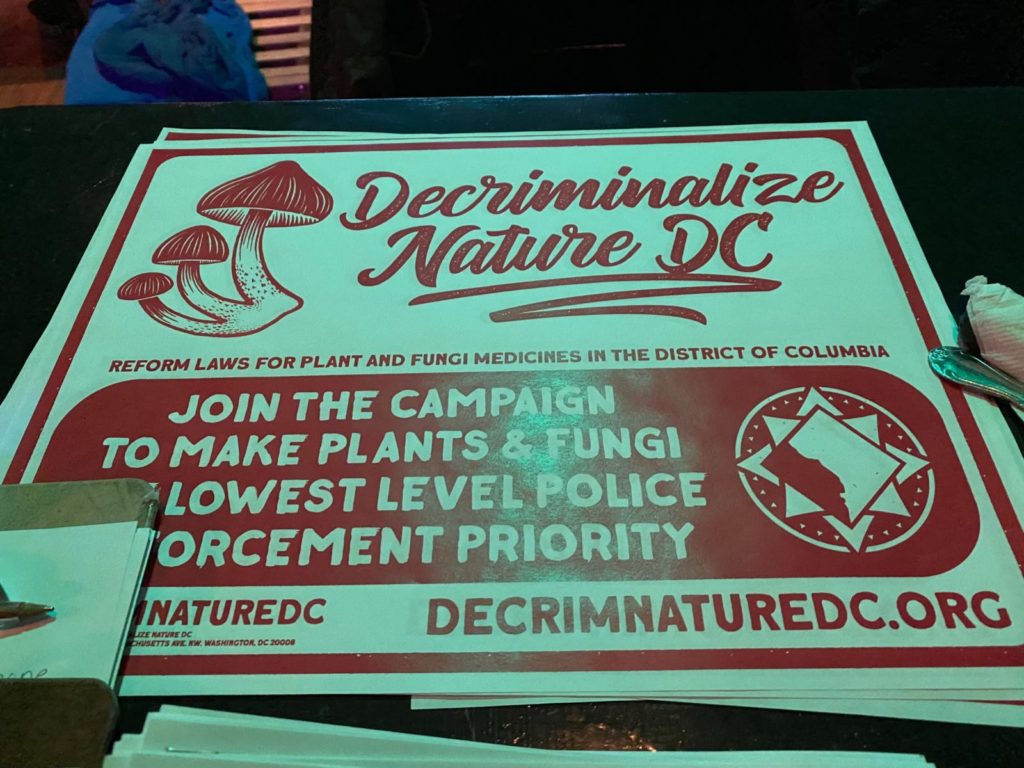
A nascent effort to reduce penalties on the possession and use of magic mushrooms and other psychedelic plants in D.C. was dealt what seemed like a fatal blow by the coronavirus pandemic — but proponents say they plan on soldiering on, using the mail to collect tens of thousands of signatures to put the issue on the November ballot.
To get an issue on the ballot, proponents have to gather signatures from 5% of D.C.’s registered voters — roughly 25,000 signatures at this point — within a six-month period. But with normal signature-collection a virtual impossibility because of the city’s stay-at-home order and social distancing norms, leaders of the Decriminalize Nature D.C. say they instead plan on sending petitions directly to households and asking voters to sign them and send them back.
“We can’t be outside getting signatures, so we’re trying to be inventive and work with the system we have,” says Melissa Lavasani, the leader of the campaign, who says a packet of information and testimonials will accompany the petitions in the mail. “We’re trying to beef up the envelope so people don’t throw it in the trash. We’re trying to make it nice and inviting.”
If approved by voters, the initiative wouldn’t formally legalize or decriminalize the possession and use of magic mushrooms and psychedelic plants, but rather make enforcing those laws the “lowest priority” for police in the city. Both are currently listed as Schedule I drugs, which can bring heftier penalties.
That was the same approach used in Denver, where voters approved a measure last year to make enforcement of drug laws against mushrooms a low priority. The Oakland City Council followed suit last June, and there are now efforts in dozens of cities across the country to ease penalties on psychedelic mushrooms and plants.
But with normal election practices on hold or being altered during the pandemic, other efforts have hit significant roadblocks. In Oregon, a statewide effort to put the issue of magic mushrooms on the ballot is struggling to get the last batch of valid signatures needed, and has had to move away from in-person collection.
And in D.C., city officials are rapidly shifting to conducting most of the June 2 primary by mail by encouraging voters to request absentee ballots. But they haven’t made any changes to how ballot initiatives are handled. A request from the campaign’s that the D.C. Council pass emergency legislation to allow for electronic signature-collection has not been addressed.
Beyond the logistical challenges of mailing petitions to tens of thousands of voters — and having them return them signed — the Decriminalize Nature D.C. campaign will likely have to overcome a legal hurdle. “Right now the law requires that petitions be gathered in person and that people be there to witness signatures,” Michael Bennett, chair of the D.C. Board of Elections, said Thursday.
Lavasani says the campaign has gotten legal advice that the board’s interpretation is wrong, and that the person signing a petition can then serve as their own witness. Still, without the Council stepping in to change the law, any of the petitions returned could be rejected or prompt a legal challenge.
Council member Charles Allen (D-Ward 6) says emergency legislation is possible to address signature-gathering rules for candidates for the November general election, but it’s unclear that there would be anything specific to the magic mushrooms initiative.
Internal polling by the campaign showed that an estimated 60% of D.C. residents would vote for the initiative, but whether the initiative even gets on the November ballot will remain the big question for the months to come. The campaign will have to submit its signatures by July to get on November’s ballot; any later than that would delay a vote until 2022.
“It exposed some vulnerabilities in our democracy, at every level,” Lavasani says of the pandemic. “We’re not as adaptable as we thought. My argument to the [elections board] was that we have to adapt, because these events will come up again and we have to be able to work around them because our democracy is being threatened.”