As area theaters face months of darkened houses and canceled productions in the wake of the coronavirus pandemic, many are scrambling to post content online. Much of it is sporadic, low cost and educational, yet one local has something bigger in mind: mining the talent from its now-axed onstage season and producing a season of web material.
Homebound is what Round House Theatre calls its newly commissioned 10-installment web series, which will feature scripts by 10 area playwrights, filmed and performed by nine D.C. actors from within the confines of their homes.
The first episode, by Washington Post humor columnist and local playwright Alexandra Petri, begins streaming on YouTube on April 27, at no cost to viewers. It’s one of many digital initiatives from local theater artists that have shut their doors for the foreseeable future.
“One of the big things that we regretted was not being able to provide work to many of the actors, designers, and directors who had been working on projects with us,” says Ryan Rilette, artistic director of Round House. “We didn’t have enough money on hand to pay everyone for shows that didn’t happen.”
Round House and other local theater companies were forced to cancel performances once local jurisdictions limited gathering sizes, postponing or canceling their 2019-2020 seasons. But unlike Arena Stage, the Kennedy Center, and the Washington Ballet, Round House has yet to furlough staff. Rilette has pledged to keep everyone working through at least June 30.
As for contracted artists scheduled to work on Round House’s three postponed shows, all were paid what they were owed for work done so far, “plus a little more,” Rilette says. The Cost of Living, Big Love, and Hatefuck have been rescheduled for the 2021-2022 season, he adds.
Once scheduling logistics were settled, Rilette and his team began looking at ways they could take what funds they still had available and create new art. Maybe not shows on stage, but something else?
“We started thinking about things like, ‘How do we find ways to put our artists to work?’” he says.
That brainstorming resulted in Homebound, and a way to employ all nine local actors who were scheduled to perform at the theater. While the two days of pay may not cover the rent, “It’s something,” Rilette says.
Each playwright will receive a $500 commission for writing a 10-minute episode. A freelance director, costume designer, composer and lighting specialist will also be compensated for helping with Homebound, bringing the total costs of the project to $30,000.
“Yes, this is an expenditure that we could have avoided, but it felt like a good investment in our artists,” Rilette says.
Petri will launch the series, with a plot still in the works. She’ll introduce two reccurring characters: one played by Craig Wallace and one played by Maboud Ebrahimzadeh. (Both actors were scheduled to appear in two shows at Round House, hence their starring status in the show.) All filming will be done solo, in homes, on sanitized equipment provided by Round House. In each episode, Wallace or Ebrahimzadeh will interact with each other—or a new character—through a medium of the playwright’s choice, such as phone, Skype, Marco Polo, or maybe even an open window.
After Petri kickstarts Homebound, with the signature wit that has netted her 164,000 Twitter followers, D.C. dramatist Karen Zacarias takes over, and writes a scene for Ebramzadeh to somehow interact with Alina Collins Maldonado.
“I love [Petri’s] humor and I love her tone,” says Zacarias, who has penned some pretty funny scripts herself, including The Book Club Play and Destiny of Desire, which both ran at Arena Stage. “I’m just relieved not to be the person who has to start things off.”
The $500 commission for Homebound comes at a time when Zacarias is reeling from what she calls the “creatively and financially kind of devastating” effects of the pandemic on her family.
“It was a bad year to have a good year,” she says with a sigh.
Other than receiving a small advance from commissioning theaters, playwrights derive their income from ticket sale royalties. In 2020, Zacarias was scheduled to have three new plays receive a total of five stagings. The royalty boost seemed fortuitous, given that the oldest of her three children is scheduled to graduate from Duke Ellington School for the Arts this spring and head to college in the fall. Now instead of traveling to premieres and celebrating family rites of passage, Zacarias is home struggling to feed and homeschool three teenagers.
“I feel like everything’s a roller coaster,” she says. “There are days when we work out and we eat healthy and we do our Zoom homework. And there are days when we’re eating potato chips for breakfast.”
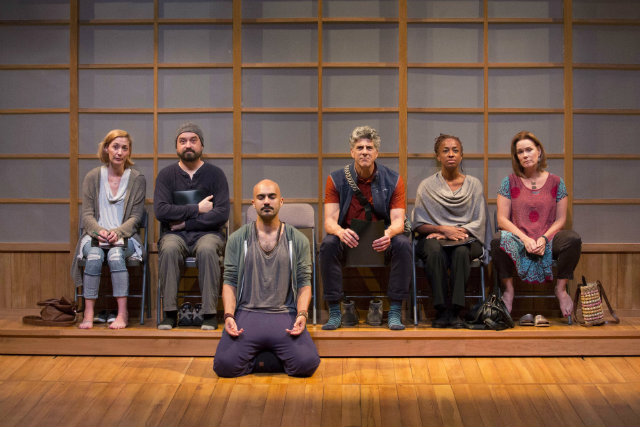
The Round House gig is her second commission from a D.C. theater since the coronavirus pandemic set in. Zacarias has already contributed to Play At Home, a 40-script database created by a coalition of theaters affiliated with New York’s The Public Theater, including Woolly Mammoth and Baltimore’s Center Stage, with the idea that theater fans can “perform” the plays at home or on Zoom.
Other local theater companies and creatives are whipping up new digital projects, as well. Solas Nua, an organization devoted to Irish culture, also commissioned a few new theater works early in the Covid-19 crisis as part of a March online festival called Cyber Craic—artistic director Rex Daugherty expects to announce additional cyber theater experiences. And a group of theaters are presenting a festival on Facebook Live of new 10-minute plays written and performed by local artists this weekend. The Q-Fest Playwriting Festival will distribute cash prizes to the writers who receive the most likes during the readings.
A few other projects are tied to directors and playwrights rather than specific theaters. Playwright Danielle Mohlman has recruited a rotating cast of cohabitating actors to perform her two-person, D.C.-set drama Nexus each evening through May 3. Dani Stoller, the playwright writing episode 8 of Homebound, also has a Jane Eyre adaptation called Crazy Bitch in the works.
Other theaters are producing content that’s designed to be educational. There’s Molly’s Salon, online chats with Arena Stage artistic director Molly Smith; Shakespearean sonnets read by celebrities on social media for Shakespeare Theatre; and virtual tours of Ford’s Theatre.
Thus far, Homebound is the most ambitious of these experiments. While the plot trajectory is up to the playwrights, Rilette did reveal his hope for the series finale, which will post on June 29.
“I hope that we find a vaccine tomorrow,” he says. “I hope that we’re creating a web series about web series about something that took place in the past, that ends with people being able to go outside. That would be amazing.”
Homebound will stream on Round House’s YouTube channel, with new episodes posted each week from April 27 to June 9. FREE
This post has been updated to correct Craig Wallace’s name.