Martin Austermuhle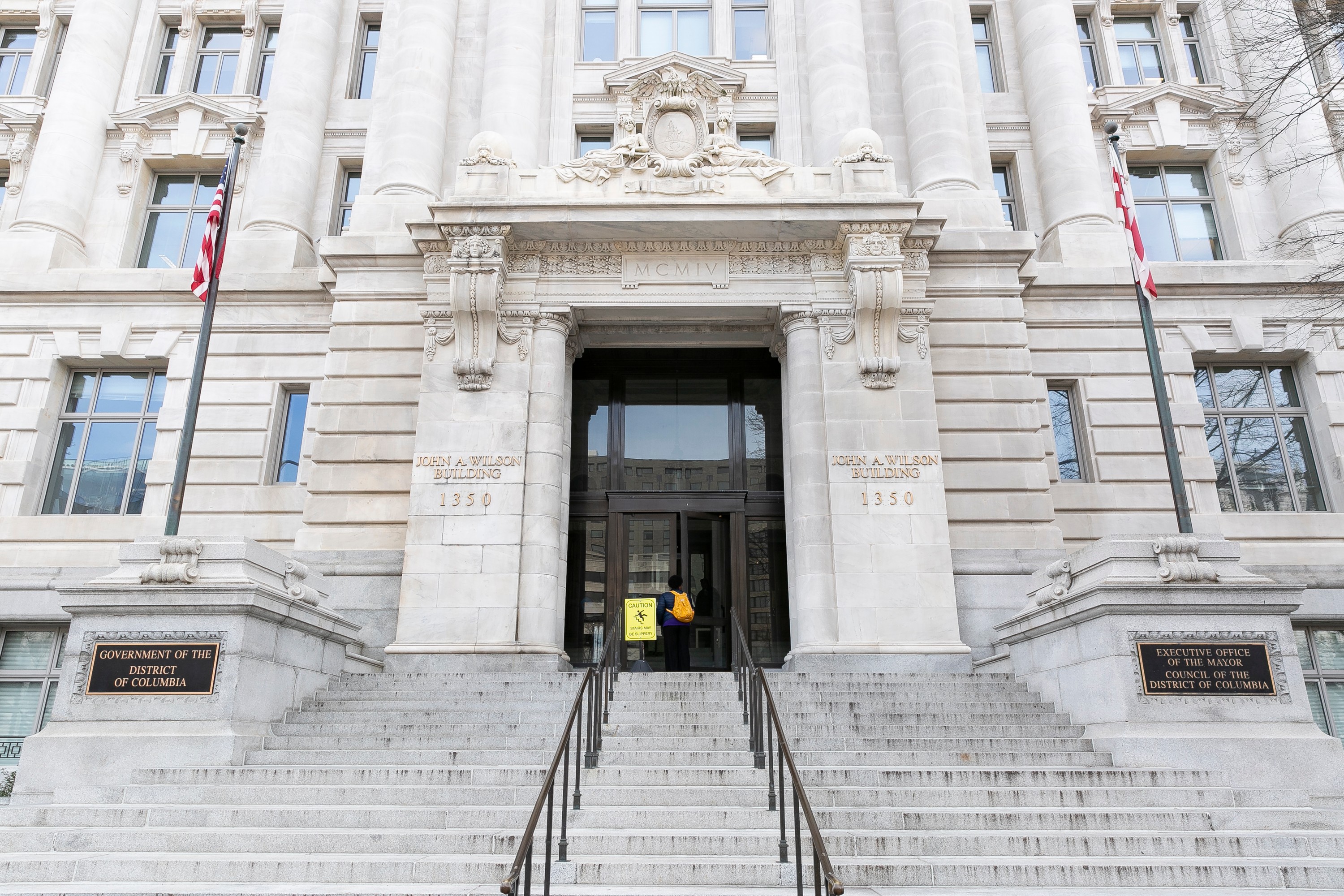
A new coalition of some of D.C.’s biggest developers and businesses are pushing lawmakers to consider massive tax breaks as part of any post-pandemic recovery plan, saying that without significant government help the city’s restaurants and retailers will struggle to hire back employees and reopen their doors.
But the costly proposal already faces obstacles, including a city budget slated for hundreds of millions of dollars worth of cuts because of revenue losses. In addition, progressive groups are pushing back, skeptical of what they see as a blank check for some of D.C.’s wealthiest and most well-connected players.
The coalition known as DC2021 is made up of prominent local developers, hotel chains, well-known restaurateurs like Busboys & Poets’ Andy Shallal, the owners of Ben’s Chili Bowl, and even the global powerhouse Amazon. Last week the group privately presented a stark assessment to the D.C. Council: stating the coronavirus pandemic has largely shuttered the city’s retail, entertainment, hospitality, and retail sectors, putting at risk some 170,000 jobs, $8 billion worth of wages, and $2.7 billion in tax revenue for the city. The meeting with the D.C. Council was flagged on Twitter for being held “in secret” and on Emancipation Day, a holiday in the District.
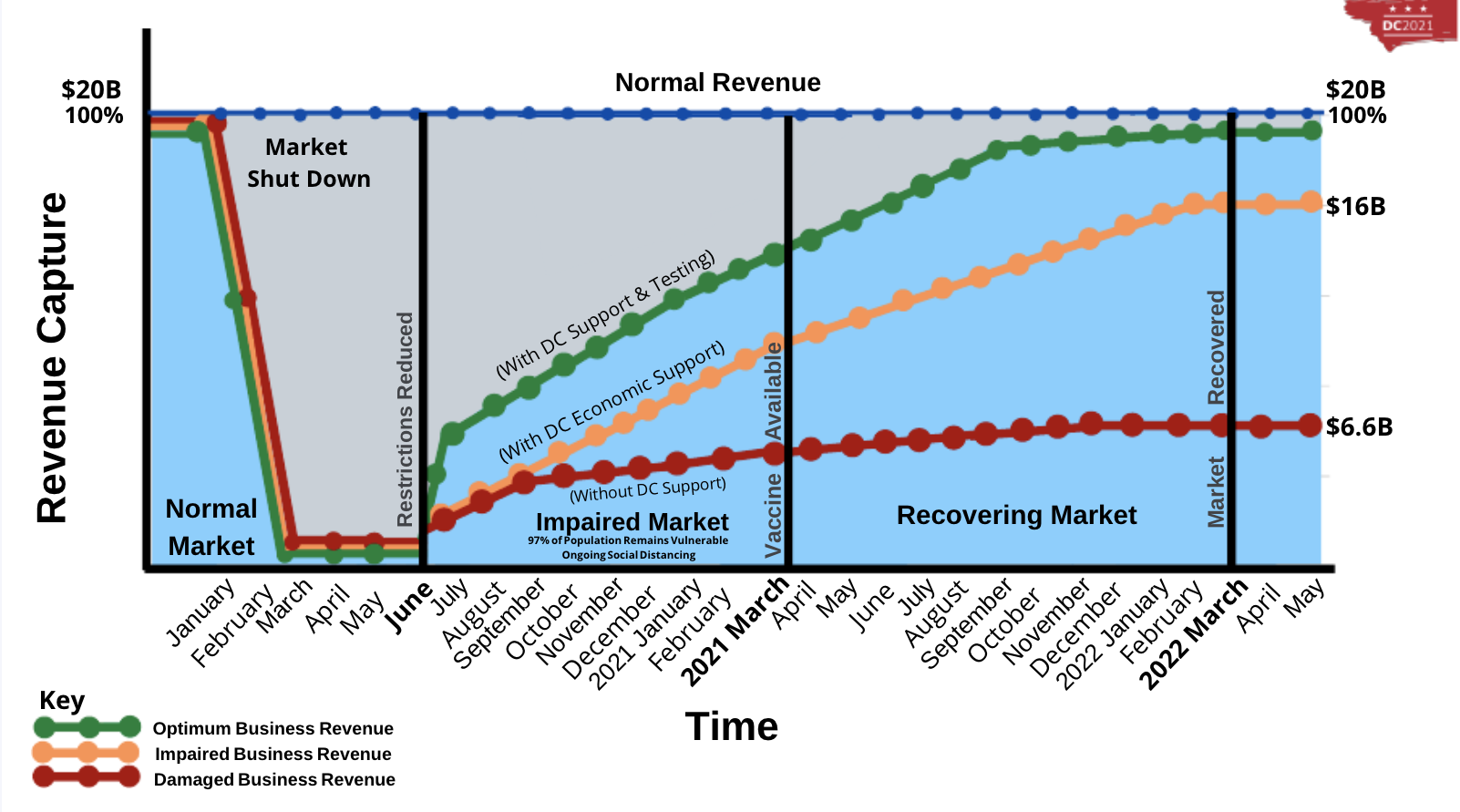
The DC2021 coalition says it could take as long as two years for the city’s hospitality industry to recover, and if it doesn’t get significant government help many businesses won’t even be able to reopen.
And even when the pandemic passes, the coalition told lawmakers that businesses would be slow to recover, largely because of expected social distancing requirements that will remain in place until a vaccine is developed. That could mean half-full stadiums and arenas for sporting events and concerts, bars and restaurants operating at half their capacity to allow for patrons to properly space apart and a tourism industry only limping along — for as long as two years.
“We want to be able to get those jobs back and preserve what’s there. Keep those smaller businesses intact. So it’s like triage,” says Monty Hoffman, CEO of Hoffman & Associates, which spearheaded The Wharf, the massive re-development along the Southwest waterfront. Hoffman, one of DC2021’s leaders, added, “And keeping your patient alive through this so that when the market returns we’re healthy. Because [businesses are] making choices right now whether to stay in business or pull the plug.”
The coalition has sketched out three recovery scenarios over the next two years. The group says that without government support, only a fraction of D.C.’s bars, restaurants, hotels, stores, and arenas will return. With some government support, the recovery will be more robust, but a full recovery can only come if there is government support as well as widespread testing for the coronavirus.
The coalition is proposing a year-long break on property taxes for many businesses in the hospitality sector, at a cost to the city of $346 million, along with an elimination of the franchise tax and a three-year moratorium on taxes related to the sale or transfer of property. Under current emergency legislation, some property and sales taxes are being deferred, but not eliminated. The total package — which some say could approach $1 billion — would be paid for out of the city’s reserves and with federal aid.
The property tax break is especially important, says Nizam Ali, who owns Ben’s Chili Bowl and its three buildings in D.C. He says that with the restaurant only doing takeout, its business is down roughly 75%, leading to a significant cash crunch.
“Collectively with those three buildings, we pay over $100,000 dollars in [property] taxes a year,” he says. “So, you know, March 31 was $53,000. And, you know, we elected not to pay it.”
But the coalition’s requests come amid a wider financial crisis for the city. The District is already expecting to have to trim the current year’s $9 billion budget by more than $600 million, and maybe as much for next year’s budget.
“It’s a big number,” says Yesim Sayin Taylor, former employee of the Office of D.C.’s Chief Financial Officer and current director of the D.C. Policy Center, referring to the proposed tax breaks. “I wouldn’t want to say the Council or the mayor will or will not do it. I don’t know what they will do, but it’s certainly a big number.”
Another source of pushback will likely come from progressive groups and some lawmakers, who say across-the-board tax cuts wouldn’t benefit the businesses that most need the help. And others are concerned it would divert money that could otherwise be used to help hard-hit individuals and families.
“We need to support our small businesses. We can and we should do that. It’s vital for our economy,” says Tazra Mitchell, policy director at the progressive D.C. Fiscal Policy Institute. “But we need to do it through a targeted grant and/or loan program. And we should leverage the new infrastructure that the Council just created rather than, you know, calling for arbitrary and poorly targeted tax cuts. This would both ensure that businesses get the help that they need and that we’re not crowding out funding for other vital public investments and economic lifelines for families and jobless workers who, too, are struggling to make ends meet.”
Mitchell was referring to a $25 million grant program the Council created in mid-March; more than 7,000 D.C. businesses have since applied for money, and city officials say they will announce who gets money and how much by the end of the month. But Taylor says the problem with any such program is that it forces the city to pick who gets money and who doesn’t.
“Obviously the targeted benefits make more sense. At least they are easier to justify than a broad-base benefit. But I really don’t know how you target it. It’s a matter of picking who — sort of winners and losers. There are about 16,000 establishments with fewer than 500 workers hiring upwards of 169,000 people in these industries — retail, restaurants, hotels, arts and entertainment and sports. Which ones do you choose?”
And the coalition’s request falls squarely in the middle of campaign season, as candidates for the D.C. Council fight for votes ahead of the June 2 primary and November’s general election. Already At-Large contender Will Merrifield, formerly an attorney at the D.C. Legal Clinic for the Homeless, has staked out a position against any tax breaks.
“If austerity is coming, the companies that have been feasting on the public for decades need to eat last, not first. Now is the time to use our resources to build from the bottom up, not the top down,” he said in a statement, additionally demanding that if any breaks are granted, the savings need to be passed on to tenants and renters.
Hoffman says he’s fine with some strings being attached. “Frankly, it’s predictable that the city should want safeguards to make sure that this incentive is being properly used. So I agree with the notion,” he says.
Asked late last week about DC2021’s recovery proposals, Mayor Muriel Bowser said she had not directly spoken to the group, but that whatever the city can do will be limited by existing financial realities.
“We have made no commitments to local relief packages,” she said. “I continue to let everybody know that the need is going to outpace what we can do locally. We have encouraged everybody to take advantage of all local help, but certainly all national help.”
This story originally appeared at WAMU.