Avery Kleinman
The author of this piece is a producer for 1A.
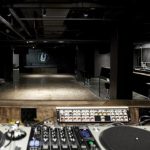
U Street Music Hall was on the verge of celebrating its 10-year anniversary with a week of special concerts before the coronavirus forced owner Will Eastman to shut the venue down.
“[Music venues] were among the first to close, and it’s looking like we may be the last to open,” he said on WAMU’s 1A on Tuesday. “We’re just in a holding pattern here.”
U Street Music Hall is now in its sixth week without concerts. Eastman closed his 500-person capacity venue after the night of March 11. Mayor Muriel Bowser banned gatherings of more than 250 people in the District just two days later.
Since then, D.C. has been among the jurisdictions that has shuttered nonessential businesses and issued a stay-at-home order. Around the region, businesses have laid off employees, and local unemployment programs have been overwhelmed.
The pandemic has similarly affected the live music industry, Eastman says. He described the financial outlook for his business as “bleak,” and says his venue will have to shutter permanently in a matter of months without live concerts.
“I have six months right now,” he told 1A. “It’s pretty dire for all folks in our industry.”
Instead of spending his time booking, promoting, and producing, Eastman is spending his time trying to keep his business afloat, including applying for Small Business Administration programs and other grants.
“Since we’ve been shuttered…I basically spend my time on paperwork and talking to people in the community,” he said. “It’s night and day, my job’s been turned upside down.”
U Street Music Hall employed 24 people that Eastman said are now on furlough.
“It’s by far the most difficult thing I’ve ever done,” he said.
He’s been able to keep paying his hourly workers—including bartenders, box office staff and security—for the past month using crowdsourced funds from a GoFundMe page that has raised more than $16,000.
U Street Music Hall also launched an online store this week that includes a new line of limited edition T-shirts that will also raise money for operations, his salaried staff—who have gone unpaid—and the nonprofit We Are Family, which delivers meals to the elderly.
“Where we go the next month and the month after that, I don’t know. But I’m here, I’m working on this,” he said. “If I have to get on the internet and sing Elton John’s ‘Rocket Man,’ whatever I have to do to raise money for this crew, I love ‘em. We’re gonna need them there on the other side of this when we do reopen.”
Eastman said he applied for and was approved for a loan from the Paycheck Protection Program, which will forgive business loans if employees are kept on the payroll for eight weeks. But the money hasn’t arrived yet, and he doesn’t know how much it will be.
The venue joined with 650 other independent concert spaces countrywide last week, including 9:30 Club, to launch the National Independent Venue Association. Independent venues are more in danger during the pandemic than ones owned by large corporations, like The Fillmore in Silver Spring, which is operated by Live Nation. NIVA hired a lobbying firm to represent their interests to Congress.
“We saw that the National Restaurant Association was very active in the CARES Act,” he said, referring to the Coronavirus Aid, Relief, and Economic Security Act, the federal program meant to provide relief to small businesses during the pandemic. The National Restaurant Association lobbied for special exceptions for aid for restaurants and hotels, according to the Wall Street Journal. “For every dollar that’s spent in the concert industry, there’s another ten that goes out in food, beverage purchases and staff in the area. It’s a huge economy, and it’s not going to be there on the other end of this if it doesn’t get help.”
While many artists and venues have shifted to live streaming to stay in touch with their fans, Eastman, who is also a music producer and D.J., compared the experience to a “cold flame.”
“There’s nothing that matches the communal music experience in person. It’s something where the sum is greater than the parts,” he said. “There’s no replacement for experiencing a live performance with others and the artist. It’s elevating, it’s irreplaceable in our society.”
Concert venues in the region, U Street Music Hall included, are rescheduling shows that were booked for the spring to the summer or fall—an exercise that may be futile. In a recent New York Times interview, a bioethicist predicted that large gatherings like concerts may not happen again until Fall 2021, or later.
Ticketmaster, which together with its parent company Live Nation controls 80 percent of ticket sales nationwide, have come under fire by members of Congress and fans for not refunding money for postponed shows in a timely fashion. The company released an updated refund policy on Friday. Meanwhile, some locals have reported that getting ticket refunds from local venues has been complicated.
“How can we reopen on the other end of this and expect fans to buy tickets if they’re going to get pinched on this hour?” Eastman said. “Now that said, if you’ve bought a ticket for a small venue and you would like to support them, one of the best ways you can do it is by not asking for a refund.”
Though U Street Music Hall and other independently owned music venues across the region face an unclear future, Eastman said the local community of live music fans is resilient.
“It’s been everything, connecting with people online, having people reach out to us, it just means the world. When you talk about an independent music venue, you’re talking about the community.”
This post has been updated to reflect that U Street Music Hall’s Gofundme funds go to pay hourly staff.