Ally Schweitzer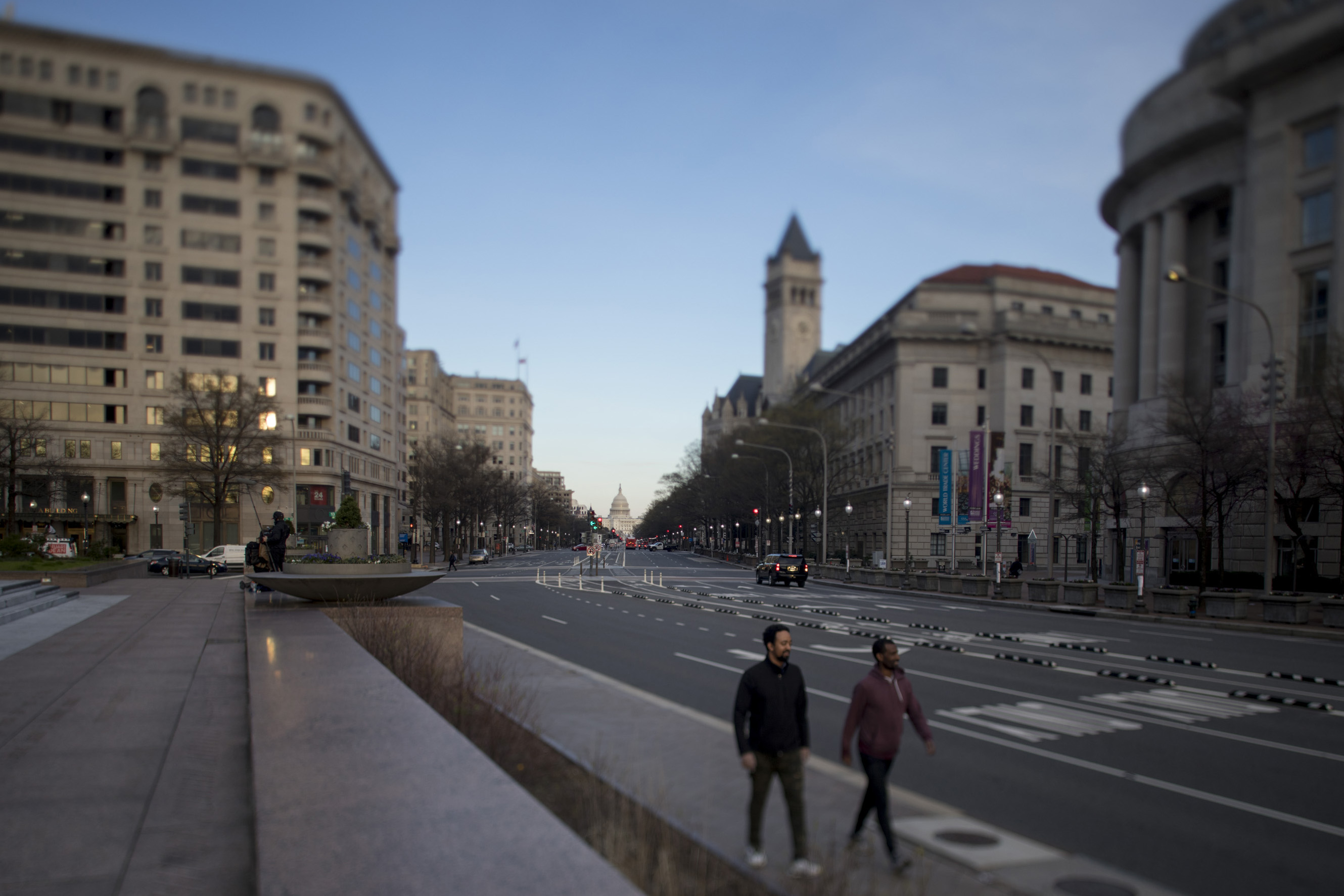
Working as a legal secretary was the most stable job Dylan ever had.
Before he got hired at the D.C. law firm more than two years ago, the 27-year-old worked temp gigs and sold bathtub liners at the mall. Processing patent documents at the firm was dull, he says, but it was steady. But his job evaporated two weeks ago — his employer laid him off to cut costs during the pandemic — and he’s not sure who will sign his next paycheck.
“It’s a ‘hanging on by the fingernails’ kind of feeling,” says Dylan, who withheld his last name to protect his former employer.
The Maryland resident is now among the many college-educated professionals who have suddenly found themselves out of work in what’s usually one of the country’s most dependable job markets.
Washington is known as “recession-proof” — when the economy goes topsy-turvy, its government-anchored workforce is insulated from the worst shocks. Thirty percent of this region’s economic activity is derived from the public sector. But COVID-19 has torn a yawning hole in that security blanket, thrusting even comfortable white-collar employees into financial uncertainty — some of them for the first time in their working lives.
“I went from being busy 60 hours a week to doing not much,” says Emilie Fairbanks, a landlord/tenant attorney in the District. “[I’m earning] probably 5 to 10% of what I was making before.”
The Washington region’s hospitality and tourism industries have already been walloped by the health crisis, with scores of jobs at hotels, bars, restaurants, and convention centers wiped out last month alone. Thousands of professional, higher-paying jobs could be next, economists say, as the slowdown ripples across a broader swath of industries.
Even with federal relief, the District could see unemployment soar above 23 percent by July, according to projections from the left-leaning Economic Policy Institute. Maryland and Virginia could reach 14 percent unemployment by the same time. For this part of the country, that’s extremely high — even at the peak of the Great Recession, the Washington region’s joblessness rate never cracked 7 percent.
“This is not something that [Washington has] ever experienced before. Everyone is getting beaten up here,” says Amanda Sweet, a public relations specialist in D.C. “The money is just going away.”
Even white-collar workers who are now earning income from home aren’t safe.
“Normal business operations have been disrupted now for four to six weeks,” says Jeannette Chapman, director of the Stephen S. Fuller Institute at George Mason University. “Even if workers can work from home, they’re generally less productive, so employers are taking a hit on the productivity side. Their revenues are probably starting to get more unpredictable. So this economic contraction is seeping into our core sectors.”
The damage could be mitigated by unemployment insurance, for which more than 400,000 workers have filed in D.C., Maryland, and Virginia since mid-March. The federal CARES Act passed last month significantly expanded eligibility for benefits, promising relief for independent contractors and gig workers, among others, who normally wouldn’t qualify for payments. Congress also approved a temporary $600 supplement for eligible claimants during the pandemic, meaning furloughed workers in D.C. could receive as much as $1,044 per week through the end of July.
But the process of applying for benefits has been rocky and confusing, even for Washington professionals who make a living navigating complex bureaucratic systems.
“I looked at filing for unemployment, but I don’t exactly understand D.C.’s process for that,” says Fairbanks, the landlord/tenant attorney. “If I’m a lawyer and I don’t understand, I’m pretty sure nobody else understands it. And that’s not good.”
Many workers may not even realize they qualify for unemployment, having never relied on it before. In 2018, three-quarters of unemployed people didn’t apply for benefits, according to government data, and three out of five didn’t apply because they believed they were ineligible.
But many still are locked out of the unemployment system, including undocumented workers, people in the cash-based economy, and those who have lost some but not most of their income. Meanwhile, forgivable loans offered by the Small Business Administration have been late to arrive, gobbled up by larger firms, and woefully inadequate to match the scale of the crisis. Washington’s economy will be battered in a way it hasn’t been before, says Terry Clower, director of George Mason University’s Center for Regional Analysis.
“There are going to be some businesses, particularly smaller businesses, who don’t have enough capital laying around to stay in business for three, four, or five months of very bad business levels,” Clower says.
Pockets of stability remain for now, Clower adds. Government activity could tick up in response to the crisis, preserving or even adding jobs. Additional federal aid could help stabilize state and local budgets. Some companies may even start up or expand, buoyed by increased spending on goods and services that become essential during the pandemic.
“I have a lot of confidence in the ingenuity of businesses and households to figure out new ways to spend money,” Clower says. “Right now, our problem is this has hit so fast and so hard that we just haven’t had time to adjust.”
This story originally appeared on WAMU.