Elliot C. Williams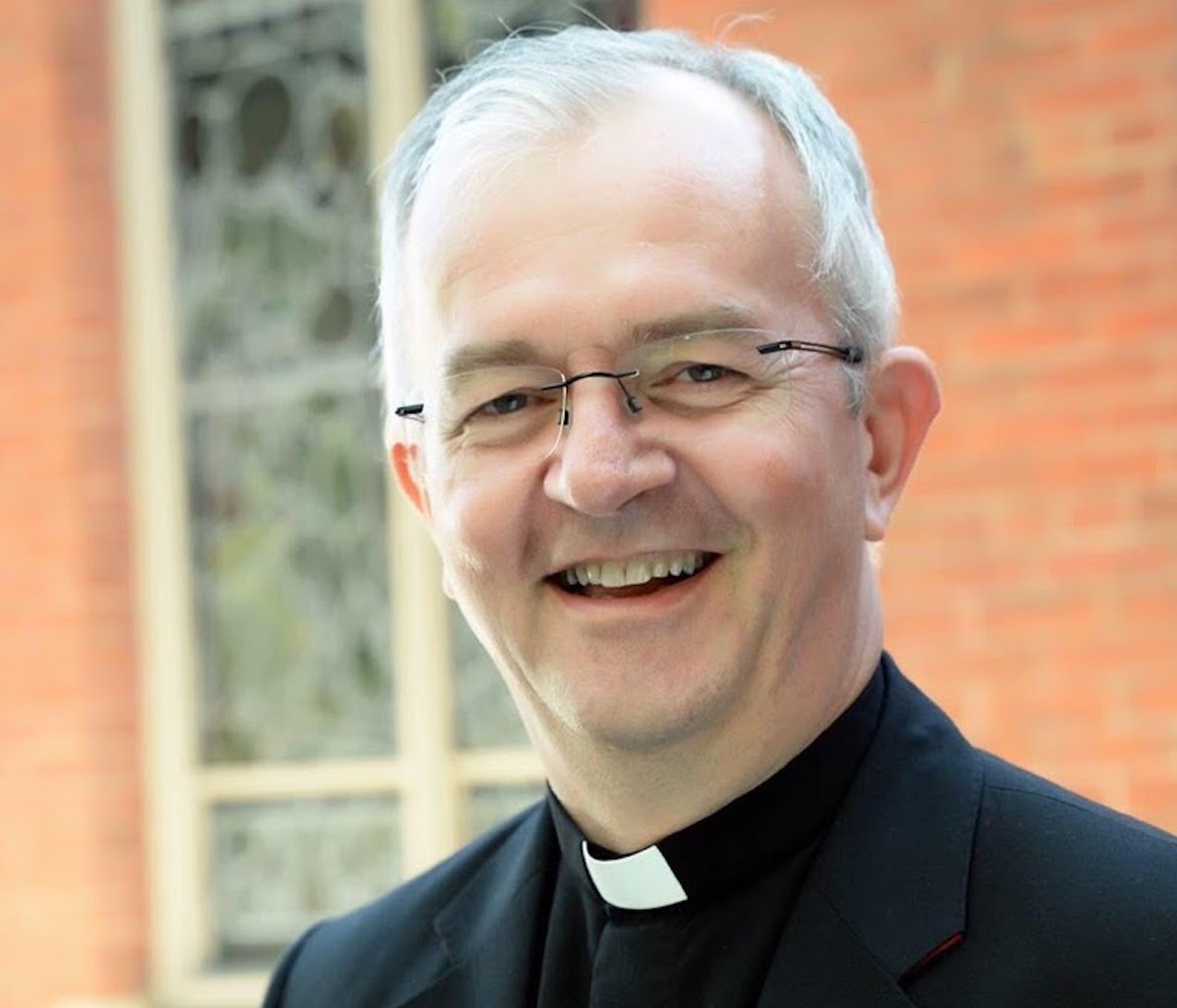
Reverend Timothy Cole isn’t exactly sure where he contracted coronavirus, but he has a pretty good guess. In late February, he had attended a church leadership conference in Louisville, Kentucky, and later came down with the typical flu symptoms—fever, shaking, sore throat. He rested in bed for three days and shook the fever.
Feeling fine, he returned to work. A few days later, Cole’s fever returned in full force and he “pretty much collapsed.” Cole, rector of Christ Church in Georgetown, was admitted to MedStar Georgetown University Hospital and became the first known COVID-19 patient in the District.
Following his diagnosis, hundreds of members of his Episcopal congregation were asked to self-quarantine, the church’s organist and four parishioners tested positive for the virus, and Christ Church joined the broader religious community in finding ways to practice faith in the midst of a pandemic.
Cole, 59, spent three long weeks receiving intensive care in the hospital, FaceTiming his wife Lorraine Cole as often as he could. He thought of the William Ernest Henley poem “Invictus,” which influenced Nelson Mandela during his 27-year prison term: I am the master of my fate, I am the captain of my soul.
“Well, that’s only half right,” Cole said in an interview on the Kojo Nnamdi Show Thursday. “Certainly, you are the captain of your soul, but in reality, we don’t have control over our fate and what happens to us.”
While the nurses, ICU doctors, and infectious disease specialists all monitored and stabilized him with antibiotics and anti-malaria medications, they told him the reality of his situation—there is no cure. He, along with those who kept watch, would have to wait and see how his body responded. At some point, the doctors said, “We’ve done everything we can, and now we just have to pray,” an easy command for a priest.
The strangeness of Cole’s situation wasn’t lost on him—that the person his congregation typically turns to for guidance and strength was the one most in need of it. Cole turned to lessons he learned during his 20 years as a chaplain in the British Army, which took him to garrison churches in Northern Ireland, Bosnia, Sierra Leone, Iraq, and Afghanistan.
Ordained in Scotland, Cole joined the Royal Army Chaplains Department in 1995, and was named an honorary chaplain to Queen Elizabeth the II in 2014. He came to the U.S. in 2016 to become the head clergyman at Christ Church.
“If I go back to how the soldiers dealt with fear and danger, they dealt with it through humor … sometimes, rather dark humor,” Cole said in a phone interview with DCist. “And they dealt with it through the fact that they were all absolutely in it together and facing the same danger, the same threat. So they had incredibly strong relationships. And they also dealt with it—even though many of them were very secular— by reaching out to God or to a bigger dimension in which death could be seen in a context.”
Cole found humor in his own situation where he could, but says he mostly relied on the outpouring of prayer and support from his own congregation relayed in texts from his wife and fellow clergymen.
“It’s much harder to be frightened when you’re aware of so many people standing beside you and with you,” he says.
As Cole adjusted to the possibility that he might not come out of this alive, he turned to his Baptismal promises: “I still believed that God would see me through that ultimate step from this life to the next. He doesn’t promise that nothing bad is going to happen to us, but he does promise that he will see us through,” he says.
Finally, after three weeks, he was wheeled out of his small room—which had just one window that looked out onto a brick wall—and into the Georgetown sunshine to meet Lorraine and his 22-year-old son. It reminded him of returning home after eight months in the Iraqi desert.
“It was just overwhelming, really,” he says. “Even just getting back home and seeing our pictures, and our furniture, and the ordinary things of our house … the detail of it all was just so refreshing and so uplifting.”
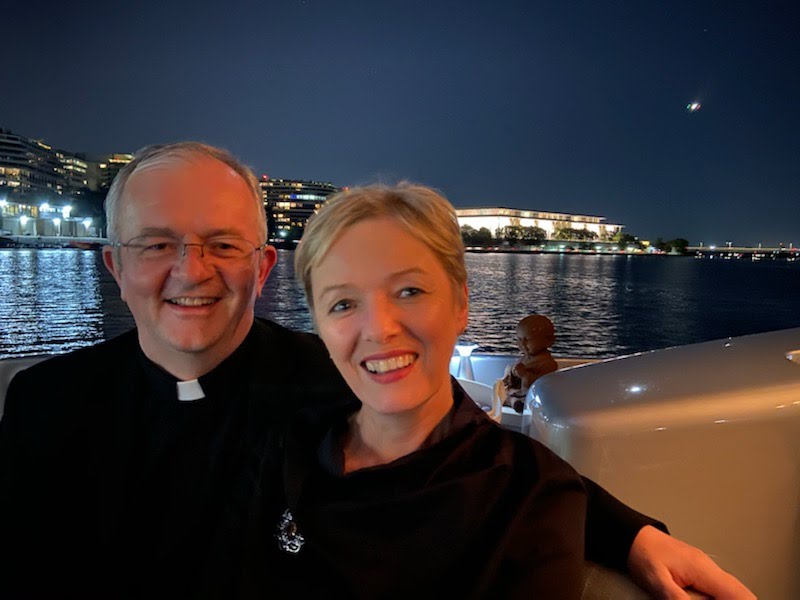
He now sits at home resting, just over 20 days out of the hospital, still coughing a bit, but healing. He and Lorraine celebrated their 31st wedding anniversary on Wednesday. With his church closed on Easter for the first time in its centuries-long history, he found the message of new life and resurrection after a period of darkness all the more relevant.
“For me, just the latest example of that was being in a hospital, in a dark place, being sick. That in a sense was the Good Friday experience,” he says. “I have a vivid memory of coming out of hospital and seeing the spring day, all the trees covered in blossom, and coming home. It was quite overwhelming. And you come to appreciate ordinary life when it’s been taken away from you for a little while.”
Cole says he’s contacted MedStar Georgetown to offer his blood, in hopes that his plasma can help heal other COVID-19 patients. At first, he says, he ran into a hiccup with the Red Cross since he lived in Britain during the mad cow disease outbreak of the 1980s. “But I think they’re changing their view on that,” he said on the Kojo Show. “I’m just waiting for a period of time to elapse from recovering, and I hope to give my blood soon.”
Normal mornings at Christ Church typically involve Cole and three other clergy members praying in the chapel at 7:30 a.m. During the pandemic, with the help of their church blog, the rector is now joined by as many as 400 congregants praying from their living rooms or kitchens, he says. Families have recorded parts of the prayer services in their own homes and edited them together, participation he hopes will continue well after the pandemic ends.
Much like neighbors across the region, Cole’s parishioners have started phone chains and volunteered to deliver groceries for those in need.
Cole says he still has a ways to go as far as his health is concerned, but he’s gone from pausing for a breath every few words to only getting winded after exercise.
On the Kojo Show, a parishioner called in to share how excited he was that Cole is back home. Other listeners asked about a way forward. What will attendance look like at religious services after the pandemic? With our societal fabric thrown to the wind, what will the new normal be like?
“Who knows, of course? … Clearly, there may well be a time of transition until the virus is fully vanquished and they have a vaccine,” Cole said. “I think there have been things that we’ve learned, though. And I think there are things from this experience which we hope to carry forward.”
As Cole’s lungs recover, he hopes communities will also heal and retain the strengths they’ve gained from facing this emergency together, both in D.C. and across the country.
“Maybe, just maybe, we might be able to look at each other across the different battle lines of politics and say, ‘You know, I recognize you as a person who was under as much threat as I was from this virus and possibly suffered.’ And maybe we can be just a little bit more united and forgiving and reasonable towards each other than we have been,” Cole says. “That would be my prayer anyway.”
Julie Depenbrock contributed reporting.