 Daniella Cheslow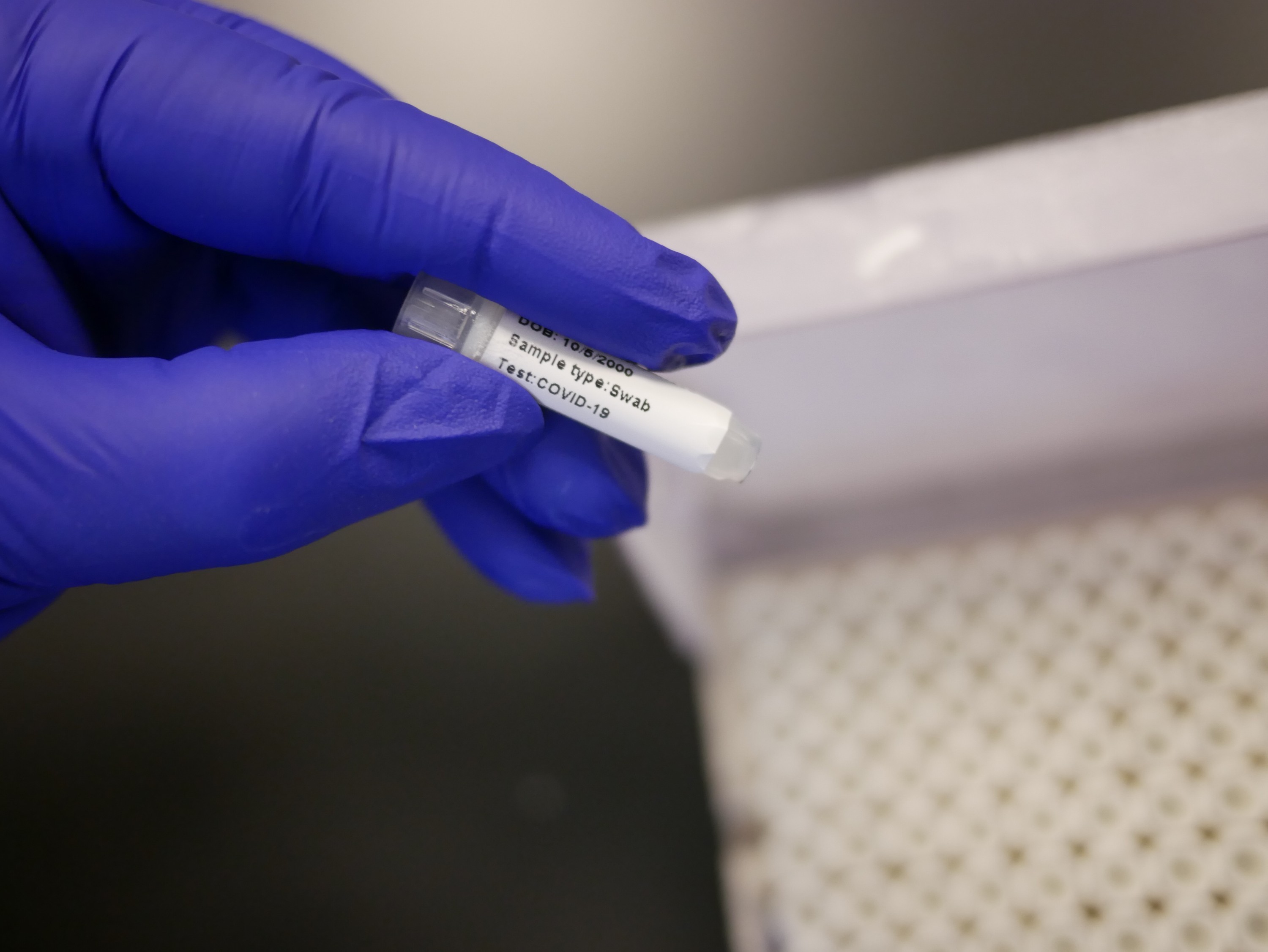
When infectious disease expert Crystal Icenhour began offering COVID-19 testing last month at her Aperiomics commercial laboratory in Sterling, Va., she expected a flood of orders. She could deliver results within 24 hours, compared to backlogged larger labs, and she could process up to 2,500 tests a week.
“We thought we’d be turning work away,” she said. Instead, she runs a few hundred tests a week, “a fraction of our capacity so far.”
Aperiomics is among several local firms that pivoted quickly to COVID-19 testing in response to widespread shortages. Now, many of them report a dearth of orders. Icenhour’s predicament has drawn the attention of her Congresswoman and state health officials.
The stakes are high: health experts say widespread testing is needed to reopen businesses and schools. Biotech firms will be vital to the effort, but the risky business climate may threaten their ability to continue.
“COVID has decreased our regular business,” Icenhour said. “As a company we still have to pay our staff. We need to pay our rent.”
Many Causes Of Slack Demand
Leaders of biotechnology companies point to a slew of challenges. Thomas Reynolds heads NEXT Molecular Analytics in Chester, Va. and at first ran up to 600 daily samples for COVID-19. That figure since dropped to 250. Reynolds said his customers – physicians – say they lost patients who were laid off and no longer have health insurance.
“This is the main reason they said people are not getting tested now in their practice,” Reynolds wrote WAMU.
GenArraytion, Inc. in Rockville, Md., sells reagents, a critical component of the tests. Chief operating officer Doreen Robinson said she had reagents for 100,000 tests on hand, but has sold only about half of them. This could be because her company does not have the manpower to seek approval from the Food and Drug Administration, she said. Instead, she sells to laboratories that are certified to ensure the tests are valid and file for emergency use authorization from the FDA.
Robinson said although has a surplus now, at other times she faces shortages from her suppliers. Juggling unstable supply and demand is exasperating.
“We sell what we have in inventory very quickly, and then we place an order we think is going to be more than enough, and then we have to wait because things are backordered,” Robinson said. “And then we don’t know if we’ll sell that.”
For Aperiomics, the supply chain is not a problem; Icenhour repurposed swabs she used for other tests and sourced more from China. She found alternate reagents and vials. But it took her weeks to get the test approved for Medicare payment.
There is also a decline in testing orders at national commercial labs, according to Louise Serio, spokeswoman for the American Clinical Laboratory Association. Serio said her members, which include Quest and LabCorp, saw a recent slowdown. She anticipates demand will rebound as health officials call for more extensive testing – and small labs will be essential.
Serio said she heard stories like Aperiomics’ “all the time.” Without stability, she said, “It’s going to be really hard to encourage laboratories to continue to step up.”
‘We’re Still At Step One’
Virginia recently announced a new testing task force aimed at addressing the obstacles to widespread testing. Former Virginia Department of Health Commissioner Dr. Karen Remley co-directs the task force and she says even the state’s public labs had slight excess capacity. She cautioned that gap might indicate a shortage of supplies like personal protective equipment needed to collect samples.
“What I’m worried about is we have extra lab capacity right now, but not PPE capacity or swab capacity,” Remley said.
Remley said she was still surveying Virginia’s patchy testing landscape. Initially, Virginia’s state lab had a limited number of tests provided by the federal government, and restricted them to hospital patients with symptoms; people who had close contact with COVID patients and nursing home residents with symptoms. Gradually, healthcare workers with symptoms were added as well.
Private labs developed tests, as did hospitals and universities, but often had slow turnaround times. Some doctors stopped ordering tests that were risky to administer and that took longer than a week to process.
To encourage more testing, Remley said she is speaking to doctors and clinics. The Virginia Department of Health recently expanded its testing criteria to include patients with COVID-19 symptoms and risk factors like pregnancy and chronic disease. It also published a list of private labs that run testing, and Aperiomics is at the top.
Epidemiologist Dr. Amanda Castel at George Washington University said more is needed to reopen the economy, including testing people without symptoms and using antibody tests to understand who may have recovered.
“I think we’re still at step one, making sure we have adequate testing for all individuals who are symptomatic,” Castel said.
Aperiomics is in Loudoun County, which Congresswoman Jennifer Wexton (D-Va.) represents. She said she is trying to connect the lab to local health providers, but saw its struggle as a symbol of wider dysfunction.
“States are left in a free-for-all,” Wexton told WAMU. “We need a national, coordinated response.”
Personal Contacts Are Key
The uncertainty benefits some private labs. William Nelson, CEO of Tetracore in Rockville, Md., said his lab began testing for the coronavirus in February using kits made in South Korea. Nelson said he can run up to 700 tests a day with a 24-hour turnaround, and his clients include several long-term care facilities as well as Los Angeles first responders.
“We’re actually throttled,” Nelson said. “We haven’t been taking new clients.”
Nelson credited his contacts, rather than any statewide effort, and said no Maryland hospitals or local governments have yet ordered his tests.
At Aperiomics, Icenhour said she, too, relied on existing relationships with doctors who used her other tests. She observed some encouraging signs for expansion. She said Virginia Tech inquired about using the lab’s services to test students. Several business owners asked about testing their employees.
“It’s getting us significant advances and developing really powerful relationships,” Icenhour said. “We’re able to leverage the COVID work we’re doing to keep moving our core technology.”