Natalie Delgadillo

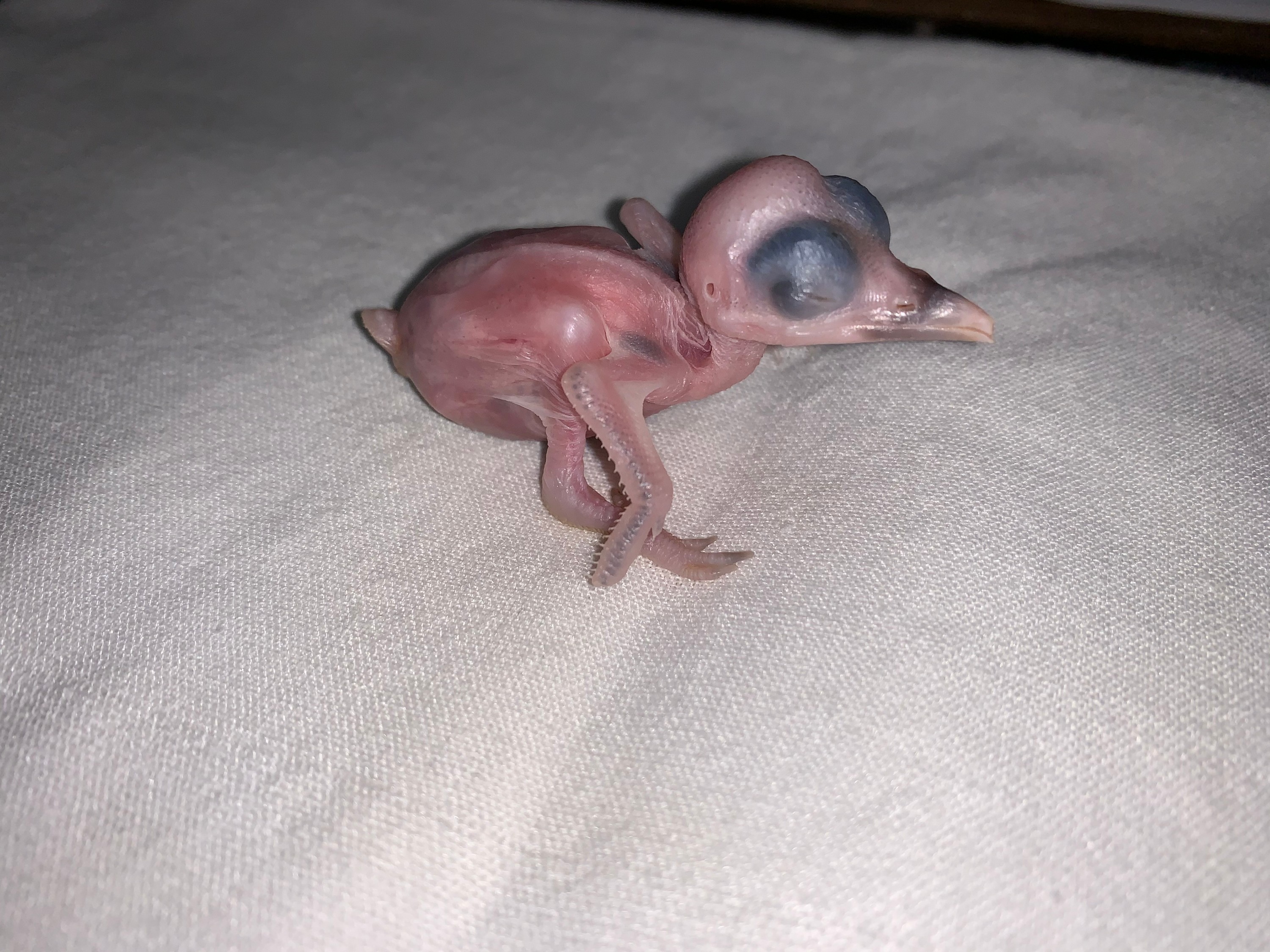
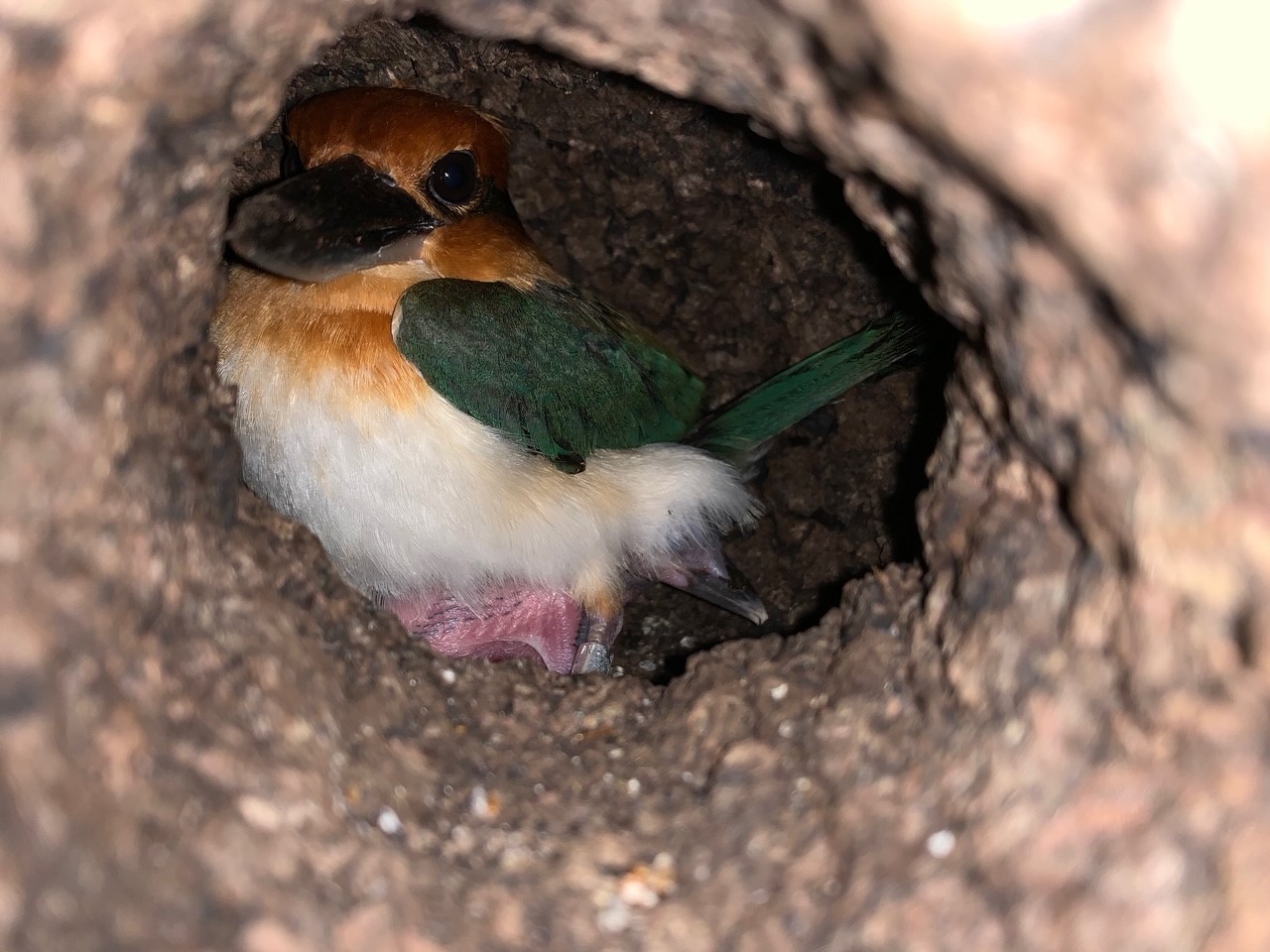
Very important bird news: two Guam kingfisher chicks have hatched at the Smithsonian Conservation Biology Institute, propping up population numbers for one of the most endangered bird species in the world.
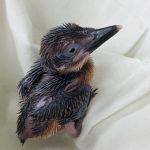
Don’t be fooled by the googly-eyed, translucent, peeled-grape nature of the hatchlings—adult Guam kingfishers are stunning, vibrantly-colored birds with blue, orange, and white plumage. There are only about 135 left of them in the world, all in captivity; the species is completely extinct in the wild.
The two baby chicks hatched at SCBI on April 21 and April 23, to mother Giha and father Animu. The older one is a female chick, and the younger one a male. Guam kingfisher hatchlings are born blind and without any plumage, and they have to live in the nest (or an incubator) until they grow older and gain the ability to regulate their own body temperatures, according to the National Zoo.
The two chicks are the Giha and Animu’s first offspring, which was some cause for concern among SCBI staff: Fearing that the newbies would be overwhelmed by the responsibility of two chicks at once, keepers took one egg from the nest and put it in an incubator, planning to hand-rear that chick.
Turns out they were right to worry. For two days after their nest egg hatched on April 21, Giha and Animu appeared not to know that they should be feeding the baby. SCBI staff had to provide supplemental feeding until they saw Giha coming to the nest with insects, a sign that she had figured out how to keep her chick alive.
The incubator chick hatched on April 23, and keepers have been feeding it thawed mice every two hours. Besides feedings, keepers will be limiting interactions with the chick to try to keep it from imprinting on humans. They’ve placed mirrors in its incubator so it can see itself, and they play it recorded Guam kingfisher calls.
With the addition of these two chicks, there are now eight Guam kingfishers under the care of the Smithsonian. Every single living Guam kingfisher is descended from 29 birds taken from the wild in 1980s in order to save them from extinction, according to a release from the National Zoo.
The birds are difficult to breed because they’re picky and territorial—they’re likelier not to like each other much than they are to become a functional breeding pair. Including these two, SCBI has successfully hatched 22 Guam kingfisher chicks.