As the region’s stay-at-home order stretches into its second month and the Small Business Administration struggles to keep up with an unprecedented level of loan applications, the future for local brick-and-mortar businesses is looking grim.
Commercial landlords are still charging monthly rent or in some cases, demanding higher prices, even as customers have evaporated. Small businesses struggled to navigate the SBA’s loan program and many who could figure it out never had a chance: The program ran out of money by mid-April. To-go orders and curbside pickup have offered a way for businesses to stay in touch with their customers, but they barely provide a lifeline for operations already running on razor-thin margins.
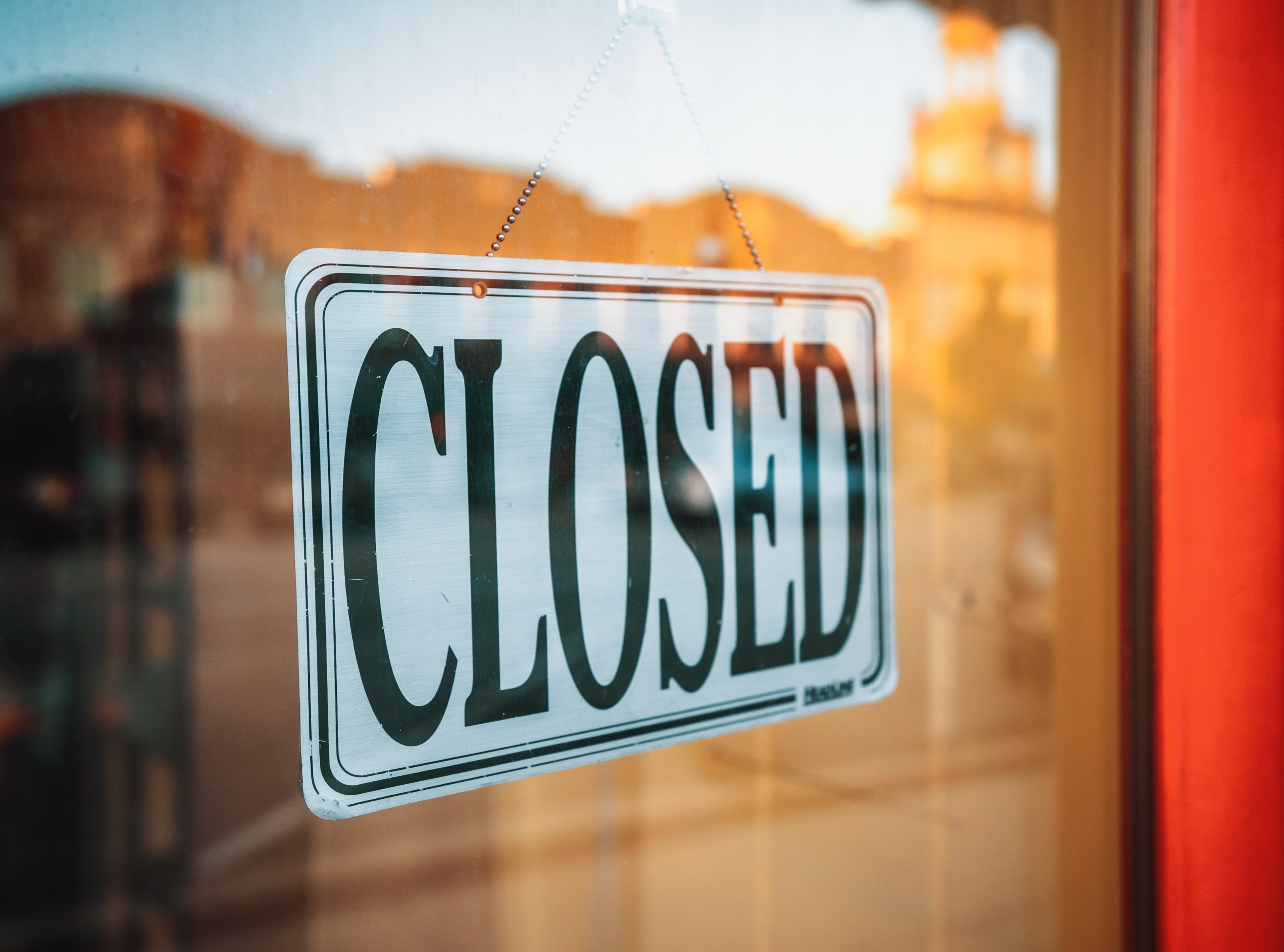
In the D.C. area, some businesses have either announced their permanent closure through social media or decided to shutter quietly.
Wagner Opticians, a 50-year-old, family-owned optician located inside the MedStar Washington Hospital Center, received an outpouring of support after its owner, Dianna Finisecy, announced she would close for good on April 30.
“It’s sad but I’m healthy,” Finisecy says. “I’m going to get to the other side of it.”
Finisecy had intended to wind down the business over time and perhaps transition to a month-to-month lease this year. Those plans for a long goodbye with her faithful customers changed when the pandemic hit. She tried to save her family’s business and applied for the Small Business Administration’s Paycheck Protection Program the day it was released, staying up after midnight and Facetiming with her daughters who helped her muddle through the bureaucratic process.
“It was hard to maneuver,” she says. “I’m still not sure if I didn’t get it approved or didn’t get it in right.”
Finisecy’s father, Kenneth Wagner, first opened the mom and pop storefront in 1970. Finisecy worked there for 46 of those 50 years and took over the business after her father died in 1992.
“It’s a labor of love for the family,” she says.
At 62 years old, she is the youngest of three longtime employees at the store. In the waning days of their business, they cut back their hours to five hours a day, three days a week. When the news of their closure got out in mid-April, they found themselves in a last-minute deluge.
“Just when I decided to close, we’re busier than a one-armed paper hanger,” she told DCist last month, pausing several times to take care of customers. “I’ve had people come in who don’t need glasses but just need one last pair.”
Finisecy struggled with the emotional toll of closing during COVID-19. She couldn’t give hugs goodbye to her patients, many of whom went to her father for their glasses. To her, eyeglasses are an intimate experience and expression of oneself. Over the years, she has seen how a new pair can open up the world to her patients, whether it’s a child seeing their mother in a new light or a man appreciating the beauty of tree leaves.
“I had a lady recently and I put lenses on her mom’s frames,” she says. “She said every time [she puts them on], it’s like a hug from her mom.”
Finisecy isn’t just saying farewell to a brick-and-mortar business. She’s saying goodbye to the labor of love that she inherited from her father.
“I have to say goodbye to my father again,” she says. “It was his dream and now it’s my dream. It was a good spot to be for a sentimental fool. It’s a hard thing when you retire but when I drive away I think it’s going to be a gut wrench.”
Wagner’s isn’t the only D.C. business that has decided to shut its doors for good since the pandemic started.
Campono, a popular Italian lunch and dinner spot inside the Watergate complex, closed permanently on March 27 after more than four years in business. The restaurant attributed its closure to both the pandemic and a rent increase.
“[The landlord] requested additional monetary contributions in order for us to maintain occupancy and extend our lease. Given our current business model, we are unable to commit to the financial burden of this request,” Campono’s owners wrote in a statement on their website. “If we had been able to continue to operate under our current agreement, it still would have been a difficult road to re-opening (as many, many restaurants are going to soon be struggling with themselves).”
The cafe’s owners would not elaborate on their closure to DCist. But its loyal patrons, an eclectic mix of journalists working inside the Watergate, Kennedy Center theatergoers, and musicians, mourned its loss on Twitter.
“I converted much of my paycheck into soup,” David Dudley, an editor at Citylab, tweeted. “In winter, chicken tortilla or gumbo; all summer, gazpacho. Godspeed, Campono.”
Beyond its sandwiches, pizza, gelato, and coffee, Campono’s airy space hosted a hive of reporters looking to escape their brutalist offices. Scott Nover, a reporter at Adweek and a former events producer at The Atlantic, described the cafe as a hub for Washington media.
“It was somewhere where you see Jeff Goldberg talking to Ben Smith, you would see source meetings, you could see journalism in motion if you open your eyes and see where you are,” he says. “There weren’t too many places to congregate in the Watergate. It was brutalist and harsh but Campono was kind of an oasis in that sense.”
Other recent announcements haven’t cited the pandemic as a reason for closing. Earlier this month, Ziegfeld’s/Secrets near Audi Field announced it would close. It offered no reason for the shutdown, but the Washington Blade reported in 2016 that the building was being sold. Less than a week later, leather bar DC Eagle followed suit, another LGBTQ institution that appears to have closed because its building was sold. Irish pub Fado, meanwhile, claimed rent hikes were behind its closure after 22 years in Chinatown. Momofuku’s D.C. location at City Center, too, announced on Wednesday it would not reopen. The restaurant had been open for five years.
In Virginia, Jasmine Jones bemoaned the recent loss of Big Bowl in Reston, the Chinese and Thai chain restaurant where she worked in 2013. After 19 years in business, the restaurant will not reopen after its current lease expires, according to a statement on the restaurant’s website. Big Bowl declined to comment on the closure to DCist.
The restaurant’s hybrid cuisine featured a stir fry bar and a custom cocktail menu. The Thai food often comforted Jones, an American who grew up living in Thailand, Malaysia, and South Korea.
“I loved working the bar, it was bumping when I worked there,” she says, adding that she celebrated Mother’s Day and her birthday at the restaurant last year. “There are people who have worked there for years and years. It was a warm environment.”
With stay-at-home orders extended to June in the District and Northern Virginia pushing its reopening until at least Memorial Day, it’s likely that this won’t be the last of the restaurants to permanently close their doors during the pandemic. Even D.C. mainstays, from the powerbroker bar at Old Ebbitt Grill to the stalwart counter at Ben’s Chili Bowl, are hanging on by a thread. Old Ebbitt’s is taking to-go orders, but its revenue has fallen about 95 percent, WAMU reported in April. On U Street, the diner that survived six decades of riots, construction and gentrification was facing closure until they received a PPP loan last month. In Falls Church, a mix of xenophobia and mandatory shut-downs for dine-in restaurants has crippled Eden Center.
Others, like the Georgetown cat cafe Crumbs and Whiskers, are still in limbo.
“We’re not sure if we’re permanently closing our DC cat cafe yet,” Kanchan Singh, founder of Crumbs and Whiskers told DCist in a May 7 email. “It is at risk of closure due to COVID-19, and people can support us by contributing to our COVID-19 fund, but nothing has been finalized yet.”
Local entrepreneurs who have had their finger on the pulse of D.C.’s economy aren’t painting a rosy picture of a post-COVID-19 world. Restaurateur Andy Shallal is already predicting that businesses with multiple locations may close or decide to hang it up altogether.
“I wouldn’t be surprised if half the businesses do not come back,” says the Busboys and Poets owner. “The growth has been so huge here in D.C., the landlords have squeezed businesses to the last drop. Great times don’t go on forever, you have to plan for the downturns. So it’s really tough for these businesses to figure this out. Nobody expected this, this is dramatic.”
Related: