 Gabe Bullard
You should wear a mask.
Rules over where masks are required have only grown stricter as the coronavirus pandemic has worn on. And the supply of masks has grown tighter. In April, The Atlantic reported that masks had become “so hard to find that health-care workers are reusing theirs multiple days in a row.”
For stragglers who debated whether they needed to cover their faces in March, the new regulations present a conundrum: Where to find a mask? This is where local dry cleaners come in. Across the region, and across the country, dry cleaners are selling masks they make themselves.
“Every cleaner I see is selling them,” says Moon Whang, the owner of Georgetown Valet, a local chain of cleaning and alteration shops.
Whang’s stores got into the mask business the same way many other cleaners did: A seamstress made some and put them up for sale. The masks soon became popular with customers and other employees. Whang says making them “became a competition,” with workers turning out new designs, as well as reversible patterns.
Georgetown Valet sells a variety of styles and sizes of masks with prices between $10 and $20. And they sell about 20 a day. “We had one guy come in the other day and bought 10,” Whang says.
ZIPS Dry Cleaners, a national chain, also sells homemade masks. They’re two for $10, according to a sales associate who answered the phone. And independent shops are doing the same. A Columbia Heights dry cleaner who asked not to be quoted said they’re selling some masks and donating others to first responders.
“It’s the ones who have tailors and it’s the ones who are bigger,” says Ann Hargrove, the director of special events for the National Cleaners Association, a New York-based trade group for dry cleaners.
With a dry cleaner on almost every block in some neighborhoods, mask sales are one way for an essential business to provide an essential service, and to generate some money for workers while their shops are struggling. Hargrove says the NCA isn’t tracking mask sales since many dry cleaners are closed, but for those who are open, masks may be the briskest business they do.
“People are working from home, they’re not wearing clothes you take to the cleaners,” Hargrove says. “They’re wearing sweatpants and they just wash them.”
“It’s been brutal,” Whang says of his business. Transactions have dropped about 90%.
As for competition, Whang says he’s not worried. A shop down the street from one of his locations is selling masks for less, but dry cleaning customers are loyal.
“People who come into this cleaners come to this cleaners. We have people who have been loyal customers forever,” he says.
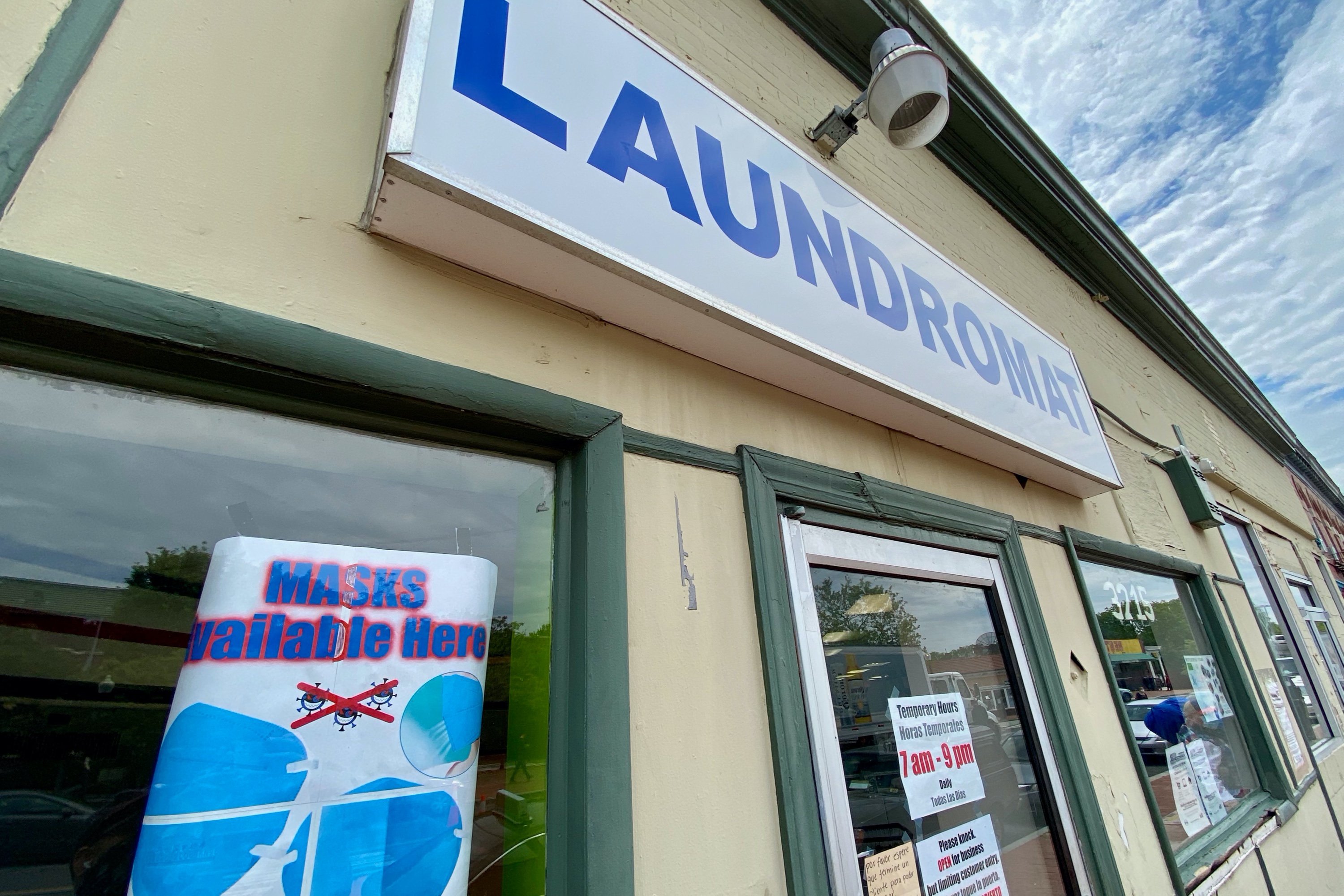
Not every cleaner has turned to masks. Calls to shops across the area turned up a handful who are sticking to laundry and tailoring. Sue Kyong, who runs Best Tailoring & Dry Cleaning in Northeast, says she doesn’t see much of a need to make them.
“Get a sheet, a pillowcase, cut it and fold it and tie it in the back,” she says. “It’s very easy. Just fold it up and put it over your mouth. What’s so difficult about that? People spend money for nothing.”
Kyong has made one mask — it was for a customer whose wife was about to have a baby and would be in the hospital. “I didn’t have the heart to sell it,” she says. “That’s what a neighbor’s supposed to do.”
Though she doesn’t sell them, Kyong is a strong proponent of wearing masks and taking other measures. She says she disinfects her shop regularly, even though customers are few and far between. And she’s not pushing for a wider re-opening of the economy. “If they open now, in a month, [the virus] is going to be out of control.”
A re-opening might bring in more business, but Kyong says an early opening is a scary prospect. “Don’t go out, stay inside, cover up your mouth,” she says. Until a safe re-opening can happen, Kyong will continue to run a heavily sanitized neighborhood business.
And if anyone needs a mask, Kyong says she’ll be happy to show them how to make one.
This story originally appeared on WAMU.