Restaurants in parts of Virginia reopen for on-site dining today as the state begins to emerge from a weekslong economic shutdown.
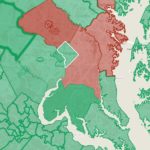
But D.C. and its surrounding suburbs remain closed. All of Northern Virginia, the city of Richmond and Accomack County on the Eastern Shore will also stay closed for at least two more weeks.
Even as parts of Maryland start to lift stay-at-home orders for some establishments, all bars and restaurants will remain closed for in-person service.
The closest businesses to Northern Virginia that can open Friday are in places like Fredericksburg, Stafford and Fauquier counties — all about an hour outside of D.C. But when local restaurants do reopen their doors, what happens in other regions will offer something of a road map on how to operate going forward.
Violino Ristorante in Winchester, Va., is open for dinner Friday evening — and all their tables were booked in advance. But the scene will look different from the ordinary hustle and bustle one might expect on a Friday night.
Under Phase One of Gov. Ralph Northam’s plan to reopen the state, restaurants can open, but they’re limited to using 50% of their outdoor seating. At this point, restaurants cannot serve any customers indoors.
For Violino, that means just 12 guests at a time on their patio. Under normal circumstances, the business can seat more than 80 people between its indoor and outdoor tables.
“We want to make everybody as comfortable as possible, especially because we have such limited seating,” says co-owner Raffaella Cintron. “We require reservations so that everybody has enough time to enjoy their meal and still have a wonderful experience here.”
There will be plenty of safety measures in place when the doors open tonight. For example, tables will be spaced the required six feet apart, and there will be disposable menus. Staff will wear masks, disinfect tables between seatings and even disinfect the bathrooms after each customer.
Cintron is hoping all goes well, but it will be a new experience. Outdoor dining is, of course, dependent on certain independent variables, like the weather. She says if it ever starts to pour rain or thunderstorm, they’ll have to box up everyone’s food and send them home.
“You can reserve your table, but you can’t reserve the weather,” she says.
And even as they start to welcome diners on-site, Violino will continue to offer take-out, including popular family meal kits that feed four to five people.
“I think some people are itching to get out and maybe dine on a patio,” Cintron says, “but I think that a lot of people are still a little bit hesitant.”
The outdoor dining rule also presents a challenge for restaurants that don’t have much, or any, exterior seating. But people are trying to get creative.
The Virginia ABC — the state-operated liquor licensing and distribution entity — said it would give temporary permits for expanded outside dining areas. The Virginia Beach City Council voted unanimously Thursday to allow temporary seating on its boardwalk, on sidewalks and in parking lots. Warrenton, a town in Fauquier County, is letting restaurants expand into parking spaces and even partially closed some streets to make room for outdoor tables.
Restaurants in Northern Virginia are already exploring whether local officials might relax some of the rules around outdoor dining.
Trae Lamond, owner of Chadwicks Restaurant in Old Town Alexandria, is thinking about his options. Without some flexibility, he may not be able to seat anyone at all during Phase One of reopening. Chadwicks’ has a small amount of sidewalk seating, but statewide rules require not only spacing tables six feet apart, but also keeping distance between patrons and pedestrians. That may prove impossible to arrange on the narrow streets of this historic city.
But he does have an alleyway next to the restaurant, and there’s a parking lot across the street that looks right onto the Alexandria waterfront. The city owns that lot, but Lamond is interested in working with officials to find creative solutions.
He’s also glad to have some extra time before the restrictions ease up, and he hopes to learn from businesses elsewhere in Virginia and around the country.
“I think it’s a blessing,” Lamond says, “Restaurant people are the most industrious … Tell us these are the guidelines and we will figure out how to make it work. But now … we also get to sit back and say … this is what those guys in X, Y and Z town have done. And this is what worked, and these are the pitfalls. I think it’s a huge benefit to us to have this kind of extra knowledge going in.”
The last thing he wants to do is reopen and then have people get sick.
Overall, he’s impressed with the ways restaurants are innovating to stay afloat. Chadwicks witnessed a swell of community support as they transitioned to exclusively take-out business — and benefited from flexible rules that allowed them to serve cocktails to-go.
“I guess people don’t know how to make a Margarita. And it’s been keeping us afloat,” Lamond says.
He compared his industry to a “cruiseliner-sized ship that’s gotten turned on a dime,” and says it couldn’t have happened without support from loyal customers and local governments willing to “change the rulebook in our favor.”
Further afield, where opening is already underway, restaurant owners are coming up with ideas they hope will gain traction.
Cole Berlin, the owner of Fahrenheit 132 in Fredericksburg, says that under Phase One guidelines he can seat a fraction of the 180 guests his restaurant usually holds.
Berlin’s ideal plan involved the city closing the entire street to make room for tables — something others around the country have considered.
“We’re in a smaller city, it’s a one-way street … There’s five restaurants on the street. For us, it seemed like a huge win-win if we closed down the entire street,” he explains.
Berlin says the city was concerned about closing roads in the downtown area. But he still hopes officials will let restaurants take over the entire sidewalk, and then use barricades to convert street parking into a temporary walkway.
A spokesperson for the city of Fredericksburg confirmed this idea is on the table, and officials hope to make some decisions by next week.
“It would really expand our capability a ton,” Berlin says, which would make reopening a better business proposition.
He encouraged local governments everywhere to “think outside the box and close streets and let the restaurants get into those spaces. And then I guess maybe if somebody else does it, then maybe my city will follow suit.”
It remains to be seen whether these first-to-open restaurants will draw eager customers from D.C., Maryland and Northern Virginia. Anecdotally, Violino, Fahrenheit 132 and several other restaurants opening this weekend say most of their reservations are coming from loyal customers, not people flooding in from faraway areas.
Hannah Schuster is a reporter in the WAMU newsroom.
The story was updated with information on Warrenton’s plans to allow expanded outdoor dining.
This piece originally appeared on WAMU.