Rachel Kurzius
 Martin Austermuhle
 Colleen Grablick
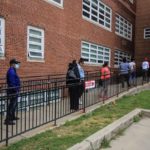
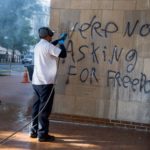
Update, 6/1/20: Mayor Muriel Bowser is instituting a 7 p.m. curfew on June 1 and 2 in response to protests in the District. D.C.’s 20 polling centers are open until 8 p.m., and Bowser says that people will be allowed to vote under curfew.
Original:
D.C.’s primary election is happening June 2. In the heavily Democratic District, the primary is usually more competitive than the general election, with the winner often sailing to victory in November. (There’s one major exception, which we note below.) The District has a closed primary, meaning that only registered Democrats can vote in the Democratic primary. The deadline for party registration was May 12.
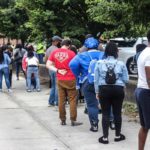
This year’s primary promises to be like no other, thanks to the pandemic. D.C. officials are promoting mail-in ballots this year as a way to avoid crowds in polling places on Election Day. (Here’s more information about how to obtain an absentee ballot—registered voters need to request them from the D.C. Board of Elections by May 26.) Early voting starts May 22 with 20 voting centers throughout the city. And on Primary Day, D.C. won’t have its typical 144 polling centers open—it will still be those 20 locations, all requiring social distancing, open from 7 a.m. through 8 p.m. D.C. allows for same-day registration in person.
Another thing to note about this year’s primary is that it’s the first election in which candidates can use D.C.’s new public financing program. Supporters have long said that the Fair Elections program will help even the playing field for first-time candidates and lessen the reliance on corporate money for elections. This primary is the first time those claims will be tested in D.C.
WARD 2
After more than a decade without a competitive race, the Ward 2 Democratic primary has eight candidates seeking a council seat that had long been held by ex-councilmember Jack Evans.
One of those candidates is Evans himself, who resigned in January over a major ethics scandal before his colleagues could expel him. Evans has apologized for his ethical transgressions and says his nearly 30 years as a lawmaker prepare him to handle D.C.’s coronavirus crisis.
His competitors, unsurprisingly, say it’s time for a new Ward 2 leader—one of many policy perspectives they share. While some are advisory neighborhood commissioners or have worked in government, others are first-timers to the world of public service.
The ANC commissioners are Patrick Kennedy, John Fanning, and Kishan Putta. Kennedy represents Foggy Bottom and served as Evans’ campaign chair in 2016, but says it was a formality. He’s backed by numerous Ward 2 ANC commissioners, Council Chairman Phil Mendelson, Greater Greater Washington, and the Sierra Club. Some of the same businesspeople who once supported Evans are also in Kennedy’s corner, leading critics to express concern that he’d be Evans redux. (Kennedy rejects that characterization.)
Fanning, the only openly gay candidate in the race, represents Logan Circle and resigned from D.C.’s small business department to run. He lost handily to Evans in 2000 but now has the D.C. Latino Caucus, the local Teamsters union, and various Ward 2 businesses on his side.
Putta represents parts of Georgetown and Burleith after previously serving in Dupont Circle. A former Republican, he unsuccessfully ran for an at-large seat in 2014 as an independent. He touts his experience in health care (and the endorsement of a former surgeon general), plus his involvement in a slew of civic associations.
The candidates who’ve worked in government, both federally and locally, are Jordan Grossman and Brooke Pinto. Grossman is supported by progressive groups such as D.C. for Democracy and the Jews United For Justice Campaign Fund, as well as multiple local unions and At-Large Councilmember Elissa Silverman. He’s been the most outspoken candidate about his support for policies like paid family leave.
Pinto is the most recent entrant in the race. She worked in D.C. Attorney General Karl Racine’s office and has his endorsement. She’s also backed by the Washington Post editorial board and national lawmakers including Richard Blumenthal and Joe Kennedy III.
Political newcomers Yilin Zhang and Daniel Hernandez come from the private sector. Zhang has worked in health care while Hernandez has worked for Microsoft.
Aside from Pinto, all the Democratic candidates are using public elections financing. On the Republican side, Katherine Venice is the only candidate in the Ward 2 primary. All the candidates besides Evans are competing in the June 16 special election to serve out the rest of his term. —Rachel Kurzius
Recommended Reading: This story looks at what happened to Evans back when candidates held in-person forums, and we’ve also delved into some of the unusual endorsements in this race. So what does the polling say? As the Washington City Paper and the DC Line recently explored, it’s (almost) anyone’s game.
WARD 4
If there’s a marquee race in this year’s Democratic primary, it’s up in Ward 4, which sprawls northward from Columbia Heights and includes traditional political strongholds along 16th Street NW and more progressive-leaning neighborhoods like Petworth and Takoma. Brandon Todd is vying not just for his second full term on the D.C. Council, but also to extend the Green Team’s hold over the ward; his predecessor and former boss is Mayor Muriel Bowser, and before that was former mayor Adrian Fenty. (The Green Team refers to the political machine backing Bowser, and Fenty before her.)
But Todd, 36, faces one of the strongest challenges yet from Janeese Lewis George, a 32-year-old Ward 4 native and former assistant attorney general in the office of Attorney General Karl Racine whose campaign has been powered as much by progressive ideas as it has by the city’s new public financing program. Marlena Edwards, a Shepherd Park resident and former member of the D.C. Democratic State Committee, is also running.
Todd is a self-admitted nuts-and-bolts councilmember; he prides himself on his constituent services, making sure that no complaint (no matter how small) is left unattended. And his closeness to the mayor certainly can bring the ward additional resources. But that opens him up to criticism that he lacks independence and is something of a legislative lightweight, known more for dealing with missed trash pickups than for pushing for solutions to the city’s most pressing challenges, including affordable housing, inequality, and violent crime.
George has stepped in with a menu of progressive-minded solutions: strengthening rent control, using violence interrupters instead of relying on police, more money for neighborhood schools, and so on. But she’s been criticized for being too far left (and her ideas too costly) for even left-leaning D.C.
Todd is the institutional candidate: He funded his campaign with money from well-heeled donors and corporations, was endorsed by the Washington Post, and has benefited from multiple mailers sent on his behalf by Democrats for Education Reform, a Walton family-funded pro-charter group. (And those mailers have had nothing to do with education.) And he’s had his share of ethical stumbles.
George touts her grassroots support (and the $200,000 in public matching funds they helped get her), is backed by all manner of progressive groups (Black Lives Matter, Jews United for Justice, the Sierra Club, various unions), and counts on the support of D.C.’s growing second center of power: Racine. She also scored an endorsement from At-Large Councilmember Elissa Silverman, who boosted George over her current colleague, Todd.
Can George pull off the upset and deal a blow to not just Todd but also Bowser’s dwindling corps of allies on the council? Polling has shown she’s not far off. But the Green Team’s longevity in Ward 4 is built on retail politics, and Todd has been around it for long enough to know how to close the deal. —Martin Austermuhle
Recommended Reading: City Paper looked at George’s critics and how she responded to them, as well as a rundown of some of the complaints about Todd’s campaign tactics.
WARD 7
Incumbent Vincent Gray faces five challengers for the Ward 7 seat. He’s worn a few political hats in the District, first representing Ward 7 as a councilmember in the mid-2000s, followed by a stint as council chairman from 2007 to 2010, and eventually serving as mayor from 2011 to 2014. While he lost his mayoral reelection bid to Muriel Bowser amid a yearslong federal investigation into his 2010 campaign finances (he was never indicted, but some of his associates pleaded guilty to charges stemming from the probe), Gray made a political comeback in 2016 by ousting his former protege, Yvette Alexander, from the Ward 7 seat.
Advisory Neighborhood Commissioners Veda Rasheed and Anthony Lorenzo Green are running, along with former ANC commissioner James Jennings, and political rookies Kelvin Brown and Rebecca Morris.
Rasheed is an attorney who works for a law firm helmed by LaRuby May, former Ward 8 councilmember and Bowser ally. (Bill P. Lightfoot, the former chair of Bowser’s mayoral campaigns and a former at-large councilmember, works at the firm too.) Rasheed also worked for D.C. Attorney General Karl Racine’s office, doing community engagement.
Green is an activist who’s served in Wards 7 and 8 since 2013 and has attracted progressive support. He told DCist last summer that he hopes to advocate for residents in ways where he sees Gray falling short, including on public safety, equitable development, and schools. He’s a vocal critic of the Metropolitan Police Department and is using public financing for his campaign.
Brown is a military veteran who’s opposed Gray’s support for a new hospital in Southeast, instead favoring community health centers. Although he’s never held office and lost an ANC write-in campaign in 2018, Brown was allied that year with mayoral candidate James Butler, who sought to unseat Bowser. He’s also using public financing.
Jennings, like Brown, is a military veteran, as well as a retired police sergeant who was an ANC commissioner in the early 1990s, according to the DC Line. Morris is a University of the District of Columbia graduate and works in hospitality, per her campaign website.
At 77, Gray has a wide base of support in his ward and has received endorsements from the Washington Post and Greater Greater Washington. As the coronavirus continues to affect the city, he’s called for renter protections and the quick development of the new Southeast hospital. —Colleen Grablick
Recommended Reading: Greater Greater Washington asked the candidates about housing, transportation, and infrastructure in a survey last month. The DC Line examined the race last July.
WARD 8
Incumbent Trayon White is facing three challengers in the June 2 Democratic primary. At 36, he’s the council’s youngest member, having risen to the seat once held by his mentor Marion Barry, D.C.’s late “Mayor for Life,” by way of a comeback. White lost a 2015 special election to replace Barry, by fewer than 100 votes, to attorney LaRuby May, an ally of Mayor Muriel Bowser. But he won comfortably when he ran against May in the next year’s primary, following a stint as a community outreach specialist for D.C. Attorney General Karl Racine.
His three opponents are Stuart Anderson, Mike Austin, and Yaida Ford. In a pair of interesting wrinkles, Anderson actually served as White’s campaign manager during the 2016 race, while Austin used to work as May’s legislative director. Both currently hold elected office: The former is a Democratic state committeeman for Ward 8—the city’s poorest ward—the latter an advisory neighborhood commissioner. Ford is a civil-rights attorney known for working on police brutality cases, including a 2019 case where she represented a man who’d been tased by Metro Transit police. (The incident was caught on video, went viral, and sparked scrutiny by the D.C. Council.)
Although DCist isn’t aware of any publicly released polling on the race, White has tended to enjoy broad support throughout his ward, updating constituents via his popular social media channels and participating in various community events, including giveaways for coronavirus provisions and Thanksgiving turkeys. Still, he’s been at the center of major controversies as a lawmaker. In 2018, White came under the microscope and triggered international outrage after posting a video in which he parroted anti-Semitic conspiracy theories. (He later apologized for his comments, saying he didn’t realize they perpetuated anti-Semitic tropes.) More recently, he amplified a conspiracy theory about the 2019 death of a Los Angeles rapper and, as reported by the Washington City Paper, posted on Instagram a questionable comment about vaccines, amid the COVID-19 pandemic.
Speaking of the pandemic, the extent to which Ward 8 voters turn out this year may not depend only on fears about the virus. The U.S. Postal Service this month acknowledged facing a worker shortage in the ward, after residents said they hadn’t received expected mail. In a year when local elections officials are encouraging people to vote by mail, this could be a huge problem. —Andrew Giambrone
Recommended reading: Washington City Paper delved into the state of the race in April. Greater Greater Washington published the candidates’ responses to a survey around the same time. The Post looked at how White was campaigning during the pandemic.
AT-LARGE
This is the rare D.C. race that’ll be much more interesting in November. D.C. has four at-large councilmembers, who are voted in by and represent the entire city, rather than one ward. Two of those four at-large members cannot be the same party as the majority of the council—which, so far in D.C.’s history, has meant they cannot be Democrats. With few exceptions, those seats served for non-Democrats end up going to independents.
Voters will elect two at-large councilmembers in 2020, and one incumbent, Democrat Robert White, is among the candidates.
With At-Large Councilmember David Grosso not running for a new term, that non-Democrat seat is up for grabs, and more than a dozen candidates are vying to fill it. But we won’t see the vast majority of their names on a ballot until November, considering most of them are running as independents.
Primary ballots will still have at-large candidates, though there isn’t any competition among them quite yet.
On the Democratic ballot, voters will see incumbent White, who will almost assuredly return to another term in office—the Democrat generally beats out the non-Dem by a wide margin.
Republicans can vote in the primary for Marya Pickering, a first-time candidate and D.C. Republican Party member for about two decades.
Libertarians will spot Joe Bishop-Henchman on their ballot—in 2018, he ran unsuccessfully for D.C. attorney general and his husband ran for chairman of the D.C. Council. (He’s also running unopposed for another term as the chair of D.C.’s Libertarian Party.)
Over on the Statehood Green ballot, longtime activist and candidate Ann C. Wilcox is throwing her hat in the ring again.
All of these candidates are shoe-ins during their primary races, and they’ll face off against one another and a slew of independents during the general election. Stay tuned! —Rachel Kurzius