Matt Blitz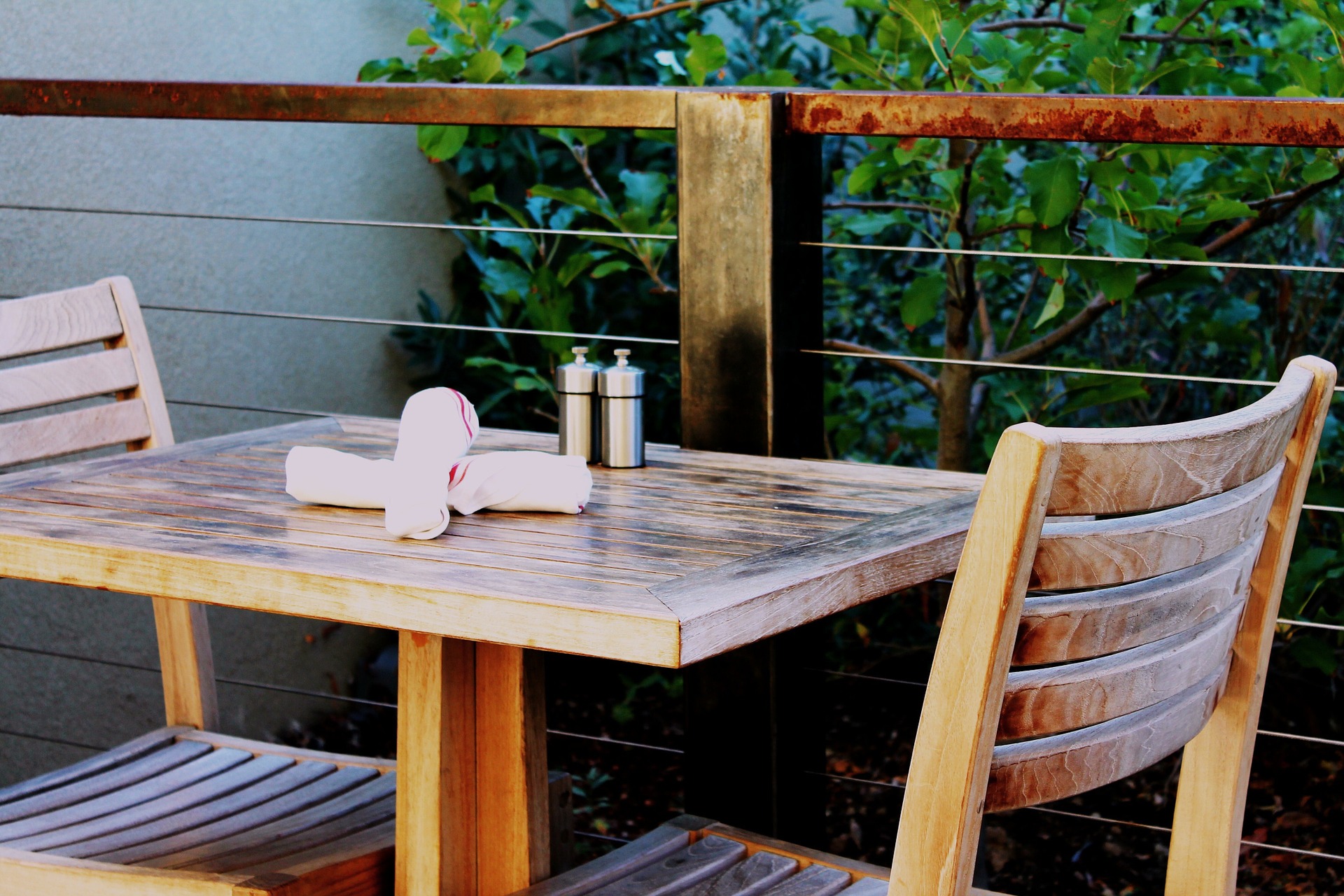
Peep Matheson, like many of us, usually celebrates life’s big moments at her favorite D.C. restaurants. Birthdays, job promotions, reuniting with friends, and engagements are all worthy reasons to dine out. “They’re perfect places to celebrate all kinds of events,” says Matheson, “Going out to eat is so central in so many different aspects of our lives.”
From her home in between Navy Yard and Barracks Row neighborhoods, which she shares with her husband Peter and 3-year-old son, she rattles off some of her favorites. “I love Lavagna, Ambar, and Belga… and CIRCA in Navy Yard. We eat at Agua 301 quite a lot. Well, used to.” she says. When she and her husband got engaged, she says, they enjoyed a special meal at Founding Farmers.
And, later this week, Matheson will be able to again have a meal out in D.C.—though with significant restrictions.
With the District now moving into phase one of a three-part reopening plan on Friday, local restaurants are now able to convert their takeout/delivery-only business to limited capacity, outdoor dine-in service.
And it’s going to look quite a bit different than it did eating out before. In D.C.’s Phase 1, tables must be six feet apart, limited to six people per table, and be outside. There will be no buffets or salad bars and one-time use, disposable menus are highly encouraged. D.C.’s government is also asking establishments to keep customer logs to facilitate contact tracing if needed. Additional guidance encourages patrons to wear masks and stay six feet apart from other parties.
The city will transition to more lenient phases as the metrics allow. According to ReOpen DC recommendations, phase 2 allows for indoor seating up to 50 percent capacity with physical distancing and up to 10 people per table as long as they are from the same household. D.C.’s Phase 3 doesn’t require physical distancing and allows establishments to submit “case-by-case” requests for capacity expansion.
Northern Virginia is joining the rest of the commonwealth in phase one later this week as well with a similar set of restaurant guidelines. Leaders in Maryland’s nearby suburbs, meanwhile, said Wednesday they won’t be reopening this weekend but cautiously are planning for June 1.
Matheson, for one, is looking forward to supporting the industry that’s been particularly hard-hit by the pandemic. She says her plan is to go to 15 different restaurants over the next few weeks. “I’m so excited. I keep looking at Open Table to see if it’s even possible to make reservations.”
Since Bowser hinted that reopening could start this weekend, a handful of restaurants announced their intentions to offer outdoor service, including Dupont Circle’s Lauriol Plaza, Duffy’s Irish Pub on H Street, Park View’s Napoli Pasta Bar, and 14th Street spot Seven Reasons.
But dining out this weekend will be anything but normal. Although recommendations were released last week, the official executive order was not issued until Wednesday morning. This leaves less than 48 hours to the official transition to phase one with a lot of questions for owners. How will staff safety be ensured? How to manage a bathroom line? What about providing menus? How many tables can be fit in an outdoor space that maximizes capacity while providing proper social distancing? Will patrons actually show up?
Then, there is an even larger, more existential question even for those who’ve made the choice to attempt to reopen: Is it even worth it?
“There’s no certainty that it will be,” says John McDonnell, the chief operating officer for Clyde’s Restaurant Group, which owns 12 restaurants across the region including Old Ebbitt Grill and the Hamilton and will be aiming to reopen a portion of the D.C. locations this week.
“Restaurants are a very thin-margin business. But we have to open somehow,” says Ashok Bajaj, owner of Rasika and founder of Knightsbridge Restaurant Group. Of their 10 restaurants, four are planning to reopen with outdoor seating by next week. “It’s going to be a balancing act.”
Ankara is also planning to open back up with outdoor patio seating, “Everything is a big question mark right now,” says Jenay Doganay, one of the managers at the Turkish restaurant in Northwest D.C. “It’s not going to be easy.”
Right now, there’s a mad scramble to prepare for patrons and ensure strict guidelines are met. For example, Ellen Kassoff and Todd Gray, the husband-and-wife co-owners of Equinox near Farragut Square, are in the midst of converting the patio and atrium of their two-decade-old restaurant into an “oasis in the city.” Equinox staff are building planters with vine-threaded trellises on rolling casters that can be moved in between tables to mark off the needed six feet separation. Kassoff’s hope is to have something functional and aesthetically pleasing.
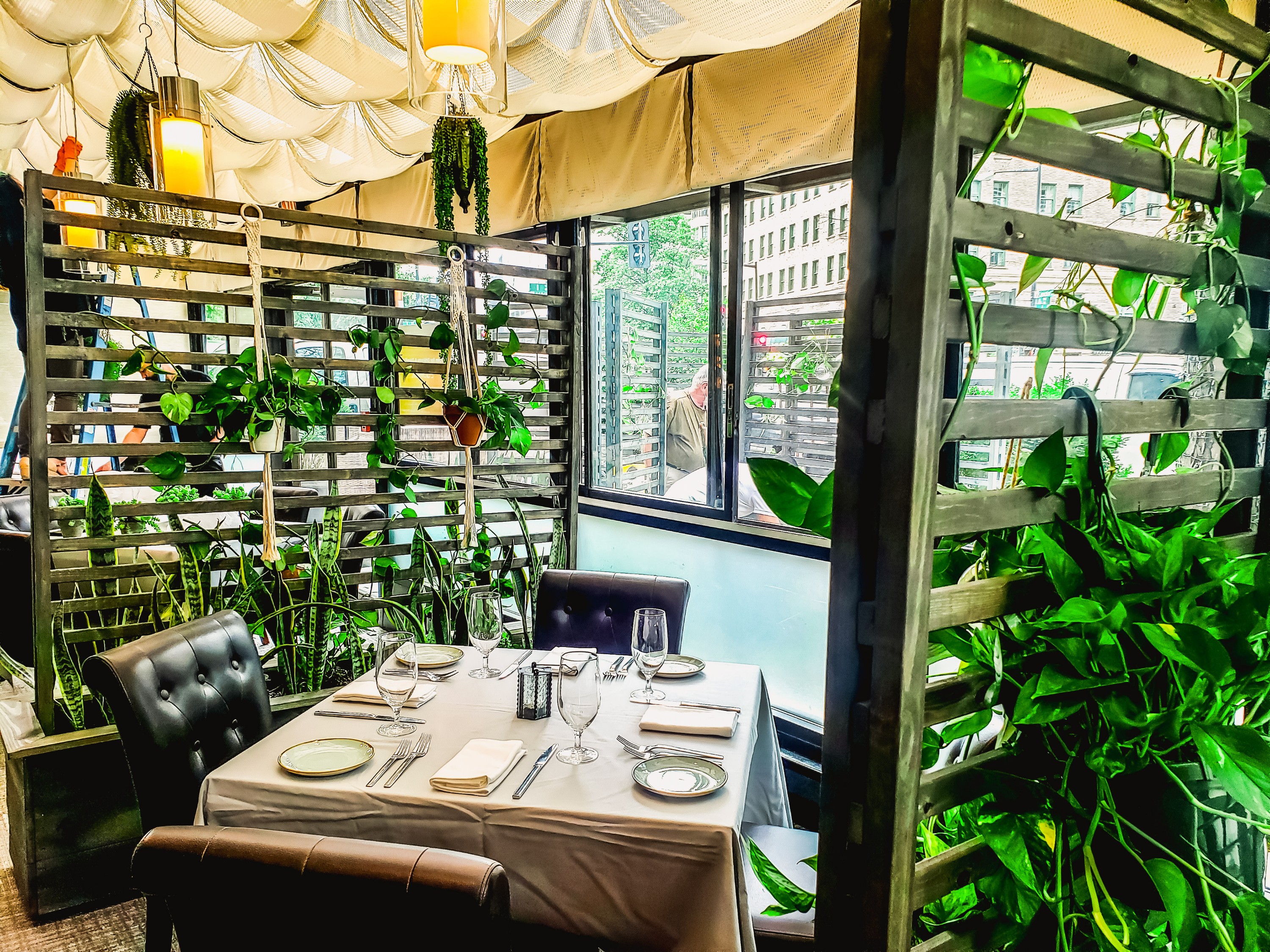
There’s a lot of upfront costs to do this, Kassoff admits—about $15,000 in total—so that they can simply accommodate about 25 percent of their usual capacity. They are also using creating QR codes and sending everyone who makes a reservation a downloadable menu to avoid printing out hundreds of one-time-use paper menus.
Kassoff thinks it’s all worth it, but knows that even if her restaurant takes every precaution and meets every regulation, none of it will matter if the customers don’t come back.
“I think it doesn’t matter what the government says,” Kassoff says. “It’s an individual choice … ultimately whether to venture out again or not.”
This is at the forefront of many other restaurant owners’ minds as well. “We need to get the public comfortable with going out to dine. It’s our responsibility to ensure [to] customers that it is safe to go out,” says Bajaj, whose restaurants include two Rasika locations, and Sababa and Bindaas in Cleveland Park.
Like Equinox’s owners, Bajaj is also preparing to welcome back as many patrons as possible even if logistics remain vague. The plan is to open Rasika West End and Sababa by the weekend with Bindas and Bombay Club reopening sometime next week.
A number of his establishments have sidewalks, rooftops, and easily accessible streets that would work well for setting up outdoor seating, he says, which would put his restaurants at about 20 percent capacity. However, guidelines are still being made clear. The mayor’s office confirmed to DCist that previously licensed rooftops (and beer gardens) will be allowed to be used for outdoor seating. The office also said that a process for requesting the use of outdoor public spaces—such as sidewalks—will be established by the end of the week.
Clyde’s Restaurant Group is also waiting on a system for setting up sidewalk seating. McDonnell is hoping that several of their D.C. restaurants could also open this weekend, but in order to set up outdoor seating, the company would need permission from the city to use sidewalks and streets. For now, this weekend’s plan is to open Clyde’s of Reston and Clyde’s Willow Creek Farm in Ashburn with the D.C. restaurants hoping to open Saturday should they get approval.
Until then, his 12 restaurants are installing 11,000 square feet of plexiglass in between booths and as bar seat dividers across as a way to provide “extra protection beyond six feet.” It’s costing them “well over $100,000” to do this, but the hope is to be prepared for the next stages so they can immediately reopen when it happens.
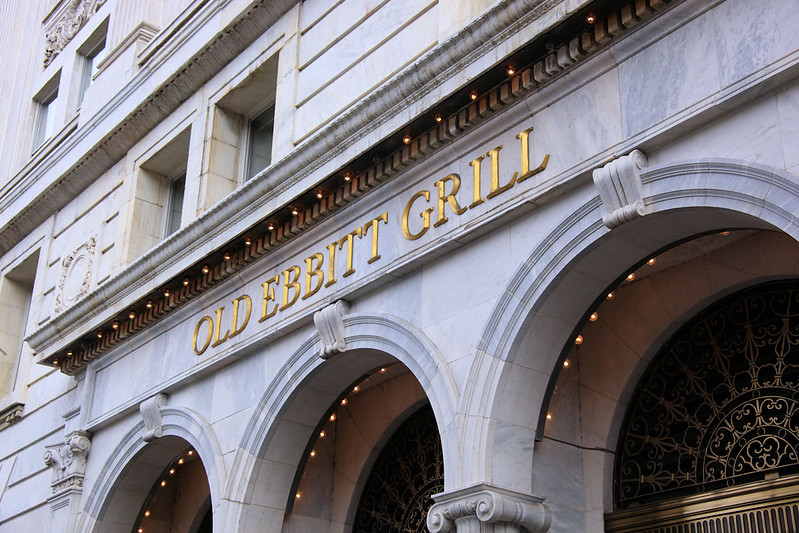
McDonnell says when they get to phase 3—when, according to ReOpen DC’s recommendations, restaurants can apply to operate at greater than 50 percent capacity—is when they can start to think about making a profit again. “Nobody’s going to actually make any money in phase one and two,” he says. “They’re going to simply try to reduce the amount of losses that they’re suffering.” Right now, he says, his restaurants are “burning cash at about a million dollars a month.”
Kitty O’Shea’s, the small Irish pub in Tenleytown, doesn’t have that kind of money. “Things have been tight across the board,” says general manager Dylan Curtis. They don’t have the capital needed to make significant renovations for phase one reopening. For now, Curtis says he will continue to prioritize take-out, since that is already running smoothly, and keeping everyone feeling safe. He’s not going to open for outdoor seating just because they can.
“Opening for the sake of opening doesn’t mean anything if people don’t feel comfortable coming,” he says.
There’s also the issue of keeping staff safe, which restaurants have already been dealing with while working takeout service. Nearly all of the restaurants we spoke to said, at least at the beginning, they’ll be using the same staff they’ve been using for take-out and delivery operations since they are already up to speed on procedures. Most also said they will be taking the temperatures of all employees prior to their shift.
Several are going further. Silvia Garufi, a manager at Cafe Milano in Georgetown, says they are going to require all employees to provide documentation they’ve been tested in the past week. “We will not allow staff into the building until they have results,” says Garufi. She says the restaurant has provided staff with multiple locations to get a test.
Duffy’s Irish Pub on H Street Northeast, which is also reopening on Friday with reservations and an online waitlist, says via direct message on Twitter that they’ve been asking staff not to take public transportation since March 15 when they started take-out service. For those that rely on it, they have offered private transportation to and from work from a Duffy’s employee who is also a professional driver. (They said they’re paying that employee “the average they made as a professional driver.”) As the restaurant noted, it’s “very expensive but helps keep the entire staff in our own bubble.” As of Tuesday, the restaurant said its reservations for the weekend were about 70 percent booked up.
No matter the precautions these restaurants take, it all comes down to whether customers will show up to dine out. If Twitter is any indication, there isn’t a hearty appetite for this quite yet.
However, all the restaurants we spoke to are optimistic. “I think [diners] will slowly, gradually come back,” says Kassoff. “I think reservations will come back strong.”
McDonnell agrees, but has also noticed that while a majority of the folks coming to his restaurants for takeout are wearing masks and social distancing, about 30 to 40 percent don’t seem to take it seriously. “That’s the group who are itching to get back out,” he says. That scares him a bit, though he says no one will be able to eat at one of his restaurants without a mask. “If you don’t have one, we can provide one for you. We bought about ten thousand [single-use masks] and will add a dollar to your bill for one,” McDonnell says. “No mask, no dine.”
Bajaj says that if he wasn’t a restaurant owner, he would be going out to eat this weekend. But admits he knows the risk. “Look, we are all taking chances here,” he says.
Matheson, the frequent restaurant patron, also knows there’s risk involved, but is willing to take it if it means getting life back to the way it was.
“We’re just really, really ready to get back to some semblance of normalcy,” says Matheson. “Even if it isn’t quite as normal as it used to feel.”