Rachel Kurzius
D.C. legislators are duking it out over the direction of the D.C. Council this primary season.
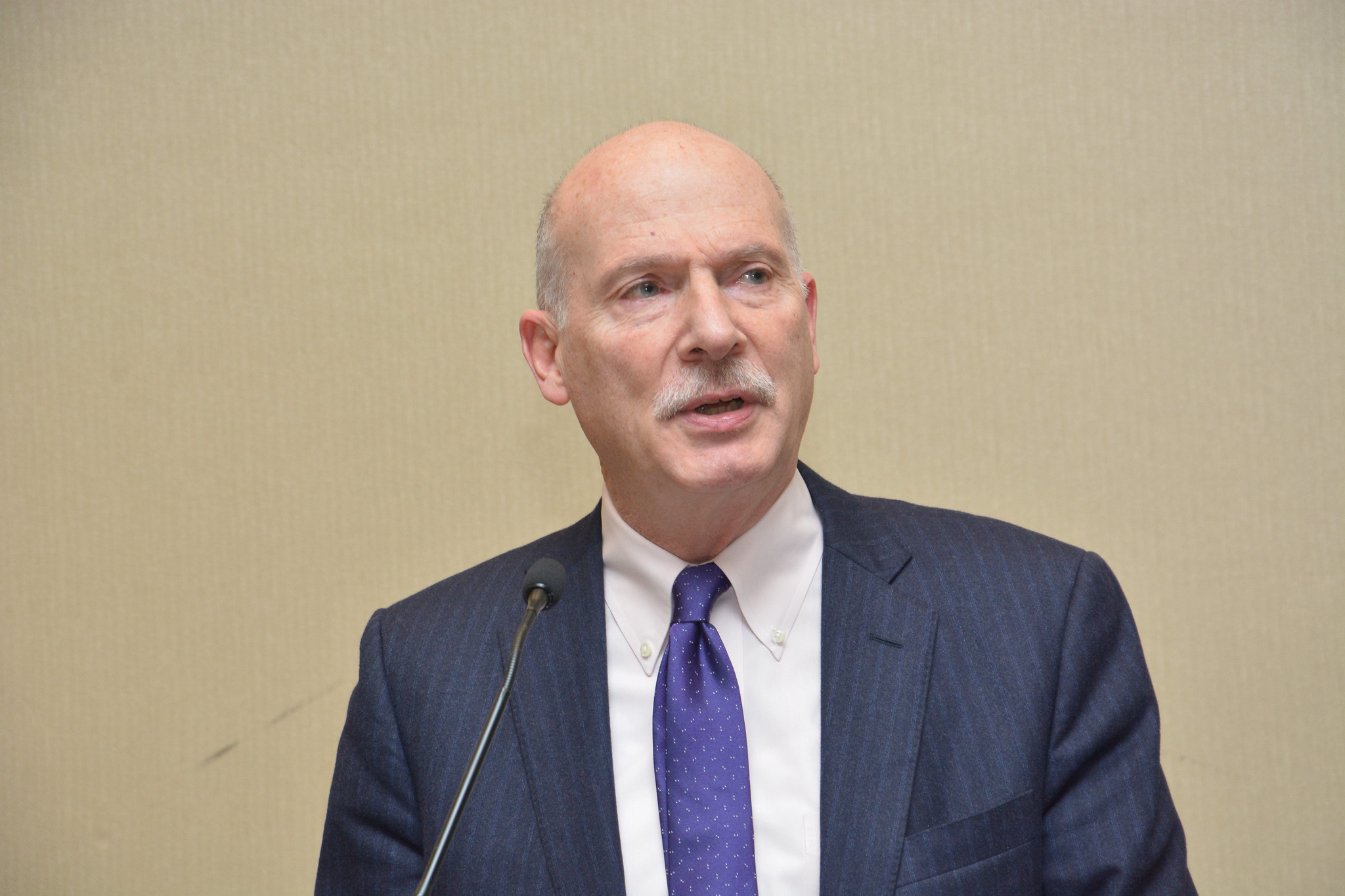
On the one side, you have the powerful chairman. In the upcoming D.C. Council primary, Phil Mendelson has endorsed Brandon Todd, the sitting councilmember in Ward 4, and Patrick Kennedy in Ward 2, the candidate supported by many of the former backers of longtime councilmember Jack Evans, who resigned in January amid a growing ethics scandal. In making those endorsements, he is joined by At-large Councilmember and former chair of the local Democratic Party Anita Bonds.
At-large D.C. Councilmember Elissa Silverman stands in the other corner. In those competitive races, the independent legislator has thrown her weight behind candidates favored by the city’s progressive community—Janeese Lewis George and Jordan Grossman, respectively.
As local political strategist Josh Brown put it: progressives “see blood in the water to move the council far to the left.” (Brown Strategy Group is advising a moderate candidate, Marcus Goodwin, in November’s at-large race.)
What’s the deal with this primary, anyway?
In 2020, six seats are on the ballot: two at-large councilmembers and wards 2, 4, 7, and 8. The winners of the Democratic primary in all of the races but the non-Democratic at-large seat are expected to win in November. (There’s an additional special election on June 16 in Ward 2 to determine who will fill the seat vacated by Jack Evans for the rest of the council term.)
Early voting began last Friday for the June 2 primary at 20 polling centers, which will remain open through the 2nd, and officials have been pushing absentee ballots. The deadline to request a mail-in ballot was May 26. See our voter guide for more information.
The seats in wards 2 and 4 have long been held by more moderate, business-friendly councilmembers. Todd and Evans have advocated for a more fiscally conservative stance on spending, and reliably voted against some of the Council’s most labor-friendly bills, arguing they would be far too costly to the business community. And with some of those issues coming down to a single vote or two, local progressive groups began supporting candidates early in the race in the hopes of shifting the balance of power on the council.
While Mendelson was one of the architects of universal paid family leave, he has also sought to put the brakes on labor legislation that worried the business community and derided some of his colleague’s proposals as “left of the left.” And now he is ringing alarm bells about the outcome of the June primary.
If Grossman and George win, he says, “we definitely will see a change in policies with regard to increasing taxes, being less employer, maybe I should say business-friendly.” He says that change is not in keeping with the D.C. electorate: “The majority of residents are not sitting at home thinking, ‘I want my taxes to go up,’ or thinking, ‘gosh, businesses are evil.’”
Silverman, one the most reliable members of the Council’s progressive bloc, calls such criticism “an old D.C. political trick of accusing opponents of raising taxes.” She made her picks, she says, by asking herself: “Who is going to be a reliable ally on critical issues of equity?” She adds that the pandemic has “shown how important social safety net programs are and that we need to treat our workers fairly.”
Mendelson notes the outcome of these races could shift the legislative body “considerably to the left.” And that’s the question in front of Wards 2 and 4 on June 2: what should the ideological make-up of the D.C. Council be?
Thanks to the predominantly Democratic population, D.C.’s primary is more important than the general election for most of the city’s elected positions. There aren’t any contested citywide positions on the ballot this June, but seats in Wards 2, 4, 7, and 8 are up for grabs. (There will also be a competitive race in November for the non-Democratic At-large seat being vacated by David Grosso.)
While the D.C. Council has always had an overwhelmingly blue hue, the shades among councilmembers vary. The divisions among national Democrats during the presidential primary are useful in terms of understanding the more moderate and progressive wings of the council (though, notably, most councilmembers use the term “progressive” to describe themselves).
Even though the members of the council vote unanimously far more often than not, they don’t see eye-to-eye on some key issues, like how much businesses and wealthy residents should be taxed, campaign finance, whether to use rainy day funds on social services, policies around the regulation of marijuana, sex work decriminalization, policing, and the use of constituent services funds.
As the pandemic redefines what campaigning and voting look like and a new public financing program offers candidates the opportunity to buck the traditional reliance on big donors, clashing endorsements continue to show how sitting councilmembers and interest groups are trying to shape the legislative body by stocking it with reliable allies.
Larger in population than two states, D.C. has a unicameral legislative body that’s small compared to its responsibilities: 13 people overseeing a $9 billion budget. (By comparison, Wyoming has a 60-member House of Representatives and a 30-member Senate for its $8.9 billion budget.)
There’s a member representing each of the eight wards; four at-large councilmembers holding citywide seats (under the Home Rule Act, two of these are reserved for the non-majority party, which has meant non-Democrat in practice since the D.C. Council was established in 1973); and a chairman, who is also elected by the entire District.
“I don’t think there are any clear caucuses, but there are groups that are more aligned than others,” says Ward 6 Councilmember Charles Allen, who generally votes alongside the more progressive wing of the D.C. Council. “There are no permanent enemies—you’ve got to count to seven for every single vote.” (That’s the number of votes needed to pass permanent legislation.)
But even though there may not be permanent enemies on the council, there’s likely to be some awkwardness after Silverman boosted challenger George over one of her current council colleagues, Todd, in Ward 4.
The race is one of the clearest distillations of the differences between the major ideologies on the D.C. Council. For years, the city’s northernmost ward has been a stronghold for the Green Team, the group of operators and supporters behind Mayor Muriel Bowser, and Mayor Adrian Fenty before her. (Both rose to the mayorship from the Ward 4 seat.)
Todd is a close ally of Bowser, as most are quick to note. But he’s also been a reliable vote for Mendelson, who endorsed him last summer.
“He works well with me, which is important,” Mendelson says of Todd. “He’s not one who’s out there saying we should be raising taxes, and I think we’re going to be having that debate very soon with this budget.” (For his part, Todd promises that he will vote against all tax increases, whether they be property taxes or income taxes.)
Todd, who is using traditional funding in the race, also has endorsements from Ward 5’s Kenyan McDuffie and At-large Councilmember Anita Bonds.
Meanwhile, George, who is using the city’s new public funding program, notched a long list of endorsements from the city’s most progressive groups and most of the local unions, as well as D.C. Attorney General Karl Racine, her former boss. (A third candidate, Marlena Edwards, hasn’t gained much traction.)
George has pointed out Todd’s positions where she would have taken an opposite stance: his vote in favor of a controversial single-source contract for sports betting, his vote against paid family leave, his vote to repeal Initiative 77, and his vote to direct online sales tax revenue to commercial tax cuts rather than homeless services, for starters. In some of those cases, that one vote would have changed the outcome.
While she’s often on the opposite side of the dais from Todd, Silverman says they get along personally. “I was reluctant and it was anguishing to get involved. But I thought it was the right thing to do,” she says. “I just felt, from a policy point of view as well as from an equity point of view, I really supported Janeese and what she stands for.”
It’s not unheard of for sitting councilmembers to back challengers behind the scenes, but it’s far rarer to see them publicly endorsing those candidates over incumbents. Silverman says the pandemic was largely what prompted her to step into the Ward 4 race.
“It takes away traditional ways that voters have gotten to learn about candidates—you can’t meet someone in person, you can’t go to a meet and greet anymore,” says Silverman. “I wanted to lend my voice, especially as a credible messenger and someone who is paying attention” to the election.
There’s also some recent historical context in understanding Silverman’s endorsement. During the councilmember’s last election in 2018, Bowser publicly threw her support behind a challenger, Dionne Reeder, who ultimately came up short after a bruising campaign. In Ward 4, Silverman beat Reeder by more than 10 points. Silverman, however, says that her involvement in this race “isn’t a grudge match.”
But though Bowser stepped into the 2018 campaign, Todd did not. “I didn’t endorse [Silverman’s] opponent in 2018, but she can do what she wants to do,” he says. “I’m focused on running my race and making my record clear to Ward 4 residents.”
Todd is billing himself as the practical candidate. “When some people try to pit business and community against each other, it’s all one,” he says. “Businesses employ residents, residents want to have businesses to go to. Moving forward in what will be a challenging financial time in the District, it’s increasingly more important to find councilmembers who will find that balance.”
George, meanwhile, is pitching herself as the “people-first candidate, the anti-corruption candidate,” calling out Todd’s past campaign finance violations and saying she would be more interested in legislating than Todd, known for his constituent services, is.
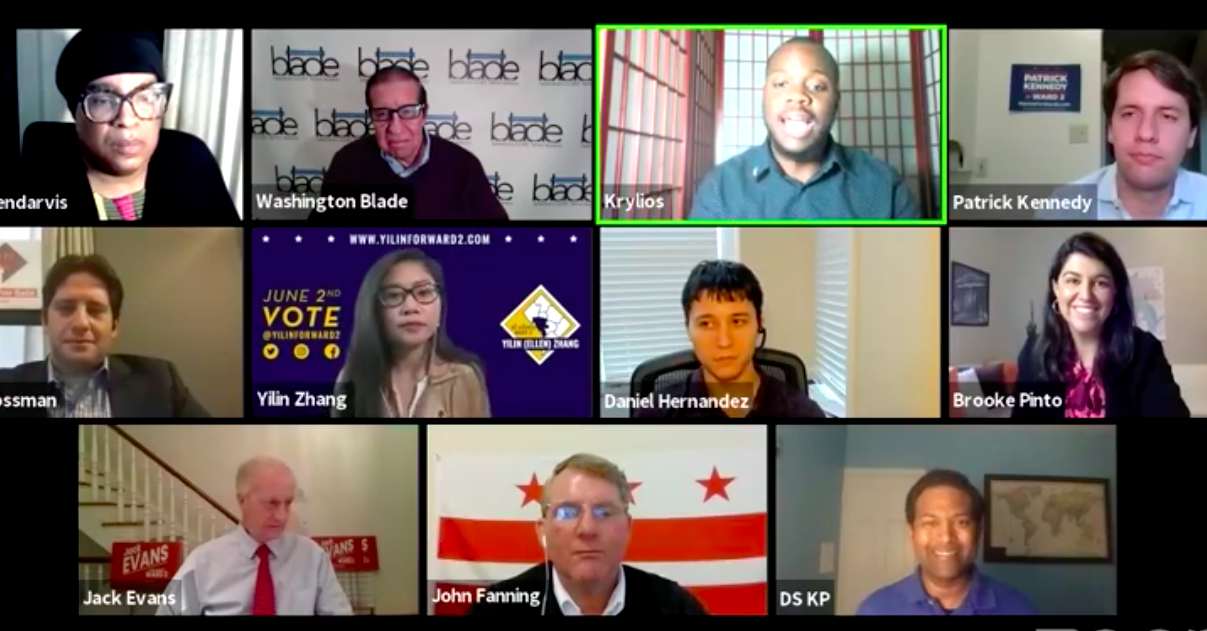
Silverman is united with Mendelson and indeed the entire D.C. Council on one thing: condemning Evans’ decision to run for the very seat he resigned from amid an ethics scandal. (Evans declines to comment on the anti-endorsement, but says his fiscal conservatism, including paying down the rainy day funds and improving the city’s bond rating “has been absolutely, absolutely proved to be right given the pandemic that we’re facing today … Because of those actions, the mayor was able to balance the budget” without layoffs or deep cuts.)
But the two lawmakers are supporting different different candidates in Ward 2.
While the contours of the race—eight candidates in total—make it harder to draw ideological distinctions as clearly as in Ward 4, Silverman and Mendelson have both made their preferences clear: Silverman supports Grossman, a former federal employee with experience at D.C.’s Healthcare Finance Agency, and Mendelson supports Kennedy, a longtime Advisory Neighborhood Commissioner in Foggy Bottom. (At-large Councilmember Bonds has also endorsed Kennedy.) Both view their chosen candidates as people who would work well with them on the D.C. Council, and presumably side with them during key votes.
The question for many in this race is how different, exactly, Ward 2 residents want their representative to be from Evans, who sat on the council for nearly 30 years. Kennedy was Evans’ campaign chair in 2016 and business leaders who once backed Evans are now fundraising for him.
“The council is at a crossroads and the need for a fiscally responsible councilmember is desperately needed,” wrote business leader and lobbyist David Julyan in a fundraising email supporting Kennedy published by the D.C. Line. “Without that balance, it is likely that D.C. employers will be the brunt of, and pay the price for, many expensive, unprecedented and unnecessary costs and intrusions in the workplace.”
Kennedy, the first candidate to enter the Ward 2 race, entered months before Evans ultimately resigned, and has earned endorsements from more fellow Ward 2 ANC commissioners than anyone else in his race.
Kennedy rejects the notion that he’d be a second coming of Evans. He says he has the “support of a diverse set of sensibilities in Ward 2. It’s about building coalitions and representing the totality of your ward, and being able to understand the needs and aspirations of your constituents.”
But Grossman’s campaign has seized on Kennedy’s ties to Evans, calling Grossman “a clean break from Jack Evans.”
As some business advocacy groups have lobbied for changes to D.C.’s paid family leave program before it launches this summer, citing the economic crisis, Grossman says he will be a steadfast supporter of implementing it. He points to his support for an indicator of how he would legislate: “Organizations that have tons of members who power our city—the teachers’ union, hotel workers, transit workers, frontline workers—right now, all of those organizations and unions have endorsed my campaign.”
Those same groups back Silverman, who says that Kennedy’s connection to Evans also influenced her endorsement. “Chairing Jack’s 2016 campaign, it was hard for me to get over that,” she says, adding that the email from Julyan “tipped the scales.”
Still, amid the intrigue, it’s unclear whether these endorsements will have any meaningful impact on the races. “The history of the city is that elected leaders don’t have very long coattails anyway,” says Tom Sherwood, longtime D.C. reporter and analyst for The Kojo Nnamdi Show Politics Hour.
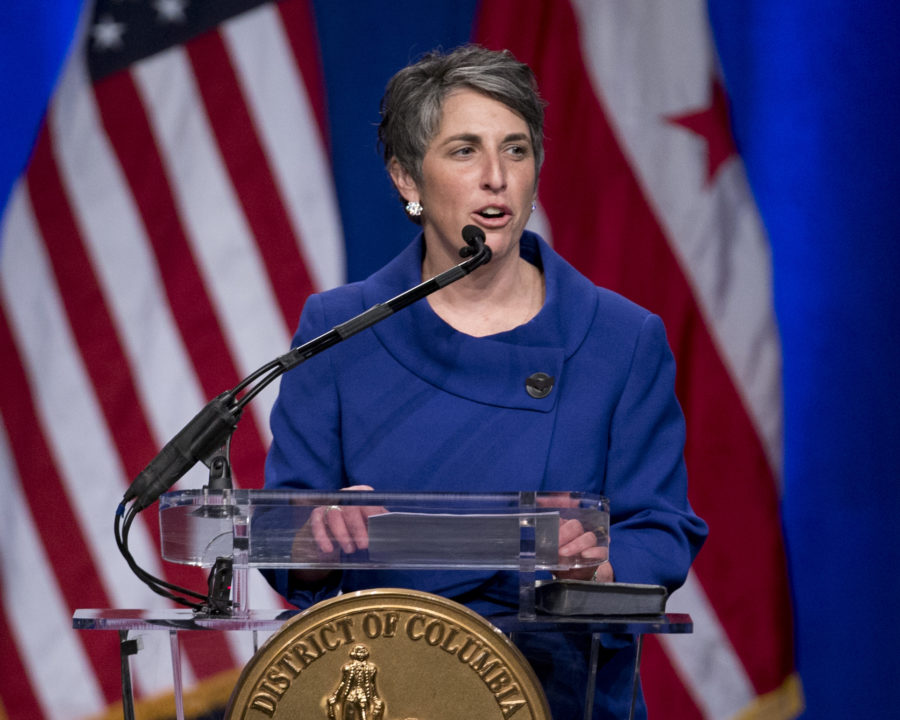
In addition to elected officials, advocacy groups have also drawn battle lines.
The Washington Teachers Union, among most other organized labor groups in the city, support Grossman and George, as well as a larger slate of progressive candidates.
Democrats for Education Reform, a political action committee funded by the Walton family that focuses on school reform and often boosts charter schools, is supporting Todd and Kennedy (as well as Vincent Gray in Ward 7).
While the group’s mailers in Ward 2 have focused on boosting Kennedy and ignore his competition, there’s controversy among George supporters over the more than a dozen mailers the group sent to Ward 4 residents. Rather than focusing on education, they instead attack George for comments she made about funding for the Metropolitan Police Department, and they show that the candidates’ distinctions aren’t just on economic grounds.
In 2019, she tweeted in 2019 “I will absolutely divest from MPD and put that money into violence interruption programs” and gave a similar answer in a questionnaire for the Metro D.C. Democratic Socialists of America last year. George contends that doesn’t fully represent her stance on public safety, pointing out that she’s a former prosecutor who has worked closely with D.C. police.
But DFER believes it is their strongest argument. The group says its polling indicates that public safety is among the most important issues for Ward 4 voters, and that’s why they’re focusing on George’s policing comments rather than education. “As with all political organizations—including others active in D.C. now—our outreach efforts are focused on our goal of electing candidates who will fight for policies that benefit students,” says D.C. Director Ramin Taheri over email.
Calling the group’s mailers “misleading … to an extreme level,” George says they are “a testament to how afraid they are of me winning and how close this race is.”
Todd defends DFER as “doing what other organizations are doing, running independent expenditures,” but says that he isn’t focused on mailers from outside groups.
In addition to George and Grossman, the lefty block of candidates also includes Deanwood ANC commissioner Anthony Lorenzo Green, who is challenging Vince Gray in Ward 7, and Ed Lazere, who long served as the director of the city’s foremost left-leaning think tank and is running for the independent at-large seat in November. The four released a shared statement last week about Bowser’s budget—”this budget proposal does not rise to address the urgency felt by residents hurting the most right now”—a combined effort rarely seen among challengers for D.C. Council races.
While wracking up support from many of the same progressive organizations, Green hasn’t gotten the kind of high-profile endorsements that Grossman and George have, and Gray appears to be safely holding onto his seat. The former mayor and council chairman says he expects the next council term will be filled with “vigorous debates among many about whether we should build the reserves we have or spend that money on services to help people.”
Lazere, meanwhile, ran against Mendelson in the 2018 primary for council chairman in another race that was seen as a referendum on how progressive the city’s voters want the council to be. Lazere lost resoundingly: 36 percent to Mendelson’s 63 percent.
Those results inform the chairman’s contention that “the electorate is not with [the District’s progressive groups]. The electorate is more centrist.”
But with more than a dozen people running for the non-Democratic at-large seat, Lazere is seen as a frontrunner in November. (Silverman won her crowded 2014 race with 11.6 percent of the vote.) Still, if he were to win, he’d be replacing another lefty councilmember rather than a more moderate one.
While Mendelson and Silverman are painting the primary as one with huge implications for the make-up of the council, Ward 3 Councilmember Mary Cheh, who often serves as a swing vote, sees it differently.
“There may be a slight shift in the perspective of the council overall, but my experience in working with the members is it’s ever-shifting coalitions,” Cheh says. “Incremental change of one or another councilmember can be influential on a particular issue, but it’s not overall going to change the council and the business that it does.”
This post has been updated to reflect that Anita Bonds is the former chair of the D.C. Dems.