 Jenny Gathright
 Gabe Bullard
 Mary Tyler March
 Matt Blitz
 Carmel Delshad
 Rachel Sadon
 Dominique Maria Bonessi
 Elliot C. Williams
This story was last updated on May 31 at 2:53 a.m.
Large-scale protests over the death of George Floyd erupted for a second day on Saturday in D.C., with clashes between law enforcement and protesters escalating dramatically as the sweltering night went on.
Lafayette Park and other areas around the White House were the main flashpoint as the day’s peaceful protests turned chaotic, prompting the Park Police to mobilize the D.C. National Guard Saturday evening.
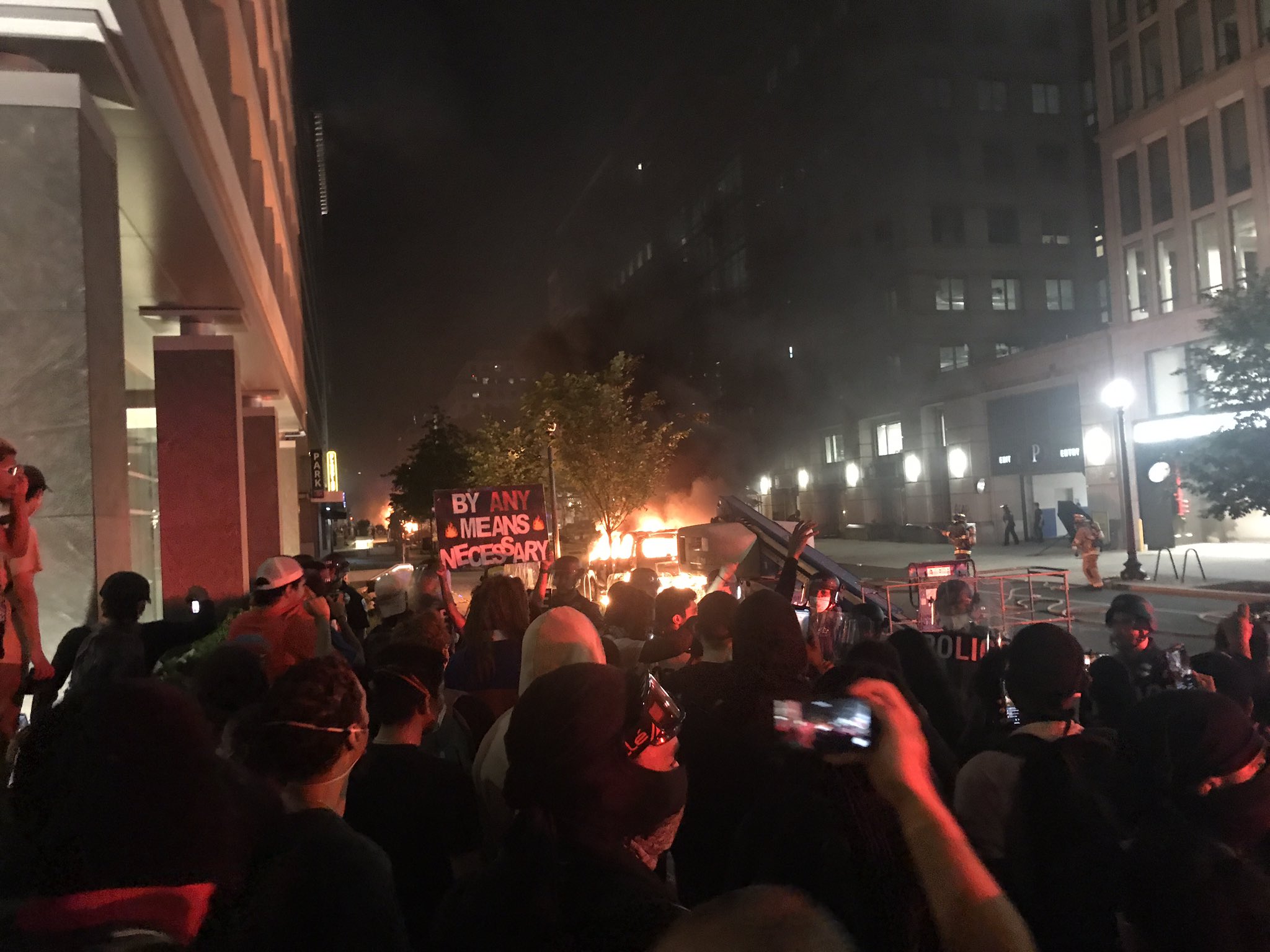
At least one car was set on fire. Some demonstrators smashed windows on the facade of the Ronald Reagan Foundation and Institute. Fireworks went off on multiple occasions. Police and Secret Service pushed protesters back as the crowd moved again and again toward Lafayette Park, repeatedly using chemical sprays. As the night turned into the early morning, stores in several neighborhoods were looted.
D.C. Fire and EMS said they transported seven people to the hospital, though a spokesperson could not immediately say how many were protesters or law enforcement. The D.C. Police Union said that at least one of its members was hospitalized after getting hit by a rock.
Volunteers wearing red or white crosses on their clothes offered medical help, checking for concussions and washing people’s eyes after they were pepper sprayed.
The widespread protests came as the Washington region slowly emerged from stay-at-home orders amid the coronavirus pandemic. Saturday marked the second night of dramatic confrontation between demonstrators and law enforcement officials outside the White House. Earlier in the day, President Donald Trump falsely accused Mayor Muriel Bowser of refusing to allow D.C. police to help manage the previous night’s protests, and warned protesters of “ominous weapons” and “vicious dogs” on the other side of the White House fence.
The demonstrations began peacefully with a car caravan that traveled from 16th Street Heights to downtown in the early afternoon. Separately, hundreds of protesters marched from the U.S. Navy Memorial Plaza to the Capitol Building.
“This is not violence, this is disruption of a prejudiced system,” a speaker shouted to the crowd gathered in front of the Capitol. Even after the official rally ended, hundreds of people continued marching down Pennsylvania Avenue, chanting “Say his name, George Floyd.”
Another caravan organized by Black Lives Matter set out from Northeast later in the afternoon, with what appeared to be hundreds of cars. As the multi-generational caravan drove down Benning Road through the H Street corridor, Capitol Hill, and Southwest D.C., people on the streets raised their fists, clapped their hands and waved in support.
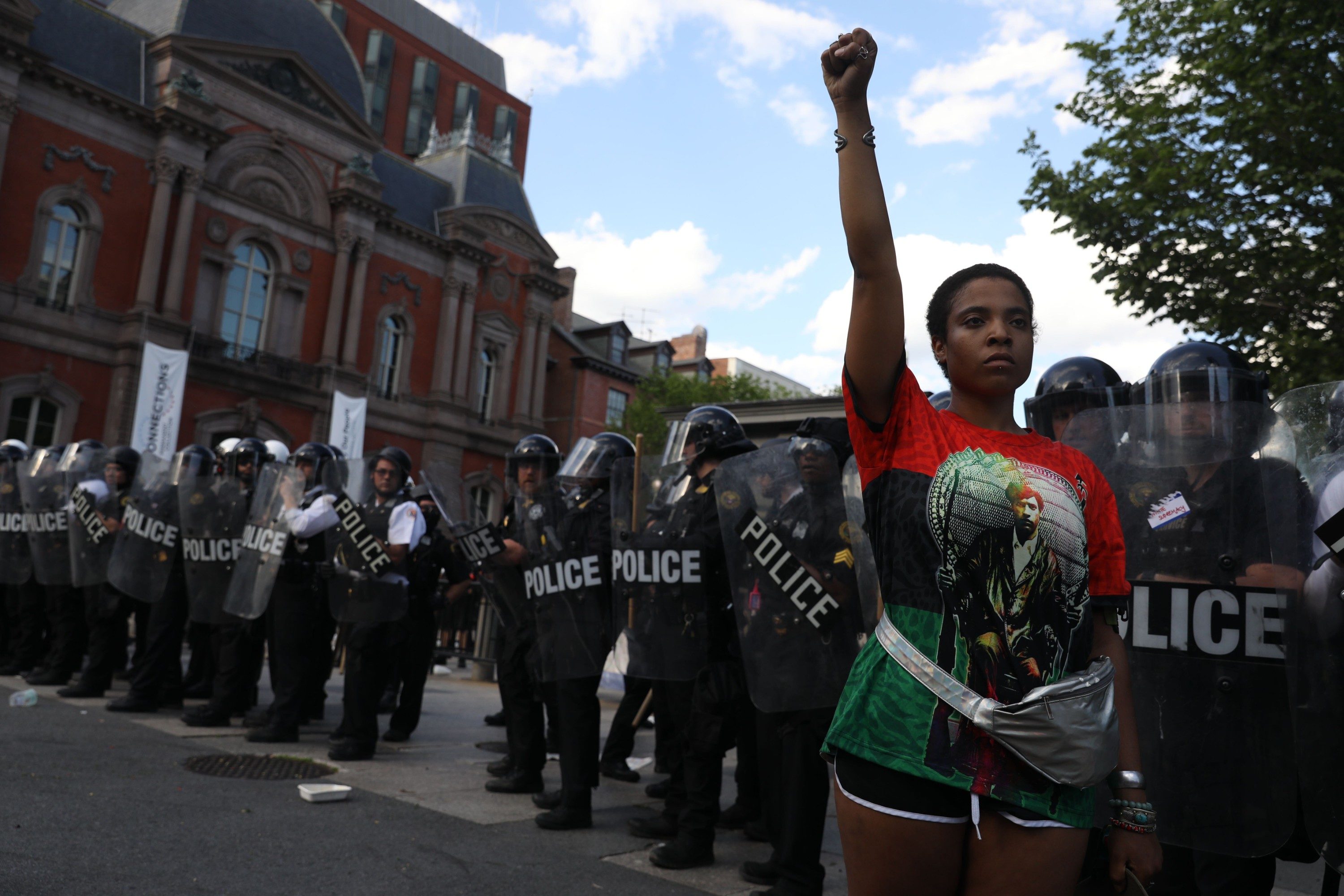
Meanwhile, clashes began near the White House, where law enforcement barricaded the entirety of Lafayette Square with black fences and yellow caution tape. As the demonstration intensified, Secret Service officers announced a final warning for protesters to disperse around 5:30 p.m. before releasing pepper spray.
The demonstration continued to the corner in front of the Renwick Gallery, as protesters shouted, “Hands up, don’t shoot,” and began climbing on police cars.
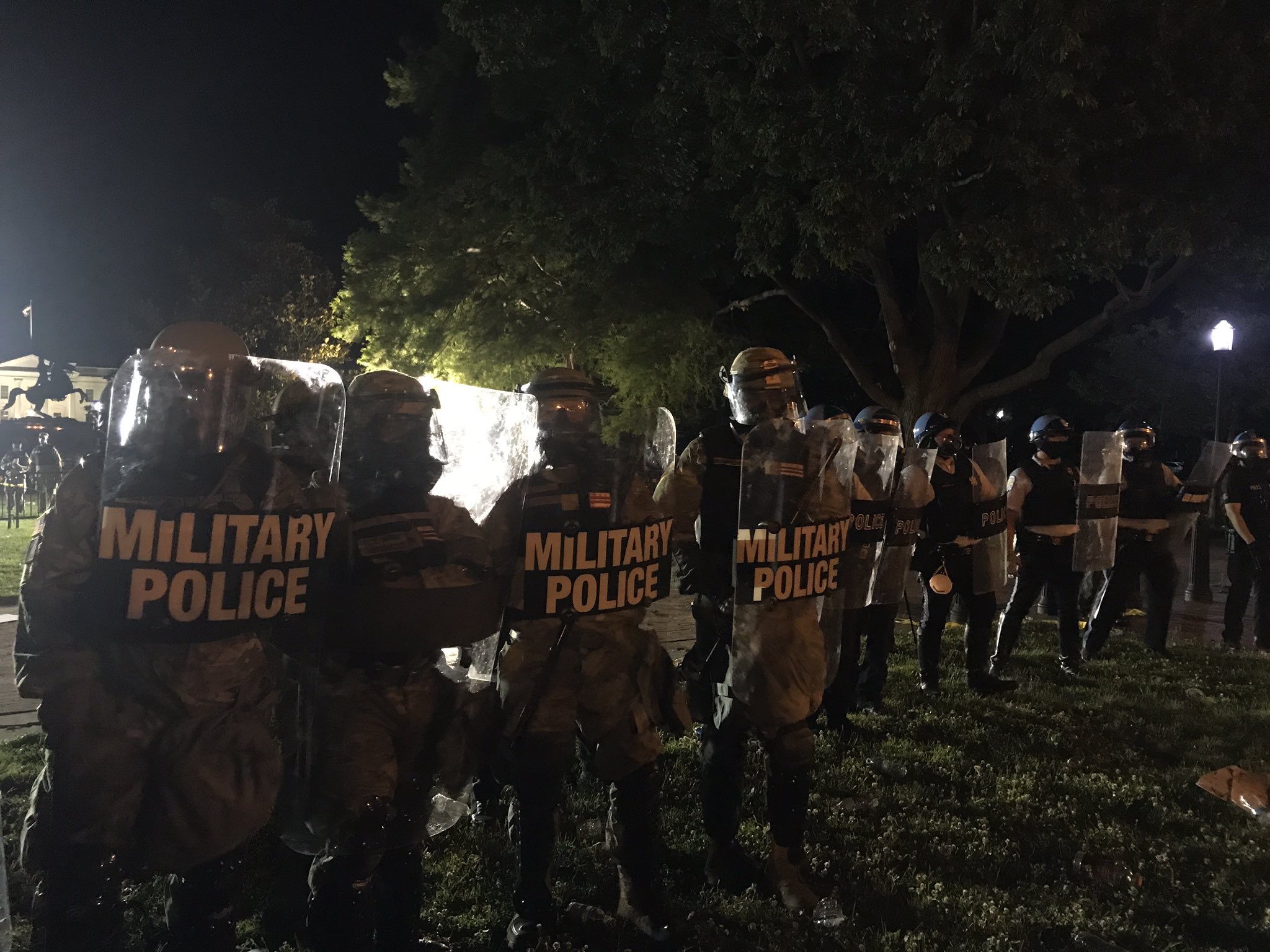
Confrontations continued later in the evening between police and protesters at 16th and H streets NW, where police pushed demonstrators back from behind barricades. The D.C. National Guard were deployed to the area as the sun began to set, joining Secret Service, D.C. police and U.S. Park Police in the area surrounding the White House.
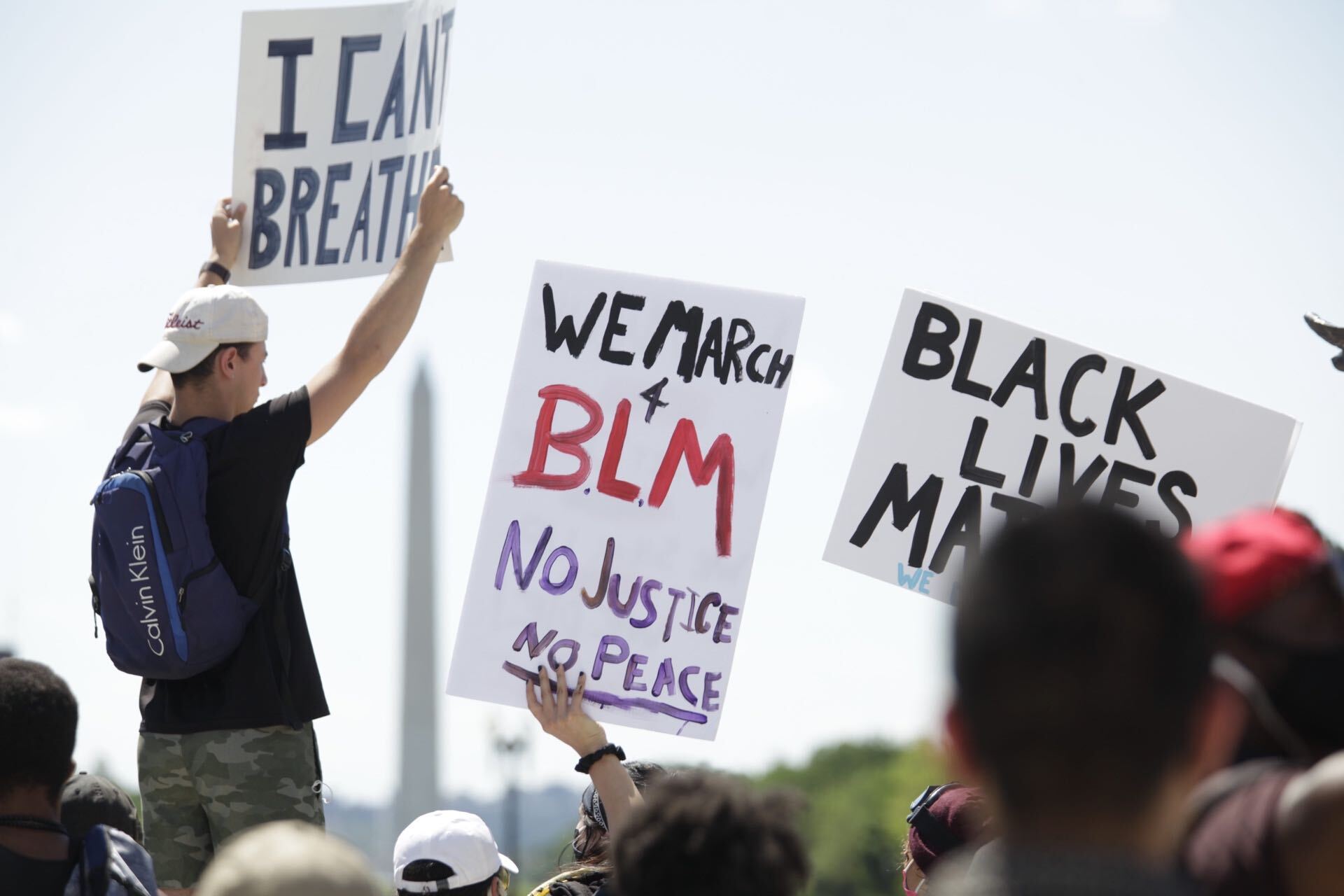

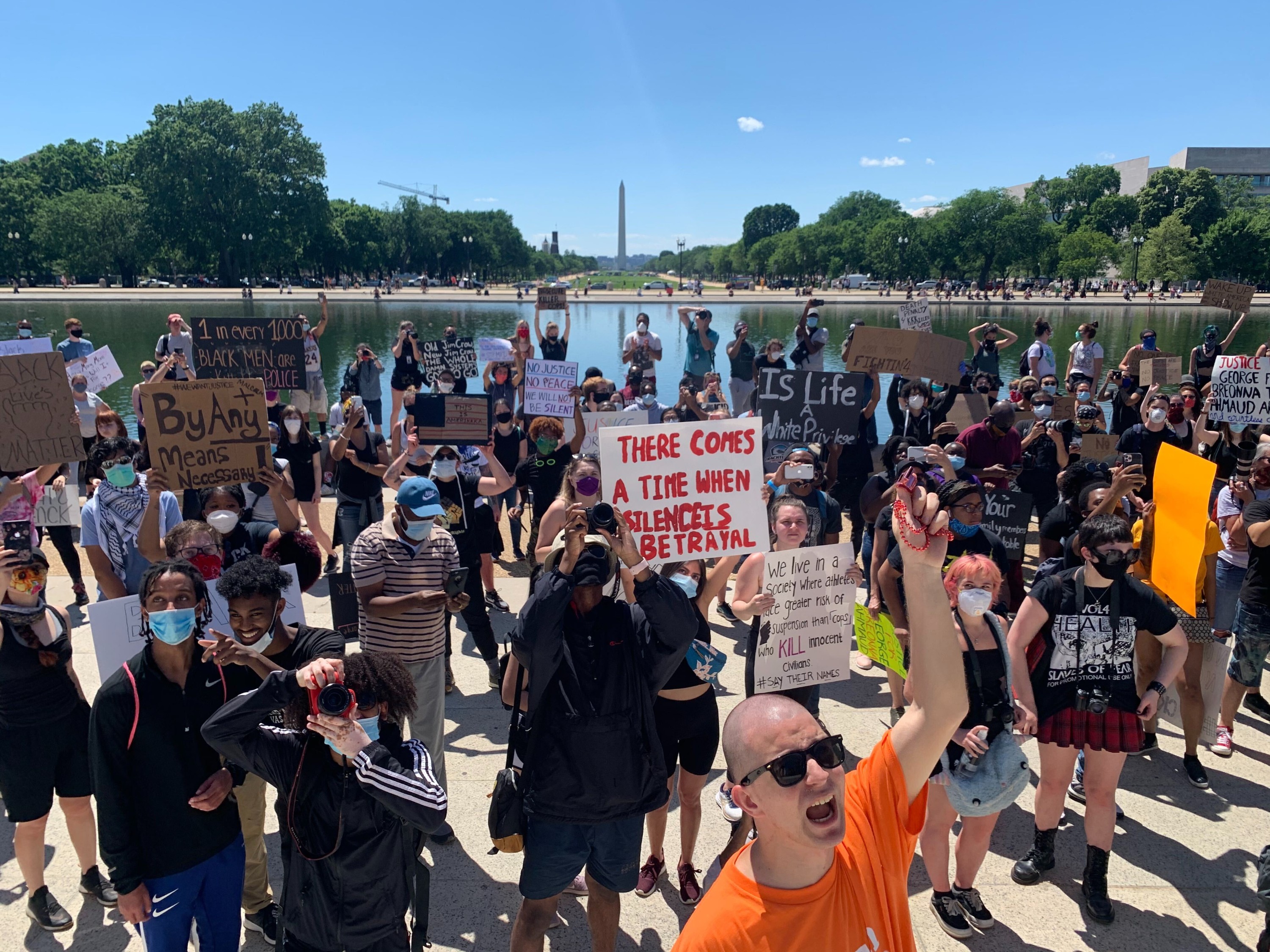
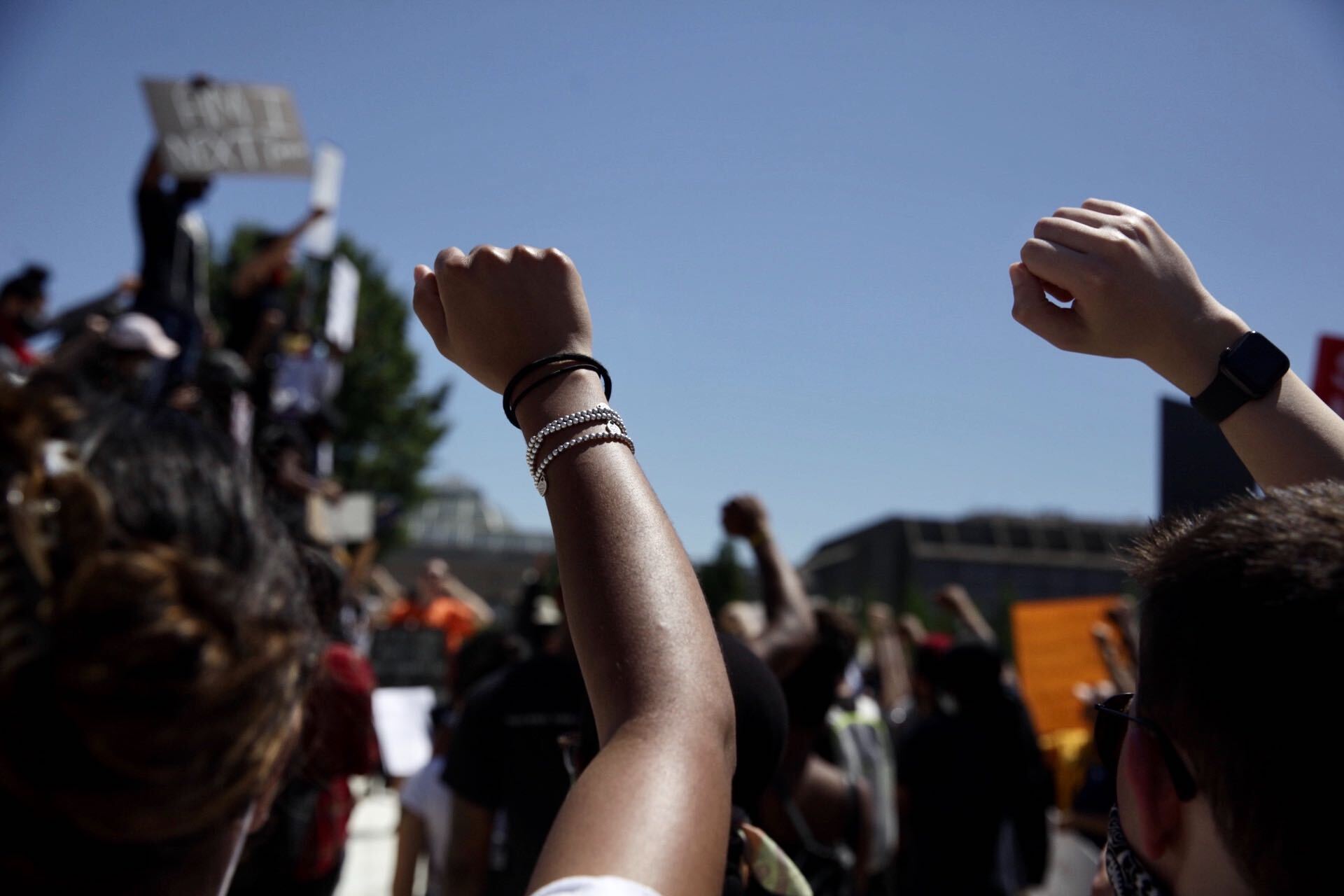
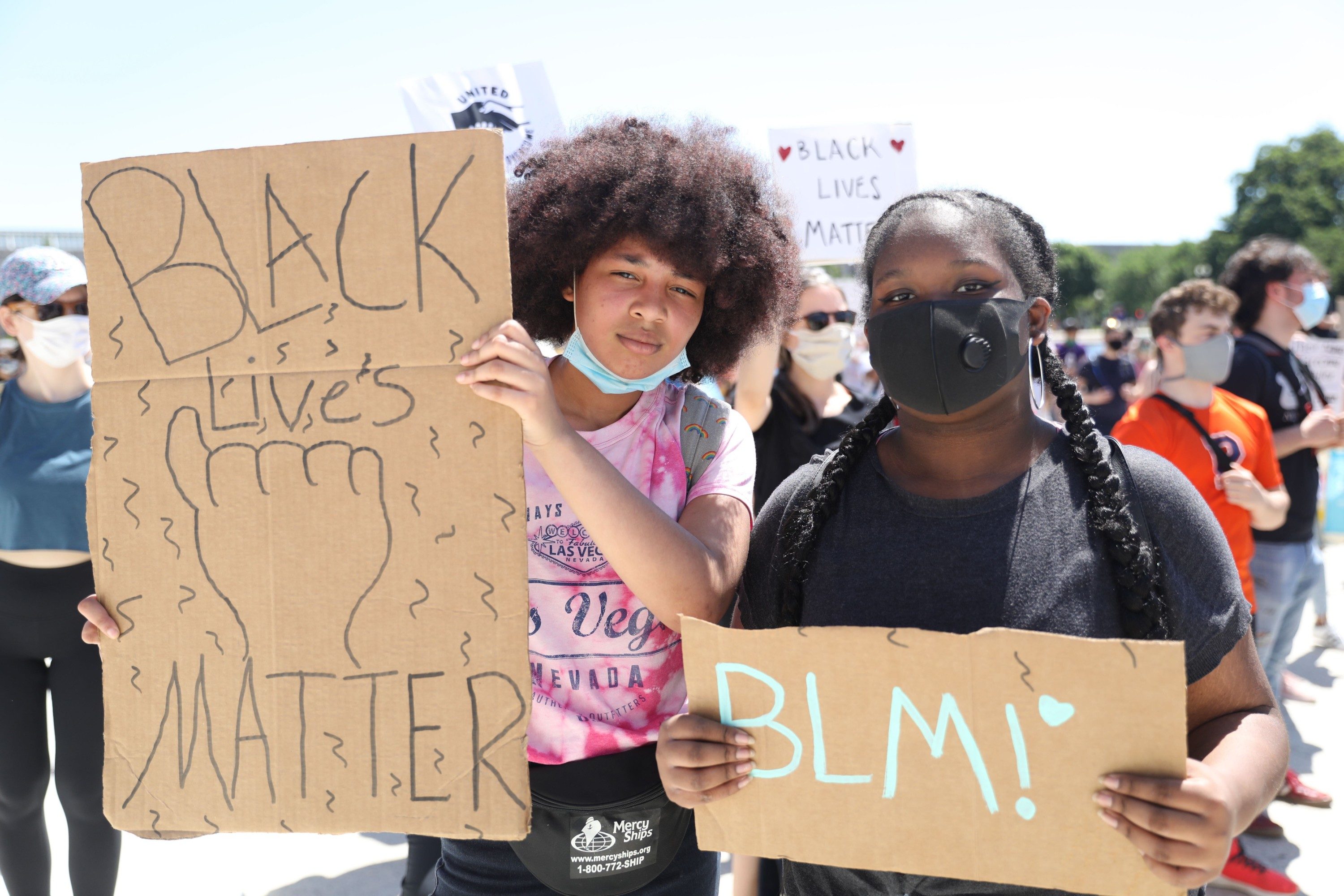
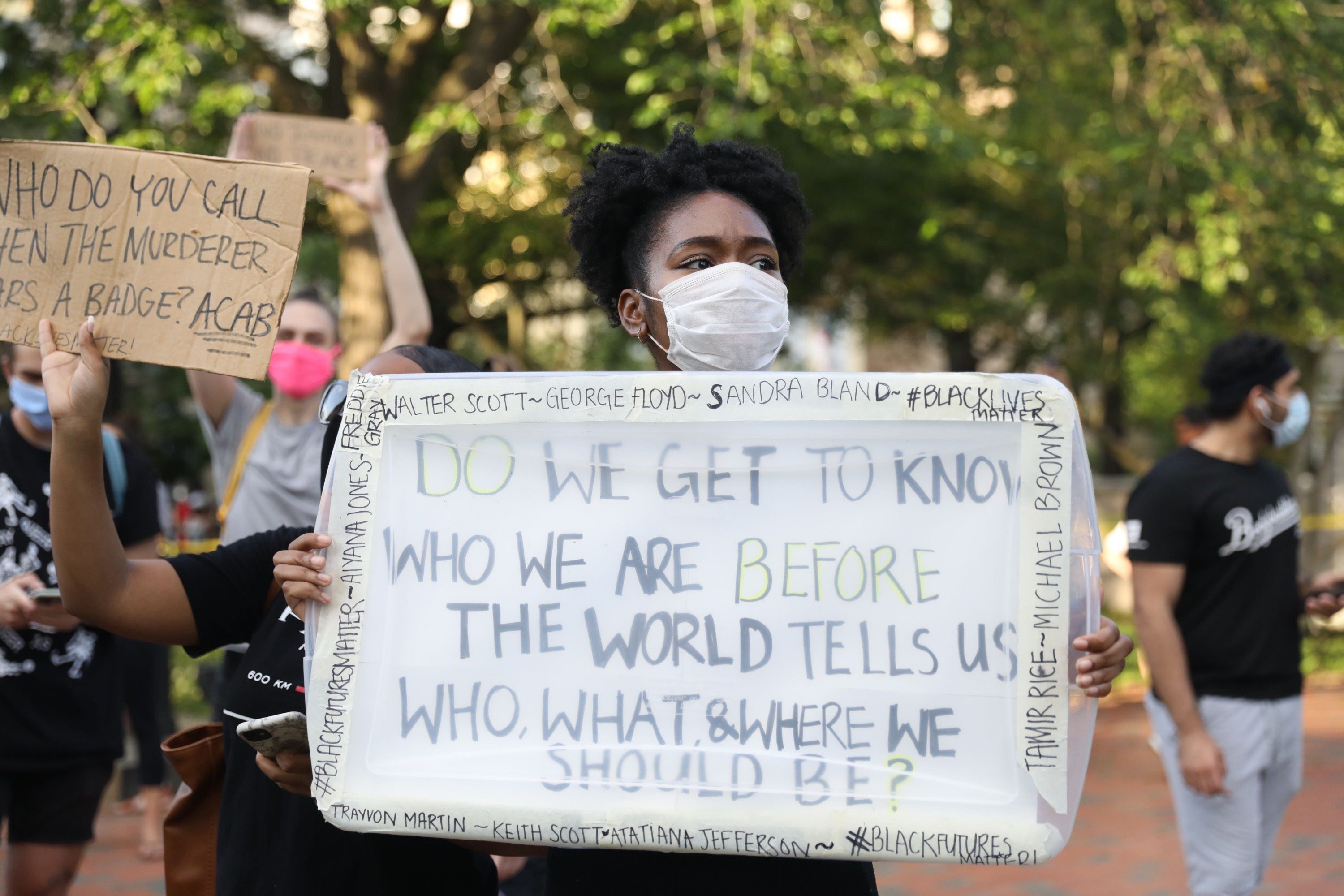
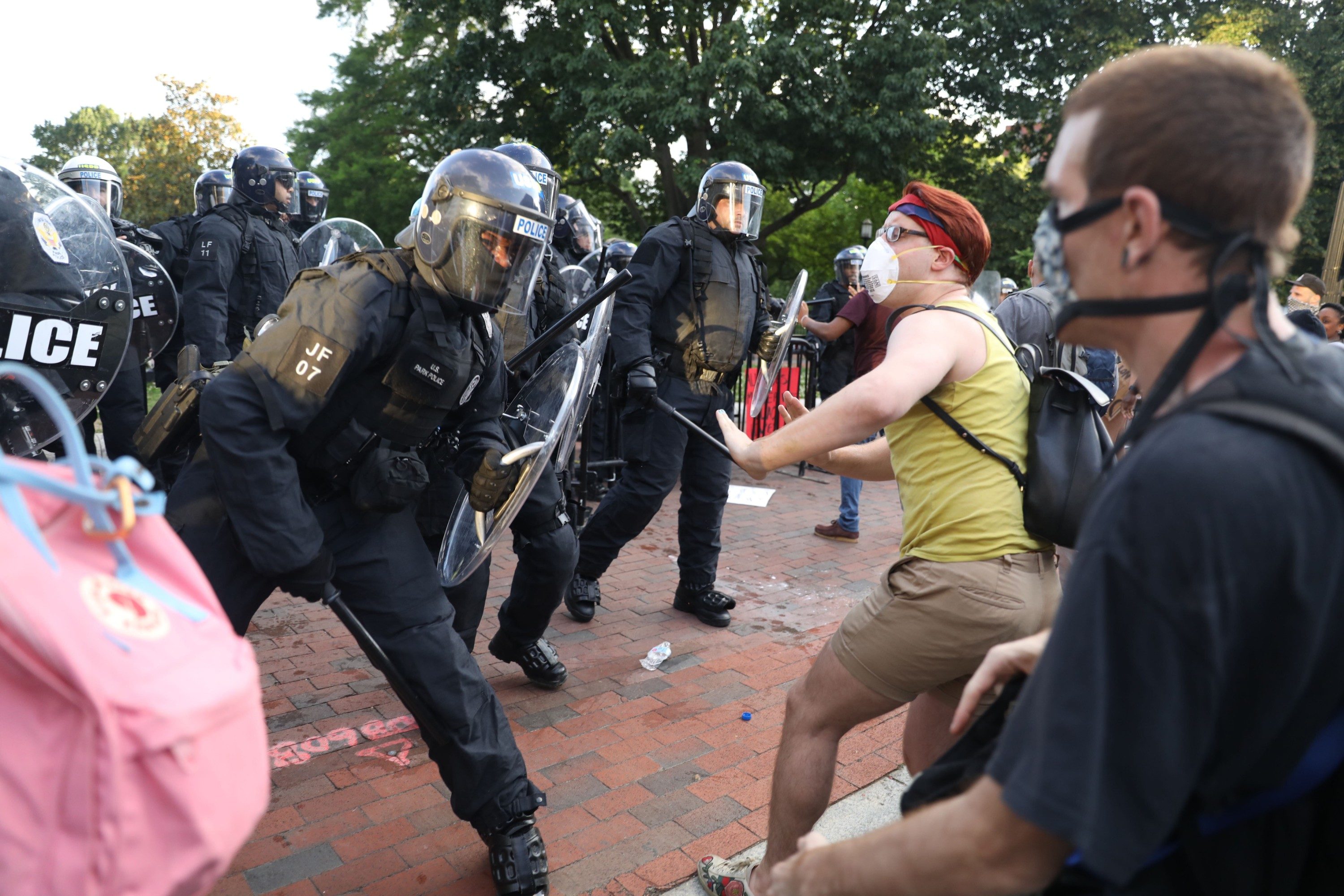
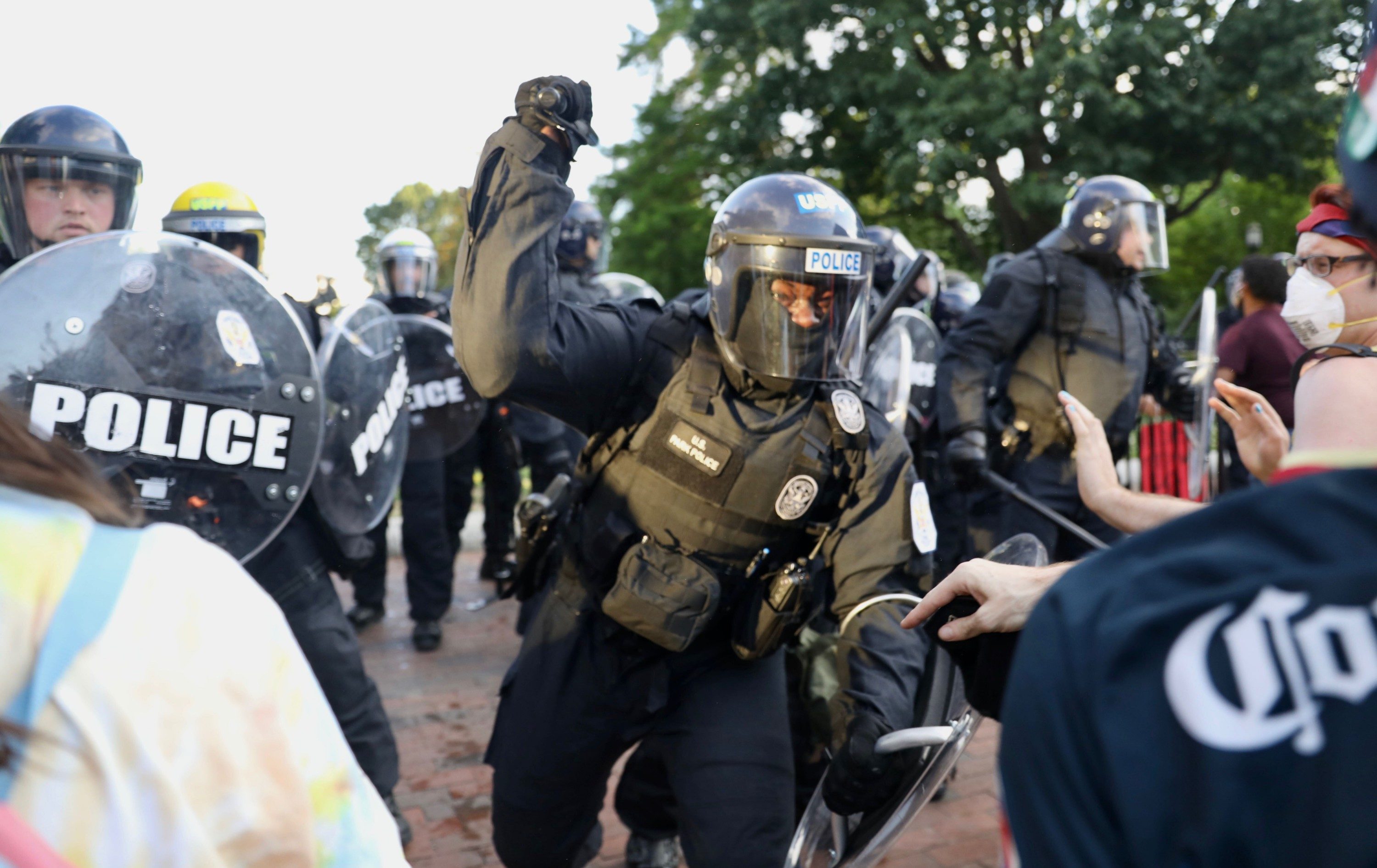
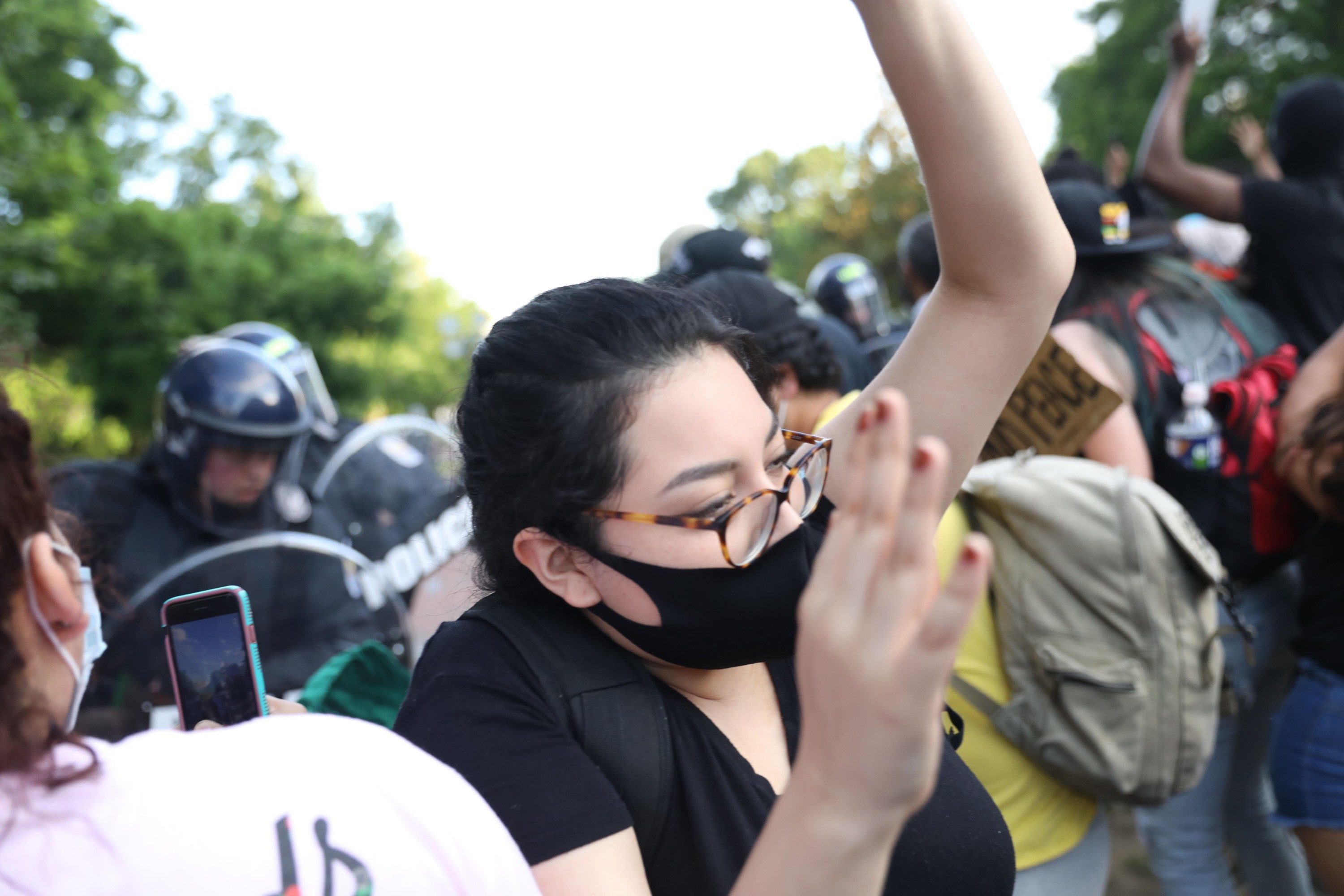

Early in the day, many protesters said they wanted the demonstrations to stay peaceful, but some also acknowledged the situation could get violent.
Nicole, a resident of Northwest D.C. who declined to provide a last name, said that “If [riot police] get violent with us, it’s okay for us to get violent with them. They already act like they’re a gang, banging on their shields like they’re getting ready to attack.”
District resident Rudi Easler participated in the protest from the fringes.
“I’m afraid for these people, but at the same time, I’m more afraid of the level of power police have in order to hurt and to silence all these people out here who are just trying to protect themselves and protect their community,” she said.
Getting close to the action is “not her personality,” but Easler said she fully supported those who chose to engage more directly at the front of the barricades.
One protester named Alexis said, “We’ve tried to make our point peacefully with sit-ins. We’ve been home quarantined for months as other people put their lives on the line. It’s our turn to get out.”
Her father, Joe, added, “I don’t support the violence. I think we have a few bad apples in the group trying to incite violence to make their point.”
Attorney General William Barr on Saturday blamed the sometimes-violent protests across the country on “anarchic and far-left extremist groups” who travel at some distance “to promote the violence.”
But there was no evidence that the crowds in D.C. appeared to be from outside the region. Virtually all of the protesters who spoke with DCist and WAMU reporters identified themselves as locals.
And while demonstrators had gathered as part of a national wave of protests over the police-involved deaths of black people around the country— George Floyd, in Minnesota, Breonna Taylor in Kentucky, Tony McDade in Florida and others — D.C. protesters also shared concerns about their region.
Josiah, an 18-year-old from District Heights, said he remembers the first time he got pulled over by police while riding in a car with friends. He says he was 14 years old at the time and on his way to a dance at Sidwell Friends School. He recounted how officers “pulled [them] out the car,” though they were doing nothing wrong or illegal.
He said he came out to protest because “you don’t want to be the one that sits by and does nothing.”
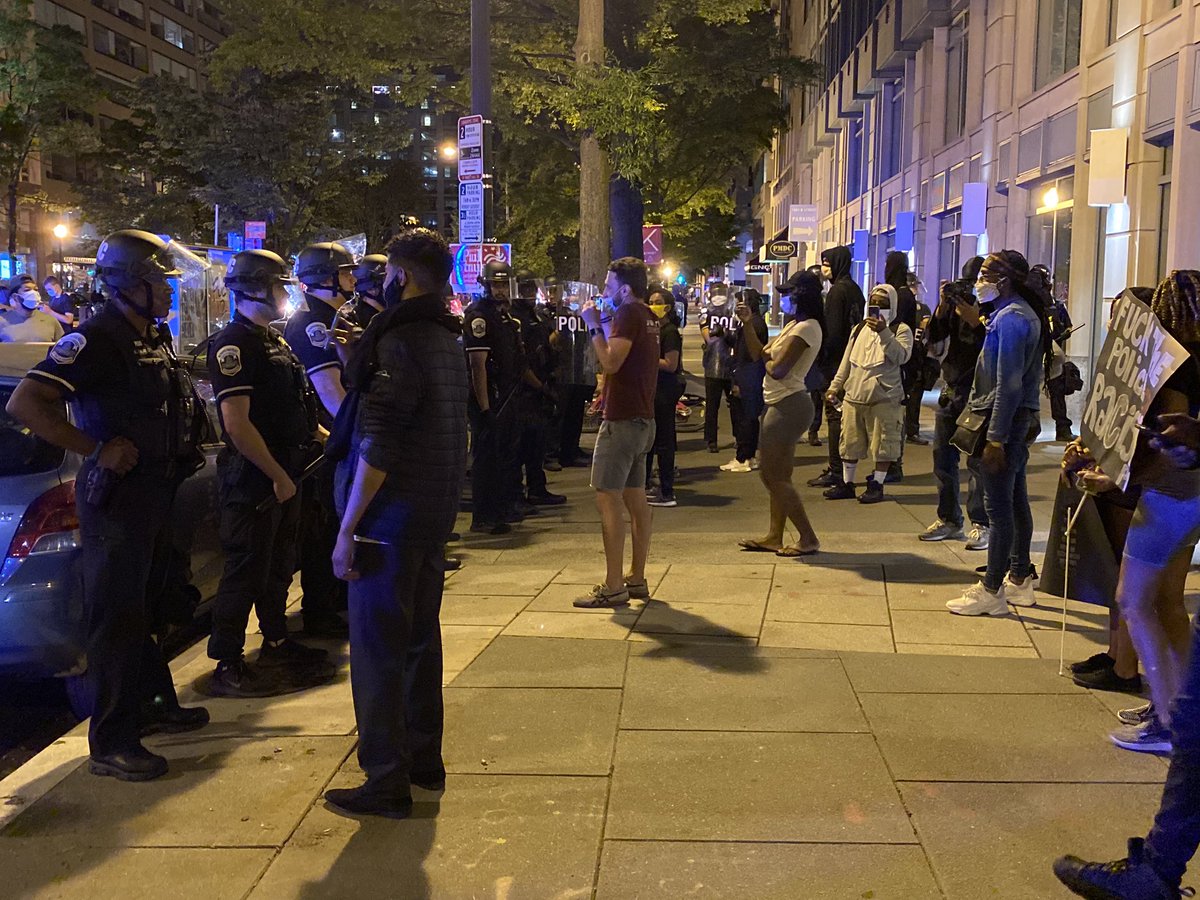
A few blocks over from the White House, at Vermont Avenue and K Street NW, a group of demonstrators had heated conversations with members of the Metropolitan Police Department, both drawing heavily from personal experience.
“I’ve been profiled many times in my life,” said one young black demonstrator.
“D.C. is not as bad as you think it is,” one officer responded. Another officer told the crowd that he was upset by police officers elsewhere who were ruining the reputation of the profession.

A caravan protest of a few hundred cars, organized by Black Lives Matter D.C., started in the afternoon from the Minnesota Ave. Safeway parking lot in Northeast. The group was seen making its way toward downtown D.C. around 5:30 p.m.
“Any opportunity I get to actually be in the streets is really important,” said Ronald Young Jr., 36, of Alexandria, who participated in the caravan.
Remarking on the racial diversity of the crowd, Young said he thinks “it’s time for white folks to step up and be a part of the fight, as long as they know this is an extended fight.” The crowds of protesters in D.C. were largely diverse, with the majority appearing to be in their 20s and 30s.
“This isn’t like, you show up to the protest and you’ve done what you’re supposed to do … You have to speak to the hearts and minds of people that are around you in your bubble. That’s the only way we’re going to see change,” Young continued.
Alie Karambash, 22, of Montgomery County, said he joined the Black Lives Matter caravan to show solidarity with people of color who are protesting injustices across the country.
“I think, for me personally, that we’re on the verge of something really transformational as a country,” Karambash said. “Hopefully we can make our voices heard to kind of tip the balance on whether that transformation is really good or really bad.”
Brenda Wilson, a resident of Southeast, said she wanted to come out regardless of fears of COVID-19 and the stay-at-home lite orders imposed by Mayor Muriel Bowser, saying: “This is important.”
Elsewhere in the region, protesters blocked off traffic in Prince William County, where police declared an “unlawful assembly” at Bull Run Plaza. Authorities there are asking residents to shelter in place indoors.
In D.C., as the sun went down and the night wore on, the protest became less organized, and the crowd at Lafayette Park thinned out slightly.
At one point, a burning trash can went largely unnoticed as protests continued peacefully around it. When something inside the can blew up, some protesters rushed to pour their water bottles on the fire. There were calls to stay peaceful, but not everyone listened.
A few minutes later, around 11 p.m., the scene turned chaotic as loud bangs could be heard around 16th and I streets. A vehicle was set on fire and several fireworks went off. Protesters started breaking glass in building facades and pushing against police riot shields.
As the night stretched on, a number of businesses were looted, including a T-Mobile and a liquor store downtown; Gucci, Hugo Boss and Moncler at the high-end City Center DC complex, several retail stores in Georgetown, and the Apple store at the historic Carnegie Library. Graffiti on one downtown building read: “The rich aren’t safe anymore.”
D.C. Fire and EMS also responded to a fire at a construction area near the Hay-Adams Hotel. Officials have not yet determined the cause of the fire, though spokesperson Vito Maggiolo noted that it took place in an area where protest activity was “very active.” The hotel itself has been spray painted with “fuck the rich”, among other messages.
Despite the blazes and skirmishes, some demonstrators were shouting to stick with the message of peaceful protesting.
“If you’re not here to protest peacefully, you’re not helping anybody!” said Ariana Evans as fellow demonstrators applauded her.
“The consequence of this is more black men dying,” Evans said. “We act like this every time and black men still die. So if peace is not the answer and violence is not the answer, then what is the answer? Communication. We all need to be able to communicate our feelings effectively.”
This post has been repeatedly updated with additional reporting.