Martin Austermuhle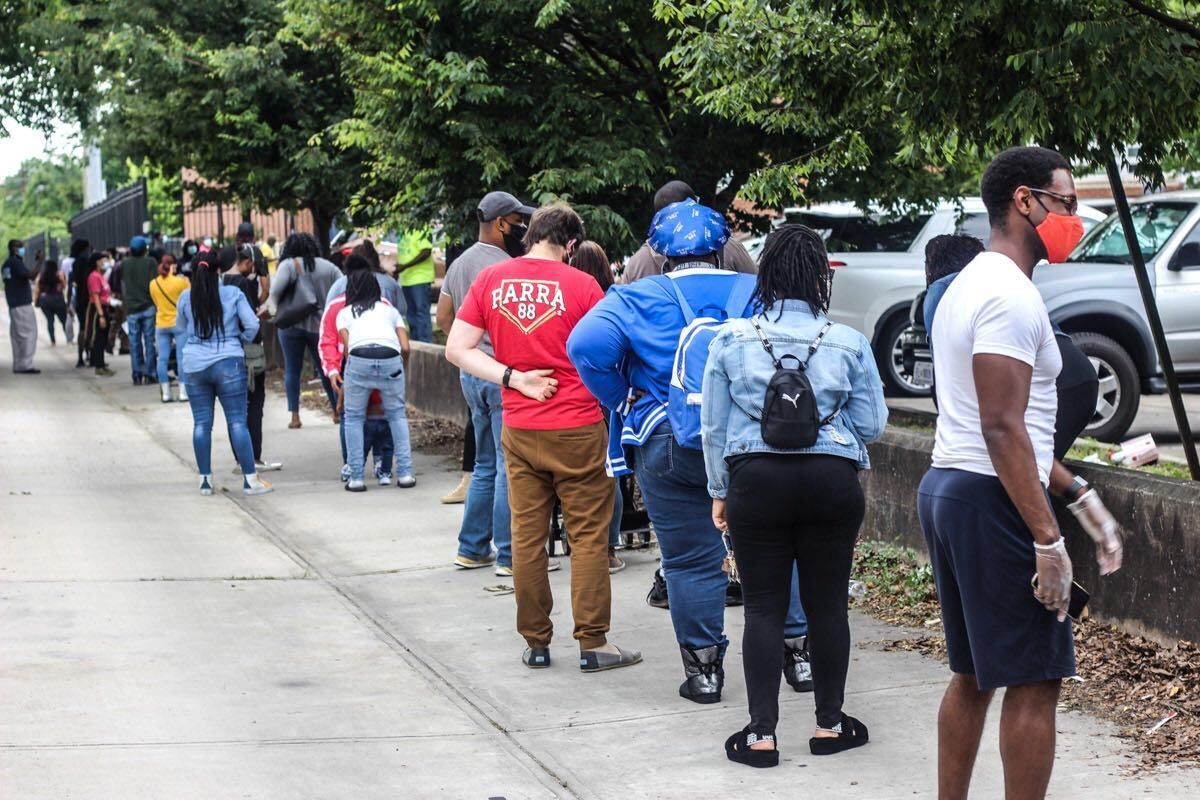
The bevy of problems around Tuesday’s D.C. primary—including hours-long lines at the polls and absentee ballots that were never delivered—have prompted calls for accountability, with Mayor Muriel Bowser and the D.C. Council asking the city’s independent elections board to explain why things went wrong.
Speaking on Wednesday, Bowser—who herself voted in person in Ward 4—called Tuesday’s primary “nothing short of failed execution,” and said she would be asking the D.C. Board of Elections for answers. Ward 6 Councilmember Charles Allen, who oversees the board, also announced a public hearing on June 19 at which election officials will be asked to testify.
“Our right to vote is sacred,” tweeted Allen on Wednesday. “The delays, lines, confusion & missed ballots in the absentee process put that in jeopardy.”
In late March, the emerging COVID-19 forced election officials to pivot on planning for the primary. They began urging as many voters as possible to request absentee ballots, and decided to scale back the election’s physical footprint from the usual 144 neighborhood precincts to 20 vote centers across the city.
While some 90,000 voters did respond and request absentee ballots, some voters reported never getting theirs. Others said while they received the ballots and sent them back in, they never got confirmation if they had been received and would be counted.
Coupled with a 10-person limit inside vote centers and voting machines that had to be cleaned between each vote, lines stretched outside vote centers on Tuesday, leaving some voters waiting up to five hours to cast a ballot. In one case, a D.C. voter was not able to cast a ballot until 1:25 a.m.—almost six hours after polls were supposed to close. Additionally, there were fewer absentee ballot requests in areas east of the Anacostia River—which are predominantly black and low-income—which some activists blamed on poor communication.
Speaking earlier this week, election officials said they did not expect such a large number of voters to come out on Tuesday. And they added that they have been working under trying circumstances, attempting to run the city’s first election by mail while also navigating a pandemic that impacted board staff and their families. It also remains unclear how extensive the problem of unsent absentee ballots was; as of Tuesday, some 50,000 had been received by the elections board. (Any absentee ballot postmarked by June 2 and received by June 9 will be counted, meaning current vote tallies in most races will change.)
Still, elected officials responded angrily in the wake of Tuesday’s primary, using words like “unacceptable” and “debacle” to describe what happened. On Wednesday, At-Large Councilmember Elissa Silverman—who said her office fielded hundreds of emails about missing absentee ballots—demanded the elections board hire an outside firm to conduct an audit.
“The District cannot have a repeat performance of what happened in the November general election,” she wrote. “The stakes are too high.”
Some elected officials also called for members of the elections board—which is independent — to resign. But board chairman Michael Bennett told the Washington Post he had no plans to resign, and added that the board would be assessing what went wrong and what would need to be corrected ahead of November’s general election. Bowser declined to say whether she thought resignations were needed, but she didn’t close the door to eventually demanding them.
“I could not tolerate continued failed leadership or execution,” she said on Wednesday.
Election-related problems weren’t limited to D.C. on Tuesday. In Maryland, ballot delivery and printing problems plagued the primary—which had been delayed from April 28—prompting Lt. Gov. Boyd Rutherford to demand that the state’s elections administrator resign.