 Kelsey Proud
 Julie Strupp
 Jenny Gathright
 Tyrone Turner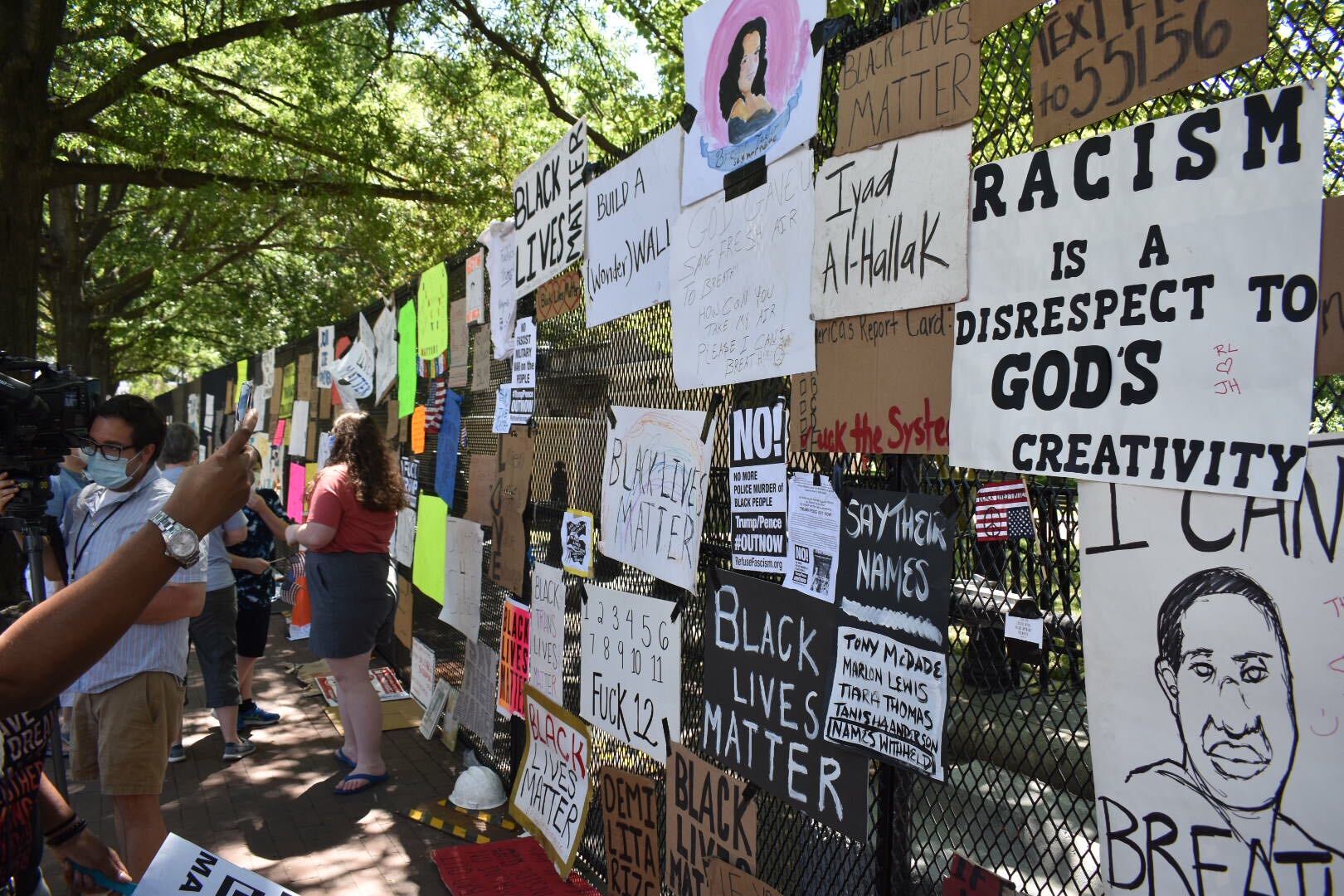
This story was last updated at 10:59 p.m.
As the protests over police brutality and the killing of George Floyd ramped up in the past week, the administration of Donald Trump increasingly fortified the area around the White House.
Entrances to Pennsylvania Avenue and E Street NW, the Ellipse, and Lafayette Square are barricaded by about 1.7 miles of mesh metal fences and guarded by police. The Secret Service said last week that the entire area around the “White House complex” would remain closed until June 10.
Meanwhile, Mayor Muriel Bowser has expressed concern that some of the measures may be permanent.
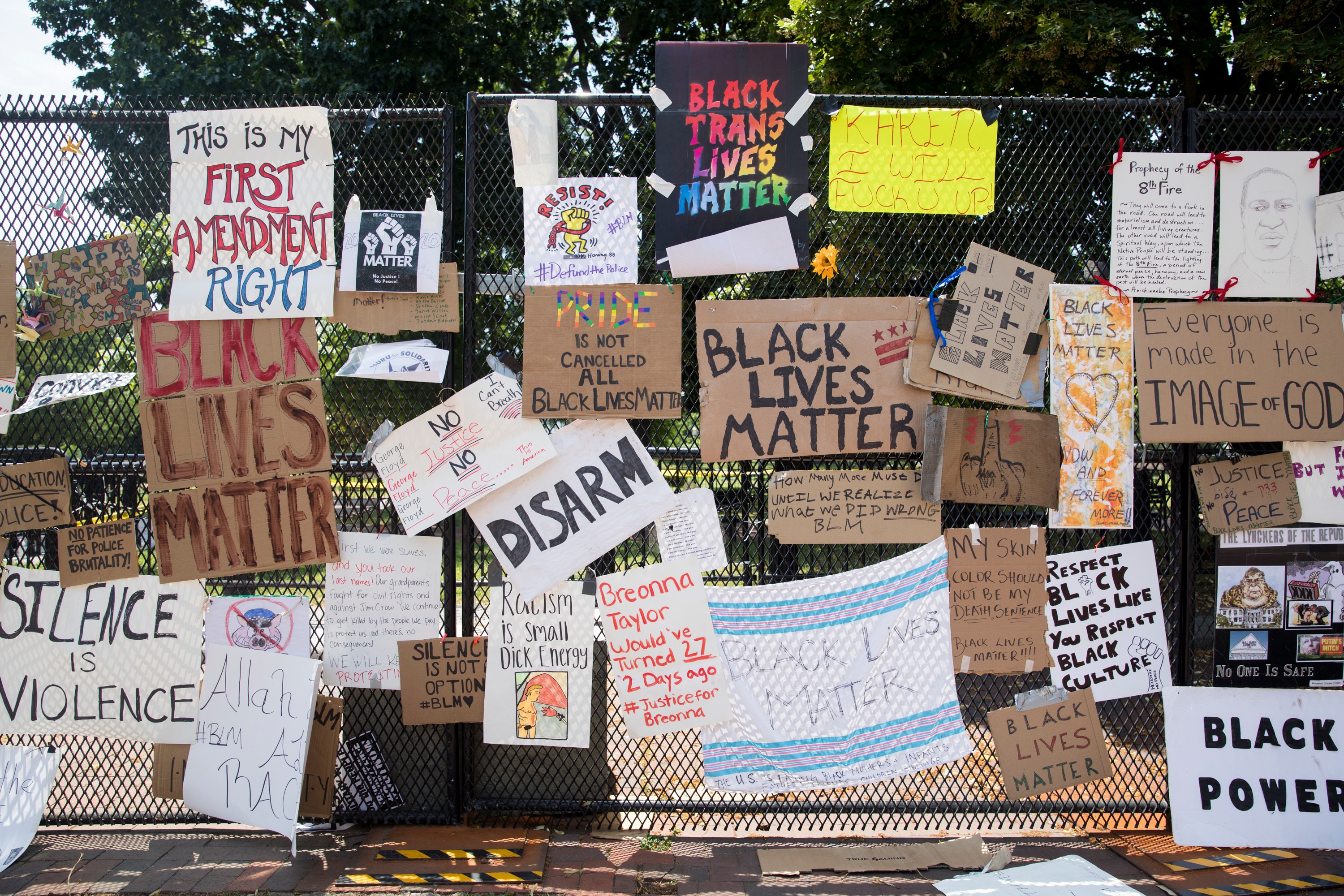
The barriers have been a jarring sight for many Washingtonians, long used to free access to spaces that serve as a symbol of democracy and where First Amendment protests have played out for over a century. Throughout the week, protesters could often be heard pressed up against the fence, chanting “This is what democracy looks like.”
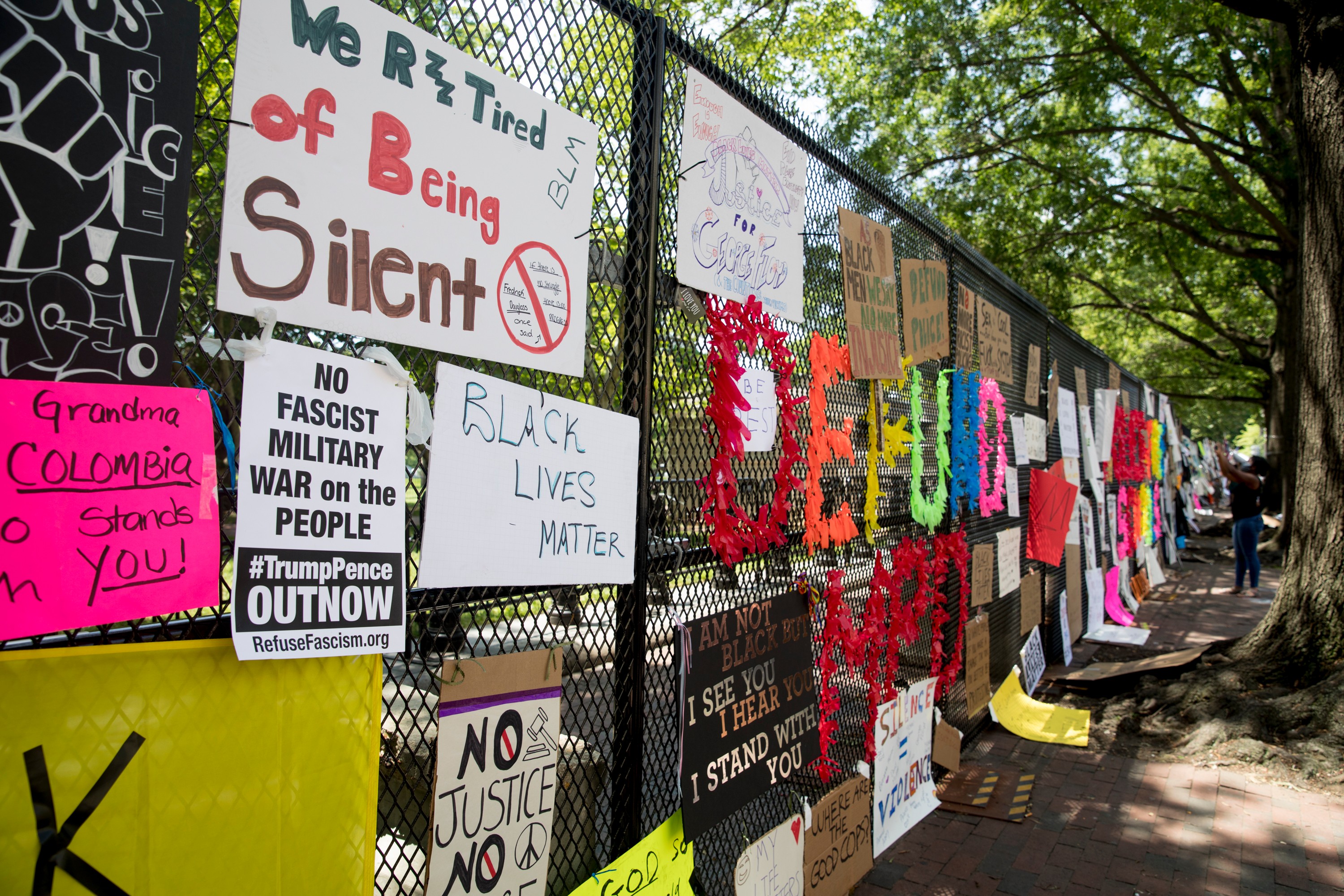
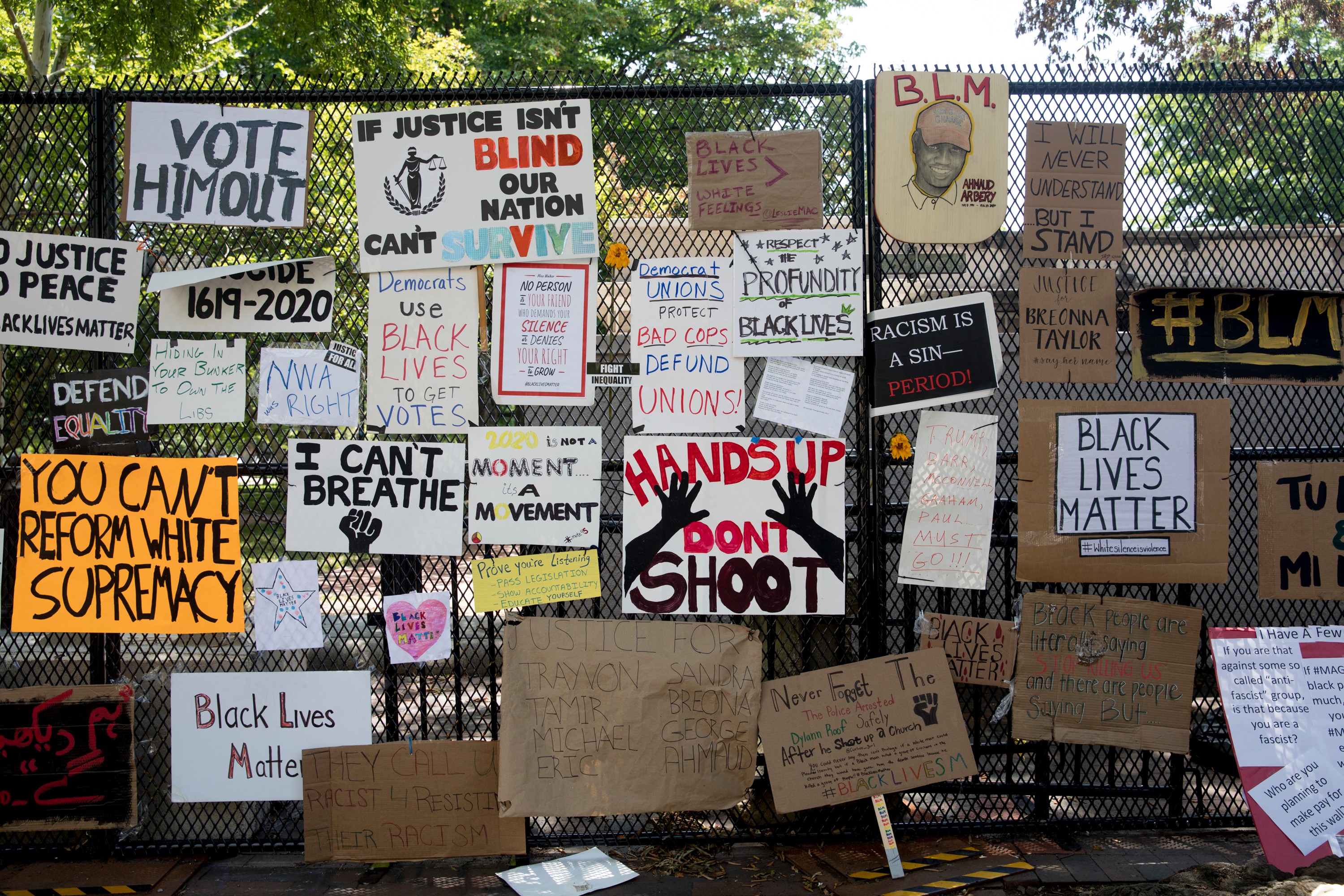
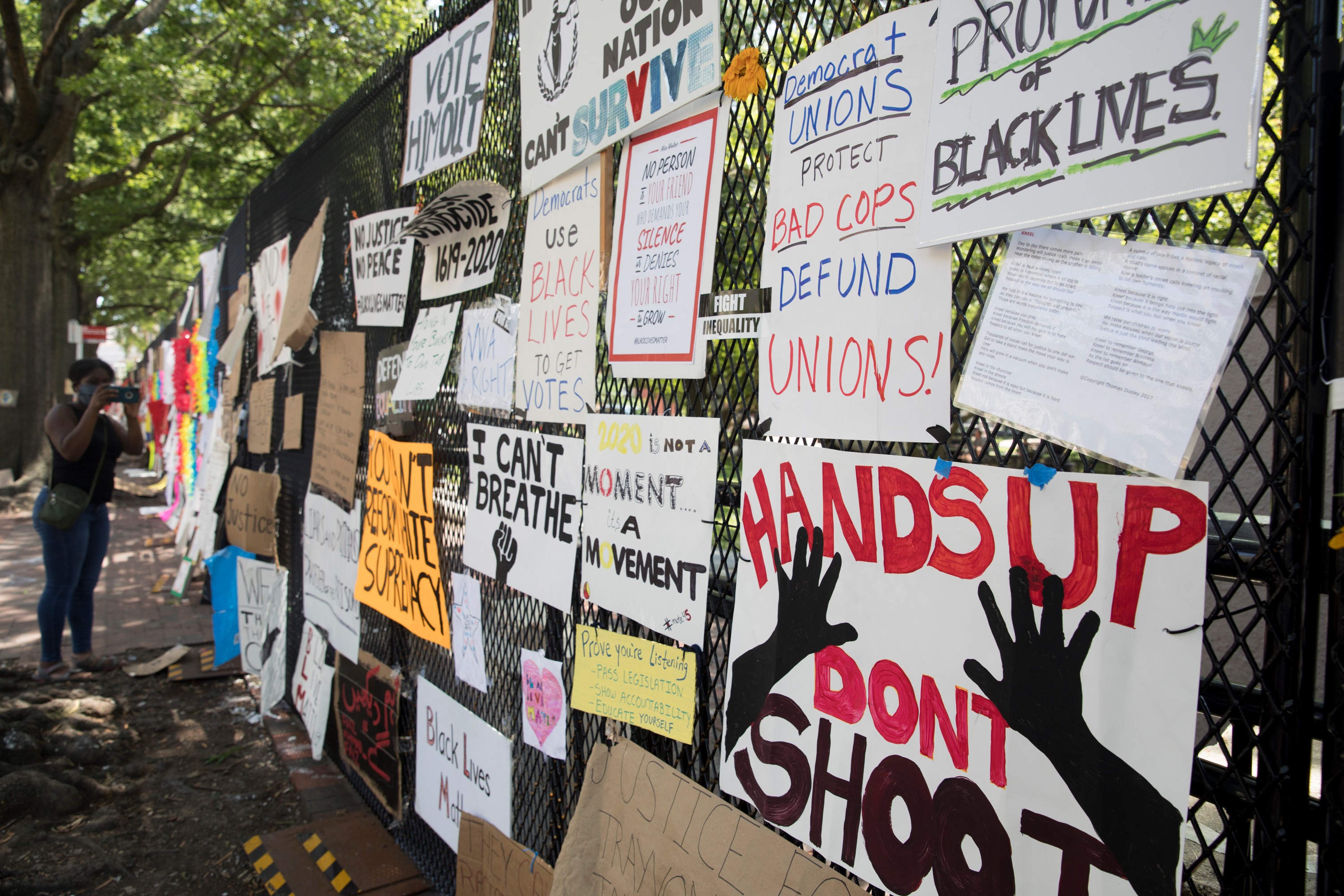
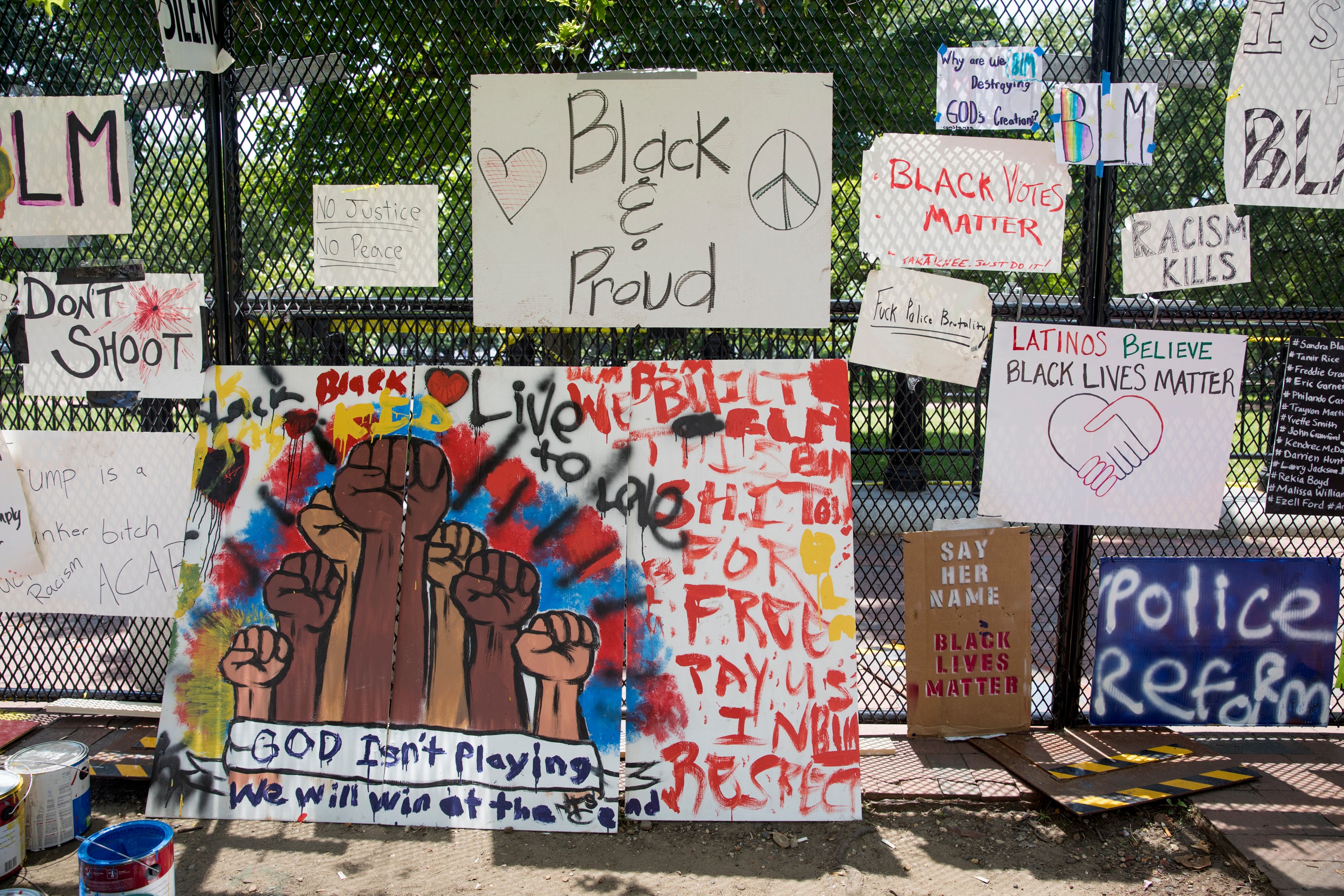
While the closest the public can get to the White House is about 600 feet away, the fence around the people’s house is again being reclaimed by the people.
Kai Gamanya hung a painting featuring his take on the raised fist widely associated with the Black Panther Party. In the piece, the fist is flanked by a crown on one side and a pyramid on the other, which the artist said denotes that black people come from royalty.
The fist is also clenching a series of planets, which Gamanya said symbolizes that black people “are the universe.”
Gamanya, who is a surgical technician, also participated in Saturday’s protest and said the fence was much emptier then. He was moved to see it fill up with work so quickly and said the barrier had become part of the demonstrations.
“It’s like the whole nation is crying, and this whole fence is crying,” said Gamanya. “And if you were to back up and see it from beginning to end, it’s nothing but posters from all the way down.”
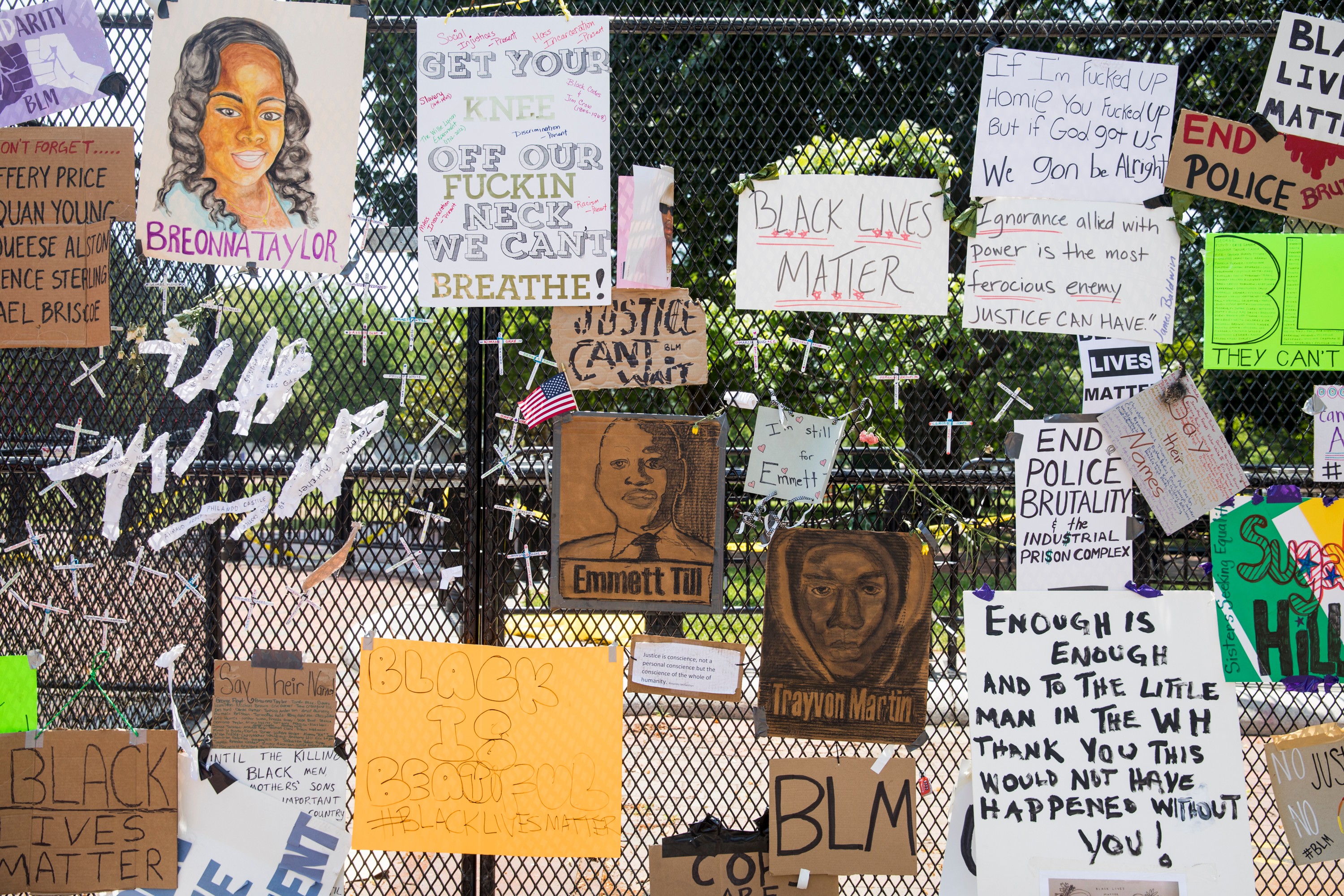
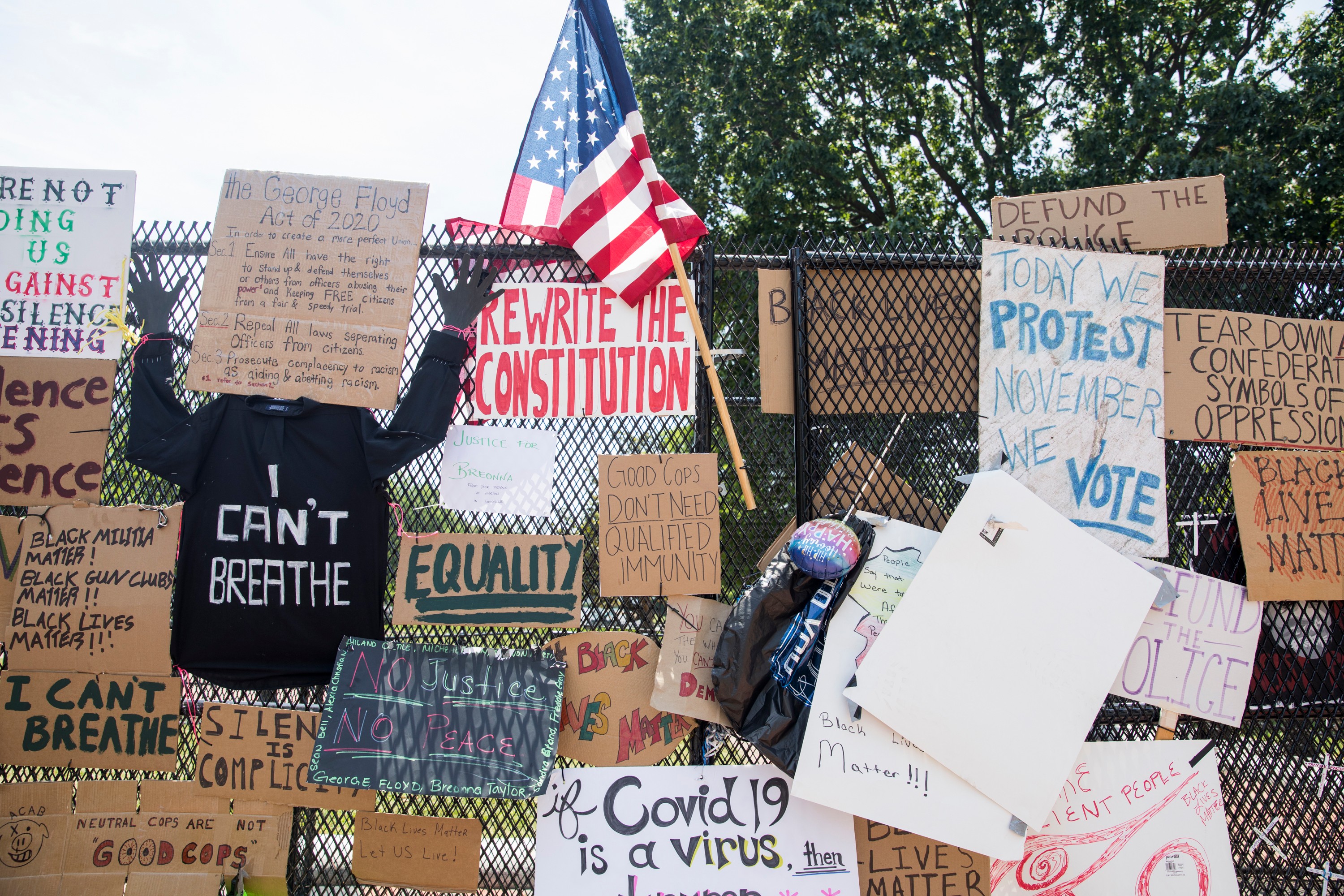
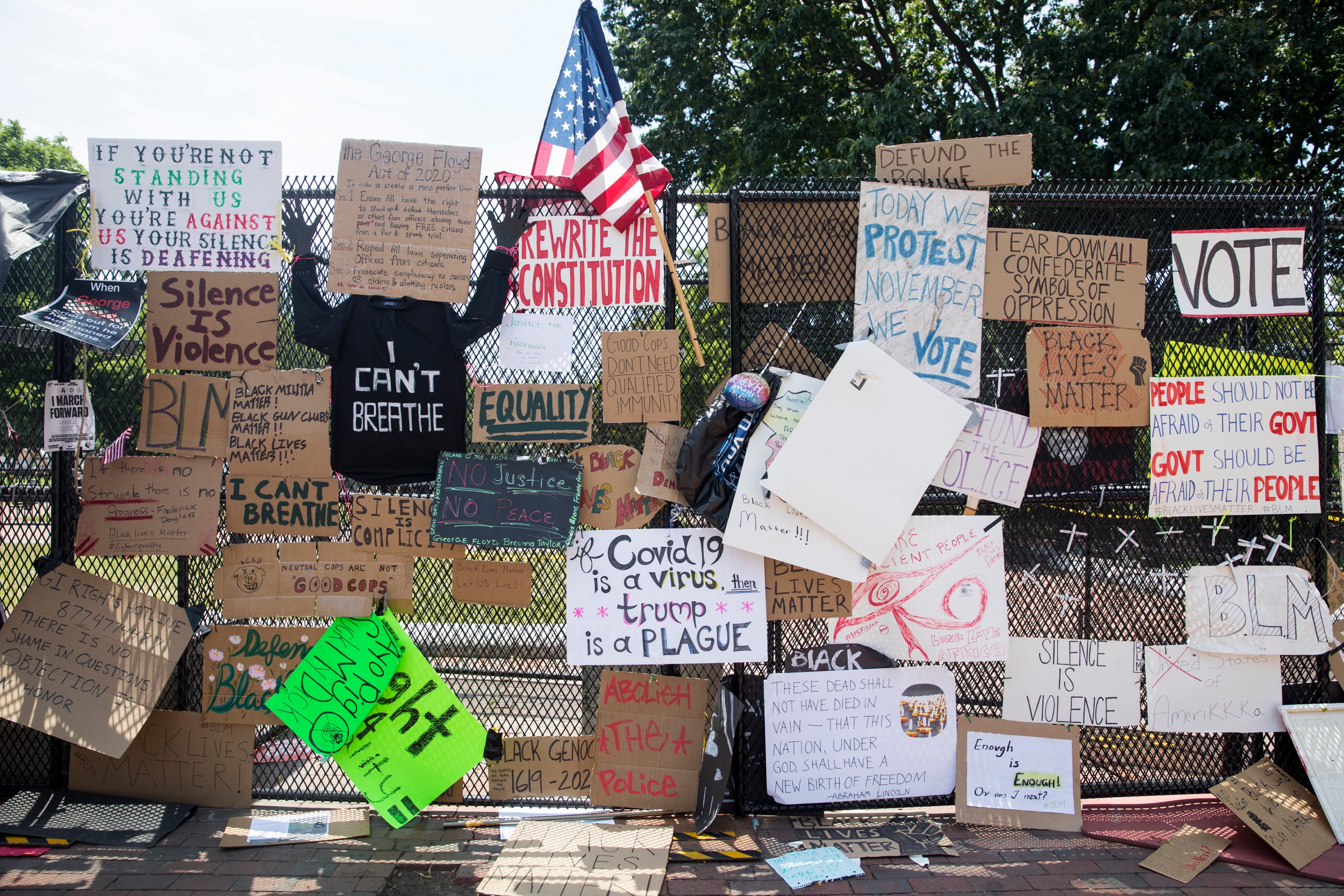
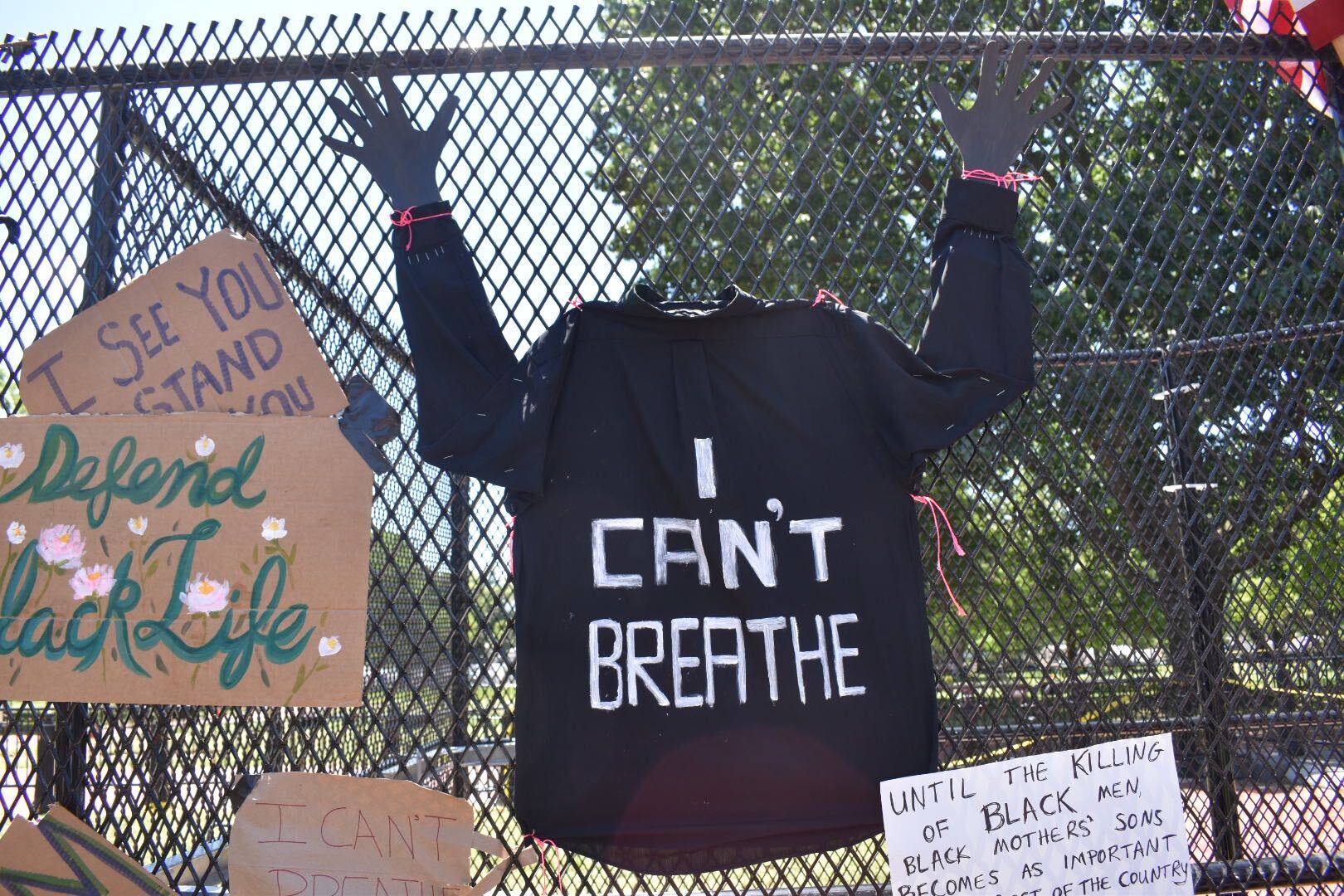
The line between protest sign and art is up to the beholder, but plenty of both now adorn the fence’s exterior face. Here’s a look:







This story was updated to include an interview with Kai Gamanya.